What Almaty Buyers Actually Need from a Sewage Treatment Plant Supplier
A sewage treatment plant supplier in Almaty must deliver packaged MBR, SBR, or WSZ units rated for Kazakhstani winter operation (down to -30°C) with effluent meeting RVK phosphorus and BOD limits. HydropureWater ships WSZ and MBR systems from 1 m³/h to 2,000 m³/day with full EAEC documentation, KZ customs support, and 12-month performance warranty.
Almaty sits at roughly 43.3°N latitude and 700–900 m elevation, where design winter air temperature reaches -25 to -30°C and ground frost penetrates 1.2–1.6 m. Any buried sewage treatment plant must therefore use tankage rated for low-temperature service (impact-resistant HDPE, GRP, or epoxy-coated carbon steel with PU foam insulation) and include heat-traced pipework and an insulated, freeze-protected blower room. Above-grade containerized STP enclosures in Almaty typically need 50–80 mm rock-wool or PU panel insulation plus an internal heater sized to keep the biological zone above 8–10°C, the lower limit for nitrification in conventional activated sludge.
On the compliance side, RVK 2024 (the Sanitary Rules for Water Bodies, updated 2024) tightens the limits the supplier's quoted effluent spec has to hit on day one — not after commissioning tuning. On logistics, a 40HQ container from China to Almaty via the Khorgos or Dostyk border crossing typically takes 18–25 days including customs clearance, and the shipment must carry an EAEC Declaration of Conformity or EAC certificate to clear Kazakh customs without a re-export risk. Most Chinese trading companies cannot issue that paperwork, so the manufacturer you choose needs a registered KZ importer of record or a customs broker who has done the route before.
Kazakhstan RVK 2024 Discharge Limits: The Compliance Baseline
RVK 2024 sets the maximum permissible concentrations (MPC) that any sewage treatment plant discharging to municipal sewer (RVK-S) or to surface water (RVK-V) must meet in the first year of operation, with monthly composite sampling at the discharge point enforced by the Committee of Water Resources under the Ministry of Ecology and Natural Resources.
| Parameter | RVK-V (surface water) | RVK-S (municipal sewer) | Analytical method |
|---|---|---|---|
| BOD₅ | ≤ 3 mg/L (fishing) / 6 mg/L (household) | ≤ 20 mg/L | PND F 14.1:2:3.4.123-97 |
| COD (Cr) | ≤ 15–30 mg/L | ≤ 80 mg/L | PND F 14.1:2:3.190-2003 |
| Total Suspended Solids (TSS) | ≤ 5–10 mg/L | ≤ 30 mg/L | Gravimetric |
| Total Phosphorus (as P) | ≤ 0.2–0.5 mg/L | ≤ 1.0–2.0 mg/L | PND F 14.1:2:3.124-97 |
| Ammonium Nitrogen (NH₄⁺-N) | ≤ 0.39–0.5 mg/L | ≤ 8.0 mg/L | PND F 14.1:2:3.1.3-96 |
| Fecal coliforms | ≤ 100 CFU/100 mL (fishing) | — | PND F 14.1:2:3.4.121-97 |
Non-compliance is enforced through administrative fines under the Kazakhstan Code of Administrative Offenses (Article 328), suspension of the discharge permit by the Committee of Water Resources, and forced plant upgrade at the owner's expense — meaning a 1–2 M USD rebuild if the imported STP turns out to be undersized. Food, dairy, slaughterhouse, and oil & gas sites face tighter sub-sector limits than the generic municipal table above, so the supplier must confirm influent characterization (BOD₅, COD, TSS, oil & grease, salinity) before sizing the biological stage. For a deeper read on the phosphorus limit specifically, the Kazakhstan total phosphorus RVK compliance guide walks through the chemical precipitation dosing and tertiary polishing steps that actually get a packaged plant below 0.5 mg/L P.
MBR vs SBR vs WSZ: Technology Comparison for Almaty Sites
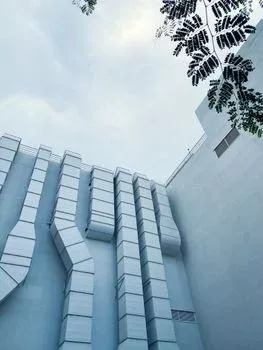
The three process technologies most commonly shipped as packaged or containerized sewage treatment plant systems — WSZ (underground integrated A/O), SBR (sequencing batch reactor), and MBR (membrane bioreactor) — differ sharply in footprint, effluent quality, and cold-weather operating margin. The right pick depends on flow rate, reuse intent, and the local discharge target in the Almaty table above.
| Criterion | WSZ (underground A/O) | SBR (batch) | MBR (membrane bioreactor) |
|---|---|---|---|
| Capacity range | 1–80 m³/h (~24–1,920 m³/day) | 50–500 m³/day per basin | 10–2,000 m³/day |
| Footprint | Buried — zero surface footprint, only hatchways | Modest, 2–3 basins required | ~60% smaller than CAS at same load (membrane replaces clarifier) |
| Effluent BOD₅ / TSS | BOD ≤ 20 mg/L, TSS ≤ 30 mg/L | BOD ≤ 15 mg/L, TSS ≤ 20 mg/L | BOD ≤ 5 mg/L, TSS ≤ 5 mg/L, turbidity ≤ 1 NTU |
| Membrane filtration | None | None | Submerged PVDF hollow-fiber, 0.1 μm nominal pore |
| Operator skill | Low — fully automatic, no on-site operator | Medium — cycle timing, decant valve maintenance | High — membrane CIP every 3–6 months |
| Cold-weather suitability | Good (buried = passive insulation) | Good (sludge blanket acts as buffer) | Marginal below 8°C without enclosure heating (viscosity rises, flux drops) |
| Best fit for Almaty | Residential compounds, hotels, hospitals under 80 m³/h | Variable industrial loadings, small communities | Reuse (irrigation, cooling), tight sites, strict effluent (hotels 4★+) |
For most Almaty residential and small commercial projects under 80 m³/h, a WSZ underground package sewage treatment plant is the lowest-risk option because burial gives passive winter insulation and the unit runs unattended. For hotel, hospital, and mixed-use projects above 100 m³/day with water-reuse intent or tight footprint, an MBR membrane bioreactor system delivers the sub-5 mg/L BOD and near-zero TSS that irrigation reuse requires. SBR sits in the middle — useful for variable industrial loadings or phased community builds, but it requires more on-site attention than WSZ and does not match MBR on effluent quality. For broader context on how these packaged systems fit the 2026–2030 decentralized wastewater treatment market, the decentralized wastewater treatment forecast to 2030 lays out the technology mix expected across emerging markets.
How to Evaluate a China-Based Sewage Treatment Plant Supplier for Almaty
Most failed Almaty STPs in 2024–2025 traced back to the supplier, not the technology — trading companies without manufacturing capacity, no EAEC paperwork, and no cold-climate references. A 7-point scorecard separates the real manufacturers from the brokers.
- Manufacturing capacity. Ask for factory floor area (≥10,000 m² is a credible mid-size STP maker), welding certifications (ASME IX or EN 1090), and annual unit throughput (≥200 packaged STPs/year). A live factory video walk-through on Zoom is the cheapest due-diligence step you can run.
- Cold-climate track record. Demand reference projects operating below -25°C — Heilongjiang, Inner Mongolia, Russian Siberia, or northern Mongolia — with operating data from at least one full winter. Names and contact numbers, not PDFs.
- Documentation. EAEC Declaration of Conformity or EAC certification for the exact model quoted, ISO 9001 quality system certificate, and a Russian-language O&M manual with P&ID, electrical drawings, and consumables list.
- Logistics to KZ. Prior 40HQ shipments to Almaty via Khorgos or Dostyk, a registered KZ customs broker or local importer of record, and a bill of lading from a previous CIS delivery. A 40HQ from Tianjin or Shanghai to Almaty typically adds 18–25 days and 15–22% to the ex-works price.
- Warranty and commissioning. Minimum 12-month performance warranty tied to effluent results, on-site commissioning by bilingual (RU/EN or KZ/EN) engineers, and a priced spare parts list in USD valid for 24 months.
- Reference call. Insist on at least one buyer reference in a CIS country you can phone — not a Chinese-language email exchange, a real call.
- After-sales distance. A supplier with an existing KZ customer base can fly an engineer to Almaty in under 48 hours; one without it will quote a 14-day mobilization that is useless during a winter upset.
CAPEX and OPEX Ranges for a 100 m³/day Sewage Treatment Plant in Almaty
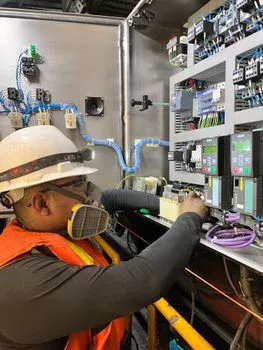
Budget a 100 m³/day packaged STP in Almaty as a USD 35,000–180,000 ex-works equipment line, then add 15–22% for sea freight, KZ customs duties (typically 5–10% CIF depending on HS code), and last-mile trucking from Almaty rail terminal to site. The spread inside each technology band is driven by effluent target, automation level, and enclosure spec.
| Cost line (2026 ex-works, USD) | WSZ (100 m³/day) | MBR (100 m³/day) | Notes |
|---|---|---|---|
| Equipment CAPEX | 35,000–80,000 | 110,000–180,000 | MBR uplift from PVDF membrane modules, blower, and CIP skid |
| Freight + KZ customs + last-mile | +15–22% of ex-works | +15–22% of ex-works | 40HQ from Tianjin/Shanghai via Khorgos, 18–25 days |
| Civil works, blower house, SCADA | 25–40% of installed cost | 25–40% of installed cost | Budget separately, supplier rarely includes |
| OPEX (power + chemicals) | 0.05–0.12 USD/m³ | 0.18–0.35 USD/m³ | MBR dominated by membrane aeration energy |
| Major maintenance event | Blower rebuild every 5 yr | Membrane replacement every 7–10 yr | MFG spare-parts kit ~3–5% of CAPEX |
For MBR sites, specify the DF series PVDF membrane module up front — replacement membrane cost is the single largest lifecycle line item, and locking the module vendor at bid time protects you from a forced re-spec mid-life. Upstream of any MBR or SBR, a GX series rotary mechanical bar screen at 3–6 mm aperture is the cheapest insurance against rags and hair fouling the membrane or clogging the SBR decanter, and it should be in the supplier scope from day one. For peer context on delivered cost in another emerging market, the wastewater treatment plant supplier buyer's guide for emerging markets covers Morocco's INC template and customs reality.
Zero-Risk Selection: 5 Steps from Spec to Commissioned Plant
The fastest way to convert a shortlist into a contract that survives winter start-up in Almaty is a tight 5-step sequence, each with a deliverable you can pin to a milestone payment.
- Step 1 — define influent and target effluent. Send shortlisted suppliers the flow rate (m³/day), peak factor (typically 1.5–2.5×), COD/BOD/TSS/NH₄-N/TP ranges, and the RVK target (RVK-V or RVK-S). No serious supplier will quote without this.
- Step 2 — request a PFD and mass balance. A licensed Chinese environmental engineer must sign the process flow diagram, hydraulic profile, and mass balance. Reject hand-waved "we'll design it" replies.
- Step 3 — pilot the process. Either accept a 30-day on-site pilot of a 1 m³/h rental unit on the Almaty site, or attend a factory trial at the supplier's workshop with a real sample of your wastewater. Winter pilot data is the only data that matters.
- Step 4 — lock the contract. EAEC Declaration, bilingual O&M manual, on-site commissioning, 12-month performance warranty tied to a liquidated-damages clause (typically 0.5–1% of contract value per percentage point of missed BOD/TSS), and a priced 24-month spares list.
- Step 5 — FAT and SAT. A third-party factory acceptance test (FAT) before the container leaves the workshop, then a site acceptance test (SAT) within 30 days of arrival in Almaty. Pay the final 10–20% on SAT pass, not on shipment.
Frequently Asked Questions
What is the cheapest packaged sewage treatment plant that meets RVK 2024 in Almaty?
For residential compounds, hotels, and small hospitals under 80 m³/h, a buried WSZ A/O unit at 1 m³/h and up is the lowest-CAPEX option, with equipment ex-works at roughly USD 35,000–80,000 for a 100 m³/day plant and OPEX around 0.05–0.12 USD per m³ treated (HydropureWater field data, 2026). It typically meets RVK-S limits directly and RVK-V limits for BOD and TSS when a tertiary stage is added; total phosphorus below 0.5 mg/L still requires chemical precipitation or a polishing filter.
How long does it take to ship a packaged STP from China to Almaty?
A 40HQ container from Tianjin or Shanghai to Almaty via the Khorgos or Dostyk rail crossing takes 18–25 days including customs clearance, provided the supplier has an EAEC Declaration of Conformity and a registered KZ customs broker; missing paperwork can add 2–6 weeks of demurrage and re-export risk.
Do packaged sewage treatment plants work in -30°C Almaty winters?
WSZ units work because burial below the 1.2–1.6 m frost line provides passive insulation and the biological zone holds at 8–12°C year-round. MBR units can work above ground in Almaty only inside an insulated, heat-traced 40HQ enclosure with the biological zone kept above 10°C; below that, membrane aeration efficiency drops and flux falls.
Which technology gives the best effluent for water reuse — MBR, SBR, or WSZ?
MBR delivers the best reuse-quality effluent: BOD₅ ≤ 5 mg/L, TSS ≤ 5 mg/L, turbidity ≤ 1 NTU, achieved through submerged PVDF membranes at 0.1 μm nominal pore size and roughly 60% smaller footprint than a conventional activated-sludge plant at the same load.
What documentation must a Chinese STP supplier provide for Kazakhstan customs?
An EAEC Declaration of Conformity (or EAC certificate) covering the exact model quoted, a Russian-language O&M manual with P&ID and electrical drawings, an ISO 9001 quality system certificate, and either a registered KZ importer of record or a contracted KZ customs broker. HydropureWater ships from a 30,000 m² Wuxi factory with documented EAEC declarations, prior KZ deliveries via Khorgos, and a standard 12-month performance warranty backed by bilingual commissioning engineers.