Myanmar Sewage Treatment Compliance Framework: NEQEG and ECD Industrial Guidelines
A compliant sewage treatment solution in Myanmar for 2026 must meet the National Environmental Quality (Emission) Guidelines (NEQEG, 2015) discharge limits administered by the Environmental Conservation Department (ECD) under the Ministry of Natural Resources and Environmental Conservation (MONREC). The numerical ceilings are BOD ≤50 mg/L, COD ≤250 mg/L, TSS ≤50 mg/L, total nitrogen ≤50 mg/L, total phosphorus ≤5 mg/L, pH 6–9, and fecal coliform ≤400 MPN/100 mL. These apply to foreign-invested and domestic industrial projects, including hotels, hospitals, textile wet processing, food and beverage plants, breweries, and municipal developers operating under a Myanmar Investment Commission (MIC) permit or a 2015 Environmental Impact Assessment Procedure approval.
Where the NEQEG is silent on a sector-specific parameter, the ECD Industrial Emission Guidelines (2015) defer to the IFC/World Bank Group EHS Guidelines for sector-specific ceilings — textile effluent (COD ≤250 mg/L, sulfides ≤1 mg/L, total chromium ≤0.5 mg/L), food processing (BOD ≤50 mg/L, oil & grease ≤10 mg/L), and oil & gas (oil & grease ≤10 mg/L, total suspended solids ≤50 mg/L). For irrigation or toilet-flushing reuse, WHO Guidelines for Wastewater Reuse (2006, updated 2017) require fecal coliform ≤1,000 CFU/100 mL for restricted irrigation and ≤200 CFU/100 mL for unrestricted irrigation.
Yangon Region and Mandalay Region require an Initial Environmental Examination (IEE) for sewage works below 2,000 m³/day and a full Environmental Impact Assessment (EIA) above that threshold, submitted to the ECD through an accredited consultant. Expect a 60–90 day IEE review and 4–6 month EIA review for the first submission.
| Parameter | NEQEG 2015 Limit | ECD Sector Reference | WHO Reuse (Restricted Irrigation) |
|---|---|---|---|
| BOD5 | ≤50 mg/L | ≤50 mg/L (food) | — |
| COD | ≤250 mg/L | ≤250 mg/L (textile) | — |
| TSS | ≤50 mg/L | ≤50 mg/L (oil & gas) | — |
| Total Nitrogen | ≤50 mg/L | — | — |
| Total Phosphorus | ≤5 mg/L | — | — |
| Fecal Coliform | ≤400 MPN/100 mL | — | ≤1,000 CFU/100 mL |
| pH | 6–9 | 6–9 | 6.5–8.5 |
| Oil & Grease | — | ≤10 mg/L (food/oil & gas) | — |
Myanmar Influent Characteristics and Site Constraints That Drive Equipment Selection
Typical municipal sewage in Yangon and Mandalay arrives at the treatment plant at BOD5 200–300 mg/L, COD 400–600 mg/L, TSS 250–400 mg/L, NH3-N 30–50 mg/L, and total phosphorus 4–8 mg/L (HydropureWater field data, 2025–2026). The BOD5/COD ratio runs 0.45–0.55, which is high enough to support conventional biological treatment without extensive pre-hydrolysis. A unit designed for European municipal duty with BOD5 of 150 mg/L will underperform here unless the aeration tank volume is scaled to the higher loading.
Myanmar's monsoon delivers 2,500–3,500 mm of rainfall between May and October in delta and coastal regions (per Myanmar Department of Meteorology and Hydrology, 2024). Daily flow at a municipal works can double for 4–5 consecutive months, and combined sewer overflows during peak storm events can push instantaneous hydraulic load to 2.0–2.5× average dry weather flow (ADWF). Equalization basins must be sized for at least 6–8 hours of peak flow, and biological stages must tolerate a 40–50% drop in F/M ratio during peak dilution.
Ayeyarwady delta and Yangon River floodplain sites sit inside the 100-year flood plain and have recorded water levels 1.5–2.0 m above grade during the 2008 Cyclone Nargis and 2024 monsoon events. Buried installations require either buoyancy anchoring (concrete ballast ≥1.2× empty tank displacement) or above-grade containerized skids on elevated plinths.
Industrial grid supply averages 8–14 hours/day with voltage variance of ±15% in industrial estates around Yangon, Mandalay, and Bago (per Myanmar Ministry of Electric Power, 2024). Specify VFD-driven blowers with 3-phase 380–440 V ±20% tolerance, PLC ride-through capacitors sized for 2–3 second voltage dips, and a diesel generator integration panel sized for the connected biological load (typically 0.8–1.2 kW per m³/day MBR). Tropical ambient temperatures of 25–38°C accelerate biological kinetics by roughly 30% versus 15°C designs, but they also drive membrane fouling rates 20–40% higher than temperate-climate references, demanding aeration-scour intensity of 0.6–0.8 m³/h per m² membrane area on submerged MBR.
Process Train Comparison: WSZ A/O Package vs MBR vs SBR vs Conventional Activated Sludge
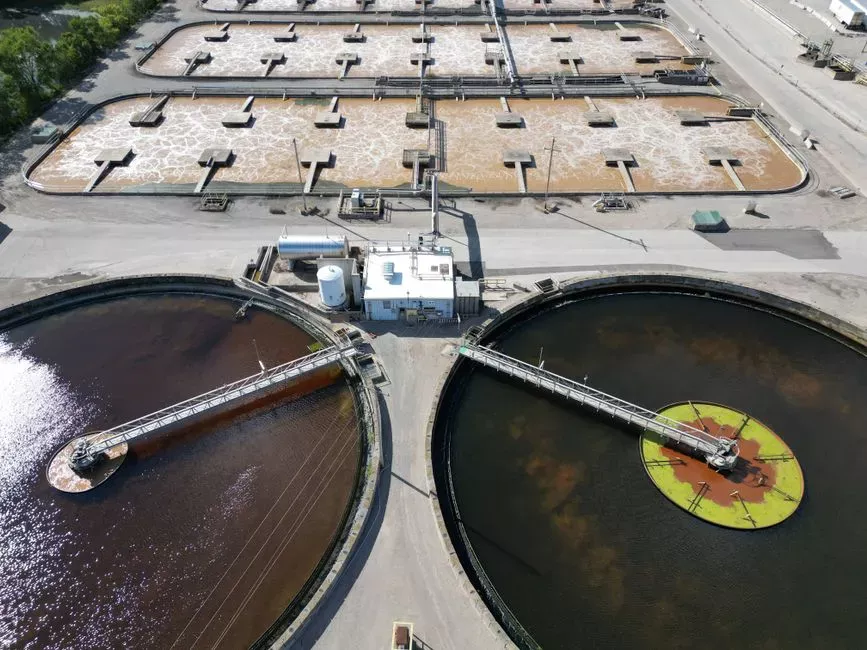
The right process train for Myanmar depends on three things: influent loading, available footprint, and whether the effluent goes to reuse or open drain. A 60% footprint reduction versus conventional activated sludge (CAS) justifies the MBR premium at sites under 600 m², while a 1.5× larger equalization volume makes SBR the wrong choice for a tight Yangon central district plot.
The WSZ underground A/O package plant integrates grit removal, anoxic/oxic contact oxidation, secondary clarification, and a disinfection chamber into a single buried FRP or carbon-steel tank, rated 1–80 m³/h (24–1,920 m³/day). It is fully automated, requires no full-time operator, and meets NEQEG 2015 for typical municipal influent — best for hotels, hospitals, residential complexes, and small commercial sites under 80 m³/h.
The containerized MBR system pairs a pre-anoxic zone with a PVDF submerged membrane cassette at 0.1 μm nominal pore size, typically 10–2,000 m³/day per ISO 20 ft or 40 ft high-cube skid. MBR effluent runs 90–95% lower TSS than CAS at 6–8 mg/L and delivers near-reuse quality, which makes it the default for industrial parks, hospitals with toilet-flushing reuse, and space-constrained Yangon central districts. Membrane replacement is on a 5–7 year cycle and CIP every 3–6 months.
Sequencing Batch Reactor (SBR) handles variable influent well and costs less than MBR, but the equalization volume adds 30–40% to the footprint and the system needs 1–2 trained operators on shift. Conventional activated sludge plus a lamella clarifier at 20–40 m/h surface loading is the lowest CAPEX per m³, but it struggles to meet NEQEG TSS ≤50 mg/L without a tertiary polishing step and is sensitive to monsoon hydraulic shocks. For textile, food, brewery, and oil & grease applications, a DAF pre-treatment unit upstream is non-negotiable to protect the biological stage and meet the ECD sector limit of ≤10 mg/L oil & grease.
| Process | Flow Range | Footprint | CAPEX (USD) | OPEX (USD/m³) | NEQEG Compliance | Best Fit |
|---|---|---|---|---|---|---|
| WSZ A/O package | 1–80 m³/h | Buried, very small | $25K–$120K | $0.08–$0.22 | Yes, municipal duty | Hotels, hospitals, complexes |
| Containerized MBR | 10–2,000 m³/day | 60% of CAS | $45K–$180K / 100 m³/day | $0.18–$0.55 | Yes, near-reuse quality | Industrial parks, hospital reuse |
| SBR | 50–500 m³/day | 1.4× MBR | $30K–$95K / 100 m³/day | $0.12–$0.30 | Yes with operator | Variable influent, staff available |
| CAS + Lamella | 500+ m³/day | Largest | $20K–$70K / 100 m³/day | $0.10–$0.25 | Needs tertiary polish | Large sites, 24/7 grid, >2,000 m² |
| DAF pre-treatment | 4–300 m³/h | Compact | +$15K–$60K / 100 m³/day | +$0.02–$0.05 | Pre-stage | Textile, food, brewery |
Disinfection, Sludge Handling, and Tertiary Polishing for Myanmar Reuse Applications
The most underestimated scope item on a Myanmar sewage works is the downstream train that makes the water reusable or safely dischargeable. A ClO₂ disinfection generator sized 50 g/h to 20,000 g/h produces on-site chlorine dioxide for residual disinfection and brings fecal coliform below the WHO 1,000 CFU/100 mL reuse ceiling with a 30–60 second contact time at pH 6.5–8.5. ClO₂ is preferred over chlorine gas in tropical climates because it stores as a precursor solution rather than as a pressurized toxic gas, and it maintains kill efficacy at pH values where HOCl would otherwise be ineffective.
A PLC-controlled chemical dosing skid handles coagulant feed for tertiary polishing and pH adjustment to within ±0.2 units, which matters for Yangon drainage ditches with low dilution ratios (typical 3:1 to 8:1 receiving water to effluent). A plate and frame filter press in the 1–500 m² filtration area range dewater biological sludge to 60–65% dry solids for off-site landfill or incineration disposal. Hydraulic plate frames are preferred over belt presses in Myanmar because sites rarely have the trained operators a belt press needs to track the belt and adjust tension.
NEQEG 2015 does not regulate biosolids directly, but ECD guidelines impose land application limits on heavy metals (lead ≤300 mg/kg, cadmium ≤39 mg/kg, zinc ≤2,800 mg/kg dry weight) if the cake is to be used as a soil conditioner — laboratory characterization is mandatory before agricultural use. For golf course, industrial green belt, or factory toilet-flushing reuse, add a HydropureWater industrial RO stage to drop TDS below 500 mg/L and meet the 2017 WHO reuse quality targets. The SCADA integration architecture for these units is detailed in the SCADA system for sewage treatment guide.
2026 CAPEX and OPEX Benchmarks for Packaged Sewage Treatment in Myanmar
Budget figures in USD per cubic meter let a procurement manager benchmark competing quotes without converting from Myanmar Kyat or navigating a multi-currency proposal. The table below reflects Q1 2026 HydropureWater reference pricing and confirmed orders in Yangon, Mandalay, and Thilawa Special Economic Zone (HydropureWater field data, 2026). Comparable regional ranges appear in the Thailand industrial effluent compliance guide for cross-checking.
WSZ underground A/O package: CAPEX $25,000–$120,000 for 1–80 m³/h; OPEX $0.08–$0.22 per m³ treated, dominated by aeration energy at the Myanmar industrial tariff of ~$0.07–0.12/kWh (per Ministry of Electric Power, 2024). Containerized MBR skid runs $45,000–$180,000 per 100 m³/day CAPEX, OPEX $0.18–$0.55 per m³ including membrane CIP chemicals every 3–6 months and 5–7 year membrane replacement. SBR sits between the two at $30,000–$95,000 per 100 m³/day CAPEX and $0.12–$0.30 per m³ OPEX, with the labor of 1–2 trained operators included.
Add a DAF pre-treatment skid for $15,000–$60,000 per 100 m³/day depending on oil & grease load. Add a ClO₂ disinfection skid sized 500 g/h for $8,000–$25,000, adequate for a 200 m³/day peak flow. Add an industrial RO tertiary stage at $20,000–$80,000 for a 50–100 m³/day reuse loop. Add a plate and frame filter press sized 10–30 m² for $15,000–$45,000. Myanmar import duties on wastewater equipment under HS code 8421.21 run 0–5% per the 2024 customs tariff schedule (verify with current MIC permit), and sea-freight plus inland trucking from Yangon Port adds $4,000–$9,000 logistics per 40 ft high-cube ISO container. Equipment quality and supplier due-diligence are covered in the Chinese wastewater equipment manufacturer reliability guide.
| Item | CAPEX (USD) | OPEX (USD/m³) | Notes |
|---|---|---|---|
| WSZ A/O package (1–80 m³/h) | $25K–$120K | $0.08–$0.22 | Buried, no operator |
| Containerized MBR (per 100 m³/day) | $45K–$180K | $0.18–$0.55 | Membrane replace 5–7 yr |
| SBR (per 100 m³/day) | $30K–$95K | $0.12–$0.30 | Needs 1–2 operators |
| DAF pre-treatment (per 100 m³/day) | +$15K–$60K | +$0.02–$0.05 | Textile/food/brewery |
| ClO₂ disinfection (500 g/h) | +$8K–$25K | +$0.01–$0.03 | Sized for 200 m³/day peak |
| Industrial RO (50–100 m³/day) | +$20K–$80K | +$0.15–$0.40 | Reuse loop |
| Filter press (10–30 m²) | +$15K–$45K | +$0.02–$0.05 | 60–65% DS cake |
| Logistics (40 ft HC, Yangon Port) | +$4K–$9K | — | Per container |
Frequently Asked Questions
What are the mandatory sewage discharge limits in Myanmar for 2026?
NEQEG 2015 sets BOD ≤50 mg/L, COD ≤250 mg/L, TSS ≤50 mg/L, total nitrogen ≤50 mg/L, total phosphorus ≤5 mg/L, pH 6–9, and fecal coliform ≤400 MPN/100 mL, enforced by the ECD under MONREC for foreign-invested and domestic industrial projects.
Which sewage treatment process is best for a hotel or hospital in Yangon?
The WSZ underground A/O package plant sized 5–50 m³/h with buried installation and a ClO₂ disinfection generator is the standard specification for Yangon hospitality and healthcare sites under 80 m³/h.
How much does a containerized sewage treatment plant cost for a Myanmar industrial park?
A containerized MBR skid runs $45,000–$180,000 per 100 m³/day CAPEX, including biological reactor, membrane cassette, blowers, PLC panel, and 40 ft ISO container — DAF pre-treatment, ClO₂ disinfection, and filter press are quoted separately.
Can a package plant operate on Myanmar's intermittent grid power?
Yes — specify VFD-driven blowers with ±20% voltage tolerance, PLC ride-through capacitors for 2–3 second dips, and a diesel generator panel sized for 0.8–1.2 kW per m³/day of MBR capacity to cover the 8–14 hours/day grid window.
Does treated sewage from a package plant meet Myanmar reuse rules for landscape irrigation?
WSZ or MBR effluent with ClO₂ polishing hits the WHO 1,000 CFU/100 mL fecal coliform target for restricted irrigation; for unrestricted irrigation add a HydropureWater industrial RO stage to also drop TDS below 500 mg/L and meet the 2017 WHO reuse quality targets.