2026 Price Ranges for Sewage Treatment Plants in Thailand
Sewage treatment plant prices in Thailand in 2026 cluster into four clear CAPEX bands, and the band a project lands in is set by flow rate and effluent target, not by brand. A packaged WSZ unit sized for 1–10 m³/h sells for THB 800,000–2,500,000 fully installed; mid-flow WSZ at 10–50 m³/h runs THB 2.5M–8M. SBR or conventional activated-sludge plants in the 100–500 m³/day range, the workhorse for hotels, hospitals, and residential projects, price between THB 8M–35M. Industrial MBR systems for 500–2,000 m³/day, where reuse-grade effluent is required, range from THB 25M–120M all-in (HydropureWater field data, 2026).
"Fully installed" in the bands above means equipment, CIF freight to Bangkok or Laem Chabang, installation labor, commissioning, and a PCD compliance test. It does not include civil works (tanks, building shell, pipe trenches), land acquisition, or the EIA study if the project is over the threshold. Civil works typically add 20–35% to the equipment price for a 200 m³/day plant, so always ask for a split quotation.
| Flow Range | Typical Technology | CAPEX (THB, fully installed) | Common Application |
|---|---|---|---|
| 1–10 m³/h | Packaged WSZ (buried A/O) | 800,000–2,500,000 | Small hotels, gas stations, clinics |
| 10–50 m³/h | Packaged WSZ or multi-tank SBR | 2,500,000–8,000,000 | Mid-size hotels, schools, housing <200 units |
| 100–500 m³/day | SBR / AS concrete tank | 8,000,000–35,000,000 | Resorts, hospitals, residential estates |
| 500–2,000 m³/day | Industrial MBR | 25,000,000–120,000,000 | Food plants, IE tenants, reuse-grade projects |
Imported packaged systems from China typically land 20–35% below European equivalents at comparable effluent quality — the SIMOP 6346 unit shown on top SERP results lists at EUR 51,980, roughly THB 1.9M for a 50 PE household-scale load, while an equivalent Chinese packaged WSZ unit for the same PE basis ships for THB 1.0–1.4M DDP Bangkok. For a buyer who only needs to hit PCD BOD ≤20 mg/L, the price gap rarely justifies the European brand premium.
Which Technology Fits: Packaged WSZ, SBR, or MBR?
Pick the process train before pricing it; choosing the wrong one can double the CAPEX or fail PCD discharge compliance. The three options a Thai buyer actually compares are packaged WSZ, SBR/AS, and MBR, and they map cleanly onto flow range and reuse intent.
| Parameter | Packaged WSZ | SBR / AS | MBR |
|---|---|---|---|
| Flow range | 1–80 m³/h | 50–1,000 m³/day | 200–2,000 m³/day |
| Footprint | Smallest (buried) | Moderate (concrete tanks) | ~60% smaller than CAS |
| BOD removal | 20–30 mg/L effluent | ≤20 mg/L achievable | <5 mg/L |
| TSS effluent | ≤30 mg/L | ≤30 mg/L | <1 mg/L |
| Reuse potential | Landscape irrigation | Limited | Cooling, RO feed, irrigation |
| CAPEX tier | Lowest | Mid | Highest |
| OPEX (THB/m³) | ~10–18 | ~14–25 | ~22–40 |
| Operator skill | Low (fully automated) | Moderate–high | Moderate (membrane CIP) |
WSZ combines anoxic/oxic treatment, sedimentation, and disinfection inside a buried FRP or carbon-steel tank. It is the right answer for a 50-room resort in Hua Hin or a clinic in Chonburi: small footprint, no building cost, effluent at BOD 20–30 mg/L clears PCD Notification surface-water limits for most non-sensitive watersheds. The A/O process is fully automated, so a site without a dedicated operator can still run it.
SBR (sequencing batch reactor) is the conventional workhorse for 100–1,000 m³/day municipal-style loads — a typical 300-room hotel or a 200-bed hospital. It needs a concrete tank, a decanter, and an operator who understands sludge wasting and settleability. Effluent at BOD ≤20 mg/L is straightforward if the plant is sized correctly; reuse is not.
MBR couples activated sludge with a submerged PVDF membrane, pore size <1 μm, so the clarifier and most of the TSS problem disappear. An integrated MBR system sized 10–2,000 m³/day produces near-reuse-quality water: BOD <5 mg/L, TSS <1 mg/L, low turbidity. The footprint is roughly 60% of a comparably loaded conventional activated-sludge plant, which matters on a tight Bangkok metro site. For an industrial buyer who needs cooling-tower makeup, boiler feed after RO, or irrigation reuse, MBR is the only technology on the list that gets there without a tertiary polish step. For module sizing, the DF flat-sheet MBR module delivers 32–135 m³/day per 80–225 m² unit, which simplifies train scaling for the 500–2,000 m³/day band.
Thailand-Specific Cost Drivers Most Foreign Quotes Miss
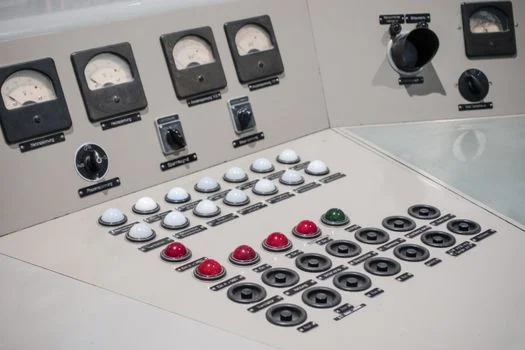
A Thai-installed plant typically costs 15–40% more than the same skid on a Chinese factory floor. Seven line items drive the gap, and most foreign vendors will not price them unless the RFQ forces them to.
- PCD effluent compliance. Pollution Control Department Notification sets BOD ≤20 mg/L and TSS ≤30 mg/L for surface-water discharge; industrial estates under the Industrial Estate Authority of Thailand typically apply the tighter BOD ≤15 / TSS ≤20 envelope. Design to the strictest applicable point, not the laxest, or the PCD test fails.
- EIA process. Projects at or above 500 m³/day, or any project discharging into a Class 2 watershed, require an Environmental Impact Assessment. The study costs THB 1.5M–6M and runs 9–18 months; the schedule slip is usually more expensive than the fee itself.
- Import duty and VAT. Wastewater equipment skids fall under HS 8421 and carry 7–10% import duty plus 7% VAT on the CIF value. Demand DDP-site pricing in the RFQ; an EXW quote hides the 17–18% landed-cost gap.
- Power standard. Thai grid is 380V / 3-phase / 50Hz with tropical humidity — not Chinese 220V domestic or European 230V. Specify IP55 enclosures and confirm motor control center ratings before signing a PO.
- Land scarcity. Bangkok metro and the Eastern Seaboard industrial belt (Rayong, Chonburi) carry land costs that push buyers toward buried WSZ or compact MBR rather than concrete-tank CAS, which can need 2–3× the footprint.
- Monsoon peak flow factor. Design hydraulic capacity for 2.0–2.5× average dry-weather flow. Undersized equalization is the single most common cause of bypass violations in Thai monsoon season, and the fix is always retrofitted at higher cost than building it in initially.
- Operator scarcity. Outside Bangkok, finding a wastewater operator who understands sludge wasting or membrane CIP is hard. Specify fully automated PLC with remote monitoring if the site is in a provincial IE; the THB 200,000–500,000 added to the control panel pays back in avoided compliance incidents.
Inside the OPEX: Power, Sludge, Membranes, Chemicals
Sticker price tells you roughly half the story. A 5-year total-cost-of-ownership comparison is where MBR's higher CAPEX often pays itself back — through lower sludge volume, reuse savings, and a smaller civil footprint.
Power is the single largest OPEX line. MBR typically draws 0.4–0.7 kWh/m³; SBR 0.25–0.45 kWh/m³; WSZ 0.2–0.35 kWh/m³. At the THB 4.5/kWh industrial tariff (MEA/PEA 2026 schedule), a 200 m³/day MBR runs roughly THB 130,000–230,000 per month on aeration and permeate pumps alone.
Sludge disposal in Thailand costs THB 1,200–2,500 per wet tonne hauled, or THB 800–1,500 per tonne if dewatered on-site to 60% moisture with a plate-and-frame sludge press. On-site dewatering usually pays back in 18–30 months for any plant above 100 m³/day.
MBR membrane replacement on PVDF flat-sheet modules runs 5–8 years in Thai industrial service. Budget THB 280,000–650,000 per 100 m³/day MBR train per replacement cycle, including CIP chemicals and labor. Cheaper than RO membranes, more expensive than not having any membrane at all.
Chemicals — coagulant (PAC), polymer, chlorine or ClO₂ for disinfection — typically run THB 0.10–0.40 per m³ treated for a balanced industrial WWTP. The ClO₂ disinfection generator eliminates bulk chlorine handling on site and is worth the CAPEX delta for any food or hospital application.
Sample Budget: 200 m³/day Food-Processing Plant on the Eastern Seaboard
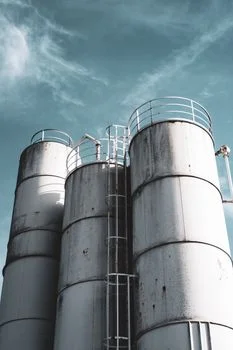
A worked example makes the bands concrete. The scenario: a seafood or ready-meal plant in Rayong, 200 m³/day average flow, influent COD 2,500 mg/L, BOD 1,200 mg/L, SS 800 mg/L, oil & grease 150 mg/L, discharge to a tidal canal that feeds an IE central treatment. Target: PCD surface-water BOD ≤20 / TSS ≤30 / pH 6–9.
Recommended process train: bar screen → equalization (2.0× peak, 8 h HRT) → DAF pre-treatment system for O&G removal → A/O MBR (sized 250 m³/day for 1.25× peak) → ClO₂ disinfection generator → plate-and-frame sludge press for the waste-activated sludge.
| Line Item | Range (THB) | Notes |
|---|---|---|
| Process equipment (skids + modules) | 12,000,000–18,000,000 | DAF + MBR + ClO₂ + press |
| Freight + import duty + VAT | 1,500,000–2,500,000 | CIF Laem Chabang, HS 8421 |
| Installation + commissioning | 2,000,000–3,500,000 | Including PCD test |
| Civil works (tanks, building, pipework) | 4,000,000–7,000,000 | EQ tank, MBR hall, slab |
| PCD permit + commissioning test | 400,000–800,000 | Lab fees, consultant |
| Total all-in CAPEX | 20,000,000–32,000,000 | Excludes land |
Annual OPEX: power ~THB 1.3M (0.55 kWh/m³ × 365 × 200 × THB 4.5), sludge disposal ~THB 0.5M (dewatered on-site), chemicals ~THB 0.15M, one operator shift ~THB 0.4M. Total ~THB 2.4M/year, or THB 33 per m³ treated. At that OPEX level, the 5-year TCO lands at THB 32M–44M, which puts the MBR premium in context against the lower civil footprint and the option to reuse the MBR permeate for washing or landscape irrigation.
How to Get a Defensible Quote in 7 Steps
Most lowball quotes fail at the same points. A structured RFQ eliminates the ambiguity and forces every vendor onto the same basis.
- Characterize the influent. Pull a 24-hour composite sample, not a grab. Test COD, BOD, SS, pH, T-N, T-P, oil & grease, plus peak instantaneous flow. Send every vendor the same data sheet — anonymous equivalency makes side-by-side comparison possible.
- Confirm the discharge point. Surface water, on-site reuse, or IE central treatment each pull a different PCD notification limit. Lock the discharge point before pricing; changing it mid-design costs weeks and money.
- Decide the reuse target. If treated water reuses for cooling or irrigation, MBR + RO is mandatory. If surface discharge is the only requirement, packaged WSZ or SBR is enough and the MBR premium is wasted.
- Specify site constraints. Buried vs above-grade, available footprint, power supply, access for skids (Thai factory aisles are typically 3–4 m wide), and headroom for a crane during installation. A site that cannot take a 12 m truck excludes half the packaged MBR market.
- Ask each vendor for DDP site price, not EXW. Require separate line items: equipment, freight, duty, installation, commissioning, PCD test. Anything bundled hides the duty/VAT component and makes comparison impossible.
- Demand a guaranteed effluent table. Not "meets PCD standards" — actual BOD, TSS, COD, pH, T-N, fecal coliform numbers with the measurement method (APHA 22nd ed. or equivalent). A vendor who will not put numbers in writing is a vendor who will miss them at commissioning.
- Check warranty and service. Membrane warranty terms for MBR (typically 5 years pro-rata) and on-site service response within 48 hours anywhere in Thailand. For a plant in Rayong, vendor service radius from Bangkok is a real constraint.
Frequently Asked Questions
How much does a small sewage treatment plant cost in Thailand? A packaged WSZ unit sized for 1–10 m³/h runs THB 800,000–2,500,000 fully installed, covering equipment, freight, installation, and a PCD compliance test for small hotels, clinics, and gas stations (HydropureWater field data, 2026).
What is the price of an MBR plant in Thailand? An industrial MBR system sized 500–2,000 m³/day, DDP site, prices between THB 25M–120M all-in depending on influent load, reuse target, and civil scope; a typical 200 m³/day food-plant MBR lands at THB 20M–32M total installed cost.
Do I need PCD approval for an STP in Thailand? Yes. Projects over 100 m³/day or any plant discharging to surface water require a PCD permit under Notification on Effluent Standards; an EIA is required above 500 m³/day or for discharges into sensitive watersheds, adding THB 1.5M–6M and 9–18 months to the schedule.
How long does installation take? A packaged WSZ ships and commissions in 8–14 weeks from PO. A 200 m³/day MBR including civil works, membrane installation, and PCD commissioning test typically runs 5–9 months end-to-end.
Can treated water be reused for irrigation or cooling? Yes. An MBR + RO train achieves TDS <500 mg/L and BOD <5 mg/L, which meets PCD Notification requirements for industrial cooling-tower makeup and landscape irrigation, and eliminates the freshwater draw on the municipal supply.