Why Tangier Industrial Buyers Are Sourcing Chinese WWTP Manufacturers in 2026
Tangier-Med, Tétouan free zone, and Tetouan Park collectively host more than 1,200 industrial units — dominated by textile dyeing, automotive wiring and assembly, agro-food processing, and leather finishing — and each sector generates a distinct wastewater profile that drives a different process train. A local Moroccan integrator typically quotes MAD-equivalent prices that run 2–3× the Made-in-China packaged-WWTP benchmark of US$ 4,100–13,000 per set (1 set MOQ, CE-certified) for equivalent flow capacity, but no local quote comes with a published spec sheet you can audit line-by-line. Containerized MBR systems rated 10–2,000 m³/day now ship FOB Qingdao or Shanghai and reach Tanger Med port in 18–22 days sea transit — often faster than the engineering and concrete-civil lead time of a locally built plant. The procurement friction in 2026 is not price discovery; it is matching Chinese catalog capacity bands to Law 12-06 effluent limits, ONEE acceptance requirements, and the actual influent profile of a Tangier-Med textile or automotive line.
Morocco Discharge Compliance: Law 12-06 and Tangier-Specific Thresholds
Morocco's Law 12-06 (2003) on environmental protection, together with its implementing decree and the Ministerial Arrêté on liquid effluent, sets national industrial discharge limits at BOD₅ ≤ 120 mg/L, COD ≤ 250 mg/L, TSS ≤ 150 mg/L, and pH 6.5–8.5 for effluent routed to municipal sewer. Stricter thresholds apply for direct discharge to receiving water bodies or for reuse applications, and automotive and textile plants in the Tangier free zone routinely negotiate site-specific limits with ONEE and the Agence du Bassin Hydraulique du Loukkos — those negotiated values must be confirmed in writing before any reactor is sized. CE marking on the skid or container and an ISO 9001:2015 quality-system certificate are the two documents Moroccan customs (DUM) and the ONEE acceptance committee typically request before clearing a foreign-supplied treatment plant. Skipping the documentation check at the RFQ stage is the most common reason a 2026 Tangier project gets stuck in customs for six weeks.
Four WWTP Process Trains a Tangier Buyer Should Compare
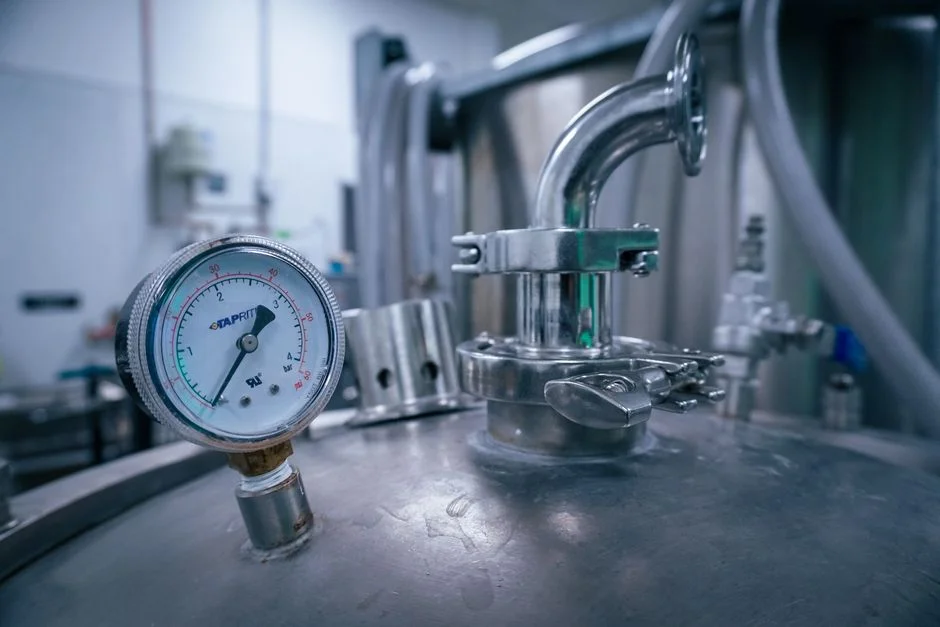
Four process families cover roughly 90% of Tangier industrial wastewater applications, and each maps to a different influent signature.
- Packaged underground STP (WSZ series): 1–80 m³/h, A/O + sedimentation + disinfection, fully buried, no dedicated operator required. This is the right fit for a Tangier coastal hotel, a hospital, or a residential compound — but it is undersized for most industrial flows above 50 m³/day.
- Integrated MBR: 10–2,000 m³/day, PVDF submerged membranes with <1 μm nominal filtration, footprint roughly 60% smaller than a conventional activated-sludge train at equivalent BOD loading. This is the workhorse for textile and automotive plants where reuse is on the 2027 roadmap, and it is the configuration most often quoted as a containerized MBR system for Tangier industrial reuse.
- Dissolved air flotation (DAF): 4–300 m³/h across 13 model sizes, used as a front-end for food, dairy, slaughterhouse, and metalworking effluents with high FOG, free oil, or colloidal TSS. Pair it ahead of an MBR when influent oil & grease exceeds 50 mg/L — the DAF pre-treatment for food and metalworking effluent configuration is the one most retrofitted onto existing Moroccan plants in 2026.
- Lamella clarifier: 20–40 m/h surface loading rate, up to 30% chemical dose reduction versus conventional settling, suited to high-flow, low-COD streams. It is typically the cheapest first step in a retrofitted plant and pairs well as a buried packaged STP for Tangier hotels and hospitals polishing stage.
| Process family | Capacity range | Best-fit influent | Typical reuse readiness |
|---|---|---|---|
| WSZ packaged STP | 1–80 m³/h | Municipal, hotel, hospital | Irrigation only |
| Integrated MBR | 10–2,000 m³/day | Textile, automotive, mixed industrial | RO feed, process water |
| DAF | 4–300 m³/h | Food, dairy, slaughterhouse, metalworking | Pre-treatment stage |
| Lamella clarifier | 20–40 m/h SLR | High-flow, low-COD, TSS removal | Pre-treatment stage |
Disinfection, Sludge Handling, and Reuse: The Pieces Most Buyers Forget
Three line items consistently show up as change orders on Tangier job sites because the RFQ did not name them. First, an on-site ClO₂ generator for reuse-loop disinfection rated 50 g/h to 20,000 g/h (EPA, EU 98/83/EC, and WHO compliant) is required when chlorination byproducts would damage a downstream RO membrane — free chlorine above 0.1 mg/L irreversibly fouls thin-film composite polyamide. Second, sludge dewatering: a filter press for sludge volume reduction with 1–500 m² filtration area, hydraulic or PLC-controlled, achieves 60–65% dry solids — and given the Moroccan landfill surcharge of MAD 350–600 per wet tonne (per ONEE 2025 tariff guidance, dated 2025-09), the payback on a 200 m³/day plant is typically under 18 months. Third, the reuse train: multi-media filtration plus reverse osmosis for industrial reuse with SDI reduction and recovery up to 95% is the realistic configuration for Tangier textile dye houses and pharmaceutical plants targeting 40–60% recovery — anything below 40% recovery is rarely worth the RO capex at current Moroccan industrial water tariffs.
CAPEX and OPEX Benchmark for Tangier WWTP Procurements in 2026
The defensible price band for a CE-certified Chinese packaged WWTP in 2026 is US$ 4,100–13,000 per set for slaughterhouse and food-processing units (Made-in-China benchmark, 1 set MOQ); an MBR-equipped container lands in the US$ 18,000–45,000 per set range at a 50 m³/day capacity point. OPEX for a modern MABR or MBR plant sits at $0.15–0.25/m³ treated — that is 40–55% below conventional activated-sludge energy use, and any vendor claiming lower should be asked for the aeration-control philosophy and the blower nameplate data, not just the brochure number. Add 12–18% to FOB price for CIF Tanger Med (freight, insurance, 18–22 day transit) and a further 6–9% for Moroccan customs duties plus ONEE commissioning supervision on a 200–500 m³/day packaged MBR. Over a 15-year life, OPEX represents 70–80% of total cost of ownership, so a 10–15% CAPEX premium for a more efficient aeration system almost always wins — this is consistent with the 2026 CAPEX/OPEX benchmark for packaged WWTP published earlier this year and the parallel MABR vs MBR OPEX comparison for 2026.
| Cost line | 2026 value (USD) | Notes |
|---|---|---|
| Packaged WWTP, FOB Qingdao | 4,100–13,000 / set | 1 set MOQ, CE-certified |
| Containerized MBR, 50 m³/day | 18,000–45,000 / set | Includes PVDF membranes |
| CIF Tanger Med uplift | +12–18% | 18–22 day sea transit |
| Customs + ONEE commissioning | +6–9% | On 200–500 m³/day MBR |
| 2026 MABR OPEX ceiling | 0.15–0.25 / m³ | Use as bid ceiling |
How to Qualify an Overseas WWTP Supplier for Morocco Export
Supplier shortlists should be based on seven specific evidence points rather than brochure comparisons. (1) Verify the CE certificate validity date: at least one major Made-in-China listing still shows a 2023-12-25 expiration, and a Moroccan customs broker will reject that file. (2) Request the ISO 9001:2015 audit trail and the issuing body's accreditation number. (3) Require a Factory Acceptance Test (FAT) video with reference meters showing the actual unit you are buying, not a showroom demo. (4) Demand at least one reference plant in MENA or North Africa with operating data older than 12 months. (5) Confirm the containerization plan: skid dimensions, wet weight, and whether the unit fits a 20 ft or 40 ft ISO container for direct offload at Tanger Med. (6) Insist on multilingual O&M documentation in French, Arabic, and English — Moroccan operators will not work from a Chinese-only manual. (7) Cross-check the supplier against a Gulf-region WWTP manufacturer comparison and a Mediterranean industrial wastewater compliance guide to validate the export track record before any down payment.
Frequently Asked Questions
What is a realistic 2026 CAPEX for a packaged WWTP in Tangier?
A CE-certified Chinese packaged WWTP at 1 set MOQ lands at US$ 4,100–13,000 FOB for food and slaughterhouse applications; a containerized MBR at 50 m³/day runs US$ 18,000–45,000 FOB, with a further 12–18% for CIF Tanger Med and 6–9% for Moroccan customs and ONEE commissioning on a 200–500 m³/day system (HydropureWater field data, 2026).
Which process train fits a Tangier-Med textile plant?
An integrated MBR with PVDF submerged membranes (<1 μm filtration) at 10–2,000 m³/day is the standard workhorse for textile dyeing effluent targeting water reuse; pair it with a DAF pre-treatment stage when influent oil & grease exceeds 50 mg/L.
What effluent limits does Law 12-06 actually impose?
Law 12-06 and its implementing decree set national industrial discharge limits at BOD₅ ≤ 120 mg/L, COD ≤ 250 mg/L, TSS ≤ 150 mg/L, and pH 6.5–8.5 for sewer discharge, with stricter values for direct discharge or reuse — site-specific limits negotiated with ONEE and the Agence du Bassin