Why Rome's Industrial Dischargers Need a 2026 Treatment Overhaul
Industrial wastewater treatment in Rome in 2026 is anchored to D.Lgs. 152/2006 Part III, whose Tables 3 and 4 set the binding numerical limits for sewer and surface-water discharge across Lazio. The standard train for Rome's food, leather, and pharmaceutical sectors is DAF pre-treatment followed by A/O or MBR biological treatment, with CAPEX of €180,000–€2,500,000 depending on flow (50–2,000 m³/day). Enforcement sits with ARPA Lazio, which conducts unannounced sampling at industrial outfalls and can suspend the Autorizzazione Unica Ambientale (AUA) on a single Table 3 exceedance. A representative case is a Roman leather-tannery client cited for chromium (total Cr 4.8 mg/L vs. 2 mg/L limit) and sulfide (3.2 mg/L vs. 1 mg/L) exceedances, then forced into a six-month retrofit that pushed the payback beyond 5 years.
The 2026 pressure layer is regulatory. EU Industrial Emissions Directive 2024/1785 tightens reporting for installations discharging more than 5,000 m³/year, and Rome plants must begin aligning their self-monitoring, mass-balance, and digital reporting through the SUAP portal during this calendar year. Italy's Piano Transizione 5.0 and the water-reuse tax credit introduced under the 2025 budget law (Legge 207/2024, art. 1 cc. 426–429) further push operators toward trains that can demonstrate reuse-grade effluent (BOD₅ < 10 mg/L, TSS < 5 mg/L), not just sewer compliance. A plant sized only to the Table 3 minimum is now a procurement risk.
D.Lgs. 152/2006 Discharge Limits Every Rome Plant Must Hit
The compliance reference every Roman plant engineer keeps on the wall is D.Lgs. 152/2006 Part III, Allegato 5: Table 3 governs discharge to the public sewer (the most common route for industrial sites in the Roma Capitale agglomeration), and Table 4 governs direct discharge to surface water such as the Tiber or Aniene. Table 4 is the stricter document — if a plant discharges to a watercourse, expect roughly half the COD ceiling of Table 3 and a much tighter metals envelope.
| Parameter | Table 3 (sewer) | Table 4 (surface water) | Notes |
|---|---|---|---|
| pH | 5.5–9.5 | 5.5–9.5 | Continuous monitoring |
| COD | ≤ 160 mg/L | ≤ 40 mg/L | Hach-Lange or equivalent test method |
| BOD₅ | ≤ 40 mg/L | ≤ 25 mg/L | 5-day, 20 °C |
| TSS | ≤ 80 mg/L | ≤ 10 mg/L | EN 872 gravimetric |
| Total N | ≤ 15 mg/L | ≤ 10 mg/L | TN as N |
| Total P | ≤ 10 mg/L | ≤ 2 mg/L | P as P |
| Oils & fats (animal/vegetable) | ≤ 20 mg/L | ≤ 5 mg/L | FOG stripper upstream |
| Total chromium | ≤ 2 mg/L | ≤ 0.2 mg/L | Metal finishing, tanneries |
| Sulfides (S²⁻) | ≤ 1 mg/L | ≤ 0.5 mg/L | Leather, paper, petrochemical |
| Conductivity | — | ≤ 1,000 µS/cm (Tiber/Aniene) | Local limit, ARPA Lazio 2024 guidance |
Sector overlays apply: metal finishing around Tivoli-Terme must meet Cr(VI) ≤ 0.05 mg/L under Table 3, and Pomezia pharmaceutical effluent often triggers the table's "difficult-to-degrade" clauses, requiring proof of treatability before AUA renewal. The 2026 AUA renewal cycle is digital: applications route through SUAP with mass-balance files in PDF/A, and ARPA's self-monitoring schedule now requires monthly composite sampling for flows above 100 m³/day (DGR Lazio 2025/118).
Process Trains Used Across Rome's Industrial Sectors
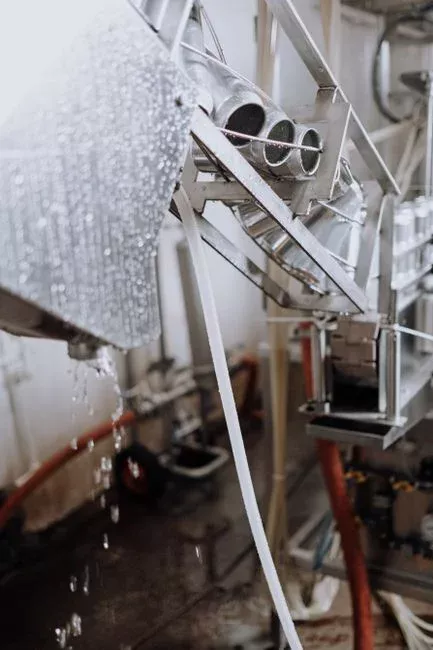
Matching the influent profile to a proven train is the core buying decision, and Rome's four dominant clusters each have a different optimum. The dissolved air flotation system appears in every recommended train because FOG, fibers, and precipitated metal hydroxides all float best in the 4–6 g/L air-saturation range the DAF nozzle design is tuned for.
Food and beverage (Tiburtina valley, southern Rome): Equalization → FOG stripper → DAF → A/O (anoxic + oxic) → sedimentation. Typical influent COD runs 2,000–8,000 mg/L with FOG of 500–2,000 mg/L; DAF removes 60–80% of FOG and 30–40% of suspended COD before the biological stage, protecting the nitrification kinetics downstream. For dairies and breweries around Tiburtina, this is the lowest-OPEX path.
Leather and tanning (Castel Romano, Santa Palomba, Ardea): Chromium precipitation at pH 8.5–9 with NaOH or MgO → sulfide oxidation with H₂O₂ or manganese-catalyzed O₂ → DAF → SBR or MBBR. The chromium-bearing sludge is filter-pressed separately, and a closed-loop chrome recovery loop (acidification to pH 2.5, re-precipitation) typically saves €0.8–€1.4 per kg of chrome purchased, an OPEX line that pays back the chemistry upgrade inside 18 months at flows above 200 m³/day.
Pharmaceutical and cosmetic (Pomezia industrial zone): Equalization → DAF → integrated MBR membrane bioreactor → RO polishing for water reuse. The DF-series flat-sheet MBR module at 0.1 µm pore size retains biomass at 8,000–12,000 mg/L MLSS, achieving the stable nitrification that Pomezia's API plants need for solvents and nitrogen heterocycles. RO polish targets conductivity < 200 µS/cm for reuse in cooling tower make-up.
Metal finishing and electroplating (Tivoli-Terme, Guidonia): Cyanide destruction at pH 11 with NaOCl → chromium reduction with FeSO₄ at pH 2 → pH adjustment → chemical precipitation → DAF → sand filter → ion exchange for residual Cr/Ni/Cu. A plate and frame filter press dewatersthe metal hydroxide sludge to 30–35% DS, the threshold for hazardous-waste disposal under CER code 11 01 09*.
MBR vs Conventional Activated Sludge for Rome Plants
The most-asked comparison question from Roman EPC contractors is MBR versus conventional activated sludge. The data favors MBR wherever land is the binding constraint, and in the Pomezia, Tiburtina, and Santa Palomba industrial zones it usually is.
| Metric | MBR (flat-sheet, 0.1 µm) | Conventional AS + clarifier |
|---|---|---|
| Effluent COD | < 50 mg/L | 80–120 mg/L |
| Effluent TSS | < 5 mg/L | 20–30 mg/L |
| Effluent turbidity | < 1 NTU | 5–15 NTU |
| MLSS operating range | 8,000–12,000 mg/L | 2,500–4,000 mg/L |
| Footprint | ~ 40% of AS for same load | Reference |
| Specific energy | 0.4–0.8 kWh/m³ | 0.2–0.4 kWh/m³ |
| Clarifier + tertiary filter | Not required | Required for reuse-grade |
MBR typically delivers 60% footprint reduction versus a conventional activated sludge plus secondary clarifier, which for a 500 m³/day plant translates to roughly 180 m² of civil works avoided (per integrated MBR membrane bioreactor datasheet, 2026). The energy penalty of 0.2–0.4 kWh/m³ is real, but at 2026 Italian industrial tariffs (€0.18–€0.24/kWh) that adds €0.04–€0.10/m³ — usually less than the OPEX of the tertiary sand filter and polymer dosing the conventional train needs to meet the same reuse-grade effluent. For dense Roman sites, the trade-off almost always closes in MBR's favor; the same logic is examined for municipal trains in this 2026 municipal wastewater engineering guide.
2026 CAPEX and OPEX Benchmarks for Rome Industrial Plants
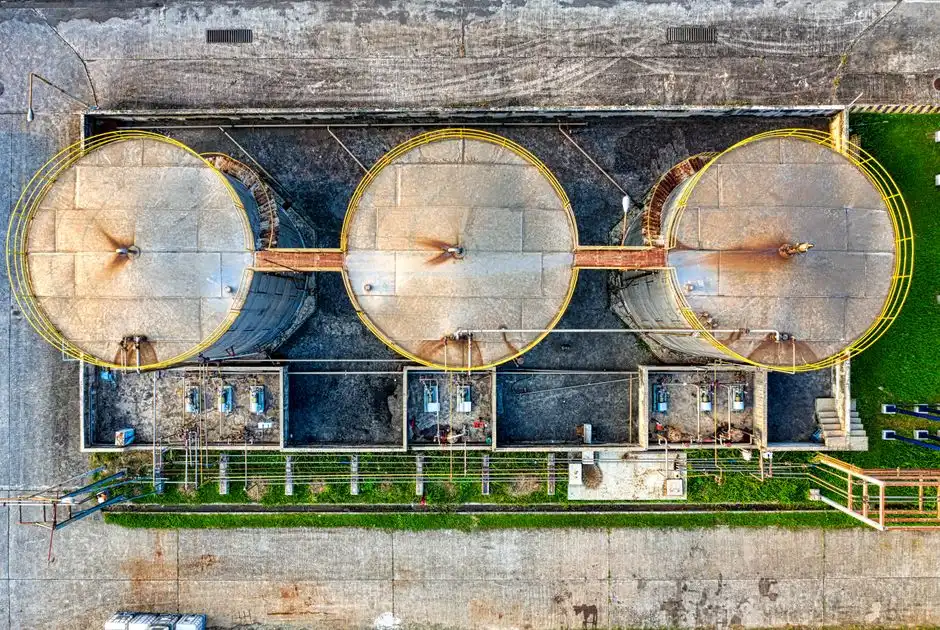
Budget conversations in Rome in 2026 run in EUR, not USD, and the cost stack is now roughly: civil works 25–35% of CAPEX, electromechanical 40–50%, automation 8–12%, commissioning and validation 5–8%. Below are defensible 2026 benchmarks for plants inside the Roma Capitale / Pomezia / Tivoli triangle, including civil works and grid connection.
| Plant size (m³/day) | CAPEX range (2026, EUR) | Typical OPEX (€/m³) | Train assumed |
|---|---|---|---|
| 50 (packaged skid) | €90,000–€180,000 | €1.20–€1.80 | DAF + SBR |
| 100 | €180,000–€420,000 | €0.95–€1.50 | DAF + A/O + clarifier |
| 500 | €650,000–€1,200,000 | €0.80–€1.30 | DAF + MBR |
| 1,000–2,000 (custom) | €1,500,000–€2,500,000 | €0.65–€1.10 | DAF + MBR + RO |
OPEX splits roughly as: energy 40–55%, chemicals 15–20%, sludge handling 15–25%, labor 10–15%. Sludge dewatering is a specific lever: a plate and frame filter press sized 5–30 m² for a 50–500 m³/day plant typically saves €0.05–€0.12/m³ versus a decanter centrifuge, mainly through lower polymer dose and higher cake solids. The Piano Transizione 5.0 / Industria 5.0 water-reuse credit (Legge 207/2024) covers 30–40% of qualifying CAPEX for plants that demonstrate > 50% water reuse, which the MBR + RO train makes achievable. Comparable EU economics for an adjacent market are detailed in this 2026 industrial wastewater treatment in Spain engineering guide.
Supplier Selection Checklist for the Rome Market
Procurement teams in Lazio typically consolidate the technical specification into a 12-point supplier checklist. The points that consistently trip up the lowest bidders are below.
- Standards compliance: CE/UE marking plus UNI EN 12255-series conformity for the biological stage (the Italian implementation of CEN wastewater equipment standards). For nitrification performance, reference the 2026 buyer's guide to total nitrogen removal for the 3–5 mg/L TN guarantee language that has become the 2026 Italian norm.
- Performance warranty: 12-month performance bond with BOD, COD, TN, and TP guarantees on real effluent, not synthetic. Require a documented FAT and on-site SAT.
- Remote monitoring: PLC with Modbus/OPC-UA and SCADA integration so ARPA Lazio's annual self-monitoring report exports in the required XML schema.
- Chemical dosing: an automatic chemical dosing system with redundant pumps and flow-paced control — manual dosing is the single most common audit finding under ARPA's 2024–2026 inspection cycle.
- Service proximity: confirm Italian-language commissioning and a service radius that reaches the site inside four hours; the local benchmark for civil/industrial O&M in Rome is the Cavallaro Group, useful for hybrid civil-industrial contracts.
- Sustainability documentation: ISO 14001:2015 alignment and EU Taxonomy substantial-contribution evidence for plants financed under green or sustainability-linked loans. Decentralized architectures, increasingly relevant for the smaller Castel Romano and Tivoli-Terme sites, are covered in this 2026 decentralized wastewater trends report.
Frequently Asked Questions
What are the 2026 D.Lgs. 152/2006 Table 3 limits for industrial discharge in Rome? Table 3 sets COD ≤ 160 mg/L, BOD₅ ≤ 40 mg/L, TSS ≤ 80 mg/L, total N ≤ 15 mg/L, total P ≤ 10 mg/L, oils and fats ≤ 20 mg/L, total Cr ≤ 2 mg/L, and sulfides ≤ 1 mg/L to public sewer. Table 4 (surface water) is roughly half the COD ceiling and one-tenth the chromium ceiling for direct Tiber or Aniene discharge.
How much does an industrial wastewater treatment plant cost in Rome in 2026? Packaged 50 m³/day skids run €90,000–€180,000, mid-scale 100–500 m³/day plants €180,000–€1,200,000, and custom 1,000–2,000 m³/day trains €1,500,000–€2,500,000 including civil works (25–35% of CAPEX). OPEX typically falls between €0.65 and €1.80 per cubic meter treated, with energy the largest line item at 40–55%.
Which process train is recommended for a Roman food or leather plant? DAF pre-treatment followed by anoxic-oxic (A/O) or MBR biological treatment is the standard for the food and leather cluster; the MBR variant wins when footprint is constrained, as in the Pomezia and Tiburtina industrial zones. Leather plants add chromium precipitation at pH 8.5–9 upstream of the DAF to enable chrome recovery.
Does the Italia 5.0 tax credit cover wastewater treatment upgrades in 2026? Yes. Piano Transizione 5.0 and the water-reuse credit introduced under Legge 207/2024 cover 30–40% of qualifying CAPEX for installations that demonstrate measurable water reuse, energy efficiency, or 4.0/5.0-enabled monitoring — conditions the MBR + RO train is typically designed to meet.