

Why Mashhad Needs a 2026-Specific Domestic Sewage Design
Mashhad is the second-largest city in Iran and the world's largest pilgrimage destination, and a 2018 supply–demand audit by Heidari concluded that its future domestic water demand is roughly 1.5× the current draw, with regional schemes already able to deliver a 122 MCM/y surplus — about 31% of demand — if conventional and non-conventional supplies are combined (Heidari 2018, jwwse.ir). Climate change and transboundary abstraction from the Hari and Kashaf basins have cut reliable yield, which is why ABFA Khorasan Razavi now treats sewage recycling — not the Oman Sea transfer — as the executable 2026 path. Two recycling routes matter for designers: (1) substituting agricultural draw with treated sewage in the western Mashhad aquifers, and (2) injecting secondary-treated effluent into domestic aquifers, both of which require a domestic sewage treatment in Mashhad sized to a discharge OR a reuse envelope, not both generically. In the Iranian context, "domestic sewage" means blackwater plus greywater from residential, hotel, hospital, and small commercial sources; industrial process streams are excluded and routed to a separate consent regime.
2026 Influent Design Basis for a Mashhad Sewage Treatment Plant
Use the Tehran benchmark per-capita loadings as the Mashhad starting point: 32.96 g BOD5/d.cap, 49.25 g COD/d.cap, 37.31 g TSS/d.cap, 6.77 g TKN/d.cap, 1.96 g P/d.cap, 92.23 g TDS/d.cap, and 128.96 g TS/d.cap (PMC4374509, accepted 2015-03). Hydraulic basis is 186.06 L/d.cap collected and 136.72 L/d.cap treated, with the ~13% gap reflecting sewer losses and stormwater ingress. Iranian Standard N. 3-129 sets a design floor of 40–50 g BOD5/d.cap and 50 g TSS/d.cap, so a Mashhad STP should be sized to the upper envelope to stay code-compliant. Apply a peak factor of 1.5–1.8× average dry-weather flow because the Imam Reza shrine concentrates 8M+ annual visitors into specific months, especially Nowruz and Ramadan. The BOD5/COD biodegradability index of 0.61 is still biologically treatable, but the 0.70 → 0.61 drift over 20 years means aeration must carry margin. Mashhad winter wastewater temperature can fall to 10–12 °C, so design biological reactors for the lower bound or specify enclosed/insulated shells.
| Parameter | Value (Tehran 2013, PMC4374509) | Mashhad 2026 design value | Source / note |
|---|---|---|---|
| BOD5 | 32.96 ± 1.91 g/d.cap | 40–50 g/d.cap | N. 3-129 floor overrides measured value |
| COD | 49.25 ± 2.49 g/d.cap | 60–70 g/d.cap | BI 0.61 implies COD:BOD5 ~1.5 |
| TSS | 37.31 ± 2.44 g/d.cap | 50 g/d.cap | N. 3-129 minimum |
| TKN | 6.77 ± 0.53 g/d.cap | 7–8 g/d.cap | Drives nitrification sizing |
| TP | 1.96 ± 0.11 g/d.cap | 2.0 g/d.cap | Biological P removal only |
| Flow collected | 186.06 ± 7.85 L/d.cap | ~190 L/d.cap | ~7% drop since 2000 |
| Flow treated | 136.72 ± 5.43 L/d.cap | ~140 L/d.cap | Includes 13% sewer loss |
| Peak factor | — | 1.5–1.8× ADWF | Pilgrim surge near shrine |
| Winter T | — | 10–12 °C | Size biology for lower bound |
Process Train Options: From Conventional A/O to MBR for Reuse
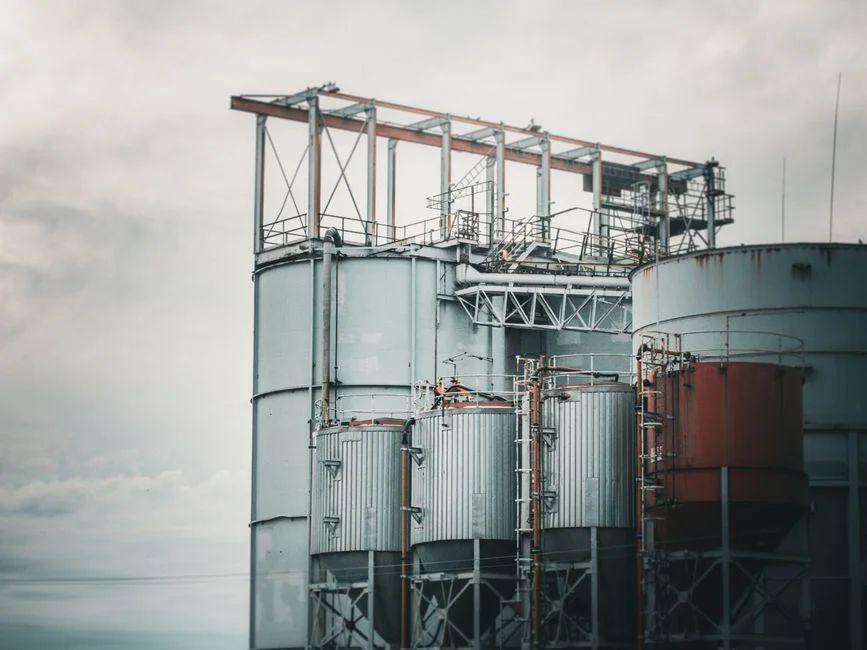
Stage 1 is fine mechanical bar screening at 3–6 mm aperture using a unit such as the rotary mechanical bar screen to protect downstream biology; raw influent TSS sits in the 200–370 mg/L range (Tehran trend 1984–2013, PMC4374509). Stage 2 is grit removal and flow equalization with a 4–6 h HRT basin — non-negotiable in Mashhad, where pilgrim surges distort the diurnal curve. Stage 3 is the biological heart: an Anoxic/Oxic (A/O) contact-oxidation train at MLSS 3,000–4,000 mg/L, HRT 8–10 h, SRT 15–20 d, sized to the higher N. 3-129 envelope and the Mashhad winter temperature. Stage 4 is clarification; a conventional secondary clarifier works for a discharge-only WSZ underground A/O package sewage treatment plant, while a submerged PVDF MBR module (0.1–0.4 μm) replaces the clarifier when reuse-grade effluent is required. Stage 5 is disinfection: UV or chlorine dioxide for surface discharge, and for aquifer-recharge projects target <10 mg/L COD and <1 NTU pre-disinfection. Sludge handling must be sized for ~504 m³/d raw and ~346 m³/d wasted per million PE (Tehran benchmark, PMC4374509); route to a plate-and-frame sludge dewatering filter press for cake ≥20% DS.
| Stage | Unit operation | Design parameter | 2026 Mashhad value |
|---|---|---|---|
| 1 | Fine screening | Aperture | 3–6 mm |
| 2 | Equalization | HRT | 4–6 h |
| 3a | A/O anoxic | HRT | 2–3 h |
| 3b | A/O oxic | HRT | 6–7 h |
| 3c | A/O reactor | MLSS / SRT | 3,000–4,000 mg/L / 15–20 d |
| 4a | Clarifier (WSZ) | Surface overflow | 0.8–1.2 m/h |
| 4b | MBR membrane | Pore / flux | 0.1–0.4 μm / 15–25 LMH |
| 5 | Disinfection | UV dose / ClO2 | 40 mJ/cm² or 2–5 mg/L |
| Sludge | Filter press | Cake DS | ≥20% |
Discharge Limits and Reuse Standards a Mashhad STP Must Meet in 2026
Design to the stricter of the two envelopes: surface discharge to stream or agriculture. Iran Department of Environment (IDOE) municipal limits are BOD5 ≤30 mg/L, COD ≤60 mg/L, and TSS ≤40 mg/L, which the conventional A/O meets comfortably. For agricultural reuse, comply with DoE Publication No. 535, including fecal coliform <200 MPN/100 mL for restricted irrigation (per Heidari 2018 citations). For the western Mashhad aquifer-recharge pathway, Heidari (2018) targets COD <50 mg/L, turbidity <2 NTU, and total coliform <10 MPN/100 mL with continuous online monitoring — an envelope only a well-operated MBR can hit. Verify influent biodegradability quarterly because the BI drift from 0.70 (1993) to 0.61 (2013) is driven by synthetic detergents, and an under-biodegradable influent will silently erode BOD removal. For a parallel review of Tehran's compliance envelope, see the Tehran domestic sewage treatment guide; the IDOE and DoE-535 frames are identical across Iranian provincial capitals.
WSZ Package vs MBR: Which Technology Fits a Mashhad Project
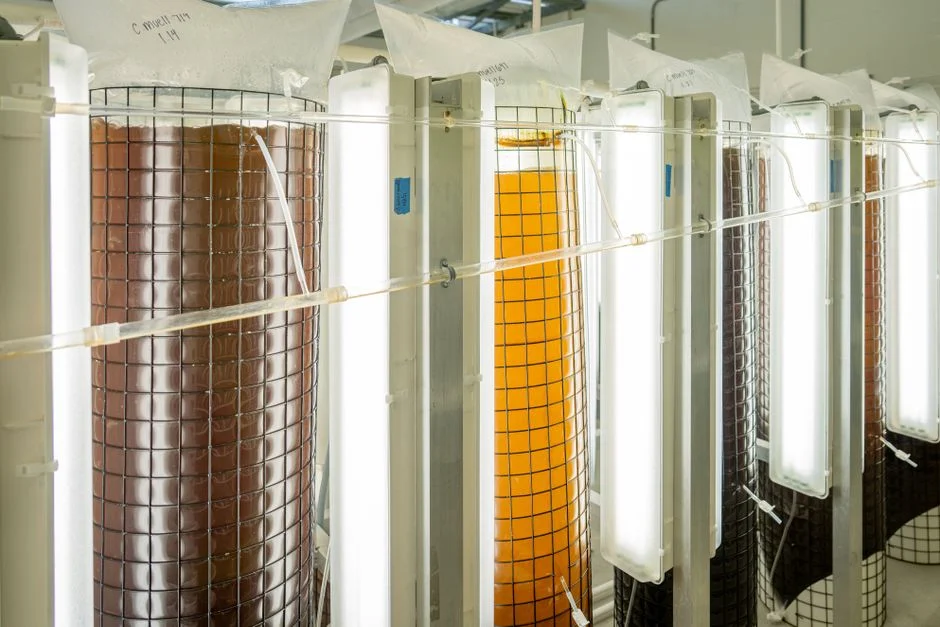
The WSZ underground A/O package sewage treatment plant combines anoxic/aerobic contact oxidation, sedimentation, and disinfection in a single buried unit, is fully automated with no operator, and covers 1–80 m³/h — the right pick for residential compounds, hotels, hospitals, and rural Mashhad sites where land is constrained and effluent goes to a surface drain or further polishing. The MBR membrane bioreactor system (10–2,000 m³/d) uses submerged PVDF membranes at <1 μm filtration and cuts footprint by roughly 60%, which makes it mandatory when the contract demands reuse-grade effluent (COD ≤50 mg/L, turbidity ≤1 NTU) for irrigation or aquifer injection. Membrane modules such as the DF-series MBR module can be specified standalone for retrofits of existing concrete tanks. WSZ CAPEX is lower per m³/d up to ~1,500 m³/d; MBR OPEX is higher because membrane aeration and chemical cleaning (typically NaOCl 500–1,000 mg/L plus citric acid 1,000–2,000 mg/L CIP cycles every 6–12 months) drive energy and chemical use, but the MBR eliminates the secondary clarifier and downstream sand filter. In Mashhad winters, MBR gives a more stable MLSS and effluent quality than a clarifier-based A/O, so if the site is exposed, specify enclosed/insulated bioreactor shells. Decision rule: pick WSZ for discharge-only projects under ~1,000 m³/d; pick MBR when the contract specifies reuse, the site footprint is <500 m², or aquifer recharge is the disposal route.
| Criterion | WSZ underground A/O package | MBR membrane bioreactor |
|---|---|---|
| Flow range | 1–80 m³/h | 10–2,000 m³/d |
| Footprint | Larger (incl. clarifier) | ~60% smaller (no clarifier) |
| Effluent COD | ≤60 mg/L | ≤30–50 mg/L |
| Effluent TSS | ≤30 mg/L | ≤1–5 mg/L |
| Turbidity | Not specified | ≤1 NTU |
| Operator | None (automated) | Part-time, membrane CIP |
| CAPEX per m³/d | Lower | Higher |
| OPEX per m³ | Lower | Higher (membrane + aeration) |
| Best for | Discharge, <1,000 m³/d | Reuse, aquifer recharge, small sites |
| Mashhad winter | Insulate the bioreactor | Stable MLSS, insulate too |
Cost Snapshot and Selection Flow for a 2026 Mashhad STP
CAPEX order-of-magnitude in the 2026 Iran market: WSZ package systems run $150–400 per m³/d installed, while MBR systems run $400–900 per m³/d installed including civil works. OPEX bands: biological treatment $0.10–0.25/m³ for WSZ and $0.20–0.40/m³ for MBR, the MBR figure including a membrane-replacement reserve (typical membrane life 5–8 years) and 2–3× higher aeration energy. Sludge dewatering adds $0.03–0.08/m³; specify the plate-and-frame sludge dewatering filter press to hit ≥20% DS cake for offsite disposal. Five-step selection flow the engineer can hand to procurement: (1) confirm influent basis against the per-capita table and apply the 1.5–1.8× pilgrim peak; (2) decide whether the project discharges to surface water or targets reuse/aquifer recharge; (3) pick WSZ or MBR against the decision rule above; (4) add equalization for the pilgrim surge and any cold-weather HRT/SRT margin; (5) specify disinfection and the sludge line, and wrap it in a performance-based O&M contract per the performance-based wastewater O&M contracts guide.
Frequently Asked Questions
What is the 2026 per-capita BOD5 loading to size a Mashhad STP against?
Use 40–50 g BOD5/d.cap and 50 g TSS/d.cap, which is the floor set by Iranian Standard N. 3-129, overriding the measured Tehran benchmark of 32.96 g BOD5/d.cap (PMC4374509, accepted 2015-03).
Which technology should a Mashhad hotel or hospital pick — WSZ or MBR?
Pick the WSZ underground A/O package for discharge-only flows up to ~1,000 m³/d; pick the MBR membrane bioreactor when the project contract specifies reuse-grade effluent of COD ≤50 mg/L and turbidity ≤1 NTU or aquifer recharge.
How is the pilgrim peak factored into a Mashhad STP design?
Apply a 1.5–1.8× peak factor on average dry-weather flow and add a 4–6 h equalization basin to flatten the diurnal curve from the 8M+ annual visitors to the Imam Reza shrine.
What winter temperature should a Mashhad biological reactor be sized for?
Design for 10–12 °C wastewater temperature, the Mashhad winter low, or specify enclosed/insulated tankage to keep MLSS activity and SRT within the 3,000–4,000 mg/L / 15–20 d envelope.