
Why the Acquisition Triggers a New Wastewater Permit in Malaysia
Under Section 18 of the Environmental Quality Act 1974 (Act 127), any "person carrying on any work or activity which may result in pollution" must hold a current DOE industrial-effluent discharge licence. A change in operating control — whether executed as a share purchase, asset deal, or business transfer — is treated by the Department of Environment as the commencement of a new undertaking; the seller's licence does not transfer with the share register or the asset bundle. The acquirer must file a fresh application, re-submit engineering plans, and may be required to undertake a new Detailed EIA screening under the EIA Order 2015 if the activity falls within Schedule 2 (pharmaceutical manufacturing at throughput thresholds specified in the Order typically does).
The four-stage permitting process is documented in Malaysian regulatory guidance: pre-application consultation with the DOE state director, EIA submission and approval, site inspection of the proposed treatment system, and licence issuance. A buyer who fronts the cost of scheduling a pre-application meeting with the relevant state DOE office (Selangor, Penang, and Johor host most of the country's pharma capacity) gains a realistic timeline and a list of retrofit conditions before the deal closes. The seller's existing licence, the IEQIS monitoring history, and any open corrective-action notices must be obtained during Phase II due diligence — they are public records, but the seller's cooperation speeds up the file transfer.
Contaminated-land exposure is a critical liability. Under the DOE's Contaminated Land Management guidelines, legacy soil and groundwater impacts from prior solvent storage, API spillage, or buried process lines become the buyer's liability on transfer of operations. A Phase II Environmental Site Assessment should be a condition precedent to closing on any Malaysian pharma acquisition.
Standard A vs Standard B Discharge Limits That Apply to Pharmaceutical Effluent
The Environmental Quality (Industrial Effluent) Regulations 2009 prescribe two numerical tiers: Standard A applies to discharges into inland waters, and Standard B applies to discharges upstream of water intakes or into sensitive catchment areas designated on the DOE water-classification maps. Plants in Selangor's Klang Valley and Penang's Bayan Lepas industrial zone are far more likely to face the tighter Standard B envelope because of downstream abstraction for water supply. The table below consolidates the parameters most relevant to a pharmaceutical site; the numeric ceilings come directly from the 2009 Regulations as cited in HydropureWater's 2026 compliance summary.
| Parameter | Standard A (Inland Waters) | Standard B (Sensitive Areas) | Pharma-Specific Note |
|---|---|---|---|
| BOD5 (mg/L) | ≤ 50 | ≤ 20 | Driven by API carbon load and fermentation residues |
| COD (mg/L) | ≤ 100 | ≤ 50 (typical, sector schedule) | Often the binding constraint for synthesis streams |
| SS (mg/L) | ≤ 50 | ≤ 30 (typical, sector schedule) | Controlled by DAF or lamella ahead of biological step |
| Ammoniacal N (mg/L) | ≤ 15 | ≤ 10 (typical) | Nitrification required in the biological stage |
| O&G (mg/L) | ≤ 10 | ≤ 5 (typical) | DAF or API skimmer upstream of equalization |
| pH | 6.0–9.0 | 6.0–9.0 | Online probe at the monitoring station |
| Temperature (°C) | < 40 | < 40 | Cooling-tower blowdown frequently breaches this |
| Heavy metals (Cr, Ni, Cd, Zn) | Per sector schedule | Per sector schedule | Triggered only if metal-fitted API lines exist on site |
The 2009 Regulations do not list explicit numeric limits for API residues, solvent traces, or antibiotic activity. The Toxicity Characteristic framework allows the DOE to demand proof that effluent is not "injurious" to receiving waters, and global pharma operators typically overlay WHO API hazard thresholds and the AMR Industry Alliance's antibiotic discharge targets on top of the local numeric ceilings. The due-diligence question to ask the seller is: "what is your effluent fingerprint for API and solvent markers, and does it survive a 24-hour composite?"
The 30 / 60 / 90-Day Compliance Transition After Deal Close
The first quarter of ownership is where most acquisition-related compliance failures occur, so a disciplined calendar aligned to the DOE's reporting rhythm is essential.
Days 0–30. File the change-of-ownership notification with the state DOE, transfer the IEQIS account credentials from the seller, and run parallel baseline sampling on the existing effluent to establish the "pre-deal fingerprint". The 2009 Regulations require 24-hour composite samples; results submitted through any channel other than IEQIS are inadmissible, so the new operator's analyst credentials must be active before the first quarter ends.
Days 31–60. Submit the engineering re-approval package: updated process flow diagrams, P&IDs, chemical inventory, sludge-handling plan, and a pre-treatment retrofit concept. Engage an MS ISO/IEC 17025-accredited lab for the quarterly programme and commission an independent pre-treatment audit. For buyers layering an AstraZeneca-style circular-water programme on top of the DOE baseline, this is the window to model the RO polishing loop and the cooling-tower reuse mass balance.
Days 61–90. Host the DOE site inspection, demonstrate 24-hour composite sampling capability (autosampler, chain-of-custody, accredited lab dispatch), close out any corrective-action notices, and file the first quarterly IEQIS return under the new owner's account. The lab accreditation rule is non-negotiable: results from a non-accredited laboratory are themselves a violation.
Pre-Treatment Train That Satisfies Both DOE and AstraZeneca's Circular-Water Targets
The unit operations that consistently appear in a compliant Malaysian pharma wastewater train map directly onto the architecture AECOM designed for AstraZeneca's Coppell, Texas facility (AECOM, 2024). That project — treatability testing, detailed design, and construction support for a high-silica API process wastewater — selected acid-based pH adjustment to precipitate silica followed by a filter press for sludge dewatering, enabling AstraZeneca to eliminate approximately 80% of landfill waste and cut waste-treatment OPEX by 90%.
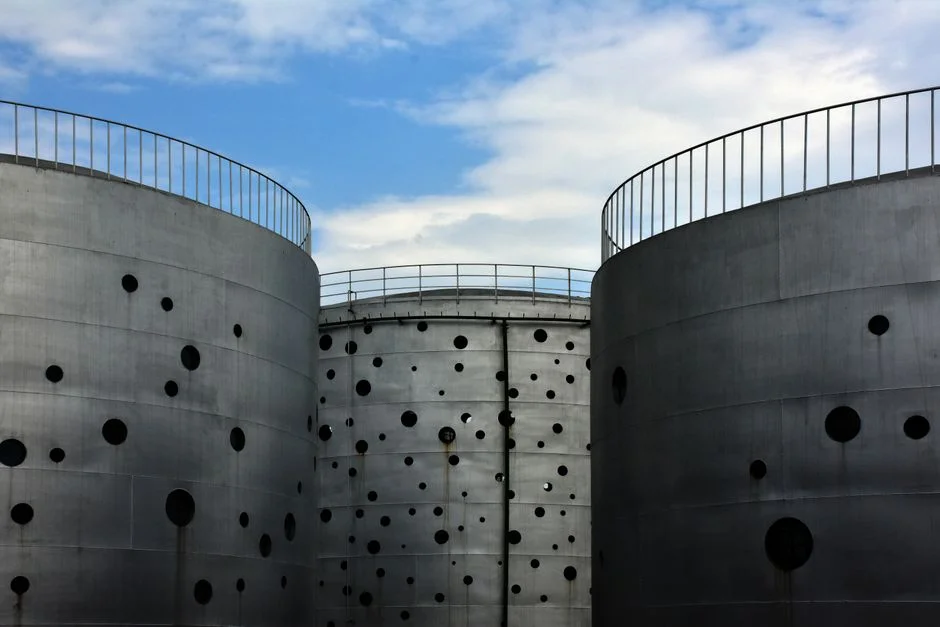
The typical Malaysian plant train runs as follows: screening and grit removal; flow equalization to dampen batch swings; PLC-controlled chemical dosing for pH adjustment and coagulant addition; a DAF system for suspended-solids and FOG removal; biological treatment via an MBR biological treatment train (SBR is a common lower-cost alternative) sized for the high-COD API carbon load; and a polishing step — sand filtration or activated carbon — before the discharge point or the reuse loop. For sites chasing AstraZeneca's Wuxi benchmark (25,000 t/year of saved water and a 20% reuse target, per the company's 2022 World Water Week presentation), the MBR permeate is polished through RO and the concentrate is sent to a crystallizer, putting the plant on a ZLD trajectory consistent with the 2020 DOE mandate for high-risk sectors.
Where the effluent is piped to a public sewer rather than a watercourse, an Indah Water Konsortium discharge agreement is required in addition to the DOE licence. The IWK agreement typically adds its own BOD, COD, and SS thresholds and imposes a surcharge for any non-compliance, so the on-site pre-treatment system must be designed to the more stringent of the two sets of limits. For biopharma process streams that carry recalcitrant organics, an activated carbon polishing for biopharma wastewater step is often the most cost-effective way to land inside both envelopes.
Monitoring, Reporting and the Cost of Getting It Wrong
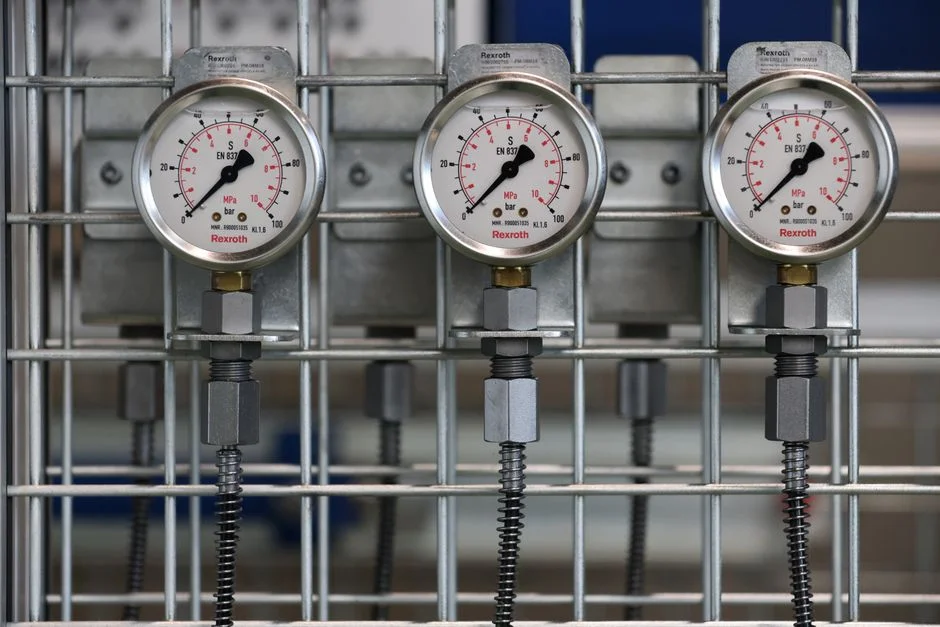
The default cadence is quarterly sampling with results submitted electronically via IEQIS, but the DOE reserves the right to impose monthly or continuous monitoring on "high-risk sectors". The AstraZeneca portfolio includes anti-infectives; an acquirer should expect the state DOE to push for telemetry on at least COD, flow, pH, and ammoniacal N from the first quarter of operation, in line with the real-time monitoring pilots now running in Selangor and Johor.
Penalties scale quickly. Under Section 25 of the EQA 1974, non-compliance can attract fines up to RM500,000 or imprisonment, and repeat offenders face operational suspension and licence revocation. The DOE conducts unannounced audits, and a failed IEQIS return triggers a formal investigation. For a multinational buyer inheriting a site with marginal historical compliance, the cleanest insurance policy is to design the pre-treatment train for one tier tighter than the applicable Standard A/B envelope and to keep a six-month rolling dataset of accredited lab results on file.
For plants being absorbed into a global performance-based operating model, the practical handover is covered in our guide to performance-based wastewater O&M contracting, and the cross-border regulatory framing for a parallel Swiss acquirer is laid out in our Roche/Malaysia acquisition compliance guide.
Frequently Asked Questions
Does a Malaysian DOE discharge permit transfer automatically when AstraZeneca buys the plant?
No. Section 18 of the Environmental Quality Act 1974 treats a change in operating control as a new undertaking, so the acquirer must file a fresh application, re-submit engineering plans, and complete the pre-application → EIA → site inspection → licence issuance sequence before discharging any effluent under the new ownership.
What is the binding BOD limit for a Malaysian pharma plant?
Standard A caps BOD5 at 50 mg/L for inland waters. Plants discharging into catchments upstream of public water intakes — common in Selangor and Penang — must meet Standard B's 20 mg/L ceiling. Ammoniacal N is capped at 15 mg/L under Standard A, with tighter sector-specific values for high-organic loads.
How often must the new operator sample, and which labs count?
Quarterly 24-hour composite sampling is the baseline, with results submitted electronically via the Integrated Environmental Quality Information System (IEQIS). All analyses must be performed by laboratories accredited to MS ISO/IEC 17025 by STANDARDS MALAYSIA; non-accredited data is inadmissible and is itself a violation.
Is ZLD already mandatory in Malaysia?
For high-risk sectors, yes. The DOE introduced zero liquid discharge mandates in 2020 and is running real-time effluent monitoring pilots in Selangor and Johor. A buyer designing a new pre-treatment train for a Malaysian pharma site should treat telemetry-ready sampling and RO-grade reuse as near-term requirements rather than aspirational targets.
What does IWK require before a sewer connection?
On-site pre-treatment is mandatory before any discharge to an IWK sewer, and the discharge agreement typically adds its own BOD, COD, and SS thresholds on top of the DOE licence limits, plus surcharge penalties for non-compliance. The pre-treatment train must be designed to the more stringent of the two sets of limits.