Spain regulates industrial wastewater under the Urban Waste Water Treatment Directive (91/271/EEC) and national law. With 1,829 treatment plants nationwide, Spain requires biological treatment with nutrient removal for most industrial effluents, achieving COD removal of 85-95% and TSS removal of 90-98% in compliant systems. Industrial reuse is 10% of Spain’s reclaimed water, led by Tarragona’s 20,000 m³/day supply to chemical manufacturing. Discharge design typically targets pH 6-9, BOD <25 mg/L, and cadmium <0.2 mg/L. Engineers sizing industrial wastewater treatment in Spain start from those limits before locking equipment.
Industrial Wastewater Treatment in Spain: Compliance Limits and Enforcement
Spain’s industrial discharge framework under Royal Decree 509/1996 and EU Directive 91/271/EEC commonly sets pH 6.0–9.0, BOD5 <25 mg/L, COD <125 mg/L, and TSS <35 mg/L. Sensitive waters often add TN <15 mg/L and TP <2 mg/L. ACA and CHG enforce limits with sampling and online monitors. AAI permits usually take 3 to 6 months from complete design packages.
Spain’s rules for industrial effluent rest on Royal Decree 509/1996 and the EU Urban Waste Water Treatment Directive for sewer and water-body discharges. In 2024, updates to Water Law 1/2001 tightened oversight in water-stressed regions such as Andalusia and Murcia. The Catalan Water Agency (ACA) and the Guadalquivir Hydrographic Confederation (CHG) run unannounced sampling and high-frequency monitoring. Continuous pH and online TSS meters are now common permit conditions, not optional extras. Violations can bring administrative fines up to €2 million, depending on impact and recidivism (HydropureWater regulatory analysis, 2025).
Compliance is tiered by receptor sensitivity and sector. Food plants discharging to sensitive areas often need BOD below 20 mg/L. Petrochemical sites face hydrocarbon and heavy-metal caps. The Autorización Ambiental Integrada (AAI) needs a full treatment design and environmental impact assessment. Approval timelines typically run 3 to 6 months. Most plants we size for Spanish food sites sit at the stricter BOD band when the receptor is flagged sensitive.
| Parameter | Standard Limit (RD 509/1996) | Strict Sector Limit (e.g., Food/Petrochem) | Monitoring Frequency |
|---|---|---|---|
| pH | 6.0 – 9.0 | 6.5 – 8.5 | Continuous/Online |
| BOD5 (Biological Oxygen Demand) | < 25 mg/L | < 20 mg/L | Weekly/Monthly |
| COD (Chemical Oxygen Demand) | < 125 mg/L | < 100 mg/L (Pharma) | Weekly |
| TSS (Total Suspended Solids) | < 35 mg/L | < 25 mg/L | Daily/Online |
| Total Nitrogen (TN) | < 15 mg/L | < 10 mg/L | Monthly |
| Total Phosphorus (TP) | < 2 mg/L | < 1 mg/L | Monthly |
| Cadmium / Mercury | < 0.2 / < 0.05 mg/L | < 0.1 / < 0.01 mg/L | Quarterly |
Treatment Technologies for Spanish Industry: Specs and Use-Case Matching
Selecting the right train means matching influent strength to reuse or discharge quality. Spanish dairy, meatpacking, and snack plants still rely on high-efficiency DAF systems for industrial wastewater treatment as primary treatment. Micro-bubble DAF units reach 90-95% TSS removal and up to 90% FOG removal at a hydraulic loading rate of 4-8 m/h, which keeps footprint compact at mid-range flows. At 20–100 m³/h, operators usually hold the air-to-solids ratio near the jar-test sweet spot rather than chasing the top of the loading band.
Sites that need near-reuse effluent often choose MBR systems for near-reuse-quality effluent in Spain over clarifier-based activated sludge. PVDF membranes with a 0.1 μm pore size cut footprint by about 60% and deliver TSS <1 mg/L and BOD <5 mg/L under stable operation. Keep MLSS between 2,000 and 5,000 mg/L and watch F/M daily; most Spanish food MBRs we commission run toward the lower MLSS end to limit membrane fouling. Smaller civil footprints can also use an Underground Package Sewage Treatment Plant (WSZ Series) when daily flow fits a packaged A/O biological train instead of a full membrane hall.
Heavy metals and phosphorus are finished with automated chemical dosing for compliance with Spain’s heavy metal limits. Optimized coagulation-flocculation can reach up to 99% arsenic and lead removal. Cooling-tower reuse and bathing-water discharge increasingly use chlorine dioxide generators for compliant disinfection in Spain. ClO₂ avoids THM formation from free chlorine, supports EU Drinking Water Directive 98/83/EC practice, and sustains a 99.9% microbial kill rate for Class A reclaimed water.
| Technology | Target Contaminants | Removal Efficiency | Footprint Requirement | Typical OPEX |
|---|---|---|---|---|
| DAF | TSS, FOG, Insoluble COD | 90-95% TSS | Medium | Low-Medium |
| MBR (Integrated) | BOD, COD, Nutrients, Bacteria | > 98% COD | Very Low | Medium-High |
| Chemical Dosing | Heavy Metals, Phosphorus | 99% As/Pb | Very Low | Medium (Chemical cost) |
| ClO2 Generation | Pathogens, Biofilm | 99.9% Microbial | Low | Low |
Food plants typically run DAF then biology for high organic loads. Petrochemical sites prioritize hydrocarbon separation and chemical oxidation. Textile mills focus on color and COD with dosing plus membranes. Studying how DAF systems achieve 95%+ TSS removal in industrial applications helps Spanish engineers protect downstream membranes. The same primary-to-biology logic appears in guides to industrial wastewater treatment in Christchurch and industrial wastewater treatment in Sydney, under different permit regimes.
Cost Benchmarks for Spanish Plants: 2025 CAPEX, OPEX, and ROI Framework
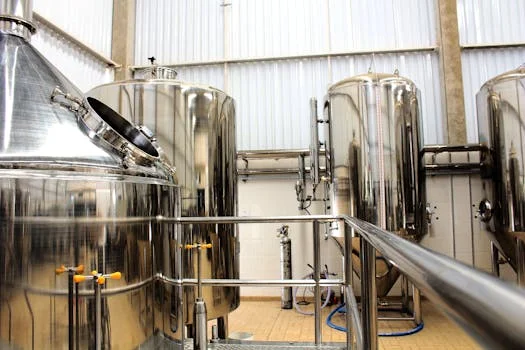
Budget work for industrial wastewater treatment in Spain must separate CAPEX from long-term OPEX. As of 2025, DAF systems rated 4 to 300 m³/h cost about €50,000 to €200,000. MBR packages for 10 to 2,000 m³/day typically cost €150,000 to €500,000 because of membranes and controls. Automated chemical dosing skids run €20,000 to €100,000 by sensor count and dosing points (HydropureWater price index, 2025).
Energy usually contributes €0.05–€0.20 per m³ treated under Spanish industrial tariffs. Coagulants and polymers add €0.03–€0.15/m³. MBR membrane replacement typically adds €0.02–€0.08/m³ over the lifecycle. Freshwater procurement in Spain can range from €0.50 to €2.00/m³, so reuse often offsets OPEX when discharge surcharges are high. Total OPEX for DAF primary stages commonly lands at €0.08–€0.15/m³, while MBR secondary/tertiary trains sit nearer €0.25–€0.45/m³ and RO reuse polish at €0.30–€0.60/m³.
Case Study: A food processing facility in Andalusia processing 50 m³/h recently integrated a combined DAF and MBR system. With a total CAPEX of €350,000, the plant reduced its water consumption by 40% through internal reuse and eliminated an average of €45,000 in annual non-compliance fines. The total annual savings amounted to €110,000, resulting in a payback period of approximately 3.2 years.
Screen ROI with Payback (Years) = CAPEX / (Annual Water Savings + Annual Fine Avoidance - Annual OPEX). A textile plant in Valencia facing €30,000 in annual fines and spending €80,000 on water can improve returns with a €180,000 upgrade that cuts those costs by 70%.
| System Type | Capacity Range | Estimated CAPEX (€) | Total OPEX (€/m³) |
|---|---|---|---|
| DAF (Primary) | 20 - 100 m³/h | 80,000 - 140,000 | 0.08 - 0.15 |
| MBR (Secondary/Tertiary) | 100 - 500 m³/day | 200,000 - 350,000 | 0.25 - 0.45 |
| RO (Desalination/Reuse) | 50 - 200 m³/day | 100,000 - 220,000 | 0.30 - 0.60 |
Water Reuse in Spain: Engineering Requirements and Industrial Applications
Recurring droughts have made industrial reuse an operating need across much of Spain. Industrial reuse is 10% of national reclaimed volume today. The Tarragona project delivers 20,000 m³/day of treated municipal effluent to a chemical complex, cutting freshwater demand by 30% and saving about €1.2 million per year in procurement costs (Cefic data, 2024). Plants in Murcia and Andalusia now treat reuse as a capacity hedge, not a CSR slide, when freshwater sits at €0.50–€2.00/m³.
Legal reuse follows Royal Decree 1620/2007 quality classes. Cooling towers typically need Class A water: TSS <5 mg/L, turbidity <2 NTU, and E. coli <10 CFU/100 mL. Tertiary treatment is usually required. Many plants are comparing MBR and SBR systems for industrial wastewater treatment to choose a stable feed for downstream reverse osmosis (RO) systems.
Regional authorities issue a Concession for the Use of Reclaimed Water and require quality reporting plus disinfection upkeep. Using chlorine dioxide generators for compliant disinfection in Spain meets Class A microbiology without the cooling-circuit corrosion risk tied to high free-chlorine residuals.
Step-by-Step Compliance Checklist for Spanish Industrial Plants
Long-term compliance holds when design and operations follow a fixed sequence:
- Pre-treatment: Install rotary mechanical bar screens to remove solids larger than 6 mm. This protects downstream pumps and membranes from mechanical damage.
- Primary Treatment: Deploy a DAF system to target 90%+ removal of suspended solids and fats. Ensure the air-to-solids ratio is optimized for the specific effluent density.
- Secondary/Biological Treatment: Implement an MBR or A/O process. Maintain Mixed Liquor Suspended Solids (MLSS) between 2,000 and 5,000 mg/L and monitor the Food-to-Microorganism (F/M) ratio daily to ensure biological stability.
- Tertiary Treatment & Polishing: For heavy metal or phosphorus removal, integrate automated chemical dosing. If reuse is planned, add RO or UV/ClO2 disinfection stages.
- Online Monitoring: Install calibrated sensors for pH, turbidity, COD, and flow rate. Data logging is mandatory for regulatory audits by the ACA or CHG.
- Documentation Management: Keep operation logs, sludge disposal records, and lab results for at least 5 years under RD 509/1996. Haulage-driven sludge planning can borrow frames from sludge dewatering equipment selection checklists when cake solids dominate cost.
Teams that also adopt global best practices for industrial wastewater treatment cut penalty risk and freshwater intake in drought basins.
Who This Guide Is For and Next Step
This page is for Spanish plant engineers, EPC designers, and procurement managers comparing DAF, MBR, dosing, and ClO₂ trains against RD 509/1996 and Class A reuse targets. Look elsewhere if you only need municipal drinking-water treatment without industrial FOG or heavy-metal loads. When influent data and a permit draft are ready, send flow, COD, and receptor limits through our industrial wastewater treatment inquiry form for a sized package review.
Frequently Asked Questions
What are the primary wastewater discharge limits for Spanish industries?
Most industrial facilities must meet Royal Decree 509/1996 limits of pH 6-9, BOD5 <25 mg/L, COD <125 mg/L, and TSS <35 mg/L. Regional authorities such as the ACA in Catalonia may set tighter values, for example COD <100 mg/L, when the watershed is sensitive. Sector permits for food or petrochemical plants can also push BOD below 20 mg/L. Confirm the exact figures on the AAI before freezing equipment sizes.
Is MBR more cost-effective than SBR for Spanish industrial plants?
MBR often wins on lifecycle cost when land is scarce or reuse quality is required, even though initial CAPEX is higher. MBR effluent can meet reuse solids and BOD targets without tertiary clarifiers and sand filters. That matters in Andalusia and Murcia, where freshwater costs of €0.50–€2.00/m³ and drought constraints raise the value of stable membrane permeate. SBR can still fit lower-spec discharge when footprint is not constrained.
How can a facility in Spain apply for water reuse subsidies?
Spanish industries can apply for grants through the EU LIFE Program or national PERTE funds for water circularity projects. These programs can cover up to 60% of eligible costs when the scheme shows measurable freshwater savings or innovative reuse. Prepare meter data, quality class targets under Royal Decree 1620/2007, and a process flow before submission. Regional water authorities still require a reclaimed-water concession after funding approval.
What are the penalties for non-compliance with the Spanish Water Law?
Under the 2024 updates to Water Law 1/2001, fines scale by severity. Minor infractions start at €10,000, while very serious violations such as toxic heavy-metal discharge to protected aquifers can reach €2 million and threaten operating-license suspension. ACA and CHG sampling records are used in enforcement. Keeping five years of logs under RD 509/1996 is the practical defense during audits.
Further Reading
Explore these in-depth articles on related wastewater treatment topics: