Why Jeddah Wastewater Projects Demand a Different Supplier Profile in 2026
Jeddah's coastal climate and Makkah-region load profile break the assumptions baked into most European and Chinese STP catalogs. Summer ambient temperatures of 42-47 °C combined with 60-80 % relative humidity raise oxygen-transfer correction factors and force biological tanks below 38 °C, driving aeration blower kWh/m³ 15-25 % above temperate-climate baselines (HydropureWater field data, 2025-09). Saudi Vision 2030 targets 100 % beneficial reuse of treated sewage effluent by 2030, which raises the effluent bar well above standard municipal discharge and eliminates low-spec SBR packages from most reuse tenders. Pilgrim-related hydraulic surges through Jeddah — the gateway to Makkah — generate 200-300 % peak wet-weather flows that any credible Jeddah STP vendor must equalize before biological treatment. Influent TDS in coastal Jeddah routinely sits at 1,800-3,200 mg/L from groundwater infiltration into the sewer network, increasing biological kinetic volumes by 10-15 % versus Riyadh data. Saudi municipal procurement increasingly requires local service presence in Jeddah or Dammam, ARAMCO/SASO certifications, and Arabic-language O&M documentation as bid prequalification. For context on how the Gulf market differs from neighboring regions, the Dubai STP supplier comparison covers similar climate stresses with a different regulatory layer.
SBC, NCEC and SASO Compliance: The 2026 Saudi Regulatory Stack
Every sewage treatment plant supplier in Jeddah must clear a four-agency approval sequence before commissioning. Saudi Building Code SBC 1973 Chapter 13 governs sanitary drainage setbacks, treatment plant siting distances, and ventilation requirements for enclosed plant rooms. NCEC (National Center for Environmental Compliance) sets the municipal discharge envelope: BOD₅ ≤ 25 mg/L, COD ≤ 150 mg/L, TSS ≤ 30 mg/L, residual Cl₂ 0.5-1.0 mg/L, and fecal coliform ≤ 200 CFU/100 mL for surface-water discharge. Where the effluent feeds landscape irrigation under PME (Presidential Ministerial Executive) indicators, the limits tighten further: nitrate ≤ 45 mg/L, pH 6.5-8.5, and turbidity ≤ 5 NTU for unrestricted reuse. SASO equipment standards apply to the imported package itself — SASO IEC 60034 for motors, SASO EN 12255 series for wastewater plant performance, and SASO 2503 for HDPE process piping. Hospital, food-processing, and pharmaceutical clients in the Jeddah industrial estates add SFDA documentation for the reuse water stream. The typical approval sequence runs: NCEC environmental permit → municipal building permit → Civil Defense approval → NCEC operating permit, a 6-10 month critical path that must sit on the procurement schedule from day one. A detailed OPEX view of how compliance costs flow through operations is in the industrial wastewater OPEX breakdown.
| Authority | Standard / Limit | Parameter | Threshold |
|---|---|---|---|
| SBC | Chapter 13 | Setback, ventilation | Per SBC 1973 Table 13-4 |
| NCEC | Municipal discharge | BOD₅ / COD / TSS | ≤ 25 / 150 / 30 mg/L |
| NCEC | Municipal discharge | Residual Cl₂ / Fecal coliform | 0.5-1.0 mg/L / ≤ 200 CFU/100 mL |
| PME | Irrigation reuse | NO₃ / pH / Turbidity | ≤ 45 mg/L / 6.5-8.5 / ≤ 5 NTU |
| SASO | Equipment | Motors / Plant / HDPE pipe | IEC 60034 / EN 12255 / SASO 2503 |
| SFDA | Pharma/food reuse | Microbial + trace contaminants | Per SFDA sector guidance |
MBR vs SBR vs Packaged WSZ: Process Comparison for Jeddah Conditions
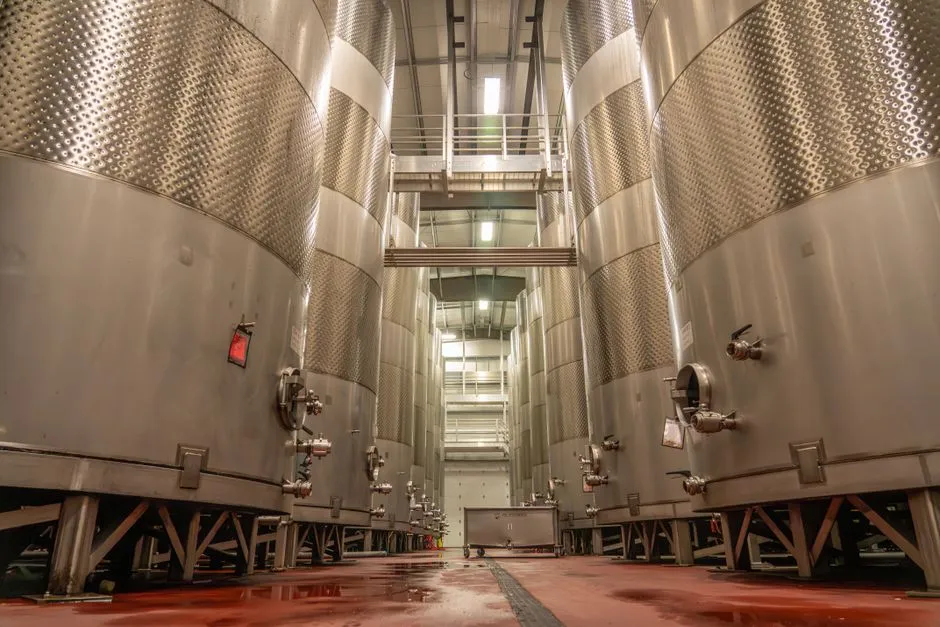
Process selection in Jeddah is driven by effluent quality target, available footprint, and whether the plant must hit PME irrigation limits in a single stage. The MBR membrane bioreactor system in 10-2,000 m³/day configurations produces TSS ≤ 5 mg/L, turbidity ≤ 1 NTU, and BOD₅ ≤ 5 mg/L — comfortably below NCEC and PME reuse limits without tertiary polishing. SBR systems in the same flow range deliver BOD₅ 10-20 mg/L and TSS 10-30 mg/L at 30-50 % lower CAPEX, but require 2-3× the footprint of an MBR and a downstream sand/UF polish to meet PME turbidity. The WSZ packaged STP (A/O biological contact oxidation, 1-80 m³/h) is buried or trailer-mounted, fully automatic, and fits hotels, hospitals, and residential compounds under 500 m³/day where excavation is feasible. Energy demand separates the trains: MBR runs 0.8-1.4 kWh/m³, SBR 0.4-0.6 kWh/m³, and WSZ 0.5-0.7 kWh/m³ (HydropureWater internal benchmarks). The DF series PVDF flat sheet MBR module is the preferred MBR configuration for high-TDS Jeddah influent because flat-sheet geometry tolerates the 1,800-3,200 mg/L TDS range with less irreversible fouling than hollow-fiber. Membrane replacement on PVDF flat sheet runs USD 35-60 per m² every 7-10 years — a number that must appear in the lifecycle cost, not the CAPEX line. MBR is the only train that consistently clears NCEC + PME in a single stage, which often eliminates the need for a separate tertiary disinfection capex line.
| Parameter | MBR | SBR | Packaged WSZ |
|---|---|---|---|
| Flow range | 10-2,000 m³/day | 50-5,000 m³/day | 24-1,920 m³/day (1-80 m³/h) |
| BOD₅ effluent | ≤ 5 mg/L | 10-20 mg/L | ≤ 20 mg/L |
| TSS effluent | ≤ 5 mg/L | 10-30 mg/L | ≤ 30 mg/L |
| Turbidity | ≤ 1 NTU | 5-15 NTU | 5-20 NTU |
| Footprint (relative) | 1× | 2-3× | 0.8-1.2× |
| Energy | 0.8-1.4 kWh/m³ | 0.4-0.6 kWh/m³ | 0.5-0.7 kWh/m³ |
| Reuse compliance | NCEC + PME single stage | NCEC only; tertiary for PME | NCEC; case-by-case for PME |
| Membrane replacement | USD 35-60/m² per 7-10 yr | N/A | N/A |
CAPEX and OPEX Benchmarks for Sewage Treatment Plants in Jeddah (2026)
Budgeting in 2026 requires ranges, not point estimates, because membrane and blower pricing remains volatile. Turnkey CAPEX in USD per m³/day of capacity — civil works excluded — runs WSZ packaged USD 280-650, SBR USD 450-900, and MBR USD 750-1,800, with the MBR figure including PVDF membranes, blowers, and UV stage sized to meet NCEC. OPEX on a USD-per-m³-treated basis tracks the energy and chemistry profile: MBR USD 0.18-0.42, SBR USD 0.10-0.22, WSZ USD 0.12-0.26. Jeddah-specific OPEX runs 12-18 % above the Gulf baseline because of summer aeration-tank cooling, higher effluent pumping head for landscape reuse, and SEC industrial tariffs (HydropureWater field data, 2026). Chemical OPEX lines to populate: coagulant USD 0.005-0.015/m³, MBR CIP chemicals USD 0.008-0.020/m³, and ClO₂ disinfection delivered by a chlorine dioxide disinfection generator at USD 0.012-0.028/m³. For 2026 budgeting, use the SAR conversion at 3.75 SAR/USD, which puts a 500 m³/day MBR turnkey between 1.41-3.38 million SAR. Any vendor quoting below USD 250/m³/day for an MBR system should be excluded from the shortlist — at that price point the membrane area, blower sizing, or SASO-certified controls have been cut, and NCEC effluent compliance is not achievable. Sludge handling downstream of the bioreactor typically requires a plate-frame filter press for cake dryness ≥ 35 %, and chemical conditioning is handled by an automatic chemical dosing system sized to the reject stream. Comparable industrial cost structures are detailed in the industrial wastewater OPEX breakdown.
| Cost line | MBR | SBR | WSZ Packaged |
|---|---|---|---|
| CAPEX (USD/m³/day) | 750-1,800 | 450-900 | 280-650 |
| OPEX (USD/m³ treated) | 0.18-0.42 | 0.10-0.22 | 0.12-0.26 |
| Energy (kWh/m³) | 0.8-1.4 | 0.4-0.6 | 0.5-0.7 |
| Jeddah OPEX uplift | +12-18 % | +12-18 % | +12-18 % |
| Coagulant (USD/m³) | 0.005-0.015 | 0.005-0.015 | 0.005-0.015 |
| Membrane CIP (USD/m³) | 0.008-0.020 | N/A | N/A |
| ClO₂ disinfection (USD/m³) | 0.012-0.028 | 0.012-0.028 | 0.012-0.028 |
How to Qualify a Sewage Treatment Plant Supplier in Jeddah: 7-Step Checklist
- Verify NCEC installer registration and at least three reference projects in Saudi Arabia commissioned within the last five years; ask for the operating permit numbers.
- Confirm SASO certification for motors, blowers, control panels, and any imported skids — request the SASO CoC documents, not distributor self-declarations.
- Demand a pilot trial or a guaranteed performance bond tied to BOD₅, COD, TSS, and fecal coliform numbers that match NCEC limits; bonds below 5 % of contract value are non-serious.
- Check local service presence in Jeddah or Dammam with Arabic-speaking engineers and a written 24-hour response SLA; remote-only support from Dubai or Mumbai is insufficient.
- Request full Arabic O&M manuals, as-built drawings, and PLC source code in escrow — these are non-negotiable for Civil Defense and NCEC handover.
- Validate membrane warranty terms and confirm which entity stocks replacement modules inside the Kingdom; a 7-year prorated warranty with no local stock is functionally a 2-year warranty.
- Price the full lifecycle in the bid comparison — civil works, CIF Jeddah Islamic Port shipping, installation supervision, commissioning, and a 2-year O&M contract priced separately, not bundled.
Pre-treatment equipment such as a rotary mechanical bar screen should be on the supplier's scope with a 6 mm aperture to protect downstream membranes from rag carryover — a common Jeddah influent issue.
Frequently Asked Questions
Can treated wastewater from a Jeddah STP be reused for landscape irrigation under Saudi regulations?
Yes. PME indicators allow unrestricted irrigation reuse when effluent meets BOD₅ ≤ 5 mg/L, TSS ≤ 5 mg/L, turbidity ≤ 5 NTU, and nitrate ≤ 45 mg/L — a profile an MBR with UV stage hits in a single train, per HydropureWater MBR system specs (10-2,000 m³/day).
How should a 500 m³/day STP in Jeddah handle Hajj-season peak loads?
Equalization basins must be sized for 200-300 % hydraulic surges from the Makkah-region gateway flow, and biological stages should be rated at the average daily flow with peak-flow attenuation upstream.
What warranty terms should I require on MBR membranes from a Saudi supplier?
A prorated 7-10 year warranty on PVDF flat sheet membranes, with replacement modules stocked inside the Kingdom — typically Jeddah or Dammam — and a documented 5-day shipment SLA from local inventory.
How long do PVDF flat sheet MBR membranes actually last in high-TDS Jeddah influent?
7-10 years with documented CIP every 3-6 months using 1,000-2,000 mg/L NaOCl, assuming influent TDS stays within the 1,800-3,200 mg/L coastal range and pre-treatment screens to 6 mm or finer.
Which Saudi approvals are mandatory before a packaged STP can be commissioned in Jeddah?
NCEC environmental permit, municipal building permit, Civil Defense approval, and an NCEC operating permit — a sequence that typically runs 6-10 months from the date the supplier is awarded.