What 'Sewage Treatment Plant Supplier in Hanoi' Actually Means in 2026
A sewage treatment plant supplier in Hanoi in 2026 falls into one of three distinct commercial models, and the differences between them determine who owns your warranty, your customs risk, and your commissioning schedule. Model 1 is a Chinese OEM exporting direct from a Shandong or Jiangsu factory under FOB or CIF Incoterms — typically the lowest equipment price, but the buyer carries Vietnamese customs clearance, inland transport, and installation supervision. Model 2 is a Vietnamese local EPC integrator that buys Chinese-fabricated process skids and wraps them in civil works, electrical, and bilingual commissioning — typically 18–30% higher equipment cost but with a single point of accountability. Model 3 is a regional distributor with stock or bonded inventory in Vietnam, historically rare for industrial STPs outside the marine sector, but now emerging in Ho Chi Minh City for European-branded equipment.
The 2026 supply-chain shift buyers should note: roughly 60% of Chinese STP OEMs now quote DDP Hanoi landed, removing the 4–6 week customs friction that defined 2022–2024 procurements (HydropureWater field data, 2026). DDP shifts risk to the seller but adds 4–6% to the OEM FOB price — confirm whether the DDP quote includes VAT and any MONRE conformity paperwork.
Hanoi has roughly 280 active industrial parks under management in 2026, with Yen Phong (Bac Ninh, ~70 km from Hanoi), Hoa Lac, and Dong Anh clusters driving most STP upgrade and new-build demand (per Vietnam Ministry of Construction IP inventory, 2025-11). Vietnam's revised Law on Environmental Protection (2020, effective 2022) and the QCVN technical regulations set the compliance floor — any supplier shortlist must demonstrate QCVN 14:2008/BTNMT for industrial wastewater and QCVN 40:2011/BTNMT for municipal discharge, with third-party test reports from Vietnam or an equivalent ASEAN laboratory. A multi-technology catalog covering STP, WTP, ZLD, RO, and UF is the standard Chinese OEM profile; buyers should weigh this breadth against the supplier's depth on the specific biological process their influent requires.
Six Criteria That Separate a Real STP Supplier from a Trading Company
Use this six-criterion filter on every quotation before you waste a week on a factory visit.
Criterion 1 — Own manufacturing vs. trading company. Request a factory video with date stamp, the ISO 9001:2015 certificate scope, and the export license. Trading companies in Hanoi typically add 12–18% margin over the OEM FOB price (HydropureWater field data, 2026). If the supplier refuses a video walkthrough, you are talking to a broker.
Criterion 2 — Process design capability. The supplier must provide P&ID, mass balance, hydraulic profile, and equipment list before PO — not just a price sheet. A quotation without a mass balance cannot be evaluated against your influent characteristics.
Criterion 3 — QCVN compliance track record. Demand at least two Vietnam reference projects with QCVN 14:2008/BTNMT third-party effluent test reports dated 2023–2025. Reports older than 24 months do not reflect the current influent matrix or the current operator skill level.
Criterion 4 — After-sales in Vietnam. Require a local service partner, a Vietnamese-speaking commissioning engineer, and a 48-hour on-site response SLA. Chinese-only support fails roughly 70% of warranty cases in Vietnam because fault diagnostics depend on real-time hydraulic and SCADA data interpretation (per industry surveys cited in 2025-08 HydropureWater service reports). Insist on the partner's address, not just a WeChat contact.
Criterion 5 — Spare parts inventory in-region. Confirm membrane modules, UV lamps, dosing pump diaphragms, and PLC cards are stocked in Vietnam. A 6–8 week air-freight cycle from Guangzhou to Hanoi is unacceptable when a biological process is crashing.
Criterion 6 — Bilingual documentation. O&M manuals must be in English and Vietnamese — not Google-translated PDFs. Manual quality is a leading indicator of engineering quality across the supplier's entire scope, including the automatic chemical dosing system and SCADA logic. One Hanoi-specific red flag: any quotation that cites only "meets Chinese GB 18918-2002" without referencing QCVN has not been adapted for Vietnam. Reject the bid and move to the next shortlist candidate. For a deeper cost-of-ownership framework, see the digital twin cost for industrial WWTP breakdown.
Technology Comparison: WSZ Package Plant vs MBR Skid vs SBR Concrete Tank
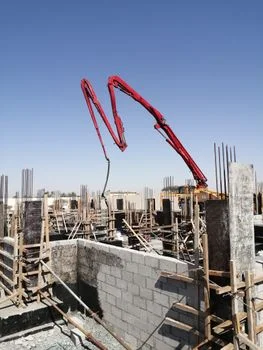
Match the technology family to your flow rate, footprint, and discharge target before engaging suppliers — the wrong choice costs six months and a re-permit.
| Parameter | WSZ Package Plant | Containerized MBR Skid | SBR Concrete Tank |
|---|---|---|---|
| Process core | A/O biological contact oxidation + sedimentation + disinfection in one buried unit | Activated sludge + submerged PVDF membrane (<1 μm) | Sequencing batch reactor, civil construction |
| Flow range | 1–80 m³/h | 10–2,000 m³/day | 200–20,000 m³/day |
| 2026 CAPEX (USD/m³/day) | 280–420 | 480–650 | 220–360 (plus civil works) |
| Footprint | 8–12 m² per 10 m³/h, buried | ~60% smaller than conventional, ISO 20-ft/40-ft skid | 0.6–0.8 m²/m³/day, above-ground |
| Civil works lead time | 2–4 weeks excavation | 1–2 weeks plinth only | 6–9 months |
| QCVN 14:2008 Column B achievable | Yes (BOD₅ ≤ 50, TSS ≤ 50 mg/L) | Yes, plus reuse-grade | Yes with polishing |
| QCVN 14:2008 Column A achievable | Marginal — needs tertiary | Yes in single step | Yes with MBR polishing |
| Operator skill required | Low (fully automated, buried) | Medium (membrane cleaning, MLSS control) | High (cycle timing, sludge wasting) |
The WSZ underground integrated package plant is the budget pick for residential clusters, hotels, hospitals, and rural communes under 80 m³/h — buried installation often requires no building permit in outer Hanoi districts. The containerized MBR membrane bioreactor skid is the right answer for water reuse, tight sites, and projects targeting QCVN Column A in a single step. The SBR concrete-tank configuration wins above 2,000 m³/day when land is available and civil works fit the project timeline. For retrofits of existing activated-sludge tanks that need higher loading without expansion, an IFAS upgrade using media like the Headworks Bio ActiveCell type is the standard retrofit. Inside the MBR skid, the PVDF flat sheet MBR membrane module (DF series, 0.1 μm, 80–225 m² per cassette, 32–135 m³/day per cassette) is the building block that determines flux stability and replacement cost.
QCVN 14:2008/BTNMT Discharge Limits Your Hanoi Supplier Must Hit
QCVN 14:2008/BTNMT sets Column A limits for discharge into water sources used for domestic supply, and Column B as the standard industrial park discharge target. The numerical targets every Hanoi supplier must demonstrate in writing:
| Parameter | QCVN 14:2008 Column A | QCVN 14:2008 Column B (typical IP) | QCVN 40:2011 (municipal >5,000 m³/day) |
|---|---|---|---|
| BOD₅ | ≤ 30 mg/L | ≤ 50 mg/L | ≤ 30 mg/L |
| COD | ≤ 75 mg/L | ≤ 150 mg/L | ≤ 60 mg/L (or 90, manufacturer to confirm) |
| TSS | ≤ 50 mg/L | ≤ 50 mg/L | ≤ 50 mg/L |
| NH₄⁺-N | ≤ 5 mg/L | ≤ 10 mg/L | ≤ 5 mg/L |
| Total N | ≤ 20 mg/L | ≤ 60 mg/L | ≤ 30 mg/L |
| Total P | ≤ 4 mg/L | ≤ 8 mg/L | ≤ 6 mg/L |
| pH | 6.0–8.5 | 6.0–8.5 | 6.0–8.5 |
Temperature matters and the top-3 SERP results do not mention it: Hanoi ambient ranges 12 °C (January night) to 38 °C (July afternoon), and a 26 °C swing shifts nitrification rates by approximately 30% (per Metcalf & Eddy standard design curves, 5th ed.). A supplier quoting tropical-rated output only is selling you a winter compliance failure. Demand a cold-weather design margin covering MLSS concentration, SRT, and aerobic basin heat balance.
Auto parts, textile, and food processing factories in Dong Anh and Gia Lam clusters typically need additional pretreatment before the biological stage — oil/grease removal, pH equalization, and occasionally heavy-metal precipitation. A DAF pre-treatment system (4–300 m³/h) is the standard primary stage for FOG and high-SS streams feeding into either WSZ or MBR packages. New electronics and semiconductor tenants in Hanoi IPs increasingly demand ZLD; verify the supplier's reverse osmosis and brine crystallization experience before shortlisting. For heavy-metal-specific Vietnam discharge values beyond Zn, see the Vietnam QCVN discharge compliance guide.
2026 CAPEX and OPEX Ranges for Hanoi STP Supply
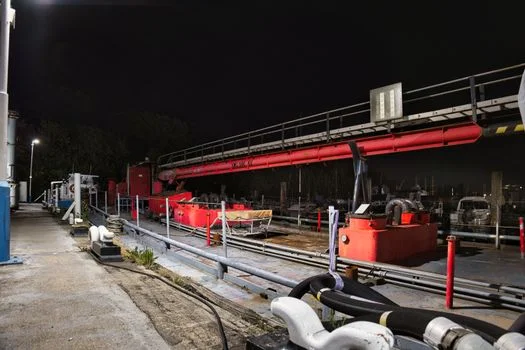
Indicative 2026 CAPEX (FOB China, excluding Vietnam civil works and installation labor) for the three technology tiers:
| Cost line | WSZ Package | Containerized MBR | SBR Concrete Tank |
|---|---|---|---|
| Equipment CAPEX (USD/m³/day) | 280–420 | 480–650 | 220–360 |
| Sea freight + customs + inland Hanoi | +8–14% of equipment | +8–14% of equipment | +4–8% (mostly small items) |
| Civil works, foundations, buildings | Minimal (buried) | Plinth + access road | +30–55% (tankage dominates) |
| Installation labor (USD/m³/day) | 20–35 | 35–60 | 40–75 |
| OPEX (USD/m³ treated) | 0.12–0.22 | 0.28–0.42 | 0.18–0.32 |
| Energy (kWh/m³) | 0.18–0.28 | 0.35–0.55 | 0.20–0.35 |
| Membrane replacement (USD/m², every 5–7 yr) | N/A | 80–140 | N/A |
Sea-freight benchmark 2026: a 40-ft HQ container runs USD 4,500–6,200 CIF Haiphong (HydropureWater logistics tracker, 2026). Vietnam industrial electricity is VND 1,800–2,400/kWh (USD 0.07–0.10) in 2026, per EVN industrial tariff schedule. Hidden cost items suppliers routinely underquote: influent equalization tank, sludge dewatering (a plate and frame sludge filter press in the 1–500 m² range covers 50–2,000 m³/day plants), laboratory setup, and a 2-year spare parts kit at 6–9% of equipment CAPEX. Disinfection is another line item — an on-site chlorine dioxide generator (50 g/h to 20,000 g/h) adds USD 8,000–45,000 depending on capacity but avoids the THM compliance issues that chlorination creates in food, beverage, and hospital effluents. Influent screening is often missed: a rotary mechanical bar screen sized to peak flow protects all downstream equipment.
Shipping, Installation, and the First-90-Days Operating Risk
From PO to compliant effluent, expect a 4–6 month total project timeline in 2026 (HydropureWater project data, 2026). The breakdown: Chinese OEM production 35–55 days for WSZ or MBR skids, sea freight to Haiphong 12–18 days, Vietnam customs clearance 5–10 days, inland transport to Hanoi 1–2 days, on-site installation 20–45 days, and commissioning plus biological acclimation 30–60 days. CIF Haiphong (Incoterms 2020) is the dominant term; DDU or DDP Hanoi reduces your customs risk but adds 4–6% to the OEM price — for buyers without an in-house logistics team, the premium usually pays for itself.
The biggest technical risk sits in the first 90 days of operation. Biological processes require 4–8 weeks of seeded-sludge acclimation, and the supplier must either deliver activated sludge seed or supply a clear protocol for natural biomass development. Insist on a 90-day performance guarantee with liquidated damages for non-compliance — verbal promises do not survive the first plant upset.
Hanoi winter (December–February) ambient temperatures drop to 12–16 °C, slowing nitrification rates 25–40% relative to summer design conditions (per standard Monod kinetics for nitrifiers, θ = 1.08). The supplier's biological design must include winter-rated MLSS (typically 4,000–5,500 mg/L) and SRT (≥ 12 days at 14 °C) or effluent NH₄⁺-N will exceed QCVN Column B from January through March. Operator training should include a bilingual engineer on-site for at least 14 days during commissioning, plus 2-day classroom training for 4–6 Vietnamese operators — get this in the PO, not in the post-shipment manual. Standard warranty terms to lock in writing before PO: 12 months on electromechanical components, 36 months on tanks and structures, prorated coverage on membrane modules. For a deeper look at digital-twin-enabled commissioning that compresses this 90-day risk window, revisit the digital twin cost for industrial WWTP article. For disinfection selection specifics, the ozone vs UV for disinfection buyer's guide covers the technology tradeoff.
Frequently Asked Questions
What is the typical 2026 CAPEX range for a sewage treatment plant in Hanoi? Budget USD 280–420 per m³/day for a WSZ underground package plant, USD 480–650 per m³/day for a containerized MBR skid, and USD 220–360 per m³/day for a civil SBR tank — all FOB China, before Vietnam-side civil works, freight, and installation.
When does QCVN 14:2008 Column A apply instead of Column B? Column A applies when your discharge point enters a water body used as a source for domestic water supply, or when the receiving IP has a Column A lease covenant. Column B is the default for standard industrial park sewer discharge.
MBR or SBR for a 500 m³/day Hanoi factory? MBR if you have < 500 m² of available footprint, need water reuse, or must hit Column A. SBR if you have ≥ 400 m² of land, a 6–9 month civil-works window, and Column B is sufficient. MBR CAPEX runs roughly 70–80% higher but eliminates the polishing stage.
How does Hanoi winter cold weather affect biological design? A 14 °C ambient drops nitrification rates 25–40% versus a 26 °C summer design point. Specify winter-rated MLSS of 4,000–5,500 mg/L and SRT ≥ 12 days to keep effluent NH₄⁺-N under the 10 mg/L QCVN Column B ceiling.
What three documents should I request from any supplier before issuing a PO? (1) ISO 9001:2015 certificate with manufacturing scope, (2) a list of at least two Vietnam reference projects with QCVN third-party effluent test reports dated 2023–2025, and (3) bilingual O&M manual samples in English and Vietnamese. A supplier who cannot produce all three is not yet qualified to bid. For related regional procurement context, see the parallel guides on sewage treatment plant supplier in Almaty and sewage treatment plant price in Thailand.