Zarqa’s industrial wastewater treatment landscape in 2026 is defined by Jordan’s severe 500M m³/year water deficit and increasingly stringent Ministry of Environment (MoEnv) standards, with fines for non-compliance often exceeding $10,000 per violation. Advanced Membrane Bioreactor (MBR) systems are proven to achieve effluent quality below 10 mg/L Chemical Oxygen Demand (COD), consistently meeting water reuse standards. Conversely, Dissolved Air Flotation (DAF) units excel at removing over 95% of Fats, Oils, and Grease (FOG) for food processing plants, preventing downstream issues. Capital Expenditure (CAPEX) for industrial wastewater treatment systems in Zarqa can range from approximately $500,000 for a 200 m³/day package plant to upwards of $5 million for a 1,000 m³/day MBR system. Operational Expenditure (OPEX) is primarily driven by energy consumption (typically 0.8–1.2 kWh/m³ for MBR) and membrane replacement cycles, which occur every 3–5 years. Strategic investments in Zero-Liquid-Discharge (ZLD) systems can cut fresh water consumption by 25% and reduce wastewater disposal costs by 30%, making them a critical investment for high-pollution industries like textiles and soda production seeking long-term sustainability and cost efficiency.
Zarqa’s Industrial Wastewater Crisis: Why 2026 Is a Turning Point
Jordan faces a critical water deficit of 500 million m³/year, as reported by the World Bank in 2024, a challenge acutely felt in Zarqa, the nation's second-largest city and a burgeoning industrial hub. Zarqa hosts a diverse range of manufacturing operations, including textiles, food processing, and chemical production, all of which contribute significantly to the region’s economic output but also generate substantial wastewater volumes. The total wastewater volume in Zarqa reaches approximately 283,000 m³/day; while major facilities like the As-Samra and Wadi Zarqa Wastewater Treatment Plants (WWTPs) collectively treat about 80% of this, they primarily focus on municipal sewage. This leaves a significant capacity gap for complex industrial effluents, which often require specialized on-site treatment to meet specific discharge parameters.
The Ministry of Environment (MoEnv) has intensified its enforcement of wastewater discharge standards, imposing severe fines that can exceed $10,000 per violation for non-compliant industrial facilities. Beyond punitive measures, MoEnv mandates and incentives for water reuse are compelling industries to invest in advanced industrial wastewater treatment in Zarqa. These drivers underscore a pivotal shift from basic compliance to strategic water resource management. A notable local example is the Al-Baha Soda and Chlorine Company in the Al-Dhuleil industrial zone. By implementing a sophisticated ZLD system, the company successfully reduced its fresh water consumption by 25% and cut wastewater disposal costs by 30%, demonstrating the tangible economic and environmental benefits of proactive investment in advanced treatment technologies.
Industrial Effluent Characteristics in Zarqa: What Your System Must Handle
Understanding the specific characteristics of industrial effluent is paramount for designing an effective wastewater treatment system in Zarqa. Each industry generates a unique wastewater profile, requiring tailored treatment approaches to meet Jordan’s MoEnv wastewater standards and enable water reuse. Failing to address these specific parameters can lead to system inefficiencies, operational failures, and significant MoEnv fines.
- Textile Industry Effluents: Wastewater from Zarqa’s textile factories is notoriously challenging. It typically exhibits high Chemical Oxygen Demand (COD) ranging from 500–1,500 mg/L, intense color (500–1,000 Pt-Co units) due to residual dyes, and elevated concentrations of heavy metals like chromium (Cr) and copper (Cu) from dyeing and finishing processes. These effluents also often have fluctuating pH levels and high Total Suspended Solids (TSS), requiring robust treatment for both discharge and potential reuse applications.
- Food Processing Effluents: Facilities involved in dairy, meat, and beverage production in Zarqa generate wastewater characterized by high concentrations of Fats, Oils, and Grease (FOG) (100–500 mg/L), Biochemical Oxygen Demand (BOD) (300–800 mg/L), and TSS (200–600 mg/L). These organic loads contribute to high turbidity and can lead to rapid anaerobic decomposition if not treated promptly, causing odors and equipment fouling. pH levels are generally neutral to slightly acidic.
- Soda/Chlorine Production Effluents: Wastewater from soda and chlorine production facilities, such as those found in Zarqa, presents unique challenges due to its high salinity. Typical parameters include high Total Dissolved Solids (TDS) ranging from 5,000–15,000 mg/L, elevated chloride concentrations (2,000–8,000 mg/L), and high alkalinity with pH values often between 10–12. These effluents require specialized treatment to manage salt content and pH, particularly if water reuse or ZLD is the goal.
The following table outlines typical effluent parameters by industry alongside relevant MoEnv discharge limits for comparison, providing a clear benchmark for compliance in Zarqa’s industrial zones.
| Parameter | Textile Effluent (Typical Range) | Food Processing Effluent (Typical Range) | Soda/Chlorine Effluent (Typical Range) | MoEnv Discharge Limit (General) | MoEnv Reuse Limit (Selected) |
|---|---|---|---|---|---|
| COD (mg/L) | 500–1,500 | 400–1,000 | 200–500 | 100 | <50 (irrigation), <10 (process) |
| BOD (mg/L) | 200–600 | 300–800 | 50–150 | 60 | <20 (irrigation), <5 (process) |
| TSS (mg/L) | 200–600 | 200–600 | 50–150 | 50 | <20 (irrigation), <5 (process) |
| FOG (mg/L) | 10–50 | 100–500 | ND–10 | 10 | <2 (irrigation), ND (process) |
| pH | 6–10 | 6–8 | 10–12 | 6–9 | 6.5–8.5 |
| Color (Pt-Co) | 500–1,000 | ND–50 | ND | 50 | <10 |
| Heavy Metals (Cr, Cu) (mg/L) | 0.5–5.0 | ND–0.1 | ND–0.05 | 0.1–1.0 | <0.05 |
| TDS (mg/L) | 500–2,000 | 500–1,500 | 5,000–15,000 | 2,000 | <1,000 (irrigation), <500 (process) |
System Comparison: MBR vs. DAF vs. Evaporation Crystallization for Zarqa’s Industries
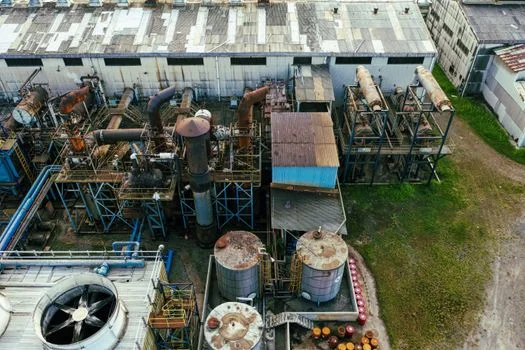
Selecting the optimal industrial wastewater treatment system in Zarqa requires a detailed evaluation of technology capabilities against specific effluent characteristics, desired output quality, and budget constraints. Three prominent technologies—Membrane Bioreactor (MBR), Dissolved Air Flotation (DAF), and Evaporation Crystallization—offer distinct advantages for different industrial applications.
- MBR Systems: MBR technology represents an advanced biological treatment method integrating activated sludge with membrane filtration. MBR systems for Zarqa’s textile and food processing plants are capable of producing exceptionally high-quality effluent, typically achieving COD levels below 10 mg/L and over 99% pathogen removal. This makes MBR ideal for applications requiring direct water reuse for cooling, irrigation, or even process water. However, MBR systems come with a higher Capital Expenditure (CAPEX), ranging from $3M–$5M for a 1,000 m³/day plant, and notable Operational Expenditure (OPEX) driven by energy consumption (0.8–1.2 kWh/m³) and the need for membrane replacement every 3–5 years.
- DAF Units: DAF units for FOG removal in Zarqa’s food processing industry are highly effective for primary or pre-treatment stages, particularly for effluents rich in suspended solids, FOG, and light particles. DAF systems achieve over 95% FOG removal and 70–90% TSS reduction by using micro-bubbles to float contaminants to the surface for skimming. Their CAPEX is significantly lower, typically $500K–$1.5M for a 500 m³/day unit, and OPEX is also lower than MBR. However, DAF is limited as a standalone solution for achieving stringent MoEnv discharge limits or water reuse, often requiring subsequent biological treatment for high-COD effluents.
- Evaporation Crystallization: This technology is specifically designed for Zero-Liquid-Discharge (ZLD) applications, achieving over 99% water recovery by separating water from dissolved solids through thermal processes. Evaporation crystallization for high-COD effluents in soda/chlorine plants is ideal for industries with high-salinity wastewater or those aiming for complete elimination of liquid discharge. While effective for ZLD, its high energy demand (10–15 kWh/m³) and substantial CAPEX ($2M–$4M for a 200 m³/day system) make it suitable primarily for industries where water scarcity is extreme or disposal costs for concentrated brine are prohibitive.
The following table provides a comprehensive comparison of these systems, aiding Zarqa’s industrial buyers in their initial selection process:
| System Type | CAPEX Range (approx.) | OPEX Range (approx.) | Effluent Quality (COD) | Footprint | Ideal Use Cases |
|---|---|---|---|---|---|
| MBR (Membrane Bioreactor) | $3M–$5M (1,000 m³/day) | $0.8–$1.2/m³ (energy, membranes) | <10 mg/L | Compact | High-quality reuse, textiles, food processing |
| DAF (Dissolved Air Flotation) | $500K–$1.5M (500 m³/day) | $0.3–$0.5/m³ (energy, chemicals) | Limited (pre-treatment) | Moderate | Pre-treatment, FOG removal (food processing) |
| Evaporation Crystallization | $2M–$4M (200 m³/day) | $10–$15/m³ (energy) | <10 mg/L (distillate) | Large | ZLD, high salinity (soda/chlorine), brine management |
Cost Breakdown: CAPEX, OPEX, and ROI for Zarqa’s Wastewater Systems
Investing in industrial wastewater treatment in Zarqa requires a clear understanding of the financial implications, encompassing both initial capital outlay and ongoing operational costs, alongside a realistic projection of Return on Investment (ROI). These figures are crucial for budgeting and justifying the significant investment required to meet MoEnv standards and achieve water reuse goals.
Capital Expenditure (CAPEX) for industrial wastewater treatment systems in Zarqa varies widely based on capacity, technology, and effluent complexity. A basic 200 m³/day package plant, often suitable for smaller facilities or as a pre-treatment unit, can have a CAPEX around $500,000. In contrast, a comprehensive 1,000 m³/day MBR system designed for high-quality effluent and water reuse might require an investment exceeding $5 million. These figures typically include equipment, civil works, installation, and commissioning.
Operational Expenditure (OPEX) is a critical long-term consideration, influenced by several key drivers:
- Energy Consumption: This is often the largest OPEX component. MBR systems typically consume 0.8–1.2 kWh/m³ due to aeration and membrane filtration, while DAF units are more energy-efficient at 0.3–0.5 kWh/m³. Evaporation crystallization, being a thermal process, has significantly higher energy demands, ranging from 10–15 kWh/m³.
- Chemical Dosing: Many systems, including DAF and pre-treatment stages for MBR, require chemical dosing systems for pH adjustment and heavy metal precipitation. Costs for coagulants, flocculants, and pH adjusters can range from $0.10–$0.30/m³ depending on effluent characteristics.
- Membrane Replacement and Sludge Disposal: MBR membranes have a finite lifespan, requiring replacement every 3–5 years, which is a significant periodic cost. Sludge management and disposal costs, including dewatering and off-site hauling, can range from $0.20–$0.50/m³ of treated wastewater, varying based on sludge volume and local disposal tariffs.
The Return on Investment (ROI) for advanced wastewater treatment systems in Zarqa can be substantial, particularly when considering MoEnv compliance and water scarcity. For ZLD systems in soda/chlorine plants, a payback period of 3–5 years is achievable, driven by a 25% reduction in fresh water consumption and a 30% cut in wastewater disposal costs. MBR systems in textile industries often see a 5–7 year payback, primarily through avoided MoEnv fines and eligibility for water reuse incentives. Crucially, the cost of inaction is high: MoEnv fines of $10,000 per violation can easily exceed the annual OPEX for compliant systems, making proactive investment a financially sound decision.
Compliance Decision Tree: How to Avoid MoEnv Fines and Enable Water Reuse
Navigating Jordan's MoEnv regulations and leveraging water reuse opportunities requires a structured approach. This decision tree provides a step-by-step framework for industrial facilities in Zarqa to assess their compliance risks, identify treatment needs, and optimize investments for both regulatory adherence and resource recovery.
Step 1: Audit Your Effluent Parameters Against MoEnv Limits. Begin by conducting a comprehensive analysis of your facility's raw wastewater. Measure key parameters such as COD, BOD, TSS, FOG, heavy metals (Cr, Cu), and pH. Compare these against the specific MoEnv discharge limits for industrial wastewater (refer to the table in the "Industrial Effluent Characteristics" section).
- Question: Do your current effluent parameters consistently meet MoEnv discharge limits?
- If NO: Immediate action is required. Proceed to Step 3 to identify suitable treatment technologies.
- If YES: Your facility is compliant with discharge regulations. Proceed to Step 2 to explore water reuse opportunities.
Step 2: Identify Water Reuse Opportunities to Offset CAPEX. Evaluate your facility's internal water demands that could be met with treated wastewater. Common reuse applications include cooling tower makeup water, boiler feed water (with further polishing), process water for non-critical applications, or irrigation for landscaping.
- Question: Are there significant internal water demands that could be met by treated wastewater, reducing fresh water intake?
- If YES: Prioritize treatment technologies that achieve high-quality effluent suitable for reuse (e.g., MBR, ZLD). The value of reclaimed water will directly contribute to ROI.
- If NO: Focus primarily on meeting MoEnv discharge limits with the most cost-effective solution, while still considering future reuse potential.
Step 3: Match System Type to Effluent Characteristics and Goals. Based on your effluent audit (Step 1) and reuse goals (Step 2), select the most appropriate treatment technology.
- For High FOG/TSS (e.g., Food Processing): Start with a DAF unit for efficient pre-treatment. If reuse is desired, follow with biological treatment and MBR.
- For High COD/BOD with Reuse Goal (e.g., Textiles, General Manufacturing): MBR systems are highly effective for achieving stringent discharge and reuse quality.
- For High Salinity/ZLD Goal (e.g., Soda/Chlorine, Brine Management): Evaporation crystallization or Reverse Osmosis (RO) followed by crystallizers are necessary for maximum water recovery and minimal liquid discharge.
Step 4: Calculate Payback Period and Risk Mitigation. Utilize the CAPEX/OPEX data (provided in the "Cost Breakdown" section) to project the payback period for your selected system. Factor in the direct savings from reduced fresh water consumption and avoided wastewater disposal costs, as well as the significant financial benefit of avoiding MoEnv fines.
- Decision Point: Does the projected ROI and risk mitigation justify the investment?
- If YES: Proceed with detailed engineering and procurement.
- If NO: Re-evaluate technology options, explore modular solutions, or consider phased implementation to optimize costs.
This systematic approach, visualized as a decision tree, empowers Zarqa’s industrial facilities to make informed choices, ensuring compliance and fostering sustainable water management.
Zero-Risk Selection Checklist: 7 Questions to Ask Before Buying
Procuring an industrial wastewater treatment system in Zarqa involves significant investment and long-term commitment. To mitigate risks and ensure optimal performance, industrial facility managers and procurement teams should ask these critical questions before finalizing any purchase:
- Does the system consistently meet MoEnv discharge limits for your specific industry? Request verifiable third-party test reports and performance guarantees under varying load conditions. Ensure the proposed effluent quality aligns with MoEnv parameters for COD, BOD, TSS, FOG, and heavy metals specific to your industry.
- What is the energy consumption per m³ of treated wastewater? Compare the quoted energy consumption to benchmarks (e.g., 0.8–1.2 kWh/m³ for MBR systems). High energy use significantly impacts long-term OPEX.
- What are the projected membrane replacement and sludge disposal costs over a 5-year lifecycle? These are often hidden costs. Demand a detailed 5-year lifecycle cost projection that includes consumables, spare parts, and disposal logistics.
- Does the supplier offer local service, technical support, and readily available spare parts in Zarqa or Jordan? Zarqa’s industrial zones can have limited aftermarket support, making local presence crucial for minimizing downtime and operational disruptions.
- Can the system scale with your production growth or changes in effluent volume/quality? Inquire about modular designs or expansion capabilities. A fixed-capacity system may become obsolete quickly if your production scales up.
- What are the system’s water reuse capabilities, and what quality of water can it produce for specific applications? MBR systems typically enable 90%+ water reuse, while DAF units usually require significant post-treatment for anything beyond primary pre-treatment. Clearly define your reuse goals (e.g., irrigation, cooling water, process water) and ensure the system meets those specific quality standards.
- What are the realistic lead times for installation, commissioning, and permitting approval in Zarqa? Local permitting processes can cause significant delays (often 6–12 months). A transparent timeline from the supplier, with experience in Jordanian regulations, is essential for project planning.
Frequently Asked Questions
Industrial buyers in Zarqa often have specific questions regarding compliance, costs, and technology selection for wastewater treatment. Here are answers to some of the most common inquiries:
What are the MoEnv discharge limits for industrial wastewater in Zarqa?
The MoEnv sets specific limits for parameters like COD (<100 mg/L), BOD (<60 mg/L), TSS (<50 mg/L), and FOG (<10 mg/L) for general discharge, with stricter limits for heavy metals and pH (6–9). Limits can vary slightly based on the receiving body and specific industry, but these serve as general benchmarks for compliance in Zarqa.
How much does an MBR system cost for a 500 m³/day textile plant in Zarqa?
For a 500 m³/day textile plant, an MBR system in Zarqa typically involves a CAPEX of $2M–$3M. OPEX can range from $0.8–$1.2/m³, primarily due to energy and membrane replacement. With water reuse opportunities and avoided MoEnv fines, a payback period of 4–6 years is often projected.
Can DAF units handle high-salinity effluents from soda/chlorine plants?
No, DAF units are not suitable for high-salinity effluents from soda/chlorine plants. DAF is effective for removing suspended solids and FOG but does not address dissolved solids (TDS) or high chloride concentrations. For effluents with TDS exceeding 5,000 mg/L, advanced technologies like evaporation crystallization or Reverse Osmosis (RO) are required.
What are the energy requirements for a 200 m³/day ZLD system in Zarqa?
A 200 m³/day ZLD system, which typically incorporates evaporation crystallization, has high energy requirements, consuming approximately 10–15 kWh/m³ of treated wastewater. The CAPEX for such a system would typically range from $2M–$4M, reflecting the complexity and energy intensity of the technology.
How can I reduce MoEnv fines for my food processing plant?
To significantly reduce MoEnv fines for a food processing plant in Zarqa, focus on effective pre-treatment. Installing a DAF unit is highly recommended for efficient FOG removal (>95%), targeting the <10 mg/L FOG limit. Additionally, implementing a robust pH adjustment system is crucial to consistently meet the 6–9 pH discharge range, as fluctuations are common in food processing effluents.