Seattle Industrial Wastewater Treatment: 2025 Engineering Specs & King County Compliance
Industrial wastewater treatment in Seattle is governed by King County Industrial Waste Program (KCIW) local discharge limits under Public Rule PUT-8-13-2-PR. Nonpolar FOG is capped at ≤ 100 mg/L. pH must meet an instantaneous minimum of 5.0, a daily minimum of 5.5, and a maximum of 12.0; earlier planning sheets often cited 6.0–9.0. Heavy metals are limited individually—not as a combined ≤ 1 mg/L ceiling—with daily averages such as arsenic 1.0 mg/L, copper 3.0 mg/L, lead 2.0 mg/L, and zinc 5.0 mg/L for larger users. Planning tables still show TSS ≤ 200 mg/L and combined metals ≤ 1 mg/L as conservative screening values. KCIW oversees approximately 650 industrial dischargers and expects high contaminant removal in practice, commonly in the 90%–98% range for FOG and solids trains. Fines may reach $10,000 per day per violation (King County); earlier materials cited $5,000–$25,000 per day. Dissolved Air Flotation (DAF), Membrane Bioreactor (MBR), and chemical precipitation remain the standard stack, with operating costs typically $0.85–$2.10 per cubic meter.
Seattle-Specific Effluent Limits and Violation Trends
King County’s KCIW program enforces local effluent limits through industrial waste discharge approvals tied to the County’s NPDES-permitted treatment plants. Civil penalties can reach $10,000 per day per violation. Facilities in food processing, metal finishing, and chemical manufacturing still show the highest violation pressure. The table below keeps common planning values for TSS, FOG, pH, and metals alongside typical fine ranges used in budget models.
| Parameter | King County (KCIW) Limit | Common Violations & Industries | Typical Fine Range |
|---|---|---|---|
| TSS | ≤ 200 mg/L | Food Processing, Pulp & Paper | $5,000 - $25,000/day |
| FOG | ≤ 100 mg/L | Food Processing, Restaurants, Commercial Kitchens | $5,000 - $25,000/day |
| pH | 6.0 – 9.0 | Chemical Manufacturing, Metal Finishing | $5,000 - $25,000/day |
| Heavy Metals (e.g., Cu, Zn, Pb) | ≤ 1 mg/L (combined) | Metal Finishing, Aerospace, Electronics | $5,000 - $25,000/day |
Read the table against current code. Nonpolar FOG at 100 mg/L matches PUT-8-13-2-PR. Current pH limits are 5.0 instantaneous minimum, 5.5 daily minimum, and 12.0 maximum, not 6.0–9.0. Metals use individual daily averages rather than a combined ≤ 1 mg/L cap. King County states fines up to $10,000 per day per violation, while older budget sheets still list $5,000–$25,000/day. The State Environmental Policy Act (SEPA) review process in Washington State adds 6–12 months to any major system upgrade. The Port of Seattle's Industrial Wastewater Treatment Plant (IWTP) Enhancement Project went through this review and cut stormwater discharge by 40% with on-site treatment, a benchmark for decentralized industrial wastewater treatment in Seattle. Operators planning capacity expansions should budget SEPA review fees of $10,000–$30,000 alongside KCIW fees that vary by permit level and compliance-monitoring tier; many sites still plan $1,500–$5,000 per year for routine program costs.
Seattle Effluent Limits vs. Treatment Technology Removal Capabilities
Matching influent characteristics to the right technology is the first engineering decision for any Seattle facility. DAF systems lead on FOG and TSS. MBR systems lead on COD, BOD, and pathogen reduction. Chemical precipitation is the practical route for heavy metals, including arsenic at the 1.0 mg/L daily average local limit. The table below maps common planning limits to measured removal rates for each technology.
| Contaminant | King County Limit (Typical) | DAF Removal (%) | MBR Removal (%) | Chemical Precipitation Removal (%) |
|---|---|---|---|---|
| TSS | ≤ 200 mg/L | 92–97% | >99% | 85–95% |
| FOG | ≤ 100 mg/L | 95% (Influent 500-3,000 mg/L) | >98% | 80–90% |
| COD | Varies (often < 200 mg/L for discharge) | 40–60% | ≥ 95% (Effluent ≤ 50 mg/L) | 10–30% |
| BOD | Varies (often < 50 mg/L for discharge) | 30–50% | ≥ 98% (Effluent ≤ 10 mg/L) | 5–20% |
| Heavy Metals (e.g., Cu, Zn, Pb) | ≤ 1 mg/L (combined) | 10–20% | 5–15% | ≥ 95% (Effluent ≤ 1 mg/L) |
| Pathogens | N/A (discharge to sewer) | Limited | 99.9%+ | Limited |
For food processors handling 1,000–3,000 mg/L FOG, DAF systems for FOG and TSS removal routinely achieve the 92% removal needed to hit the 100 mg/L nonpolar FOG KCIW limit. For high-organic or water-reuse applications, Seattle-Tacoma Airport feeds treated wastewater into cooling towers using MBR systems for high-strength industrial wastewater in King County, which hold COD under 50 mg/L and BOD under 10 mg/L. Metal finishers pair chemical precipitation with pH adjustment to 9–11 and polymer dosing at 0.5–2 mg/L to meet individual metal limits such as copper 3.0 mg/L and zinc 5.0 mg/L; older combined ≤ 1 mg/L targets remain a conservative design check. Required removal efficiency follows ((Influent − Effluent) / Influent) × 100%; a 1,200 mg/L FOG influent needs roughly 92% removal to land at 100 mg/L.
Step-by-Step: Designing an Industrial Wastewater System for King County Compliance
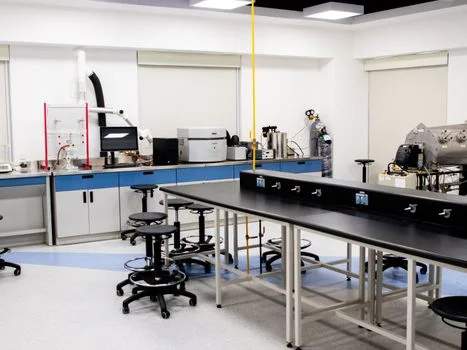
Most plants we size for King County run through the same five-step design sequence. Skipping any step tends to surface later as a permit condition or a failed DMR.
- Characterize Influent: Run grab samples and 24-hour composites for TSS, FOG, COD, BOD, pH, heavy metals, and flow. King County Wastewater Treatment Division (WTD) requires quarterly testing for all permit holders, and categorical applications need data filed at least 90 days before discharge starts.
- Select Pretreatment: For high FOG and TSS, Seattle-optimized DAF systems for FOG and TSS removal handle the bulk of the load. A rotary mechanical bar screen ahead of the DAF protects downstream nozzles from rags and large solids. Equalization tanks buffer flow and concentration swings before the next stage.
- Choose Primary Treatment: For COD above 1,000 mg/L or where effluent reuse is the goal, MBR systems for high-strength industrial wastewater in King County are the most efficient route. Chemical precipitation with pH 9–11 and coagulant dosing is mandatory for heavy metals. Biological units such as the WSZ underground integrated sewage treatment series knock down BOD when space is limited.
- Size System Components: Follow KCIW hydraulic loading rates: DAF at ≤ 5 m/h, MBR at ≤ 20 L/m²/h, conventional sedimentation at ≤ 1 m/h. MBR skids typically need about 60% less footprint than conventional activated sludge, a useful figure for sites like the Port of Seattle IWTP.
- Plan for Sludge Management: Industrial sludge must go to approved sites such as the Cedar Hills Landfill. King County-approved sludge dewatering for industrial facilities, such as plate-and-frame filter presses from 1 to 500 m², cuts hauling volume and OPEX.
2025 Cost Breakdown: CAPEX, OPEX, and ROI for Seattle Industrial Systems
Budgeting for industrial wastewater treatment in Seattle means looking at CAPEX, OPEX per cubic meter, and the line items that move both numbers. The figures below are anchored to King County WTD and Port of Seattle IWTP references and are accurate enough for a procurement committee first pass.
| System Type | Capacity Range | Estimated CAPEX | Estimated OPEX/m³ | Key Cost Drivers |
|---|---|---|---|---|
| DAF Systems | 5–50 m³/h | $80,000 – $250,000 | $0.85 – $1.20 | Chemicals ($0.30/m³), Sludge Disposal ($0.25/m³), Energy |
| MBR Systems | 10–100 m³/day | $150,000 – $500,000 | $1.10 – $2.10 | Membrane Replacement ($0.50/m³ every 5-7 years), Energy, Maintenance |
| Chemical Precipitation | 10–30 m³/h | $50,000 – $150,000 | $0.70 – $1.50 | Chemicals (e.g., Lime $0.20/kg, Polymer $0.15/kg), Sludge Disposal |
A food plant running a 20 m³/h DAF at $120,000 CAPEX and $0.90/m³ OPEX that avoids $50,000 in annual fines pays back the unit in roughly 2.4 years. Add SEPA review ($10,000–$30,000), KCIW fees ($1,500–$5,000/year in many planning models), and 1–2 weeks of operator training, and the realistic first-year outlay is 20–30% above sticker CAPEX.
King County Compliance Checklist: 12 Steps to Permitting
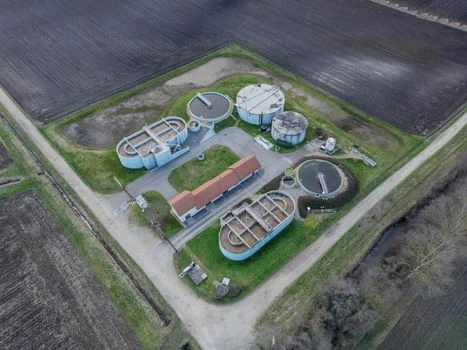
This 12-step sequence mirrors what most Seattle dischargers actually run through, in the order KCIW expects. Treat it as a procurement and engineering schedule, not a marketing checklist.
- 1. Pre-application Meeting: Mandatory for new industrial dischargers. Book 3–6 months ahead through KCIW.
- 2. Submit NPDES Permit Application: File Form 2C with at least 90 days of influent and effluent data, per King County WTD 2024 guidance.
- 3. Complete SEPA Checklist: Required when modifications exceed $500,000 or disturb more than 10% of the site footprint. The form is posted on the Port of Seattle website.
- 4. Install Flow Meters and Sampling Ports: KCIW requires 4-inch sampling ports with lockable caps at all designated monitoring points.
- 5. Develop SPCC Plan: Prepare a Spill Prevention Control and Countermeasure plan under EPA 40 CFR 112.
- 6. Train Staff: Cover KCIW reporting, including quarterly Discharge Monitoring Reports (DMRs) and annual compliance certifications.
- 7. Implement Pretreatment Program: For sites discharging to the regional sewer, document pH neutralization, FOG removal, and any pollutant-specific controls.
- 8. Conduct Vulnerability Assessment: Required for systems with remote monitoring, covering cybersecurity per evolving KCIW expectations.
- 9. Obtain Industrial Waste Discharge Permit: Typical validity is 5 years, with a renewal fee near $1,500 on lower permit tiers.
- 10. Install Signage: Post signs at least 12 inches in diameter showing the permit number at every discharge point.
- 11. Schedule Annual Inspections: KCIW conducts 1–2 unannounced site visits per year, so plan audits around that cadence.
- 12. Maintain Records: Retain sampling data, maintenance logs, chemical usage, and compliance reports for a minimum of 5 years.
Who this is for / Next step
This guide fits plant engineers, EPC contractors, and procurement leads sizing a new or upgraded system in Seattle or anywhere under KCIW jurisdiction. Food processors, metal finishers, and chemical manufacturers will find the DAF, MBR, and precipitation numbers directly applicable. If your waste stream is low-strength domestic sewage or your discharge target is groundwater remediation rather than sewer discharge, the cost and technology assumptions here do not apply, and you should look at dedicated domestic or remediation packages instead. To get a sized proposal with CAPEX, OPEX, and a permit timeline, send your influent data and flow rate through our Seattle wastewater inquiry form.
Frequently Asked Questions
What are the penalties for violating King County industrial wastewater limits?
King County may fine violators up to $10,000 per day per violation for illegal or non-compliant industrial discharges. Earlier budget sheets often listed $5,000–$25,000 per day under older KCIW enforcement summaries. Repeat or severe cases can escalate to permit revocation and published significant noncompliance notices. Facilities may also owe post-violation inspection, sampling, and damage costs. The Port of Seattle's IWTP Enhancement Project set aside $200,000 in contingency during its upgrade phase to cover potential penalties.
Can treated industrial wastewater be discharged directly to Puget Sound?
Generally, no. In King County, industrial wastewater must go to the regional sewer system managed under KCIW approvals. Direct discharge to surface waters needs a separate NPDES permit from the Washington State Department of Ecology or EPA, and that pathway is rarely granted for industrial sources inside the county sewer service area. Most plants therefore design to local sewer limits, not to open-water discharge criteria.
How often does King County test industrial wastewater?
KCIW conducts unannounced sampling about 1–2 times per year at permitted facilities, with extra visits after prior violations. Self-monitoring is typically required quarterly under industrial waste discharge approvals, and records must be kept for at least 5 years. Significant industrial users are inspected and sampled at least once per year to meet federal pretreatment program rules. Operators should treat self-monitoring data as the primary compliance record between KCIW visits.
What is the best treatment technology for a Seattle food processing plant?
For Seattle food processors, Dissolved Air Flotation (DAF) systems deliver over 95% FOG removal and are typically paired with a biological step such as the WSZ series for BOD and COD reduction. A 30 m³/h DAF system generally runs about $180,000 in CAPEX with OPEX near $0.95/m³. That pairing is the usual first design cut when FOG sits at 500–3,000 mg/L and sewer FOG must stay at or below 100 mg/L.
How long does it take to get a King County industrial wastewater permit?
New industrial dischargers in King County should plan for a 6–12 month permitting timeline. Categorical dischargers must file at least 90 days before discharge starts; non-categorical dischargers need at least 60 days. SEPA-reviewed projects can add a public comment window that pushes the upper end of that range. Early pre-application meetings with KCIW cut rework on sampling ports, FOG controls, and metals pretreatment.
Further Reading
Explore these in-depth articles on related wastewater treatment topics: