Idaho Municipal Sewage Treatment Plants 2025: Engineering Specs, Costs & Zero-Risk Compliance Blueprint
Idaho municipal sewage treatment plants must comply with Idaho DEQ’s IDAPA 58.01.16 rules, requiring effluent limits of 30 mg/L BOD and 30 mg/L TSS for discharge permits. For example, a 50,000 GPD SBR system in Kootenai County costs ~$1.2M (90% state-funded) and achieves 95% BOD removal, while MBR systems deliver <1 mg/L TSS for reuse applications—critical for Idaho’s growing rural communities and industrial operations. This guide provides 2025 engineering specs, Idaho-specific cost benchmarks, and a compliance decision framework for selecting the right technology.
Why Idaho’s Municipalities Need Upgraded Sewage Treatment Plants
Idaho’s population grew by 20% from 2010 to 2020, a trend that continues to strain rural areas like Kootenai and Canyon Counties. An Idaho DEQ 2023 report indicates that 80% of septic systems in these high-growth rural zones fail inspections, necessitating a transition to centralized or decentralized municipal treatment plants to prevent groundwater contamination.
The ecological health of the Boise River and Snake River is at a critical juncture. Outdated Publicly Owned Treatment Works (POTWs) contribute significant nutrient loading, particularly phosphorus and nitrogen, which fuels harmful algal blooms. To mitigate this, the Idaho DEQ has mandated upgrades for 42% of the state’s 120+ municipal plants by 2027 under IDAPA 58.01.16.10. These upgrades are not merely regulatory hurdles but essential investments in public health and economic stability.
Consider the 2022 upgrade in Caldwell, Idaho. The city transitioned to a 4.2 MGD Sequencing Batch Reactor (SBR) system, which successfully reduced Biological Oxygen Demand (BOD) by 94%. This proactive engineering shift saved the municipality an estimated $250,000 annually in potential non-compliance fines while supporting local industrial expansion. Idaho’s wastewater challenges include rural decentralization, seasonal tourism spikes, and the need for industrial pre-treatment.
The need for upgraded sewage treatment plants is clear; now, let's examine the regulatory requirements.Idaho DEQ Wastewater Regulations: Compliance Requirements for Municipal Plants

Idaho’s regulatory environment requires a precise understanding of IDAPA 58.01.16. The DEQ defines a POTW as any system—public or private—that treats 2,500 gallons per day (GPD) or more. Systems exceeding this threshold must obtain a DEQ permit. However, systems under 10,000 GPD may qualify for specific exemptions if they utilize subsurface drip irrigation with no surface discharge.
The baseline effluent limits for discharge into Idaho waters are 30 mg/L BOD, 30 mg/L Total Suspended Solids (TSS), and 200 CFU/100mL fecal coliform. While these meet federal standards, many Idaho projects now target higher quality for water reuse. For instance, MBR systems for Idaho’s reuse applications can consistently achieve <1 mg/L TSS, making the effluent suitable for irrigation or industrial process water—a vital capability in Idaho’s water-scarce regions.
The permitting process typically spans 6 to 12 months. For plants discharging into "impaired waters" (those on the 303d list, such as segments of the Boise River), Total Maximum Daily Load (TMDL) requirements may impose even stricter limits on phosphorus and ammonia. Failure to comply is costly; DEQ annual inspections can result in fines of up to $10,000 per day per violation.
| Requirement Parameter | Idaho DEQ (IDAPA 58.01.16) | EPA Secondary Standards | WA/OR Standards (Comparison) |
|---|---|---|---|
| BOD5 (Monthly Avg) | 30 mg/L | 30 mg/L | 25 mg/L (WA) / 20 mg/L (OR) |
| TSS (Monthly Avg) | 30 mg/L | 30 mg/L | 30 mg/L (WA) / 20 mg/L (OR) |
| Fecal Coliform | 200 CFU/100mL | N/A (State dependent) | 200 CFU/100mL |
| Permit Threshold | ≥2,500 GPD | Publicly Owned Systems | Varies by discharge type |
SBR vs MBR vs DAF: Technology Comparison for Idaho Municipal Plants
Sequencing Batch Reactors (SBR) currently dominate the Idaho municipal sector, accounting for roughly 65% of POTWs. Their popularity stems from a low Operating Expenditure (OPEX) of $0.30–$0.50 per 1,000 gallons and mechanical simplicity. However, SBRs require a significant footprint—often 0.5 to 1.0 acres per MGD—and can be sensitive to rapid flow variations.
Membrane Bioreactors (MBR) represent the "gold standard" for high-growth areas. By combining biological treatment with membrane filtration, MBR effluent quality and process parameters far exceed standard discharge requirements. While the Capital Expenditure (CAPEX) is higher ($4.5M–$8M per MGD), the 60% smaller footprint makes it the only viable choice for urban infill projects.
For municipalities dealing with heavy industrial loads, Dissolved Air Flotation (DAF) is an essential pre-treatment step. Using DAF pre-treatment for Idaho’s industrial wastewater allows for the removal of Fats, Oils, and Grease (FOG) and high TSS before the water enters secondary biological treatment.
| Technical Parameter | SBR (Sequencing Batch) | MBR (Membrane Bioreactor) | DAF (Pre-treatment) |
|---|---|---|---|
| Effluent BOD/TSS | <20 / <20 mg/L | <5 / <1 mg/L | 70% removal (Pre-treat) |
| Footprint (Acres/MGD) | 0.5 – 1.0 | 0.2 – 0.4 | 0.1 – 0.2 |
| Energy Use (kWh/1k gal) | 1.2 – 1.8 | 2.0 – 3.5 | 0.5 – 1.0 |
| Sludge Yield | Moderate | Low (40% less than SBR) | High (Chemical sludge) |
| Cold Climate Risk | Low (Process slows) | High (Requires insulation) | Moderate (FOG congealing) |
Idaho Wastewater Treatment Plant Costs: CAPEX, OPEX & Funding Sources
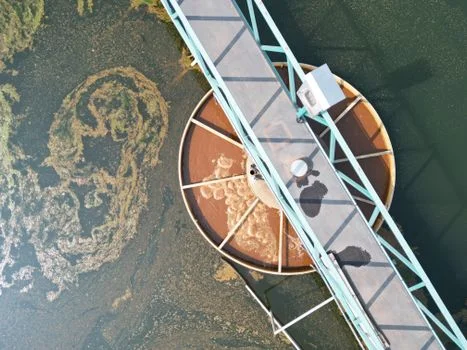
Budgeting for a municipal sewage treatment plant in Idaho requires accounting for 2025 inflationary pressures and regional labor costs. For small-scale rural applications, modular package plants range from $1.2M to $2.5M for capacities of 50,000 to 100,000 GPD. Larger municipal POTWs (1–5 MGD) typically see CAPEX between $5M and $12M.
OPEX is driven primarily by energy (40%) and labor (30%). MBR systems generally have a 20% higher OPEX than SBRs due to the energy required for membrane scouring. To offset these costs, many Idaho municipalities are adopting energy-efficient turbo blowers and remote monitoring systems.
Funding is the most critical hurdle for Idaho projects. The Idaho DEQ 319(h) grants are highly effective for rural projects, often covering up to 90% of costs. The State Revolving Fund (SRF) offers low-interest loans for larger municipal upgrades.
| Plant Capacity (GPD) | Estimated CAPEX | Avg. OPEX ($/1k gal) | Primary Funding Source |
|---|---|---|---|
| 50,000 | $1.2M – $1.6M | $0.65 | DEQ 319(h) / USDA |
| 100,000 | $2.0M – $2.8M | $0.55 | DEQ 319(h) / SRF |
| 500,000 | $4.5M – $6.0M | $0.45 | SRF Loan / Municipal Bond |
| 1,000,000+ | $8.0M+ | $0.35 | SRF Loan / Federal Grants |
Case Studies: Idaho Municipal Sewage Treatment Plant Upgrades
Real-world applications in Idaho demonstrate how technology selection impacts long-term compliance and operational costs. In Caldwell, ID, the 4.2 MGD SBR upgrade addressed aging infrastructure struggling with BOD levels. The $9.8M project was financed largely through a 70% SRF loan.
In Meridian, ID, a 1.5 MGD MBR system was commissioned in 2023 to produce Class A reclaimed water for municipal irrigation. The system consistently delivers <1 mg/L TSS and 5 mg/L BOD. A critical lesson from this site was the implementation of automated "clean-in-place" (CIP) protocols, which reduced membrane fouling by 30%.
Rural success is exemplified by a Kootenai County School District project in 2024. Facing a total failure of their septic leach field, the district installed a 50,000 GPD SBR package plant. The $1.2M cost was 90% covered by a DEQ grant.
How to Select the Right Sewage Treatment Technology for Idaho’s Needs
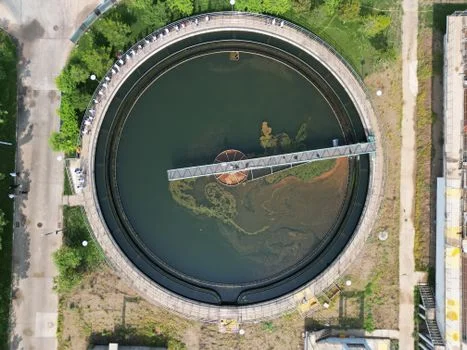
Selecting the right system requires a balanced evaluation of regulatory requirements, environmental conditions, and long-term financial health. Engineers should follow this five-step decision framework:
Step 1: Define Discharge Requirements. If the project involves surface water discharge to an impaired river, SBR is often sufficient. However, if the goal is irrigation or industrial reuse, MBR is mandatory to meet the <1 mg/L TSS threshold.
Step 2: Assess Flow Variability. In Idaho’s resort towns, flows can triple during peak season. SBR systems handle these "slug loads" better than MBRs.
Step 3: Evaluate Footprint Constraints. In rapidly growing urban centers like Boise or Nampa, land is at a premium. MBR systems require 60% less space than SBRs.
Step 4: Compare Total Cost of Ownership (TCO). While SBRs have a lower OPEX, MBRs can generate revenue through water reuse and save on sludge disposal costs.
Step 5: Check Funding Eligibility. Small rural projects should prioritize technologies that qualify for DEQ 319(h) grants. Larger POTWs should focus on SRF-compliant designs.
"The decision between SBR and MBR in Idaho often comes down to the 'Winter Factor.' While MBR offers superior water quality, the engineering required to prevent membrane icing in -20°F weather must be factored into the initial budget." — Senior Environmental Engineer, Idaho Project Group.