Madhya Pradesh’s Sewage Crisis: 2025 Data, Compliance Gaps & Urgent Needs
Madhya Pradesh generates 2,183.65 MLD of sewage (NMCG 2025), but only 12 operational STPs treat approximately 200 MLD, leaving a staggering 90% treatment gap across the state’s 476 urban centers. This infrastructure deficit is particularly acute in Class I cities like Indore and Bhopal, where rapid urbanization has outpaced existing sewer network expansions. Current data from the National Institute of Urban Affairs (NIUA 2025) indicates that the urban population of 20.1 million is projected to grow at an annual rate of 3.5%, further straining the already overburdened sanitation infrastructure. For municipal engineers and procurement officers, the challenge is not just capacity, but compliance; the Madhya Pradesh Pollution Control Board (MPPCB) has tightened discharge limits for 2025, specifically targeting the protection of the Narmada River basin.
The "last-mile" challenge remains the primary bottleneck for municipal projects. Approximately 60% of existing STPs in Madhya Pradesh operate below 70% of their designed capacity due to significant gaps in the secondary and tertiary sewer networks (NIUA 2023). This leads to a paradoxical situation where massive capital is locked in treatment plants while untreated sewage continues to flow into inland surface waters via open drains. In cities like Hoshangabad, Jabalpur, and Sehore, untreated municipal discharge contributes to nearly 60% of the organic pollutant load in the Narmada River. To mitigate this, the Madhya Pradesh Urban Sanitation and Environment Programme (MPUSEP) has prioritized centralized collection systems with integrated treatment technologies that can handle variable influent loads.
| City Name | Sewage Generation (MLD) | Treatment Capacity (MLD) | Primary Treatment Technology |
|---|---|---|---|
| Indore | 350.00 | 312.00 | SBR / Activated Sludge |
| Bhopal | 280.00 | 185.00 | Activated Sludge / MBR |
| Jabalpur | 180.00 | 115.00 | SBR / WSP |
| Gwalior | 120.00 | 90.00 | Activated Sludge |
| Rewa | 50.00 | 21.00 | SBR (Sequencing Batch Reactor) |
Compliance with MPPCB’s 2025 discharge limits is now mandatory for all new project approvals. For inland surface water discharge, the standards require BOD levels below 30 mg/L and COD below 100 mg/L. However, for plants discharging near ecologically sensitive zones or for treated water reuse in urban landscaping, stricter compliance standards for specialized wastewater streams are often applied, mirroring national NGT directives.
SBR vs MBR vs Activated Sludge: Engineering Specs for Madhya Pradesh’s Municipal STPs
Selecting the appropriate treatment technology for a municipal sewage treatment plant in Madhya Pradesh depends heavily on the available land footprint, power reliability, and the target city’s population tier. Sequencing Batch Reactor (SBR) technology currently dominates the landscape for mid-sized cities like Rewa and Jabalpur because it combines aeration and sedimentation in a single basin, reducing the need for secondary clarifiers. For Class I cities with high land costs, Membrane Bioreactor (MBR) systems are becoming the preferred choice due to their significantly smaller footprint and superior effluent quality, which often exceeds MPPCB 2025 requirements.
The detailed engineering process for MBR systems involves integrating biological treatment with microfiltration or ultrafiltration. While MBR offers the highest BOD removal rates (>95%), it requires more intensive pre-treatment. Specifically, pre-treatment screening for MBR and SBR systems using 1–3 mm fine screens is critical to prevent membrane fouling or diffuser clogging. In contrast, traditional Activated Sludge Processes (ASP) remain viable for very large installations (>100 MLD) where land is not a constraint, though they typically struggle to meet the fecal coliform limits without expensive tertiary disinfection stages.
| Engineering Parameter | SBR (Sequencing Batch) | MBR (Membrane) | Activated Sludge (ASP) |
|---|---|---|---|
| Hydraulic Retention Time (HRT) | 6 – 12 Hours | 4 – 8 Hours | 8 – 16 Hours |
| BOD Removal Efficiency | 85% – 92% | >95% | 85% – 90% |
| TSS in Effluent | <20 mg/L | <5 mg/L | 20 – 30 mg/L |
| Footprint Requirement | 0.5 – 1.0 m²/PE | 0.2 – 0.5 m²/PE | 1.0 – 1.5 m²/PE |
| Energy Consumption | 0.6 – 0.8 kWh/m³ | 0.8 – 1.2 kWh/m³ | 0.4 – 0.6 kWh/m³ |
| Sludge Production (kg/TSS) | 0.3 – 0.5 | 0.2 – 0.4 | 0.4 – 0.6 |
For smaller towns and peri-urban areas, compact SBR systems for small towns in Madhya Pradesh offer a decentralized solution that minimizes the cost of laying extensive sewer lines. These systems are often designed as "plug-and-play" units, allowing for modular scaling as the urban population grows. Regardless of the technology, the engineering design must account for the high grit content typical of Indian municipal sewage, necessitating robust grit removal chambers and mechanical bar screens to protect downstream electromechanical equipment.
CAPEX & OPEX Breakdown: 2025 Cost Benchmarks for Madhya Pradesh STPs (5–100 MLD)
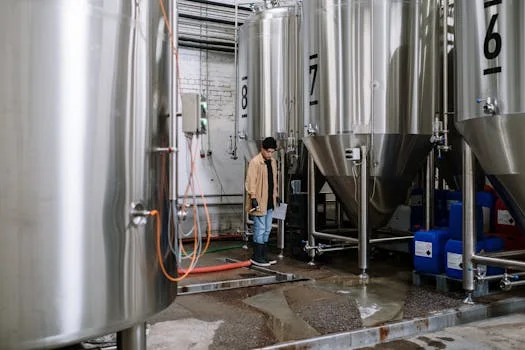
Capital expenditure (CAPEX) for municipal STPs in Madhya Pradesh is currently influenced by the MPUSEP funding model, which provides up to a 70% grant for cities with populations under 100,000, financed largely through KfW Germany. For procurement officers, understanding the lifecycle cost is more critical than the initial bid price. While Activated Sludge plants have the lowest CAPEX, their higher land requirements and sludge management costs often result in a higher 20-year lifecycle cost compared to SBR systems. MBR systems represent the highest initial investment but offer the potential for revenue generation through the sale of high-quality treated water for industrial use or HVAC cooling towers.
Operational expenditure (OPEX) in Madhya Pradesh is dominated by energy costs, which account for 30–40% of the total monthly budget. To mitigate this, many new tenders now specify solar-powered aeration systems or high-efficiency blowers with variable frequency drives (VFDs). For anaerobic stages, a cost comparison for anaerobic treatment options suggests that UASB reactors can reduce energy demand, though they require more sophisticated gas management than aerobic-only systems. Sludge management also represents a significant cost driver; utilizing sludge dewatering solutions for Madhya Pradesh STPs can reduce sludge volume by 70%, drastically cutting transportation and disposal fees.
| Cost Component (2025 Benchmarks) | SBR Technology | MBR Technology | ASP Technology |
|---|---|---|---|
| CAPEX per MLD (USD) | $120,000 – $180,000 | $180,000 – $250,000 | $100,000 – $150,000 |
| OPEX per m³ (USD) | $0.15 – $0.25 | $0.20 – $0.35 | $0.10 – $0.20 |
| 20-Year Lifecycle Cost (per MLD) | $2.5M – $3.5M | $3.0M – $4.5M | $2.0M – $3.0M |
| Membrane/Media Replacement | Low (10-15 years) | High (5-7 years) | N/A |
| Land Cost (as % of CAPEX) | 5% – 8% | 2% – 4% | 10% – 15% |
Strategic cost-saving measures for municipal projects include the adoption of modular designs. By installing treatment capacity in phases (e.g., 5 MLD modules), municipalities can avoid the "stranded asset" problem where a 20 MLD plant operates at 20% capacity for the first five years while the sewer network is being built. integrating MBR systems for Class I cities like Indore and Bhopal allows for the recovery of valuable urban real estate that would otherwise be dedicated to large clarifiers and maturation ponds.
Equipment Selection Checklist: Zero-Risk Procurement for MPPCB-Compliant STPs
Procuring equipment for a municipal STP requires a rigorous technical evaluation framework to ensure the selected vendor can meet the 24/7 operational demands of urban sanitation. The following checklist is designed for Madhya Pradesh municipal engineers to use during the RFP evaluation phase:
- Step 1: Technology-Population Matching: Ensure SBR is prioritized for towns <50 MLD due to operational simplicity. For high-density urban cores like Bhopal, verify that MBR is selected to minimize footprint and maximize effluent quality.
- Step 2: Influent Characterization: Validate that the equipment is designed for typical MP municipal sewage: BOD (150–400 mg/L), COD (300–800 mg/L), and high TSS (200–500 mg/L). Designs based on weaker European sewage standards often fail in the Indian context.
- Step 3: Discharge Compliance Verification: Demand performance certificates showing the system consistently hits MPPCB 2025 limits (BOD <30 mg/L, COD <100 mg/L, TSS <30 mg/L).
- Step 4: Automation and Remote Monitoring: Ensure the system includes PLC-based controls with SCADA integration. This is a mandatory requirement for MPUSEP and KfW-funded projects to allow for centralized state-level monitoring.
- Step 5: Pre-treatment Integrity: Verify that the vendor has included robust mechanical bar screens (1–6 mm) and automated grit removal. Failure in pre-treatment is the leading cause of pump and membrane failure in Madhya Pradesh.
- Step 6: Maintenance and Warranty: Request a minimum 12-month mechanical warranty and a 5-year performance guarantee on membranes or aeration diffusers. Ensure the vendor has a local service presence in Madhya Pradesh (e.g., Indore or Bhopal hubs).
- Step 7: Sludge Handling Strategy: Confirm the inclusion of mechanical dewatering (filter presses or centrifuges). Open sludge drying beds are increasingly discouraged by the MPPCB due to odor and land use issues.
Case Study: Rewa’s 9 MLD SBR Plant—Design, Performance & Lessons for Madhya Pradesh
The 9 MLD Sewage Treatment Plant in Rewa, located near the Forest Range Office, serves as a benchmark for modern sanitation projects in Madhya Pradesh. Utilizing Sequencing Batch Reactor (SBR) technology with an integrated Anoxic/Aerobic (A/O) process, the plant was designed to handle the city’s fluctuating sewage volumes while meeting stringent environmental standards. The facility includes a main pumping station (MPS) and two intermediate pumping stations (IPS) to manage the city's topography, ensuring a steady flow to the treatment basins.
According to a 2024 MPPCB audit, the Rewa plant consistently achieves a BOD removal rate of 92% and a TSS removal rate of 88%. One of the critical success factors was the implementation of a robust pre-treatment stage. By using a pre-treatment screening for MBR and SBR systems, the plant successfully protects its aeration diffusers from the heavy plastic and rag load typical of the local influent. The modular design of the SBR basins allowed the municipal corporation to save approximately 30% in CAPEX by phasing the electromechanical installation.
A key lesson learned from the Rewa project is the importance of power redundancy. Initial operations faced challenges due to regional power outages, which were mitigated by installing a 24/7 synchronized backup generator system and VFDs on all major blowers. This ensures the biological culture remains active even during grid failures. For other cities in Madhya Pradesh, the Rewa model demonstrates that SBR technology, when paired with high-quality mechanical components and automated controls, provides a reliable and cost-effective path to compliance.
Frequently Asked Questions
What are the MPPCB’s 2025 discharge limits for municipal STPs?
According to MPPCB Notification No. 12/2024, municipal STPs must ensure effluent quality of BOD <30 mg/L, COD <100 mg/L, TSS <30 mg/L, and fecal coliform <1,000 MPN/100mL for discharge into inland surface waters. Stricter limits may apply for discharge into the Narmada River.
How much does a 10 MLD STP cost in Madhya Pradesh?
For 2025, the estimated CAPEX for a 10 MLD plant ranges from $1.2M to $1.8M for SBR technology and $1.8M to $2.5M for MBR systems. OPEX typically ranges between $0.15 and $0.35 per cubic meter treated, depending on energy efficiency measures.
Which technology is best for small towns (<50 MLD) in Madhya Pradesh?
SBR (Sequencing Batch Reactor) is generally recommended for small to mid-sized towns. it offers a lower CAPEX ($120K–$180K/MLD), requires less land than ASP, and has been successfully proven in cities like Rewa and Jabalpur.
What pre-treatment is required for MBR systems?
MBR systems require high-precision pre-treatment, including 1–3 mm fine bar screens (such as the HydropureWater GX Series) and vortex grit removal. This is essential to protect the membranes from physical damage and clogging by fibrous materials.
How can municipalities reduce STP energy costs?
Municipalities can reduce costs by 30-40% through solar-powered aeration, the use of high-efficiency turbo blowers with VFDs, and implementing PLC-based automated dissolved oxygen (DO) control to prevent over-aeration during low-flow periods.
Further Reading
Explore these in-depth articles on related wastewater treatment topics: