Bangladesh’s industrial wastewater crisis—5.3 million m³/day in Greater Dhaka alone—demands solutions that balance DoE compliance, cost, and reuse potential. In 2026, three technologies dominate: Dissolved Air Flotation (DAF) for high-TSS textile effluents (92–97% removal), MBR for near-reuse-quality effluent (COD ≤50 mg/L), and electrocoagulation for heavy metal-laden streams (99%+ nickel/copper removal). CAPEX ranges from BDT 5M (DAF) to BDT 50M (MBR), with payback periods of 18–36 months via water reuse savings. This guide provides engineering specs, cost models, and zero-risk compliance strategies for each.
Why Bangladesh’s Industrial Wastewater Crisis Demands Zero-Risk Solutions
The textile industry alone generates 70% of Greater Dhaka’s 5.3 million m³/day wastewater, as reported by World Bank 2026 data, highlighting the severe environmental burden. Untreated industrial effluent poses significant threats to public health and agricultural productivity; a UEPZ study (MDPI 2025) demonstrated that such discharges reduce crop yields by 30% and increase waterborne diseases by 40% in areas like Nilphamari. While the Department of Environment (DoE) mandates Effluent Treatment Plants (ETPs) for industrial clearance, 60% of small and medium factories in Bangladesh still lack adequate treatment facilities, according to a DoE 2024 compliance report. This regulatory gap, coupled with the socio-environmental impact, underscores the urgent need for effective wastewater management. the Alliance for Water Reuse and Recycling (A4R Alliance) has set an ambitious 20% wastewater reduction target by 2025, actively driving the adoption of advanced, reuse-ready systems like MBR across the industrial sector. Achieving these targets is not merely an environmental obligation but an economic imperative, transforming wastewater from a liability into a valuable resource for water-stressed industries.
Technology Comparison: DAF vs MBR vs Electrocoagulation for Bangladesh’s Industrial Effluents
Selecting the optimal industrial wastewater treatment technology in Bangladesh hinges on specific effluent characteristics and desired discharge or reuse quality. Each primary technology—Dissolved Air Flotation (DAF), Membrane Bioreactors (MBR), and Electrocoagulation—offers distinct advantages and limitations tailored to different industrial needs.
Dissolved Air Flotation (DAF) systems, such as the DAF systems for high-TSS textile wastewater, are highly effective for pre-treatment of high-TSS (Total Suspended Solids) effluents common in textile dyeing, washing, and food processing. These units achieve 92–97% TSS removal, operating efficiently across flow rates of 4–300 m³/h. Their hydraulic loading typically ranges from 2–4 m/h, utilizing micro-bubbles (20–50 μm) to float suspended solids, oils, and greases to the surface for skimming. DAF excels at physical separation but struggles with dissolved chemical oxygen demand (COD) and biological oxygen demand (BOD) components.
Membrane Bioreactors (MBR), exemplified by Integrated MBR systems for water reuse in Bangladesh’s EPZs, are ideal for achieving near-reuse quality effluent. MBR systems consistently produce effluent with COD ≤50 mg/L and turbidity <1 NTU, making it suitable for various industrial reuse applications. These systems integrate biological treatment with membrane filtration, offering superior effluent quality compared to conventional activated sludge. MBR configurations include submerged (lower energy, easier maintenance) and external (higher flux, more compact). Energy consumption typically ranges from 0.6–1.2 kWh/m³, and membranes boast a lifespan of 5–8 years with proper maintenance. However, MBR systems require effective pre-treatment to handle high concentrations of Fats, Oils, and Greases (FOG) to prevent membrane fouling.
Electrocoagulation (EC) is an optimal choice for industrial effluents laden with heavy metals and complex organics, achieving over 99% removal of nickel and copper, and 99.5% for cyanide. This technology utilizes electrical current to destabilize contaminants, forming flocs that are easily separated. Common electrode materials include iron and aluminum, operating at current densities of 10–20 A/m². One key advantage is reduced sludge generation (0.3–0.5 kg/m³ of treated water) compared to chemical coagulation, and the sludge is often less voluminous and easier to dewater. For specific applications, further details on Electrocoagulation specs for heavy metal removal in Bangladesh’s EPZs can be found. EC systems generally require pH adjustment, typically maintaining a range of 6–9 for optimal performance.
| Technology | Primary Application | Key Performance Metric | Removal Efficiency | Energy Consumption (kWh/m³) | Footprint (relative) | Limitations |
|---|---|---|---|---|---|---|
| DAF | High-TSS textile/food processing | TSS removal | 92–97% TSS | 0.3–0.5 | Medium | Limited dissolved COD/BOD removal |
| MBR (DF Series) | Water reuse, high-quality effluent | COD, Turbidity | COD ≤50 mg/L, Turbidity <1 NTU | 0.6–1.2 | Compact | Requires pre-treatment for high FOG/TSS |
| Electrocoagulation | Heavy metals, cyanide, complex organics | Heavy metal removal | 99%+ Nickel/Copper, 99.5% Cyanide | 0.4–0.7 | Medium | Requires pH adjustment, higher OPEX for electrodes |
2026 Cost Models: CAPEX, OPEX, and Payback Periods for Bangladesh’s Factories
Understanding the financial implications of industrial wastewater treatment in Bangladesh requires a detailed breakdown of both Capital Expenditure (CAPEX) and Operational Expenditure (OPEX), alongside realistic payback period estimations. For a typical 100 m³/h system, CAPEX varies significantly by technology. A DAF system might require a CAPEX of approximately BDT 8M, while an MBR system, due to its advanced membrane technology and higher effluent quality, typically ranges around BDT 35M. Electrocoagulation systems for similar capacity are estimated at BDT 12M. These figures typically include core equipment, but civil works, encompassing tank construction and foundation, can add 20–30% to the total CAPEX. Automation, often involving PLC-controlled systems, represents an additional investment of approximately BDT 1.5M, enhancing operational efficiency and reducing manual intervention.
OPEX is primarily driven by energy consumption, chemical usage, and sludge disposal. DAF systems are relatively energy-efficient, consuming about 0.3 kWh/m³ of treated water. MBR systems, with their membrane filtration, have higher energy demands, typically around 0.8 kWh/m³. Chemical costs for coagulants and flocculants range from BDT 50–100/kg, essential for DAF and sometimes for pre-treatment in MBR or post-treatment in EC. Sludge disposal costs in Dhaka range from BDT 200–500/ton, a significant recurring expense that varies based on sludge volume and hazardous content.
Payback periods offer a crucial metric for evaluating investment viability. For DAF systems, payback can be achieved within 18–24 months, primarily through the avoidance of DoE penalties for non-compliance. MBR systems, with their higher initial investment, offer a longer payback period of 30–36 months, largely driven by substantial water reuse savings and reduced freshwater abstraction costs. Several financing options are available to mitigate initial costs: the A4R Alliance provides grants covering up to 30% of CAPEX for eligible projects, the DoE offers low-interest loans (around 5%) for Small and Medium Enterprises (SMEs), and the Board of Investment (BOI) provides tax holidays for up to 5 years for factories operating within Export Processing Zones (EPZs).
| Cost Category | DAF (100 m³/h) | MBR (100 m³/h) | Electrocoagulation (100 m³/h) |
|---|---|---|---|
| CAPEX (BDT) | 8,000,000 | 35,000,000 | 12,000,000 |
| Civil Works (20–30% of core) | 1,600,000–2,400,000 | 7,000,000–10,500,000 | 2,400,000–3,600,000 |
| Automation (PLC) | 1,500,000 | 1,500,000 | 1,500,000 |
| OPEX per m³ (BDT) | |||
| Energy (kWh/m³) | 0.3 | 0.8 | 0.5 |
| Chemicals (BDT/kg) | 50–100 | (Pre-treatment only) | (Electrode replacement) |
| Sludge Disposal (BDT/ton) | 200–500 | 200–500 | 200–500 |
| Estimated Payback Period | 18–24 months | 30–36 months | 24–30 months |
Compliance Checklist: Meeting DoE and EPA Standards in Bangladesh
Meeting Bangladesh's Department of Environment (DoE) and Environmental Protection Agency (EPA) standards is non-negotiable for industrial operations, requiring a structured approach to system selection and operation. The DoE's 2026 discharge limits, as outlined in the DoE Gazette 2024, mandate that treated effluent must meet stringent parameters: Chemical Oxygen Demand (COD) ≤200 mg/L, Biological Oxygen Demand (BOD) ≤50 mg/L, Total Suspended Solids (TSS) ≤100 mg/L, and a pH range of 6–9. For industries aiming for water reuse, particularly with MBR systems, the EPA's 2023 reuse standards are more demanding, requiring turbidity <1 NTU and E. coli <10 CFU/100 mL, indicative of high-quality, sanitized water.
Effective pre-treatment is a critical first step for compliance and optimal ETP performance. This typically includes robust screening, often utilizing GX Series bar screens for rags/fibers, to remove large solids and prevent damage to downstream equipment. An equalization tank with 2–4 hours retention time is essential to buffer flow and pollutant load fluctuations, ensuring a consistent influent quality for the main treatment units. pH adjustment, managed by PLC-controlled dosing for pH adjustment and coagulation, is frequently required to bring the wastewater within the optimal range for biological and chemical processes. Continuous monitoring is indispensable for maintaining compliance and demonstrating due diligence during DoE audits. Installing online sensors for pH, TSS, and COD, complete with data logging capabilities (a 3-parameter system typically costs BDT 2M–4M), allows for real-time performance tracking and provides undeniable evidence of adherence to discharge limits.
Case Study: Upgrading Fakir Knitwear’s ETP with DAF and Water Reuse (A4R Alliance 2025)
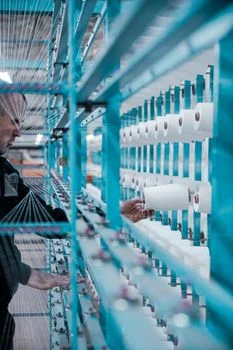
Fakir Knitwear, a prominent textile factory in Bangladesh, faced significant challenges with its conventional Effluent Treatment Plant (ETP), consistently failing DoE inspections due to elevated Total Suspended Solids (TSS) levels, which often reached 180 mg/L against the mandated 100 mg/L limit. This non-compliance exposed the factory to substantial penalties and operational risks. In response, Fakir Knitwear, with support from the A4R Alliance in 2025, implemented a strategic upgrade to its wastewater treatment infrastructure. The chosen solution involved installing a DAF-100 system, capable of treating 100 m³/h of textile wastewater, integrated with an automatic chemical dosing system for optimized coagulation and flocculation. The total CAPEX for this upgrade was BDT 12M, with a crucial 30% grant provided by the A4R Alliance, significantly reducing the initial investment burden.
The implementation of the DAF-100 system yielded immediate and substantial improvements. Post-treatment TSS levels were consistently reduced to below 30 mg/L, comfortably meeting and exceeding DoE discharge limits. the enhanced treated water quality facilitated a 70% water reuse rate within the factory's non-critical processes, resulting in annual water savings estimated at BDT 2.5M. This economic benefit contributed to an impressive payback period of just 22 months for the investment. Key lessons learned from this project, and further insights from case studies from Indonesia’s textile wastewater treatment projects, emphasized the critical role of proper pre-treatment, particularly effective screening, for textile effluents. While DAF proved highly effective for TSS removal and initial water savings, achieving higher-grade water reuse for color-sensitive processes or critical applications often necessitates further treatment stages, such as MBR, to address residual COD and ensure stringent quality compliance.
Supplier Selection Framework: 5 Questions to Ask Before Buying
Choosing the right wastewater treatment equipment supplier in Bangladesh is a strategic decision that extends beyond initial purchase price, directly impacting long-term operational reliability and compliance. To mitigate risks and ensure a successful ETP project, industrial buyers should pose five critical questions during the evaluation process.
- Do they have a Dhaka service center? A local presence is paramount for rapid response in industrial environments. A supplier with a dedicated service center in Dhaka or nearby regions should guarantee a response time of less than 24 hours for critical breakdowns, minimizing costly downtime.
- Can they provide DoE/EPA compliance guarantees? A reputable supplier should offer a clear performance guarantee, such as "TSS <100 mg/L or full refund," demonstrating confidence in their equipment's ability to meet specific DoE or EPA discharge limits. This transfers some of the compliance risk to the supplier.
- Do they offer financing/grant assistance? Understanding local financial incentives is crucial. Inquire if the supplier has partnerships with organizations like the A4R Alliance for grant applications or can provide guidance on navigating BOI tax holiday benefits for EPZ factories, which can significantly reduce CAPEX.
- What’s their local reference list? Requesting and verifying a list of at least two operational installations in Bangladesh allows for direct observation of equipment performance, maintenance requirements, and overall client satisfaction in a local context.
- Do they include operator training? Proper operation and maintenance are vital for ETP longevity and efficiency. A comprehensive supplier package should include on-site operator training at the time of installation, supplemented by remote monitoring support for at least 12 months post-commissioning to ensure sustained performance and knowledge transfer.
Frequently Asked Questions
Navigating the complexities of industrial wastewater treatment in Bangladesh often raises specific questions for engineers and procurement managers.
What’s the cheapest way to meet DoE TSS limits? DAF systems, with CAPEX ranging from BDT 5M–15M for typical industrial capacities, are generally 60% cheaper than MBR for primary TSS removal. However, DAF does not effectively address dissolved COD or BOD, which are also part of DoE limits.
Can MBR effluent be reused in textile dyeing? Yes, MBR effluent is high-quality and suitable for many textile processes. However, for color-sensitive dyeing or critical applications requiring very low COD (<30 mg/L) and complete pathogen removal, additional post-treatment such as Reverse Osmosis (RO) or Ultraviolet (UV) disinfection is often recommended.
How much sludge does electrocoagulation generate? Electrocoagulation typically generates 0.3–0.5 kg of sludge per cubic meter of treated water. This sludge volume is generally lower and denser than that from chemical coagulation, potentially reducing disposal frequency. Disposal costs in Dhaka range from BDT 200–500 per ton, varying by hazardous content and transport distance.
Are there grants for wastewater treatment in Bangladesh? Yes, the A4R Alliance offers CAPEX grants of up to 30% for textile factories investing in water reuse and recycling technologies. Additionally, the Department of Environment (DoE) provides low-interest loans, typically around 5%, for Small and Medium Enterprises (SMEs) to adopt compliant wastewater treatment solutions.
What’s the lifespan of an MBR membrane in Bangladesh? With proper operation and maintenance, MBR membranes in Bangladesh can last 5–8 years. Regular cleaning-in-place (CIP), often weekly with chemicals like citric acid or NaOH, is crucial to prevent fouling and extend membrane life.