Municipal sewage treatment plants in Luzon must meet DENR DAO 2016-08 General Effluent Standards for the receiving water class. For many Class C inland discharges that means BOD <50 mg/L and TSS <70 mg/L, while serving catchments from about 50,000 to more than 1 million residents. The Ilugin STP in Pasig City, a 100 MLD facility, remains a practical capacity and compliance benchmark. Procurement teams still choose between conventional activated sludge (CAPEX about $1.2–1.8M/MLD) and MBR (CAPEX about $2.0–2.5M/MLD, typically ~60% smaller footprint).
This guide organizes capacity rules, process specs, cost drivers, and a supplier checklist for 2025–2026 Luzon projects.
Municipal Sewage Treatment Plants in Luzon: Capacity and Compliance
Municipal sewage treatment plants in Luzon are sized from population using about 1 MLD per 10,000 residents, then locked to DENR DAO 2016-08 limits for the discharge class. A 500,000-person city therefore needs roughly 50 MLD of secondary capacity before peaking allowances. Effluent must clear BOD, TSS, fecal coliform, and pH gates or face RA 9275 enforcement.
Meeting DENR Administrative Order 2016-08 is mandatory for Luzon municipal STPs. For many inland Class C discharges, designers still target BOD less than 50 mg/L, TSS less than 70 mg/L, fecal coliform less than 1,000 MPN/100mL, and pH 6.5–8.5 as stated in common bid specs. Non-compliance can trigger daily fines up to ₱1 million under Republic Act 9275 (Philippine Clean Water Act of 2004). Most plants we size for LGU and concession catchments run at the lower end of the capacity curve until sewer laterals catch up.
Projected sewage generation in Luzon cities still follows that 1 MLD per 10,000 residents estimate based on MWSS guidelines. A city with 500,000 residents would therefore require about a 50 MLD STP before peaking factors. The table below keeps the estimated 2025 sewage generation figures for select Luzon cities drawn on PSA 2023 population projections.
| Luzon City (Example) | Estimated 2025 Population | Estimated 2025 Sewage Generation (MLD) |
|---|---|---|
| Quezon City | 3,200,000 | 320 |
| Caloocan City | 1,700,000 | 170 |
| Antipolo City | 950,000 | 95 |
| Bulacan (Selected Municipalities) | 700,000 | 70 |
Key operators include Manila Water (East Zone of Metro Manila and Rizal) and Maynilad (West Zone), plus LGU-led plants outside the concession. Many large STPs use PPP structures such as Build-Operate-Transfer (BOT). Ilugin STP in Pasig City treats about 100 MLD for roughly 600,000 residents. Typical influent there sits near 250 mg/L BOD and 300 mg/L TSS, treated with anoxic/aerobic activated sludge and secondary sedimentation. Where a city needs a smaller packaged train before the trunk sewer arrives, a package wastewater treatment plant in Luzon is often the interim bridge.
Treatment Technologies for Luzon’s Municipal Sewage: MBR vs. Conventional Activated Sludge
Conventional activated sludge (CAS) and membrane bioreactor (MBR) trains differ most on footprint, energy, and effluent polishing needs for Luzon municipal sewage. CAS uses aeration tanks plus secondary clarifiers, typically removing 85–95% of BOD and 80–90% of TSS at hydraulic retention times (HRT) of 6–12 hours. Field CAPEX benchmarks for CAS remain $1.2–1.8M/MLD, with OPEX about $0.15–0.25/m³ (HydropureWater field data, 2025).
MBR folds submerged PVDF membranes into the bioreactor, dropping separate clarifiers and most tertiary filters. Footprint is typically about 60% smaller than a comparable CAS plant. BOD removal of 95–99% and TSS removal above 99% are routine when membranes are healthy, which suits tight urban sites. CAPEX rises to about $2.0–2.5M/MLD and OPEX to about $0.25–0.40/m³ because of scour air and membrane cleaning.
For dense districts such as Makati or Bonifacio Global City, compact MBR systems for urban Luzon projects cut land take when plot prices dominate NPV. Plants above about 50 MLD with available land still often prefer CAS on first-cost grounds. Hospital or satellite nodes that also need dedicated waste water tanks + luzon equalization should keep those tanks off the municipal headworks hydraulic model. Head-to-head parameters stay as follows:
| Parameter | Conventional Activated Sludge (CAS) | Membrane Bioreactor (MBR) |
|---|---|---|
| Footprint | Large (requires secondary clarifier) | 60% smaller (no clarifier/tertiary) |
| Energy Use | Moderate (aeration, pumping) | Higher (aeration, membrane scouring) |
| Sludge Production | Moderate (0.3-0.5 kg TSS/kg BOD removed) | Slightly higher (longer SRT) |
| Effluent Quality (BOD) | 85-95% removal (<50 mg/L) | 95-99% removal (<10 mg/L) |
| Effluent Quality (TSS) | 80-90% removal (<70 mg/L) | >99% removal (<5 mg/L) |
| CAPEX (per MLD) | $1.2–1.8M | $2.0–2.5M |
| OPEX (per m³) | $0.15–0.25 | $0.25–0.40 |
| Maintenance Complexity | Moderate | Higher (membrane cleaning, replacement) |
Engineering Specifications for Luzon STPs: Influent, Effluent, and Process Parameters
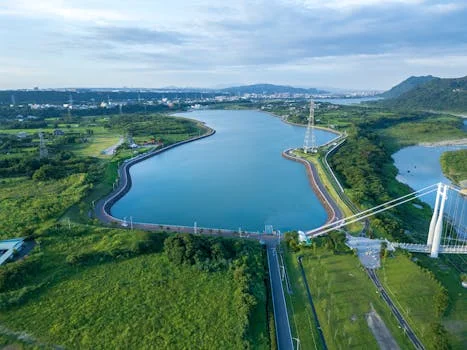
Influent characterization for Luzon municipal STPs usually falls in 200–350 mg/L BOD, 250–400 mg/L TSS, 30–50 mg/L NH₄-N, and pH 6.8–7.5. Data from Ilugin STP and Maynilad projects support those bands for aeration, anoxic volume, and chemical dose calculations. Designers should still sample wet-season dilution and dry-season concentration separately before freezing tank volumes.
Effluent targets remain those in DENR DAO 2016-08 for the receiving class, with BOD <50 mg/L, TSS <70 mg/L, and coliform <1,000 MPN/100mL still written into many Luzon municipal contracts. Reuse for irrigation or cooling needs tertiary filtration plus DENR-compliant disinfection for municipal effluent with chlorine dioxide or UV. Concessionaires have also been upgrading plants to DENR DAO 2021-19 revised effluent standards; keep both orders in the compliance matrix during bid review (BusinessWorld reporting on Maynilad upgrades, 2025).
Process set-points for CAS HRT stay near 6–12 hours; MBR HRT is often 4–8 hours at higher MLSS. SRT of 15–30 days and F/M of 0.2–0.5 kg BOD/kg MLSS/day keep nitrifiers stable in tropical water temperatures. Aeration demand typically sits at 1.2–1.5 kg O₂ per kg BOD removed when alpha factors are measured on site rather than copied from temperate manuals.
Sludge yield of 0.3–0.5 kg TSS per kg BOD removed drives digester and dewatering sizing. Belt presses or centrifuges used as sludge dewatering solutions for Luzon STPs commonly cut volume by 80–90%, leaving 18–30% cake solids for landfill, composting, or incineration under local rules.
| Parameter Category | Parameter | Typical Range/Value | Unit |
|---|---|---|---|
| Influent Characteristics | BOD₅ | 200–350 | mg/L |
| TSS | 250–400 | mg/L | |
| NH₄-N | 30–50 | mg/L | |
| pH | 6.8–7.5 | - | |
| Effluent Targets (DENR DAO 2016-08) | BOD₅ | <50 | mg/L |
| TSS | <70 | mg/L | |
| Fecal Coliform | <1,000 | MPN/100mL | |
| Process Parameters | Hydraulic Retention Time (CAS) | 6–12 | hours |
| Hydraulic Retention Time (MBR) | 4–8 | hours | |
| Sludge Retention Time (SRT) | 15–30 | days | |
| F/M Ratio | 0.2–0.5 | kg BOD/kg MLSS/day | |
| Sludge Management | Sludge Production Rate | 0.3–0.5 | kg TSS/kg BOD removed |
| Dewatered Solids Content | 18–30 | % |
What Does a Municipal Wastewater Treatment Plant Cost?
Municipal wastewater treatment plant cost in Luzon tracks technology more than brand: CAS CAPEX of $1.2–1.8M/MLD versus MBR CAPEX of $2.0–2.5M/MLD (2025 USD) still frames most bid evaluations. Civil works usually take about 40% of CAPEX, mechanical 30%, electrical 20%, and instrumentation & control 10%. Land value can erase the MBR premium in Metro Manila CBDs within a few years of NPV.
What is STP construction cost per m³/d?
Philippines sewage treatment plant construction cost per cubic meter per day converts directly from the per-MLD benchmarks: $1,200–1,800 per m³/d for CAS and $2,000–2,500 per m³/d for MBR at 2025 USD pricing. OPEX adds $0.15–0.25/m³ for CAS and $0.25–0.40/m³ for MBR, with energy near 40% of operating spend. For regional context, compare cost benchmarks for Southeast Asian STPs.
OPEX splits typically run energy ~40%, chemicals ~20%, labor ~15%, routine maintenance ~15%, and sludge disposal ~10% (HydropureWater field data, 2025). A 20-year NPV on a 50 MLD plant still shows MBR competitive when land is scarce or reuse revenue is bankable. Funding routes include BOT/BOO PPP structures, LGU budgets, DENR-linked grants, and multilateral loans. Earlier guidance often cited Maynilad’s multi-year ~$300M wastewater expansion envelope. According to BusinessWorld (2025), Maynilad spent ₱25.75 billion on water and wastewater infrastructure in 2024. About ₱7 billion of that went to sewerage works and plant upgrades aimed at DENR DAO 2021-19 compliance.
| Cost Category | Conventional Activated Sludge (CAS) | Membrane Bioreactor (MBR) | Breakdown Components (Example) |
|---|---|---|---|
| CAPEX (per MLD, 2025 USD) | $1.2–1.8M | $2.0–2.5M | Civil Works (40%), Mechanical (30%), Electrical (20%), I&C (10%) |
| OPEX (per m³) | $0.15–0.25 | $0.25–0.40 | Energy (40%), Chemicals (20%), Labor (15%), Maintenance (15%), Sludge Disposal (10%) |
| Sample Lifecycle Cost Comparison (20-Year NPV for 50 MLD Plant, illustrative) | |||
| Initial CAPEX | ~$75M (avg $1.5M/MLD) | ~$112.5M (avg $2.25M/MLD) | |
| Annual OPEX (Year 1) | ~$3.65M (avg $0.20/m³) | ~$6.38M (avg $0.35/m³) | |
| Total 20-Year NPV (discounted) | ~$130M – $160M | ~$140M – $180M (highly dependent on land value & reuse potential) | |
Supplier Evaluation Checklist for Luzon STP Procurement
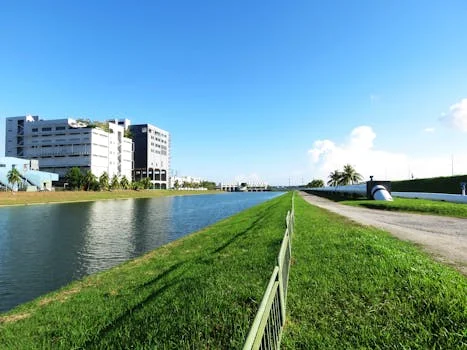
Supplier scoring for a Luzon municipal STP should start with a written guarantee to DENR DAO 2016-08 (and DAO 2021-19 where the discharge permit requires it). Critical rotating assets need N+1 redundancy, and PLC/SCADA with remote alarming should be base scope, not an option. Similar regulatory pressure appears in other island jurisdictions; see how Tasmania’s STPs handle similar regulatory challenges when building your RFP checklist.
Commercial packs need transparent CAPEX/OPEX line items against the $1.2–2.5M/MLD bands, clear 30/60/10 payment milestones, and enforceable uptime or effluent bonds. Local experience with Manila Water, Maynilad, or provincial LGUs matters more than brochure capacity lists. DENR-related accreditation, spare-parts stocking in Luzon, and operator training hours should be scored, not assumed.
Selection checklist before award:
- Confirm receiving-water class and matching GES limits in the draft Discharge Permit.
- Require factory acceptance tests for blowers, membranes, and PLC logic.
- Verify PEC 2017 electrical compliance drawings before civil freeze.
- Demand two operable Luzon references of similar MLD and technology.
- Lock sludge route (landfill/compost) and tip fees into the OPEX model.
- Include wet-weather peak factor (typically 2–3× ADF) in hydraulic calculations.
- Hold 10% retention until 30-day compliance sampling passes.
| Category | Evaluation Criteria | Assessment Points |
|---|---|---|
| Technical Capabilities | Effluent Compliance Guarantee | Does the proposal explicitly guarantee DENR DAO 2016-08 standards? |
| System Redundancy | Are critical components (pumps, blowers, controls) N+1 redundant? | |
| Automation & Monitoring | Is a PLC-based system with remote monitoring included? | |
| Financial & Commercial | Cost Transparency | Are CAPEX/OPEX breakdowns detailed and aligned with benchmarks? |
| Payment Terms | Are payment milestones reasonable (e.g., 30/60/10)? | |
| Performance Guarantees | Are uptime, effluent quality, and power consumption guaranteed? | |
| Local & Support | Philippine Experience | Proven track record with LGUs, Manila Water, or Maynilad projects? |
| DENR Accreditation | Is the company and its technology accredited by DENR? | |
| After-Sales Support | Availability of local spare parts, service, and operator training? | |
| Red Flags to Watch For | Vague Guarantees | Lack of specific, measurable performance commitments. |
| No Luzon References | Inability to provide local project references. | |
| Non-PEC Compliance | Electrical designs not compliant with Philippine Electrical Code (PEC 2017). |
Who This Is For and Next Step
LGU engineers, concession planners, and EPC estimators sizing or upgrading Luzon municipal STPs under DENR limits are the primary readers for this checklist. Teams buying only industrial pretreatment, or needing ultrapure semiconductor water, should look elsewhere. If you already have influent data and a target MLD, request a process and CAPEX cross-check through our municipal STP inquiry form before freezing the bid package.
Frequently Asked Questions
What DENR rules apply to municipal STPs in Luzon?
DENR DAO 2016-08 sets the General Effluent Standards by receiving-water class, with many Luzon municipal contracts still citing BOD <50 mg/L, TSS <70 mg/L, and fecal coliform <1,000 MPN/100mL. DAO 2021-19 revises selected nutrient and pathogen limits, and West Zone upgrades have been paced to that order. RA 9275 supplies the enforcement backbone, including fines for chronic non-compliance.
How do I estimate required STP capacity in Luzon?
Use about 1 MLD of sewage generation per 10,000 residents as the MWSS-style starting point, then apply peaking and infiltration factors from local sewer studies. A city of 250,000 residents therefore needs roughly 25 MLD of average-day treatment capacity before peaks. Confirm the number with dry- and wet-season flow metering before civil design freeze.
How do MBR and CAS CAPEX and OPEX compare?
MBR typically costs $2.0–2.5M/MLD CAPEX and $0.25–0.40/m³ OPEX, while CAS sits near $1.2–1.8M/MLD and $0.15–0.25/m³ (2025 USD field benchmarks). MBR usually cuts footprint by about 60% and pushes BOD/TSS lower, which can repay land and reuse value. Choose CAS when land is cheap and secondary clarification already meets the permit.
What design challenges are common on Luzon municipal STPs?
Variable peak loads, scarce urban land, intermittent power, strict DENR sampling, and sludge outlet logistics dominate most Luzon municipal designs. Equalization, N+1 blowers, and standby gensets reduce excursion risk. Compact MBR systems for urban Luzon projects help when the plot cannot fit clarifiers.
What financing options exist for Philippine municipal STPs?
PPP models such as BOT or BOO, direct LGU capital budgets, and loans from the World Bank or Asian Development Bank are the usual paths. DENR-linked grants sometimes co-fund environmental infrastructure when compliance gaps are documented. Concessionaires also fund multi-year wastewater packages inside their MWSS business plans.