Wastewater Treatment Plant Cost in Malaysia 2026: Engineering Breakdown with Local Data, Compliance & ROI Calculator
Wastewater treatment plant costs in Malaysia range from about RM500,000 for a 10 m³/h compact sewage treatment plant (STP) to roughly RM480 million for a 1.5 million PE regional facility such as Papan STP in Perak. Earlier project summaries used figures near RM480 million; The Star (2023) reported the Papan 2 Regional Sewerage Treatment Plant at more than RM452 million. The main cost drivers are population equivalent (PE) capacity, technology choice (MBR vs. conventional activated sludge vs. DAF pre-treatment), and compliance with the Environmental Quality (Sewage) Regulations 2009 under the EQA 1974. For a 50,000 PE plant, annual total sewerage management cost runs near RM2.9M, with electricity alone around RM2.3M at regional scale (12th Malaysia Plan data).
Picture a facility manager in Penang’s Bayan Lepas Industrial Park facing a Department of Environment (DOE) directive to meet Standard A discharge under the Environmental Quality (Sewage) Regulations 2009. The choice between expanding a conventional activated sludge system or retrofitting with a membrane bioreactor is as financial as it is technical: land scarcity, Tenaga Nasional energy tariffs, and SWCorp sludge tipping fees drive feasibility. This guide gives plant engineers, EPC contractors, and procurement teams the cost framework, compliance data, and ROI logic needed to size and budget a Malaysian WWTP project.
How Wastewater Treatment Plant Costs Scale with Population Equivalent (PE) in Malaysia
Malaysia defines 1 PE as 0.225 m³/day (225 L/day) of wastewater flow carrying a BOD₅ load of 55 g/day, per the Sewerage Services Department (JPP) and Indah Water Konsortium (IWK) standard. PE lets engineers scale CAPEX and OPEX linearly for small municipal plants; large regional projects break that pattern because trunk sewers and pumping stations dominate the budget. Most plants we size between 20,000 and 50,000 PE sit at the low end of the cost-per-PE curve due to modular construction.
| Plant Capacity (PE) | Average CAPEX (RM) | Annual OPEX (RM) | Cost per PE (CAPEX) |
|---|---|---|---|
| 10,000 PE (Small/Medium) | RM 3,100,000 | RM 450,000 | RM 310 |
| 50,000 PE (Medium/Large) | RM 2,900,000 (per unit block) | RM 1,200,000 | RM 290 |
| 1,000,000 PE (Regional) | RM 320,000,000+ | RM 18,000,000+ | RM 320 |
Above 50,000 PE, cost-per-PE often doubles or more. Treatment equipment is not the cause; trunk sewers and centralized pumping stations can absorb up to 60% of a regional project budget. The Papan Regional STP in Perak illustrates this: earlier summaries cited a RM479.7 million contract sum for 1.5 million PE ultimate capacity, or roughly RM319/PE; The Star (2023) reported the Papan 2 plant at more than RM452 million. Compare this to Singapore’s Changi Water Reclamation Plant, which averages RM450/PE once NEWater reclamation stages are included, and the Malaysian figure looks lean, though land and labor assumptions differ.
Technology Cost Comparison: MBR vs. Conventional vs. DAF Systems for Malaysian Projects
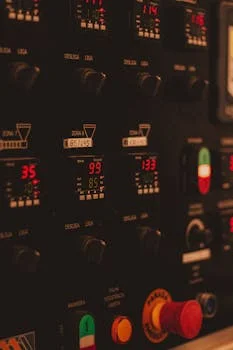
Three technologies dominate Malaysian WWTP tenders: Conventional Activated Sludge (CAS), Membrane Bioreactor (MBR), and Dissolved Air Flotation (DAF) used as industrial pre-treatment. The trade-off is CAPEX versus long-term OPEX. Tropical climate helps biological kinetics; electricity tariffs decide the rest. The table below summarizes costs at a 50,000 PE scale.
| Parameter | Conventional (CAS) | MBR System | DAF + Biological |
|---|---|---|---|
| CAPEX (50K PE) | RM 2.1 Million | RM 3.2 Million | RM 4.0 Million (Total) |
| Annual OPEX | RM 1.8 Million | RM 2.5 Million | RM 2.2 Million |
| Footprint (m²) | 1,200 m² | 400 m² | 800 m² |
| Energy (kWh/m³) | 0.4 kWh/m³ | 0.8 kWh/m³ | 0.6 kWh/m³ |
| Sludge Yield | High | Low | Medium |
MBR (Membrane Bioreactor): MBR systems for compact, high-efficiency treatment are favored where land exceeds RM250/m², common in Kuala Lumpur and Penang. CAPEX runs about 50% above CAS, but footprint drops roughly 60%. Membrane scouring air drives energy to 0.8 kWh/m³, yet the land saving plus elimination of secondary clarifiers typically delivers a net benefit on constrained sites.
Conventional Activated Sludge: The baseline for rural or semi-urban projects. Lowest energy use, but clarifiers and maturation ponds need real estate. To hit Class IIB (<20 mg/L BOD), CAS usually needs sand filtration added, adding roughly RM800,000 to a 50K PE CAPEX.
DAF (Dissolved Air Flotation): For F&B and palm oil mill effluent, DAF pre-treatment for industrial wastewater is the front-end workhorse. A 100 m³/h DAF unit costs about RM1.5M and strips FOG and TSS before biological polishing.
Malaysia’s Compliance Costs: How EQA 1974 and Sewerage Regulations Impact Your Budget
Discharge class is the single biggest non-technical cost lever. Moving from Class III to Class IIA roughly multiplies treatment-train cost by 1.75x because polishing stages (filtration, UF, UV) stack on top of biological reactors. Under Section 25 of the EQA 1974, inland-water pollution carries a fine not exceeding RM100,000 or imprisonment for a period not exceeding five years or both. Regulation 26 of the Environmental Quality (Sewage) Regulations 2009 sets the same ceiling: a fine not exceeding RM100,000 or imprisonment for five years or both. Section 43 of the EQA 1974 covers officer and principal liability when a company commits an offence; it is not the penalty schedule. Earlier guidance cited RM500,000; for sewage discharge the verified statutory ceiling is RM100,000.
| Discharge Class | BOD Limit (mg/L) | Typical Technology | Cost Multiplier (vs. Class III) |
|---|---|---|---|
| Class III | < 50 mg/L | Basic Biological (Ponds) | 1.0x |
| Class IIB | < 20 mg/L | CAS + Sand Filtration | 1.4x |
| Class IIA | < 10 mg/L | MBR or CAS + Ultrafiltration | 1.75x |
Statutory sewage limits under the Environmental Quality (Sewage) Regulations 2009, Regulation 7, are Standard A (BOD 20 mg/L) and Standard B (BOD 50 mg/L) for new treatment systems. Standard A applies to inland waters in Third Schedule catchment areas; Standard B applies to other inland waters or Malaysian waters. The Class III / IIB / IIA rows above are a design-cost multiplier ladder used against tighter BOD targets; they are not the official Standard A/B labels.
Does Malaysia Standard B need secondary or tertiary treatment?
Standard B compliance (BOD 50 mg/L, COD 200 mg/L, SS 100 mg/L for new systems) is met by sound secondary biological treatment in most Malaysian municipal plants. Tertiary polishing is not the legal default for Standard B. Plants chasing the tighter Class IIA design target (<10 mg/L BOD) or Standard A catchments usually add filtration, UF, or UV after the biological stage.
Retrofit path: adding UV disinfection to a 50K PE plant to meet bacterial Standard A/B limits runs about RM300,000 in CAPEX. For plants already failing limits, the more common upgrade is MBR or UF swapping, not full replacement.
ROI Calculator: How to Justify Your Wastewater Treatment Plant Investment in Malaysia
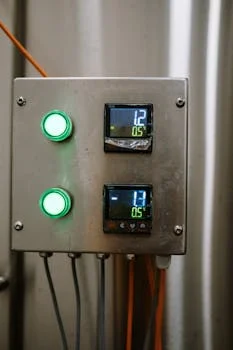
Justifying a WWTP project to finance teams requires Payback Period and NPV, not just CAPEX. Three savings streams carry the ROI in Malaysian industrial parks: avoided DOE fines, water reuse offsetting utility purchases, and lower sludge hauling costs. For municipal projects, the same logic applies with IWK tariff structures instead.
ROI Formula:
(Annual Savings – Annual OPEX) / CAPEX = Payback Period (Years)
Worked example with the directive scenario:
Scenario A — RM250M investment, RM3.40/m³ buy-back rate (the directive case). Assume treated effluent reused at 50,000 m³/day: annual buy-back revenue = 50,000 × 365 × RM3.40 = RM62.05M/year. Subtract typical large-plant OPEX of RM18M/year and you get net annual cash flow of about RM44M. Payback = RM250M ÷ RM44M ≈ 5.7 years before discounting. Apply a 7% WACC over 20 years and NPV lands near RM310M positive, with IRR roughly 17–18%. The decisive variable is reused volume: drop reuse to 20,000 m³/day and payback stretches past 14 years, which kills most project finance cases.
How do water reuse upgrades change WWTP payback?
Reuse volume sets payback more than equipment brand. At RM3.40/m³ buy-back and 50,000 m³/day, the RM250M case clears in about 5.7 years undiscounted. Cut reuse to 20,000 m³/day and payback stretches past 14 years. Size the reuse loop before you lock CAPEX.
Scenario B — Compact 30 m³/d packaged STP. Smaller scope: about RM300,000–RM500,000 CAPEX depending on automation and containerization, with OPEX near RM45,000–RM60,000/year for a 30 m³/d unit. Payback for industrial reuse usually sits in the 2–4 year range once water and surcharges are avoided.
A Johor industrial park recently hit a 2.8-year payback by integrating a plate and frame filter press. Dewatering sludge from 2% to 35% solids cut landfill haul volume by 90%, saving RM200,000/year in tipping fees. Engineers considering similar upgrades often cross-check their numbers against wastewater treatment plant cost benchmarks for Selangor to confirm regional cost-per-PE ratios.
Hidden Costs of Wastewater Treatment Plants in Malaysia (And How to Avoid Them)
Budget overruns on Malaysian WWTP builds cluster in four areas. Catching them at FEL2 design can save 15–20% of total project cost:
- Land acquisition and site preparation: Industrial land in Selangor and Penang runs RM150–RM300/m² (NAPIC 2024). Geotech surprises on ex-tin or ex-paddy land regularly add 10–15% to civil costs.
- Permitting and EIA consultancy: DOE approvals, EIA submission, and IWK connection permits need a specialist consultant. Budget RM120,000–RM250,000 for a 50K PE project.
- Labor and training: A 50K PE plant needs two certified operators and one supervisor under JPP guidance. Wages total roughly RM180,000–RM240,000/year fully loaded.
- Sludge disposal tipping fees: Under SWCorp rules, landfill tipping for scheduled waste sludge ranges RM250–RM400/ton. Mechanical dewatering cuts this line item sharply.
Who this is for, and where to look next
This breakdown fits plant engineers and EPC procurement teams sizing Malaysian municipal or industrial WWTPs between 10,000 and 1,000,000 PE. If your scope is a packaged plant under 50 m³/d for a small facility, the unit economics in Malaysia’s municipal sewage treatment plants engineering guide are a closer match than the regional figures above.
Send your influent data, target discharge class, and reuse intent to our engineers for a sized quotation and ROI model.
Frequently Asked Questions
How much does a 10K PE wastewater treatment plant cost in Malaysia?
A 10,000 PE plant typically requires RM1.2M to RM1.8M CAPEX for a conventional CAS system, or RM2M to RM2.5M for an MBR-based system. Annual OPEX runs about RM450,000 at this scale, dominated by electricity and sludge handling. Land, EIA consultancy, and connection fees add another 10–15% on top.
What is the most cost-effective technology for industrial wastewater in Malaysia?
For high-organic loads (F&B, palm oil), DAF pre-treatment feeding a biological stage delivers the lowest 10-year lifecycle cost in our Malaysian project data. MBR is preferred only when discharge limits are tight or land cost exceeds RM250/m².
How long does a RM250M wastewater plant take to pay back at RM3.40/m³ buy-back?
At 50,000 m³/day reuse, payback is about 5.7 years undiscounted; NPV at 7% WACC over 20 years is roughly RM310M with IRR near 17–18%. Reuse volume is the swing variable: below 20,000 m³/day, payback stretches past 14 years and project finance becomes difficult.
How much does a 30 m³/day packaged STP cost in Malaysia?
A 30 m³/d containerized or skid-mounted STP runs RM300,000 to RM500,000 depending on automation level and disinfection stage. Annual OPEX sits at RM45,000 to RM60,000, with electricity and sludge disposal the largest lines.
What compliance class does my Malaysian WWTP need?
New sewage discharges must meet Standard A (BOD 20 mg/L) or Standard B (BOD 50 mg/L) under the Environmental Quality (Sewage) Regulations 2009, Regulation 7. Standard A applies in Third Schedule catchments; Standard B covers other inland waters. Industrial parks near water intakes usually need Standard A, which pushes trains toward MBR or CAS plus polishing and roughly 1.75x the Class III cost ladder used in design budgets.
Request a sized quotation and ROI model based on your flow, influent load, target discharge class, and reuse intent.