Buried wastewater treatment systems for food processing plants combine anoxic/aerobic (A/O) biological contact oxidation with sedimentation and disinfection in a single underground unit, reducing footprint by up to 60% compared to above-ground systems. The WSZ series, for example, handles 1–80 m³/h of high-FOG, high-COD wastewater (typical food processing influent: 1,500–5,000 mg/L COD, 500–2,000 mg/L BOD) with 92–97% removal efficiency, meeting EPA pretreatment standards and local sewer district limits. These systems are fully automated, require no operator, and can be landscaped over for aesthetic integration.
Why Food Processing Plants Need Buried Wastewater Treatment Systems
Food processing wastewater typically carries organic loads 10 to 50 times higher than domestic sewage, often exceeding 5,000 mg/L Chemical Oxygen Demand (COD) during peak production cycles.Unlike municipal effluent, food industry wastewater is characterized by high concentrations of Fats, Oils, and Grease (FOG) ranging from 500 to 1,500 mg/L, and extreme pH swings from 3.5 to 11.0 caused by alternating production and sanitation cycles. These characteristics make food industry wastewater pretreatment essential before discharge into municipal sewers.
Regulatory risks for non-compliance are substantial. Under EPA pretreatment standards and FDA sanitation requirements, facilities must often meet local sewer district limits, typically capped at 300 mg/L BOD and 100 mg/L Total Suspended Solids (TSS). Exceeding these limits results in heavy sewer surcharges, often calculated at $0.50–$2.00 per m³ for excess organic load. In the United States, daily fines for repeated violations can reach $25,000, while production slowdowns due to permit suspensions can cost facilities hundreds of thousands in lost revenue.
Space constraints represent a primary driver for adopting underground sewage treatment for food industry applications. Expanding facilities in urban or high-density industrial zones often lack the 500-1,000 m² required for traditional above-ground clarification and aeration tanks. A buried system reduces the required footprint by 40–60%, allowing the land above to be utilized for parking, green space, or logistics, effectively reclaiming valuable real estate for core production activities.
Engineering Specifications for Buried Wastewater Treatment Systems
The buried wastewater treatment system for food processing utilizes an A/O biological contact oxidation process designed for a hydraulic retention time (HRT) of 6 to 12 hours.This process flow begins with an anoxic tank for denitrification, followed by an aerobic stage where high-efficiency biological fillers provide a massive surface area for microbial growth. This is followed by secondary sedimentation and a disinfection stage, typically using on-site generated chlorine dioxide, to ensure the effluent meets microbial safety standards.
Structural integrity is paramount for buried installations. Engineering specifications require a minimum load-bearing capacity of 20-30 kN/m² if the area above is intended for light vehicular traffic. Standard units, such as the WSZ-10, feature dimensions of approximately 6.2m x 2.5m x 3.1m, requiring a burial depth that allows for 0.5m to 1.0m of soil cover. For facilities dealing with high-salinity brines or acidic cleaning agents (pH < 4.0), carbon steel tanks are treated with heavy-duty epoxy anti-corrosion coatings, or the entire shell is constructed from Fiberglass Reinforced Plastic (FRP) or Grade 304/316 stainless steel to prevent structural failure over a 20-year service life.
| Parameter | WSZ-10 (Small Scale) | WSZ-50 (Medium Scale) | WSZ-100 (Large Scale) |
|---|---|---|---|
| Treatment Capacity | 10 m³/h | 50 m³/h | 100 m³/h |
| Footprint (L x W) | 6.2m x 2.5m | 11.5m x 3.5m | 15.0m x 6.0m |
| Biological Stage HRT | 8.5 Hours | 10.0 Hours | 12.0 Hours |
| Aeration Power | 2.2 kW | 7.5 kW | 15.0 kW |
| Material Options | Carbon Steel / FRP | Carbon Steel / 304 SS | Reinforced Concrete / SS |
Automation is managed via a PLC-based control system with SCADA compatibility, allowing facility engineers to monitor Dissolved Oxygen (DO), pH, and flow rates remotely. Landscaping integration is a key advantage; once installed, the system can be covered with grass, shrubs, or permeable pavers. However, engineering designs must include root barriers to prevent invasive vegetation from compromising tank seals or external piping.
Buried vs. Above-Ground Systems: Performance, Costs, and Trade-Offs
While above-ground systems offer easier access for visual inspection and equipment replacement, buried systems provide superior thermal stability for biological processes, as the surrounding soil acts as an insulator against extreme ambient temperature fluctuations that can shock microbial populations in food processing environments.
| Metric | Buried (WSZ Series) | Above-Ground (Conventional) |
|---|---|---|
| COD Removal Efficiency | 92% – 97% | 85% – 95% |
| FOG Reduction | 90% – 95% | 80% – 90% |
| CAPEX (per m³/h) | $1,200 – $2,500 | $1,000 – $2,000 |
| OPEX (Energy/Maint) | Lower (No HVAC required) | Higher (Climate control needed) |
| Noise/Odor Impact | Negligible (Sub-surface) | Moderate to High |
| Landscaping Cost | Reduced by 30-50% | High (Requires screening) |
The Capital Expenditure (CAPEX) for a buried vs. above-ground wastewater system is typically 15–25% higher for the buried option due to excavation, shoring, and the need for reinforced structural shells. However, the Operational Expenditure (OPEX) is often 10–15% lower. This is because buried systems do not require expensive climate-controlled housing for pumps and blowers in cold climates. the aesthetic value and the ability to utilize the surface area for production logistics often result in a faster Return on Investment (ROI) when land value exceeds $150 per square meter.
Step-by-Step Selection Framework for Buried Systems in Food Processing
Selecting a buried treatment system for food processing requires a 24-hour composite sampling protocol to account for diurnal fluctuations in pH and organic loading caused by batch processing.Engineers should follow this structured framework to ensure long-term compliance and operational stability:
- Characterize Influent: Conduct a 7-day monitoring period to determine average and peak flow, COD/BOD, FOG, and pH. If FOG exceeds 500 mg/L, integrate DAF pre-treatment for high-FOG food processing wastewater to protect the downstream biological stage.
- Determine Regulatory Targets: Identify the most stringent limits among EPA standards, FDA sanitation rules, and local sewer codes. Aim for a 20% safety margin in design capacity.
- Assess Site Geotechnics: Evaluate soil type, groundwater table depth, and load-bearing requirements. High groundwater may require anti-buoyancy measures (concrete ballast) for buried tanks.
- Technology Comparison: Compare the WSZ series (A/O) against MBR integrated wastewater treatment for sites requiring high-quality water reuse.
- Pilot Testing: For facilities with unique waste streams (e.g., high-salinity pickling or high-sugar beverage production), a 4–6 week pilot trial is recommended to calibrate microbial acclimation.
- Final Design and Permitting: Select materials (FRP vs. Stainless Steel), define automation levels, and submit engineering plans for local environmental permits.
Understanding how DAF systems remove FOG from food processing wastewater is critical during Step 1, as excessive grease will coat biological media, reducing oxygen transfer efficiency and leading to system failure.
Case Study: Buried System for a Meat Processing Plant in Shandong
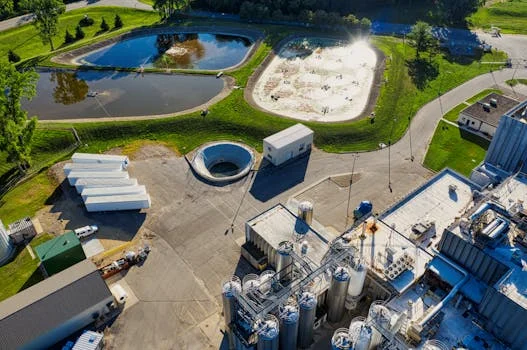
The plant was discharging 40 m³/h of wastewater with 4,500 mg/L COD, 1,800 mg/L BOD, and 1,200 mg/L FOG. Prior to the upgrade, the facility was paying over $120,000 annually in municipal sewer surcharges and faced potential closure due to odor complaints from a nearby residential development.
The solution involved a two-stage approach. First, a DAF-40 unit was installed to strip away the bulk of the oils and suspended solids. The effluent then flowed into a WSZ-40 buried system for biological polishing. To ensure pathogen control, an on-site chlorine dioxide disinfection for food industry effluent system was added as the final stage.
Results after 12 months of operation showed COD levels dropped to 150 mg/L and BOD to 40 mg/L, well within local discharge limits. The facility eliminated all sewer surcharges, resulting in a total annual savings of $135,000 (including reduced water fees). A key lesson learned was the necessity of automated backwashing; initial FOG carryover caused minor clogging in the aerobic stage, which was resolved by adjusting the DAF polymer dosing and increasing the aeration intensity.
Frequently Asked Questions
How do buried systems handle high Fats, Oils, and Grease (FOG)?Standard A/O buried systems can handle moderate FOG, but for concentrations above 300 mg/L, a pretreatment stage like a grease trap or DAF is required. This prevents grease from coating the biological film, which would otherwise inhibit oxygen transfer and kill the aerobic bacteria.
Can these systems operate in cold climates?Yes. One of the primary benefits of buried wastewater treatment systems for food processing is the insulation provided by the soil. Even in sub-zero temperatures, the wastewater inside the buried unit typically remains between 10°C and 15°C, maintaining the metabolic activity of the bacteria.
What is the maintenance requirement for an underground system?While the tanks are buried, access manholes are provided for every chamber. Maintenance is largely automated via the PLC. Monthly tasks include checking blower filters and replenishing disinfection chemicals. The biological media typically lasts 5-8 years before requiring inspection or replenishment.
Do buried systems meet EPA and FDA standards?Yes, when designed correctly, they meet healthcare-grade wastewater treatment standards for food processing. The combination of biological treatment and chlorine dioxide disinfection ensures the effluent is safe for municipal discharge or even non-potable reuse in some jurisdictions.
What is the typical lifespan of a WSZ series system?With proper anti-corrosion treatment (epoxy coating for steel