Electrocoagulation (EC) removes nickel from industrial wastewater with up to 99.9% efficiency under optimal conditions (pH 9.2, 10 mA/cm², 90 min electrolysis), outperforming chemical coagulation and reducing sludge volume by 30–50%. Using zinc or aluminum electrodes, EC generates metal hydroxides in situ to adsorb Ni²⁺ ions, achieving compliance with EPA’s 2.38 mg/L nickel discharge limit (40 CFR 433) and China’s GB 25466-2010 standard (1.0 mg/L). This guide provides 2026 engineering specs, electrode selection criteria, and cost models for industrial-scale deployment.
Why Electrocoagulation Outperforms Chemical Precipitation for Nickel Removal
Traditional chemical precipitation relies on the manual or automated dosing of lime, caustic soda, or magnesium oxide to raise pH levels, typically to a range of 10.0 to 11.5, where nickel solubility is minimized. However, this process is fraught with operational inefficiencies. Chemical precipitation often results in a nickel residual exceeding 5 mg/L without secondary polishing, which fails to meet the stringent 2023 EPA guidelines for many industrial subcategories. the high volume of sludge generated (0.5–1.0 kg/m³ of treated water) creates a secondary waste stream that is expensive to transport and stabilize.
Electrocoagulation operates through a fundamentally different mechanism. Instead of adding bulk chemicals, EC utilizes sacrificial anodes—most commonly zinc or aluminum—to release metallic ions into the wastewater via electrolysis. These ions undergo rapid hydrolysis to form monomeric and polymeric hydroxides. These in-situ flocs possess a high surface area and charge density, allowing them to adsorb Ni²⁺ ions through surface complexation and electrostatic attraction. Because the coagulant is generated precisely where it is needed, the dosage is much lower, resulting in a 30–50% reduction in sludge volume compared to lime softening (HydropureWater field data, 2025).
Efficiency comparisons demonstrate that EC achieves 99.9% removal at a near-neutral pH of 9.2, whereas chemical precipitation requires significantly higher pH levels (10.5+) to achieve even 85–95% removal. This lower operating pH reduces the need for post-treatment acid neutralization, further lowering the total cost of ownership. Additionally, EC is less sensitive to the presence of chelating agents often found in metal plating baths, which can prevent nickel from precipitating in traditional chemical systems.
| Performance Metric | Chemical Precipitation (Lime/Caustic) | Electrocoagulation (EC) |
|---|---|---|
| Nickel Removal Efficiency | 85% – 95% | 98.5% – 99.9% |
| Optimal Operating pH | 10.0 – 11.5 | 8.5 – 9.5 (Optimal: 9.2) |
| Sludge Production Rate | 0.5 – 1.0 kg/m³ | 0.2 – 0.4 kg/m³ |
| Chemical Consumption | High (Continuous dosing) | Low (Sacrificial electrodes) |
| Effluent Ni Concentration | >2.0 mg/L (Requires polishing) | <0.5 mg/L (Direct discharge) |
Electrocoagulation Process Parameters: 2026 Engineering Specs for Nickel Removal
Designing an industrial-scale EC reactor for nickel removal requires precise control over current density, electrode geometry, and residence time. Based on 2026 engineering standards, the optimal current density for nickel-rich streams is 10 mA/cm². Operating below this threshold may lead to insufficient hydroxide generation, while exceeding it increases energy consumption and electrode passivation without a proportional increase in removal efficiency. A retention time of 90 minutes is standard for achieving 99.9% removal, though this can be optimized to 60 minutes for lower concentration streams (Ni < 20 mg/L).
Electrode material selection is the most critical variable in system design. Zinc electrodes have emerged as the superior choice for nickel removal, providing uniform corrosion and a more predictable maintenance cycle. Zinc anodes achieve 99.9% removal with an estimated lifespan of 1,200 to 1,500 operating hours. Aluminum electrodes are a cost-effective alternative, achieving 95–98% removal, but they are prone to pitting corrosion, which can lead to structural failure of the electrode plate and a shorter lifespan of 800 to 1,000 hours. The spacing between electrodes also significantly impacts performance; a 4 cm gap is optimal. Reducing the gap to 2 cm increases the risk of short-circuiting due to floc buildup, while increasing it to 6 cm raises the ohmic resistance, leading to higher energy costs.
Kinetic modeling of the process indicates that Ni²⁺ removal follows a second-order Lagergren model. This suggests that the rate of removal is dependent on both the concentration of nickel and the available surface area of the generated metal hydroxides. For engineers, this means that maintaining a consistent current density is vital for stable effluent quality. To prevent electrode passivation—the formation of an insulating oxide layer on the anode—systems must be equipped with automated pH control for electrocoagulation systems to maintain the pH at 9.2 and include a polarity reversal mechanism that cycles every 15 to 30 minutes.
| Design Parameter | Standard Specification (2026) | Impact on System Performance |
|---|---|---|
| Current Density | 10 mA/cm² | Determines rate of coagulant generation |
| Electrolysis Time | 60 – 90 Minutes | Directly correlates to removal percentage |
| Electrode Spacing | 4.0 cm (±0.5 cm) | Balances energy use vs. removal rate |
| Energy Consumption | 0.5 – 1.2 kWh/m³ | Primary driver of operational expense |
| Zinc Electrode Life | 1,200 – 1,500 Hours | Determines maintenance frequency |
| Aluminum Electrode Life | 800 – 1,000 Hours | Lower CAPEX, higher replacement rate |
Electrocoagulation vs. Alternatives: Nickel Removal Technology Comparison
When evaluating nickel removal technologies, procurement teams must balance initial capital expenditure (CAPEX) with long-term operational costs (OPEX). Electrocoagulation sits in a unique middle ground. Compared to ion exchange (IX), EC has a significantly lower OPEX. While IX can achieve very low effluent concentrations, the cost of resin replacement and chemical regenerants typically ranges from $0.30 to $0.60/m³. EC operates at approximately $0.12 to $0.31/m³, depending on energy costs and electrode material. However, resin adsorption as an alternative to electrocoagulation remains preferred for ultra-low flow, high-concentration batch processes where CAPEX must be minimized.
Reverse Osmosis (RO) is often considered for nickel removal when water reuse is the primary goal. RO achieves 99.5%+ removal but requires extensive pre-treatment to maintain a Silt Density Index (SDI) of less than 3. Without this, membranes foul rapidly. RO energy costs are also substantially higher, often exceeding $0.50/m³. In many modern industrial designs, EC is used as a robust primary treatment step, followed by reverse osmosis for nickel polishing after electrocoagulation. This hybrid approach protects the RO membranes while ensuring total compliance with zero-liquid discharge (ZLD) requirements.
| Technology | Efficiency (%) | OPEX ($/m³) | Primary Advantage |
|---|---|---|---|
| Electrocoagulation | 99.9% | $0.12 – $0.31 | Low sludge, high efficiency, no bulk chemicals |
| Ion Exchange | 99.5% | $0.30 – $0.60 | Effective for trace polishing |
| Reverse Osmosis | 99.8% | $0.50 – $1.00 | Enables water reuse/ZLD |
| Chemical Precipitation | 90.0% | $0.25 – $0.45 | Low CAPEX, well-understood process |
Cost Analysis: CAPEX, OPEX, and ROI for Industrial Electrocoagulation Systems
A comprehensive cost model for a 30 m³/h electrocoagulation system reveals a compelling ROI for facilities currently using chemical precipitation. The CAPEX for such a system typically ranges from $12,000 to $35,000. This includes the high-current power supply (rectifier), the reactor vessel (usually 304 or 316L stainless steel), and the automation package for pH and flow control. Zinc electrodes represent a higher initial investment than aluminum ($2,000–$5,000 vs $1,500–$3,500), but their longer lifespan and uniform corrosion properties reduce downtime, providing a lower total lifecycle cost.
OPEX is dominated by energy consumption and electrode replacement. At a standard industrial electricity rate of $0.12/kWh, the energy cost for treating nickel wastewater is approximately $0.06 to $0.15/m³. Electrode replacement adds another $0.02 to $0.05/m³. The most significant savings occur in sludge management. Because EC reduces sludge volume by up to 50%, disposal costs (averaging $0.05/kg for non-hazardous industrial sludge) drop significantly. For a facility treating 30 m³/h, the switch from chemical precipitation to EC can save over $15,000 annually in sludge disposal and chemical procurement alone.
The payback period for an EC system is typically between 18 and 36 months. Sensitivity analysis shows that ROI is most sensitive to the initial nickel concentration and the flow rate. In high-concentration environments (Ni > 200 mg/L), the chemical savings are even more pronounced, often shortening the payback period to under 14 months. Conversely, in very low-flow applications, the CAPEX may be harder to justify unless regulatory compliance cannot be met by other means.
| Cost Component | Estimated Cost (30 m³/h System) | Percentage of Total OPEX |
|---|---|---|
| Energy Consumption | $0.06 – $0.15 / m³ | 45% |
| Electrode Replacement | $0.02 – $0.05 / m³ | 20% |
| Sludge Disposal | $0.03 – $0.08 / m³ | 25% |
| Labor & Maintenance | $0.01 – $0.03 / m³ | 10% |
| Total OPEX | $0.12 – $0.31 / m³ | 100% |
Case Study: Electrocoagulation for Nickel Removal in a Chinese Metal Plating Plant
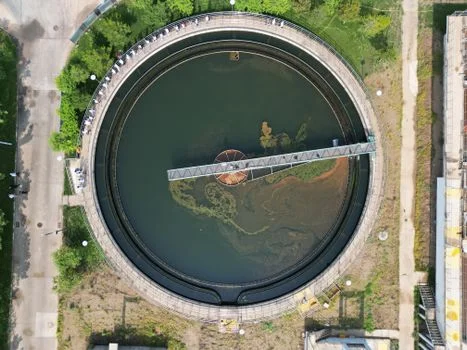
In 2024, a major metal plating facility in Jiangsu Province, China, faced a critical compliance challenge. The plant processed 40 m³/h of wastewater with nickel concentrations fluctuating between 20 and 80 mg/L. Their existing lime-based precipitation system was unable to consistently meet the GB 25466-2010 discharge limit of 1.0 mg/L, often averaging 2.5 mg/L in the effluent. This resulted in significant regulatory fines and the threat of operational suspension.
The facility replaced the chemical dosing tanks with a multi-stage electrocoagulation reactor utilizing zinc electrodes. The system was designed with a 4 cm electrode spacing and a 90-minute retention time. To manage the variable nickel loading, the plant implemented automated pH control for electrocoagulation systems, maintaining the reactor at pH 9.2. To combat electrode passivation, a polarity reversal system was programmed to switch every 24 hours.
The results were immediate and sustained. Nickel removal efficiency reached 99.5%, with effluent concentrations consistently below 0.5 mg/L. Sludge production dropped from 0.8 kg/m³ to 0.3 kg/m³, which allowed the facility to utilize their existing sludge dewatering for electrocoagulation byproducts more effectively, reducing the frequency of filter press cycles. The total operating cost was recorded at $0.18/m³, a 48% reduction from the $0.35/m³ required for lime and polymer dosing. The project achieved a full ROI in 24 months, while completely eliminating non-compliance risks.
How to Select an Electrocoagulation System for Nickel Removal: A 5-Step Decision Framework
Selecting the right EC equipment requires a systematic evaluation of your facility's specific wastewater profile and regulatory targets. Follow this framework to ensure a zero-risk deployment:
- Step 1: Characterize Wastewater: Determine the peak and average nickel concentration, flow rate, and pH. Identify co-contaminants like hexavalent chromium or cyanide, which may require pre-treatment (e.g., reduction or oxidation) before entering the EC reactor.
- Step 2: Choose Electrode Material: Select zinc for maximum removal efficiency and uniform maintenance. Choose aluminum if the budget is highly constrained and removal targets are slightly less stringent (e.g., >1.5 mg/L).
- Step 3: Size the Reactor: Use a design basis of 90 minutes for residence time and 10 mA/cm² for current density. Ensure the reactor volume can handle peak flow without reducing retention time below 60 minutes.
- Step 4: Evaluate Automation Needs: Ensure the system includes automated pH adjustment, polarity reversal, and real-time monitoring of current/voltage. Lack of automation is the leading cause of EC system failure in industrial settings.
- Step 5: Compare Vendors: Verify vendor claims with pilot test data using your actual wastewater. Demand electrode lifespan warranties and energy efficiency guarantees.
Red Flags: Be wary of vendors who recommend EC for high-TDS streams (>5,000 mg/L) without a detailed energy analysis, as high conductivity can lead to excessive heat generation and electrode degradation. Additionally, avoid systems that lack easy access for electrode replacement, as this will significantly increase labor costs during maintenance cycles.
Frequently Asked Questions
What is the typical lifespan of electrodes in a nickel removal EC system? The lifespan depends heavily on the material and current density. Zinc electrodes typically last between 1,200 and 1,500 operating hours when maintained at 10 mA/cm². Aluminum electrodes have a shorter lifespan of 800 to 1,000 hours due to pitting corrosion. Implementing polarity reversal and maintaining optimal pH can extend these lifespans by 15–20% by preventing passivation (HydropureWater field data, 2025).
Can electrocoagulation meet the EPA's 2.38 mg/L nickel limit? Yes, EC comfortably exceeds this limit. Under optimal conditions (pH 9.2), EC can achieve effluent nickel concentrations below 0.5 mg/L, making it suitable for both the EPA's 40 CFR 433 standards and more stringent local or international limits, such as China’s GB 25466-2010 (1.0 mg/L).
How does EC handle wastewater with high concentrations of organic chelators? EC is generally more effective than chemical precipitation for chelated nickel. The high energy environment near the electrode surface can partially destabilize metal-organic complexes, and the in-situ generated flocs provide more aggressive adsorption sites than pre-formed chemical coagulants. However, for highly stable chelates (like EDTA), a pre-oxidation step may still be required.
What is the energy cost associated with electrocoagulation for nickel? Energy consumption typically ranges from 0.5 to 1.2 kWh per cubic meter of treated wastewater. At an average industrial rate of $0.12/kWh, this translates to $0.06–$0.15/m³. This is often offset by the significant reduction in chemical procurement and sludge disposal costs compared to traditional methods.