Resin Adsorption for Nickel Removal: 2026 Engineering Specs, Cost Models & Zero-Risk Compliance Guide
Resin adsorption removes nickel from industrial wastewater with up to 147 mg/g adsorption capacity (per 2024 benchmarks), meeting EPA discharge limits of <0.1 mg/L. Chelating resins like AmberSep™ M4196 achieve 99%+ nickel removal at pH 2–6, ideal for acidic plating baths. Process parameters—0.5 mL/L resin dosage, 35-minute contact time, and 120 rpm agitation—optimize efficiency while minimizing operational costs. Regeneration with 5–10% sulfuric acid restores 95%+ capacity, reducing resin replacement costs by 70% over 5 years.
Why Nickel Removal from Industrial Wastewater is Non-Negotiable
EPA nickel discharge limits are strictly codified at <0.1 mg/L for metal finishing (40 CFR 433) and <0.25 mg/L for mining operations (40 CFR 440), with non-compliance fines reaching up to $50,000 per day according to 2024 EPA enforcement data. These regulatory pressures are not merely theoretical; in 2023, a plating facility in Ohio was assessed $1.2 million in fines and faced a temporary plant shutdown following repeated nickel discharge violations. To rectify the breach, the facility transitioned from traditional chemical precipitation to a high-capacity resin adsorption system, eventually achieving a consistent effluent quality of <0.05 mg/L. This level of precision is increasingly required as EU Directive 2000/60/EC sets even more stringent nickel limits at 20 µg/L for surface water, influencing global standards for the chemical and plating sectors.
Beyond legal and financial liabilities, the health risks associated with nickel-laden wastewater demand robust pretreatment protocols. Chronic nickel exposure is a documented cause of contact dermatitis, lung fibrosis, and various carcinogenic effects (WHO 2023). For industrial facilities, failing to implement advanced industrial wastewater treatment solutions like resin adsorption endangers both local ecosystems and the health of the workforce. When nickel concentrations exceed local limits, the resulting sludge from inferior treatment methods often classifies as hazardous waste, significantly increasing disposal costs and long-term environmental liability.
How Resin Adsorption Removes Nickel: Mechanism and Process Parameters
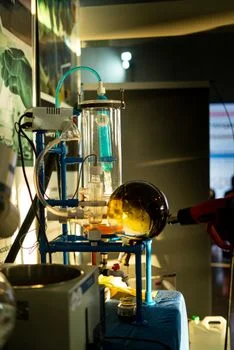
Chelating resins utilize iminodiacetic acid or similar functional groups to bind Ni²⁺ ions via coordinate covalent bonds, providing high selectivity for nickel even in the presence of competing ions like Ca²⁺ and Mg²⁺. This selectivity is the primary technical advantage of resin adsorption over generic ion exchange. For industrial-scale applications, the nickel adsorption capacity is heavily influenced by the wastewater’s pH. While many resins operate optimally at a neutral pH (7 ± 0.2), specialized chelating resins such as AmberSep™ M4196 are engineered to perform in acidic environments (pH 2–6), making them uniquely suited for acidic plating baths and mining leachates.
Engineering a high-efficiency system requires precise control over several operational variables. Field data indicates that a resin dosage of 0.5 mL/L is generally sufficient to achieve equilibrium within a 35-minute contact time, provided that 120 rpm agitation is maintained to prevent fluid channeling within the resin bed. While increasing the process temperature to 318 K can boost adsorption capacity by approximately 15% compared to 298 K, the additional energy expenditure often offsets the performance gains in large-scale systems. The resin regeneration process typically involves the use of counter-ions, where H⁺ ions from a sulfuric acid wash displace the captured Ni²⁺, allowing for the recovery of concentrated nickel sulfate solutions.
| Process Parameter | Optimal Industrial Range | Impact on Efficiency |
|---|---|---|
| pH Level | 2.0 – 7.0 (Resin dependent) | Determines ion speciation and resin selectivity |
| Resin Dosage | 0.5 – 1.0 mL/L | Balances removal rate vs. operational cost |
| Contact Time (EBCT) | 35 – 45 Minutes | Ensures 99%+ saturation of active sites |
| Agitation/Flow Speed | 120 rpm / 5-15 BV/h | Prevents "dead zones" and resin fouling |
| Regenerant Conc. | 5% – 10% H₂SO₄ | Restores 95%+ of original adsorption capacity |
Resin Types for Nickel Removal: Selectivity, Capacity, and Use Cases
Chelating resins, such as Lewatit® MonoPlus TP 207 and AmberSep™ M4195, offer the highest nickel adsorption capacity, ranging from 100 to 150 mg/g, making them the industry standard for high-concentration plating and mining streams. These resins are typically built on a macroporous styrene-divinylbenzene (DVB) matrix, which provides the mechanical strength necessary to withstand repeated osmotic shock during regeneration cycles. In contrast, weak-acid cation (WAC) resins offer a more economical alternative for polishing rinse waters where nickel concentrations are low, though their capacity is significantly lower at 50–80 mg/g.
Recent developments in magnetic resins have shown 20% faster adsorption kinetics than conventional bead resins, though they currently command a 3x higher CAPEX and face scalability challenges for systems exceeding 50 m³/h. When selecting a resin, engineers must evaluate the matrix material; styrene-DVB resins offer excellent durability, while acrylic matrices provide superior resistance to organic fouling in chemical manufacturing streams. For facilities managing complex waste streams, integrating ion exchange for heavy metal removal requires a strategic choice between high-selectivity chelators for acidic environments and cost-effective WAC resins for neutral-polishing stages.
| Resin Type | Capacity (mg/g) | Best Use Case | Durability |
|---|---|---|---|
| Chelating (Styrene-DVB) | 100 – 150 | Acidic plating baths, mining | High (1,000+ cycles) |
| Weak-Acid Cation (WAC) | 50 – 80 | Neutral rinse water polishing | Moderate |
| Magnetic Resin | 120 – 140 | High-speed batch processing | Low/Experimental |
| Modified Activated Carbon | Up to 210 | Low-flow specialized recovery | Non-regenerable |
Designing a Resin Adsorption System: Flow Rates, Bed Depth, and Regeneration Cycles
Industrial resin column design must balance hydraulic loading with the kinetics of nickel capture, typically utilizing a flow rate of 5–15 Bed Volumes per hour (BV/h). Exceeding 20 BV/h often results in a 25% reduction in removal efficiency as the contact time becomes insufficient for the Ni²⁺ ions to diffuse into the resin pores. For a standard 10 m³/h stream with an influent concentration of 50 mg/L Ni²⁺, a calculated resin volume of approximately 34 liters is required, assuming a 147 mg/g capacity and a 0.5 mL/L dosage safety factor. However, most industrial systems double this volume to allow for a lead-lag configuration, ensuring continuous operation during regeneration.
Bed depth is a critical factor in preventing premature breakthrough; industrial columns should maintain a depth of 1–2 meters. Shallower beds (<0.5 m) are prone to "breakthrough" where nickel ions bypass the resin sites during peak flow events. To maintain performance, automated pH adjustment and resin regeneration systems are employed to deliver 5–10% sulfuric acid at a controlled rate of 2–5 BV/h. preventing physical fouling is essential—implementing pretreatment filters for TSS removal before resin adsorption is mandatory if Total Suspended Solids (TSS) exceed 50 mg/L. Field studies show that failing to pre-filter can lead to a 40% loss in adsorption capacity within just six months due to pore clogging.
| Design Element | Specification | Engineering Rationale |
|---|---|---|
| Hydraulic Loading | 5 – 15 BV/h | Optimizes Empty Bed Contact Time (EBCT) |
| Minimum Bed Depth | 1.0 Meter | Prevents premature breakthrough and channeling |
| Regeneration Frequency | 4 – 6 Cycles/Year | Based on 50 mg/L average nickel load |
| Pre-filtration Limit | < 50 mg/L TSS | Protects resin pores from irreversible fouling |
Cost Model: CAPEX, OPEX, and ROI for Resin Adsorption vs. Alternatives
The CAPEX for a 10–50 m³/h resin adsorption system typically ranges from $50,000 to $200,000, covering columns, pumps, automation, and necessary pretreatment. While this is approximately 30% higher than the initial cost of chemical precipitation hardware, it is roughly 50% lower than the CAPEX required for a comparable Reverse Osmosis (RO) installation. The true value of resin adsorption, however, lies in its OPEX, which ranges from $0.50 to $1.50 per cubic meter treated. This includes resin replacement every five years ($200–$400/m³), acid for regeneration ($0.10–$0.30/m³), and minimal labor costs due to high levels of automation.
When comparing technologies, chemical precipitation as an alternative to resin adsorption often appears cheaper on paper ($0.30–$0.80/m³ OPEX), but frequently fails to meet the <0.1 mg/L nickel limit. the cost of hazardous sludge disposal adds an additional $0.20–$0.50/m³, narrowing the gap. Conversely, while reverse osmosis for nickel removal achieves the lowest effluent concentrations (<0.01 mg/L), its OPEX is double that of resin ($2–$4/m³) due to high energy consumption and frequent membrane replacement. For a 20 m³/h plating plant, resin adsorption typically offers an ROI of 2–4 years by eliminating non-compliance fines and reducing sludge management costs.
| Metric | Resin Adsorption | Chemical Precipitation | Reverse Osmosis |
|---|---|---|---|
| Effluent Ni Level | < 0.05 mg/L | 0.5 – 2.0 mg/L | < 0.01 mg/L |
| CAPEX (Relative) | Moderate ($$$) | Low ($$) | High ($$$$$) |
| OPEX (per m³) | $0.50 – $1.50 | $0.50 – $1.30 (inc. sludge) | $2.00 – $4.00 |
| Sludge Volume | Minimal | High | None (Brine instead) |
Compliance Checklist: Meeting EPA, EU, and Local Nickel Discharge Limits

Ensuring that a metal finishing wastewater treatment system remains in compliance requires more than just high-quality resin; it necessitates a rigorous monitoring and maintenance framework. Resin adsorption systems consistently achieve effluent levels below 0.05 mg/L, which exceeds EPA 40 CFR 433 requirements by 50%. However, this performance is contingent upon maintaining the correct influent chemistry. To ensure "zero-risk" compliance, facilities should adopt the following checklist:
- Pretreatment Verification: Ensure influent TSS is <50 mg/L and oil/grease is <5 mg/L to prevent resin blinding.
- pH Stabilization: Maintain influent pH within the resin’s specified range (typically 2–7) using automated pH adjustment systems.
- Monitoring Protocols: Utilize EPA Method 200.7 (ICP-AES) or 200.8 (ICP-MS) for daily nickel analysis in categorical industrial users.
- Capacity Testing: Conduct quarterly resin core samples to check for "fines" or capacity loss, ensuring regeneration cycles are still effective.
- Documentation: Maintain detailed logs of all regeneration cycles, influent/effluent nickel concentrations, and resin replacement dates for NPDES permit audits.
By following these steps, engineers can leverage the high selectivity of chromium removal with ion exchange resins and similar metal-specific technologies to create a comprehensive, compliant heavy metal treatment suite.
Frequently Asked Questions
What is the maximum nickel concentration resin adsorption can handle? While resin adsorption is highly efficient for polishing, it is most cost-effective for influent concentrations between 5 mg/L and 150 mg/L. For streams exceeding 500 mg/L, we recommend primary treatment via chemical precipitation followed by resin adsorption to protect the resin from rapid exhaustion and reduce regeneration frequency.
How often does the nickel chelating resin need to be replaced? In a well-maintained system with proper pretreatment (TSS <50 mg/L), high-quality chelating resins like Lewatit® TP 207 typically last 5 to 7 years. Replacement is usually driven by physical bead breakage (fines) or irreversible organic fouling rather than a loss of chemical adsorption sites.
Can resin adsorption recover nickel for reuse in plating baths? Yes. By using sulfuric acid for regeneration, the system produces a concentrated nickel sulfate solution. If the wastewater stream is segregated and free of organic brighteners, this recovered nickel can often be returned to the plating bath, significantly improving the facility's circular economy metrics and ROI.
Does resin adsorption work for nickel-complexed wastewater (e.g., Electroless Nickel)? Standard ion exchange resins often struggle with chelated or complexed nickel (like those found in electroless nickel baths). However, specialized chelating resins with higher affinity constants can break some complexes, though pretreatment with advanced oxidation (AOP) is often required to "crack" the complex before resin treatment.
What is the typical footprint of a 20 m³/h nickel removal system? A 20 m³/h system generally requires a footprint of approximately 15 to 25 square meters. This includes two resin columns (lead-lag), the regeneration chemical skid, and the control panel. Its compact, vertical design makes it much easier to retrofit into existing facilities than large-scale clarification tanks.