Start with the permit that controls the discharge point
Mining and metals plants near Byhalia meet pretreatment limits by designing to the receiving POTW’s current sewer-use ordinance and any applicable categorical standard, not by treating every discharge against one generic limit. EPA identifies local limits as site-specific requirements enforced at the industrial user’s connection to the POTW. A typical train combines equalization, pH-controlled precipitation, coagulation, DAF or lamella clarification, filtration, and—where needed—UF. Direct surface-water or stormwater outfalls remain separate NPDES obligations under CWA §402.
First identify every proposed discharge route. A process-water connection to a POTW collection system is an indirect discharge governed by the industrial-user permit, local limits, and the pretreatment requirements applied through CWA §307(b) and 40 CFR Part 403. EPA explains that POTW local limits protect the POTW’s treatment processes, sludge operations, NPDES permit, and receiving waters, and are enforced at the industrial user’s point of connection (EPA, “Pretreatment Standards and Requirements—Local Limits,” 2026).
A direct surface-water discharge or qualifying stormwater outfall is different. EPA states that point-source discharges from mining operations, including discharges from associated impoundments, require NPDES authorization under CWA §402 (EPA, “Industrial Wastewater,” 2026). One facility may therefore have both sewer pretreatment and NPDES obligations; neither authorization substitutes for the other.
| Discharge route | Controlling framework | Items to obtain before design |
|---|---|---|
| Process wastewater to a POTW sewer | CWA §307(b), 40 CFR Part 403, POTW local limits, and the industrial-user permit | Current sewer-use ordinance, connection permit, discharge authorization, monitoring conditions, and responsible control authority |
| Direct discharge to surface water | CWA §402 NPDES permit | Permit, outfall limits, monitoring requirements, stormwater coverage, and discharge-point controls |
| Stormwater discharge | Separate stormwater authorization, including applicable NPDES coverage | Site drainage map, exposed materials, sampling points, benchmark or permit conditions, and responsible operator |
The designer should not issue a treatment specification until these records are in hand. For a broader process context, compare the fabricated metals wastewater pretreatment guide and transportation-equipment plant pretreatment approach, but use neither as a substitute for the Byhalia-area permit and ordinance.
Build the design basis from local limits and categorical standards
The equipment design basis must identify the applicable categorical rule, the POTW’s site-specific limits, and the measured influent before vendors size tanks, pumps, filters, or membranes. The federal categorical standard and the local sewer-use ordinance can impose different limits, so the more restrictive confirmed requirement must govern the applicable pollutant.
Potential categorical standards include 40 CFR Part 430 for metal mining, Part 434 for coal mining, Part 437 for ore mining and dressing, and Part 433 where plating, pickling, or anodizing operations are co-located. For a conditional metal-finishing example, 40 CFR 433.15 limits copper to 3.38 mg/L as a daily maximum and 2.07 mg/L as a monthly average, and total chromium to 2.77 mg/L and 1.71 mg/L, respectively (HydropureWater, 2025-11 source excerpt; publication date not stated in the supplied research). These values are not automatically Byhalia requirements.
HydropureWater’s Kentucky POTW framing presents pH of 6.0–10.0, often 6.5–9.0; TSS at or below 250–500 mg/L; total arsenic at or below 0.5 mg/L; total iron and manganese at or below 5–10 mg/L each; and oil and grease at or below 100 mg/L. The same source cites 40 CFR Part 434 values that may be tighter for applicable coal-mining operations, including TSS of 30–100 mg/L, iron below 5.0 mg/L, and manganese below 2.0 mg/L. These are framing values, not confirmed Byhalia limits, and the exact subcategory must be checked against the current ordinance and categorical rule.
| Design input | Permit document or dataset | Procurement requirement |
|---|---|---|
| Local limits | Current POTW sewer-use ordinance and industrial-user permit | Show each daily-maximum and monthly-average limit as a separate proposal line |
| Categorical limits | Applicable 40 CFR part, subcategory, and production description | State the selected subcategory and explain how it applies to the plant |
| Influent quality | Representative metals, TSS, pH, oil and grease, arsenic speciation, flow, and batch-event records | Use measured concentrations and loads, not generic wastewater assumptions |
| Hydraulic basis | Measured average flow, peak 2-hour flow, and discharge-event timing | Size equalization and treatment stages against the documented peak |
Require the selected local monthly-average limit to appear as a distinct line in every equipment proposal. If a limit is narrative, request the control authority’s written interpretation. For arsenic, require speciation data where As(III) may be present; total arsenic alone does not establish whether a precipitation-only approach is adequate.
Route the wastewater through a compliance-focused treatment train
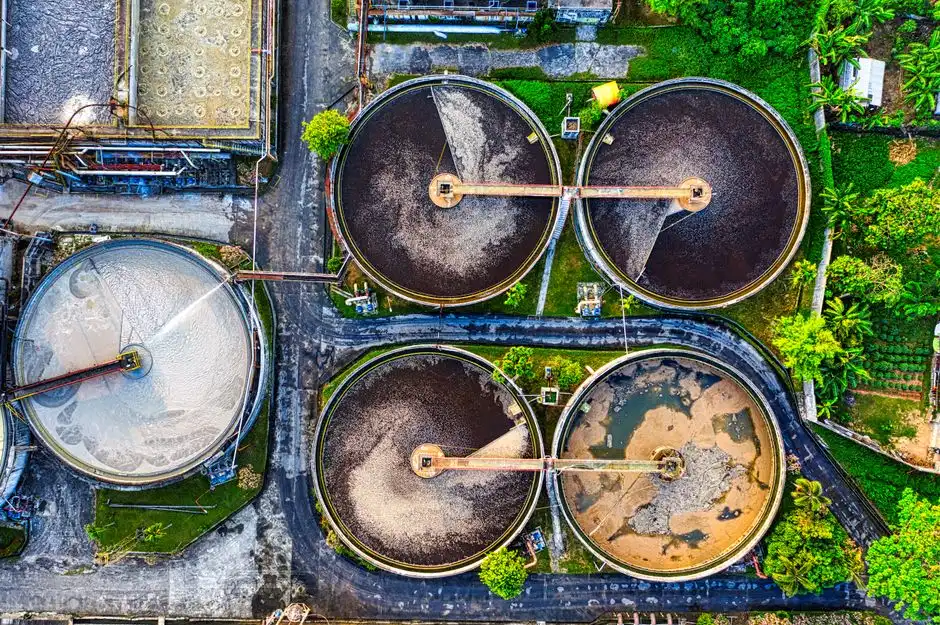
Assign each treatment step to the failure mode it controls: equalization for batch surges, pH control and hydroxide precipitation for dissolved metals, coagulation and flocculation for colloidal solids, clarification for solids separation, and filtration or UF for residual TSS.
Equalization should accommodate dump-leach, mill clean-out, and shift-change discharges. HydropureWater cites Phelps sizing at 8–24 hours of average daily flow and Dayhoit sizing at 20–30 minutes of holding time; the final basis must follow measured batch dynamics rather than adopt either duration mechanically. Specify PLC-controlled pH adjustment and chemical feed. The same source cites a precipitation setpoint of 8.5–9.0 when lead and arsenic are present, followed by adjustment to 7.0–8.0 for discharge.
Lime or caustic hydroxide precipitation should be the primary metals-removal stage. HydropureWater, citing Fluence (2024-11), reports 85–95% total-metals removal in operating mining and metals installations. Where arsenic is relevant, oxidize As(III) to As(V) with chlorine dioxide or hydrogen peroxide and provide iron-arsenate co-precipitation before UF, because hydroxide precipitation alone underperforms on As(III).
Follow precipitation with coagulation and low-shear flocculation. HydropureWater cites alum at 50–150 mg/L, ferric chloride at 30–100 mg/L, or polyaluminum chloride, followed by anionic polyacrylamide at 1–5 mg/L, with 15–25 minutes of flocculation residence time. An automatic chemical dosing system should meter reagent against measured pH, flow, and the selected control strategy.
Reserve sulfide precipitation for defined residual-metal targets. HydropureWater identifies NaHS, FeS, and Na₂S for residual metals below 0.1 mg/L, with sulfide residuals of 0.01–0.05 mg/L for Cu, Zn, Cd, and Ni at 2–4 times higher reagent cost and a controlled H₂S off-gas hazard. Require sealed reactors and scrubbed vents where sulfide precipitation is proposed.
| Process stage | Compliance function | Bid inputs and controls |
|---|---|---|
| Equalization | Limits batch-driven hydraulic and concentration shocks | Measured peak 2-hour flow, batch duration, mixing, transfer capacity |
| pH adjustment and precipitation | Removes dissolved metals as hydroxide solids | Influent load, reagent demand, pH setpoints, solids yield, off-gas provisions |
| Arsenic oxidation and co-precipitation | Converts and captures As(III)-bearing solids | Speciation, oxidation demand, iron feed, residual arsenic data |
| Coagulation and flocculation | Forms solids separable by clarification | Dose ranges from the design basis, low-shear mixing, residence time, polymer control |
| Filtration and UF | Controls residual TSS carryover | Multi-media filter at 1–2 m/h with differential-pressure backwash; PVDF UF at 0.03 or 0.1 µm where required |
HydropureWater reports UF polishing to under 1 NTU and under 5 mg/L TSS. Treat that as a cited performance claim, not an automatic guarantee; require the vendor to define the tested feed conditions and acceptance method.
Choose DAF or lamella clarification by wastewater character
DAF is the better match when free oil, grease, or fine colloidal metals are present, while lamella is generally more suitable for relatively high flows carrying primarily metal-hydroxide sludge where footprint is constrained. The decision should follow stream composition—not simply flow rate or equipment availability.
HydropureWater gives DAF a hydraulic loading range of 5–25 m³/m²·h and reports 90–98% TSS removal and 85–95% oil and grease removal in mining and metal-finishing service. It identifies coal preparation, truck washing, equipment washdown, and co-located finishing streams as common DAF applications. A dissolved air flotation system should therefore be evaluated where oil-coated or colloidal particles must be removed with the solids.
For predominantly metal-hydroxide sludge, HydropureWater gives lamella 20–40 m/h surface loading and states that it occupies roughly one-third the footprint of a conventional clarifier. Its limitations are equally important: lamella does not remove free oil as effectively as DAF and is less suited to fine colloidal solids. A high-efficiency lamella sedimentation tank should be evaluated only after the wastewater character and solids loading are documented.
| Decision criterion | DAF | Lamella clarification |
|---|---|---|
| Controlling stream characteristic | Oil, grease, or fine colloidal metals | Primarily metal-hydroxide sludge |
| Hydraulic loading cited by HydropureWater | 5–25 m³/m²·h | 20–40 m/h surface loading |
| Reported performance | 90–98% TSS; 85–95% oil and grease | Strong handling of heavy metal-hydroxide flocs |
| Site constraint | Requires more footprint than lamella for comparable service | Roughly one-third the footprint of a conventional clarifier |
| Key limitation | Requires reliable whitewater and solids handling | Less effective for free oil and colloidal fines |
Each bid must state the design flow, measured peak 2-hour flow, 20–30% turndown requirement, chemical scheme, solids loading, sludge-removal rate, and expected overflow quality. Do not accept flow capacity alone as an equipment guarantee. The DAF versus clarifier selection for mining wastewater provides a useful comparison structure, while the DAF selection checklist for FOG and TSS should be used to test oil-removal claims.
Treat upstream and downstream equipment as one hydraulic system. Evaluate filter or UF backwash, clarifier underflow, and DAF float together; hydraulic surges and polymer mis-dosing can carry solids through a clarifier that is nominally adequate.
Specify sludge handling and operating safeguards before approval
The bid must include a complete solids balance because metal sludge from pH adjustment, coagulation, DAF float, and UF backwash affects dewatering capacity, filtrate quality, and long-term plant operability. A plate-and-frame filter press can dewater sludge and recover filtrate for recycling when the water chemistry and disposal pathway support that decision.
HydropureWater’s sizing method calculates daily dry solids from clarifier-underflow TSS multiplied by flow, then adds DAF-float and UF-backwash solids. It recommends 0.5–1.0 m³ of chamber volume for 50–80 kg dry solids per cycle and a 90–180 minute cycle time. The same source identifies polypropylene plates and automatic plate shifting as the 2026 specification for plants producing more than about 2 dry tonnes of dry sludge per day, with 60–70% dry solids by weight.
Require automatic controls and alarms for pH, reagent feed, differential pressure, backwash, flow, and upset conditions. Also require a sampling plan that distinguishes daily-maximum performance from monthly-average compliance. The monitoring scope should address arsenic speciation where relevant, oil and grease, TSS, pH, lead, PFAS, and any categorical or local constituent that the permit requires.
| Bid section | Required evidence | Acceptance question |
|---|---|---|
| Regulatory basis | Current local limits and categorical subcategory listed line by line | Does every guarantee correspond to a confirmed limit? |
| Hydraulic design | Measured peak 2-hour flow, 20–30% turndown, and batch-event basis | Is performance demonstrated at the governing flow and composition? |
| Controls | PLC narrative, cause-and-effect matrix, alarms, and data logging | Can operators detect and contain a compliance excursion? |
| Solids balance | Clarifier underflow, DAF float, UF backwash, press cycle, and filtrate fate | Is every residual solid stream assigned? |
| Acceptance testing | Defined test methods, sampling points, startup conditions, and retest rights | Which party bears performance risk if the feed differs? |
Price regulatory-change risk explicitly. HydropureWater identifies 2024 MSGP PFAS monitoring for PFOS, PFOA, PFHxS, and PFNA in sectors that include metal mining; an LCRR lead action level approaching 10 µg/L; and March 2025 ore-mining BAT revisions. Ask each vendor to state whether the proposal reflects each change. The same source reports CWA §309 civil penalties of up to $25,000 per day per violation, which makes control of the binding monthly-average limit a purchasing issue rather than an administrative footnote.
Frequently Asked Questions
What should a buyer confirm before pricing mining pretreatment equipment near Byhalia?
Confirm the receiving POTW’s current sewer-use ordinance, applicable categorical standard, industrial-user permit, discharge authorization, monitoring requirements, and responsible control authority. EPA states that POTW local limits are enforced at the industrial user’s point of connection (EPA, “Pretreatment Standards and Requirements—Local Limits,” 2026). Do not accept a quotation built only on generic Kentucky values or a proposed categorical subcategory.
Should a mining or metals plant select DAF or lamella clarification?
Choose DAF when measured wastewater contains free oil, grease, or fine colloidal metals. Choose lamella when the stream is mainly metal-hydroxide sludge, flow is relatively high, and footprint is constrained. HydropureWater cites DAF removal of 85–95% oil and grease, compared with lamella’s stronger fit for metal-hydroxide flocs but weaker free-oil removal. Verify the decision against an influent characterization rather than flow alone.
What information is needed to size the treatment train?
Provide measured peak 2-hour flow, average flow, 20–30% turndown, constituent concentrations and loads, pH, TSS, oil and grease, arsenic speciation, and batch-discharge records. The bid must also identify the local daily-maximum and monthly-average limits separately. Size equalization from actual batch duration rather than adopting a generic holding time.
What should drive supplier selection and cost comparison?
Request a line-by-line proposal against the confirmed local limits, plus guarantees tied to defined feed conditions, operating evidence or pilot data, PLC controls, automatic backwash, maintainability, and a written list of regulatory assumptions. For budget comparison, request installed pricing or a documented pricing basis using the measured flow band, influent profile, solids balance, and required controls; the supplied research contains no defensible equipment quotation, so a numerical budget cannot be stated. Include sludge dewatering, UF backwash, monitoring, PFAS provisions, and lead-action-level risk so no bid omits a cost that may become necessary.