The Real Choice Florence Mining and Metals Plants Face in 2026
Florence, South Carolina mining and metals plants are running clay wash water, metal-bearing slurry, and tailings decant at flows between 5 and 1,000 m³/h — and the first solids-separation unit they specify determines whether the rest of the train hits its NPDES permit. The searcher's dilemma is real: should the primary clarifier be a DAF system or a HydropureWater lamella clarifier? Neither is universally better. Selection hinges on three feedwater properties: particle density, oil/FOG content, and whether the contaminant is floatable or settleable (Hahn 2010, Flotation Technology). The article that follows gives a head-to-head matrix, a 2026 cost snapshot anchored in Florence operating conditions, and a decision rule you can apply at the RFP stage.
How Dissolved Air Flotation Works in a Mining and Metals Plant
Dissolved air flotation is a buoyancy-driven separator, not a gravity one. Pressurized recycle water is saturated with air at ≥5 bar, then released at atmospheric pressure inside the flotation cell. The pressure drop nucleates 10–100 μm micro-bubbles that attach to coagulated flocs and lift them to the surface in 3–5 minutes (Hahn 2010). The floated sludge is scraped off, and clarified water exits from below. Five steps make up a standard DAF train: coagulant/flocculant dosing → air-saturated recycle injection → bubble-floc contact → surface scraping → clarified water outlet (wastewatermachinery.com process flow, 2025-12).
For a Florence aggregate or kaolin plant, DAF fits because the contaminants that cause permit excursions are exactly what flotation removes best: low-density clay fines that settle poorly, emulsified oils from equipment wash-down, and floatable metal-hydroxide flocs (Fe(OH)₃, Al(OH)₃) that resist sedimentation. Industrial DAF catalogs report up to 97% TSS reduction and 60–80% COD reduction, with 90% oil removal (wastewatermachinery.com 2025-12; H2Flow product data). The key design knobs are the air-to-solids (A/S) ratio, hydraulic surface loading rate of 5–25 m/h, saturation pressure, and a properly sized equalization tank upstream to buffer diurnal surges (Hahn 2010; H2Flow). One limitation matters for quarry operators: high-density coarse sand and grit pass straight through DAF — it is not a grit remover and needs a pre-screen or hydrocyclone upstream.
How Clarifiers (Conventional and Lamella) Work for Mineral Process Water
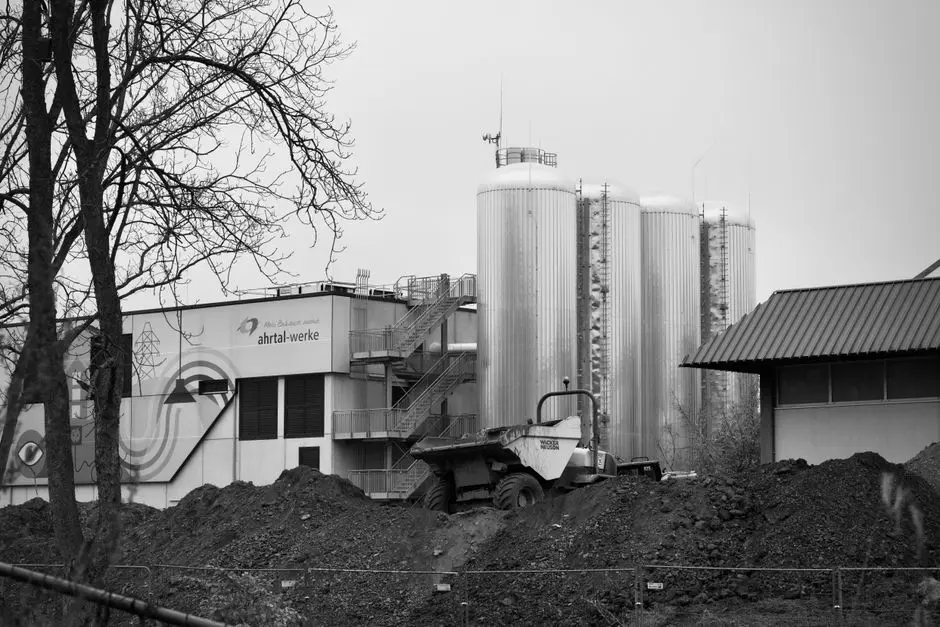
Gravity clarification is the older and simpler approach: settleable solids sink under quiescent conditions in a basin sized for 1–2 m/h surface loading. Conventional clarifiers work, but they consume footprint that most Florence sites don't have. Lamella (inclined-plate) clarifiers solve that by stacking parallel plates at 55–60° inside a compact tank, multiplying the effective settling area. The plates cut the effective settling distance so surface loading climbs to 20–40 m/h — roughly 20× a conventional basin (HydropureWater HST product data).
For Florence mining, lamella clarifiers suit dense, mineral-heavy streams: sand wash overflow, crushed-stone fines, and metal-bearing slurry where particle specific gravity runs 2.6–4.0. Polymer dose runs 2–8 mg/L, about 30% lower than comparable DAF loads, because the mechanism is physical settling rather than bubble attachment. A second advantage is the underflow: lamella underflow reaches 5–10% solids versus 3–6% for DAF float, which means downstream dewatering with a plate and frame filter press runs at lower cake moisture and shorter cycle time. The honest trade-off: clarifiers underperform on low-density fines, emulsified oils, and floatable metal hydroxides — the very contaminants DAF handles best.
DAF vs Clarifier: Head-to-Head Comparison for Mining and Metals
Side-by-side, the two technologies split cleanly on mechanism, footprint, and cost. The matrix below is the version I'd put in front of a procurement committee in 2026. DAF numbers are anchored on the wastewatermachinery.com 2025-12 model table and H2Flow product data; lamella numbers come from HydropureWater HST specifications.
| Parameter | DAF | Lamella Clarifier (HST) |
|---|---|---|
| TSS removal | Up to 97% | 60–90% |
| COD removal | 60–80% | 20–40% |
| Hydraulic surface loading | 5–25 m/h | 20–40 m/h |
| Footprint at 10 m³/h | ~4.65 m × 2.7 m × 2.4 m (skid) | ~5 m × 3 m × 6 m tall (tank + plates) |
| Oil/FOG capture | Excellent (≥90%) | Poor |
| Polymer dose | 5–15 mg/L | 2–8 mg/L |
| Sludge solids | 3–6% float | 5–10% underflow |
| CapEx per m³/h (planning) | $8,000–$12,000 | $4,000–$8,000 |
| Flow range covered | 3–1,000 m³/h (H2Flow Sigma) | 5–500 m³/h |
| Best-fit influent | Low-density fines, oils, metal hydroxides | Dense mineral, sand, coarse grit |
| Limitation | Won't remove coarse grit | Won't remove floatable FOG |
The mining-specific rows drive the decision: if the feed is grit-heavy, a DAF will pass it through and load the downstream filter press. If the feed is oily or hydroxide-rich, a lamella clarifier will let the floatable fraction escape and load the biological stage downstream. For mixed streams — which is what most Florence plants actually run — a DAF-primary + lamella-polish train captures the floatables first and settles the carryover, at higher total CapEx but lower compliance risk. A useful frame: pick by dominant particle type. Floatable and oily → DAF. Dense and mineral → clarifier. Mixed → DAF-then-clarifier train.
Florence, US Operating Context: Permits, Flows, and Feedwater Character
Florence sits in a clay, aggregate, and mineral-processing corridor. Discharges go under South Carolina Department of Health and Environmental Control (SCDHEC) NPDES permits, with TSS, metals (Fe, Al, Mn), and pH as the typical limits. Most plants in the area run 5–500 m³/h — well within both the H2Flow DAF envelope (5–1,000 m³/h across Alpha, Delta, and Sigma series) and standard lamella model ranges (HydropureWater HST data; H2Flow product line, 2025-12).
Two local factors complicate the design. First, South Carolina groundwater and stormwater infiltration can push influent TDS to 10–50 g/L, which forces operators to re-tune the DAF A/S ratio and tighten clarifier underflow management (per ecologixsystems saline wastewater data, 2025). Second, seasonal variation is severe: summer quarry wash-down surges and winter low flows can shift influent flow by 3:1 or more diurnally. Hahn (2010) recommends an equalization tank upstream of either technology to buffer these shocks. The compliance driver is unambiguous: a TSS excursion triggers SCDHEC Notices of Violation, and the rest of the treatment train — biological stage, filtration, disinfection — performs poorly when the primary separator is mis-sized or mis-applied.
2026 Cost and Footprint Snapshot for a Florence Plant
Translating the technical comparison into procurement language, the rough-order-of-magnitude numbers below reflect industry-typical planning estimates, not quotes. Treat them as 2026 budgetary anchors and verify with vendor bids before commitment.
| Item | DAF (10–50 m³/h) | Lamella Clarifier (10–50 m³/h) |
|---|---|---|
| Equipment CapEx (installed) | $80,000–$250,000 | $40,000–$120,000 |
| Civil works | Minimal (skid) | Concrete pad + tank |
| Footprint at 10 m³/h | 4.65 m × 2.7 m × 2.4 m | 5 m × 3 m × 6 m tall |
| Polymer consumption | 5–15 mg/L | 2–8 mg/L |
| Power draw (relative) | Higher (saturation pump + recycle) | Lower (no air system) |
| Sludge solids to dewatering | 3–6% float | 5–10% underflow |
| Downstream dewatering | Plate and frame filter press | Plate and frame filter press |
The 2026 budget rule of thumb: a DAF skid runs roughly 1.8–2.2× the CapEx of a comparable lamella clarifier at the same flow, but DAF offsets some of that gap with lower civil works, faster install, and a smaller concrete pad. Operating cost favors lamella on low-FOG streams; on streams with >50 mg/L oil/FOG, DAF's higher removal rate reduces downstream polymer and filter-press cycle load, which flips the lifecycle math.
Selection Decision Matrix: Which Technology Fits Your Plant
The rule below is what I'd hand a Florence plant manager at the RFP kickoff. It's intentionally binary — each row points to one technology unless the answer is genuinely "both."
| If your influent looks like this… | Then specify… |
|---|---|
| Oil/FOG >50 mg/L, or floatable fraction >20% | DAF system |
| Coarse, sandy TSS >3,000 mg/L, low oil | HydropureWater lamella clarifier |
| TDS >10 g/L or seasonal salinity swings | Lamella primary + DAF polish for the floatable fraction |
| Diurnal flow variation >3:1 | Add equalization tank upstream of either unit (Hahn 2010) |
| Site footprint <50 m² | DAF skid over a lamella tower |
| Downstream biological (MBR/SBR) | DAF pretreatment — cuts shock load on the biology |
| Variable feed, both floatables and grit | DAF-primary + lamella-polish train |
For chemical conditioning of either flow, an automatic chemical dosing system sized for the plant's polymer and coagulant demand keeps A/S ratio and floc strength stable across flow swings. For long-term operability, see the 2026 mining wastewater maintenance guide for the preventive maintenance schedule both trains share. For a cross-region comparison on the same decision, the DAF vs clarifier in Blue River mining article applies the same matrix to a different feedwater profile, and the DAF vs clarifier for fabricated metals in LA piece covers the metals-finishing variant of the same question.
Frequently Asked Questions
What flow range can a single DAF unit handle for a Florence mining plant?
Standard DAF skids cover 5–180 m³/h (H2Flow Alpha and Delta series) and 225–1,000 m³/h (Gamma and Sigma series) (H2Flow product data, 2025-12). For most Florence facilities running 5–500 m³/h, a single Alpha/Delta skid is sufficient without parallel units.
How much oil and grease can DAF remove compared to a lamella clarifier?
Industrial DAF systems achieve ≥90% oil/FOG removal by attaching micro-bubbles to emulsified oil droplets (Hahn 2010; wastewatermachinery.com, 2025-12). Lamella clarifiers rely on gravity settling and capture only free oil that rises naturally — typically under 30% on emulsified streams.
Which technology has lower chemical consumption for clay and aggregate wash water?
Lamella clarifiers use 2–8 mg/L polymer versus 5–15 mg/L for DAF on comparable loads, roughly 30% lower (HydropureWater HST data). For dense mineral streams with low FOG, the lamella lower chemical use makes it the more economical primary separator.
Can a DAF handle high-TDS influent from South Carolina groundwater?
Yes, but the air-to-solids ratio must be re-tuned for TDS of 10–50 g/L (per ecologixsystems saline wastewater data, 2025). At sustained TDS above 50 g/L, operators typically prefer a lamella primary plus DAF polish to manage both floatable and settleable fractions.
What is the typical 2026 CapEx for a 20 m³/h primary separator in Florence?
Planning estimates put a 20 m³/h DAF skid at $130,000–$200,000 installed and a comparable lamella clarifier at $60,000–$100,000 (industry-typical ranges, 2026). Confirm with vendor bids and include equalization, chemical dosing, and a downstream plate and frame filter press in the total budget.