Why 2026 Is a Tipping Point for Martinsville-Area Transportation Plants
Three regulatory pressure points converge on transportation equipment plants near Martinsville in 2026, and the audit trail matters more than the equipment itself. First, EPA sets the National Pretreatment Program, IDEM acts as the authorized NPDES/pretreatment state, and the Martinsville POTW enforces local limits at the industrial user's end-of-pipe per 40 CFR 403.5(c). Second, EPA's December 2024 State and Territory Program Authorization and the Categorical Standards summary remain the operative baseline a 2026 inspector will reference; transportation plants with machining, plating, or coated-parts lines typically fall under 40 CFR Part 433 (metal finishing), and any plant discharging above the general 40 CFR 403.5 prohibited-discharge standards faces enforcement regardless of categorical status. Third, 2026 IDEM local-limit re-evaluations combined with EPA's continued emphasis on slug-control plans under 40 CFR 403.8(f) raise the documentation bar for significant industrial users this year.
The receiving system sets the boundary. The Martinsville WWTP is a 2.2 MGD design-flow activated-sludge plant with a 6.8 MGD peak, two 1.1 MG aeration tanks, secondary clarification, and UV disinfection before discharge to the West Fork of the White River (per the city's published plant description, 2026). The plant reports a 98% removal rate and operates four 200,000-gallon digesters feeding a two-meter belt press with landfill cake as the endpoint. That digestion train is precisely why 40 CFR 403.5(c) local limits exist: a discharge causes "interference" when it disrupts the POTW, its treatment processes, or its sludge processes, use, or disposal per 40 CFR 403.3(k), and causes "pass-through" when it exits the POTW in quantities or concentrations that violate the POTW's NPDES permit per 40 CFR 403.3(p). For a transportation plant, that translates into concrete concerns: zinc and nickel upsetting digester biology, hexavalent chromium inhibiting biosolids handling, and FOG or coolant plumes slugging the aeration basins.
Characterizing Transportation-Equipment Wastewater Before You Treat It
Transportation equipment manufacturing produces a recognizable pollutant fingerprint that any defensible pretreatment design starts from. The dominant families are total petroleum hydrocarbons (TPH) and emulsified oils from machining, stamping, and parts washing; FOG from coolant breakdown and assembly lubricants; TSS in the 200–2,000 mg/L band from stamping and machining swarf; phosphate and surfactant cleaners from phosphating rinsewater; and trace metals (Zn, Ni, Cr, Cu, Fe) ranging from 1–50 mg/L depending on plating line closure, plus pH swings between 6 and 10 from batch acid/caustic wash operations. These are industry-typical engineering placeholders, not regulatory limits, and the local POTW limits will tighten or relax the design margin.
Stream segregation is the single highest-leverage BMP a plant can document. Keep oily wastewater, phosphating rinsewater, and general assembly washwater in separate trenches so each stream can be matched to the right unit operation rather than blended into a dilute but problematic composite. This segregation is exactly the kind of practice a 40 CFR 403.12 self-monitoring report and 40 CFR 403.8(f)(1)(viii) slug-control plan must describe, and it gives the POTW a clean inspection answer when a slug of coolant or solvent would otherwise have hit the collection system. The table below summarizes the engineering bands a typical transportation plant should measure against during characterization.
| Pollutant / Parameter | Industry-Typical Influent Range | Why It Matters for 40 CFR Part 403 |
|---|---|---|
| Oil & Grease / FOG | 100–5,000 mg/L | Pass-through and interference; slug risk |
| TSS | 200–2,000 mg/L | Settling load; biosolids volume |
| TPH | 50–1,000 mg/L | FOG overlap; fire/flammability hazard |
| Zinc (Zn) | 1–50 mg/L | Categorical under 40 CFR Part 433; digester toxicity |
| Nickel (Ni) | 0.5–20 mg/L | Categorical under Part 433; sludge quality |
| Chromium (Cr, total) | 0.1–10 mg/L | Categorical under Part 433; biosolids handling |
| Copper (Cu) | 0.5–15 mg/L | Categorical under Part 433; receiving-stream toxicity |
| pH | 6.0–10.0 | 40 CFR 403.5 general prohibited discharge range |
| Phosphate (as P) | 5–100 mg/L | Phosphating line; receiving-stream nutrient loading |
The 2026 Pretreatment Train: Unit Operations That Actually Pass the Audit
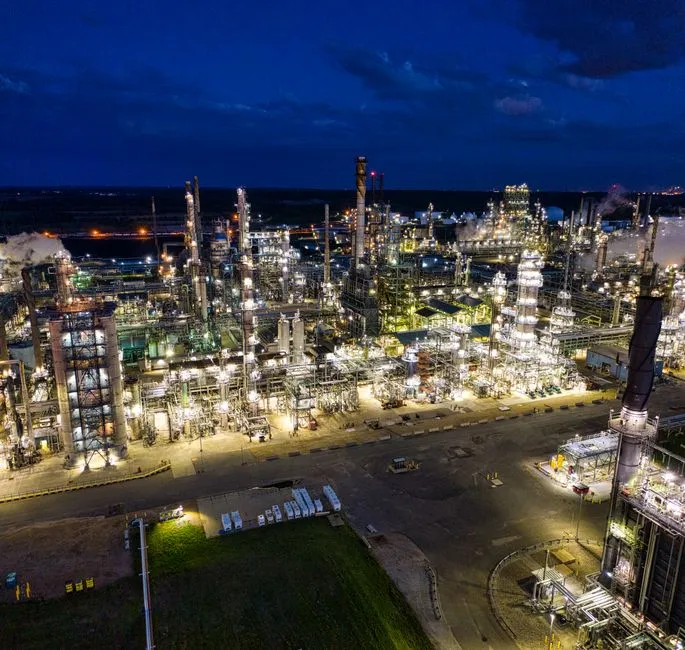
The pretreatment train that reliably brings a transportation plant below Martinsville's local limits is a sequence of seven unit operations, each removing a defined fraction of the load so the next step has a tractable influent. The sequence below is the architecture a 2026 audit will recognize as defensible.
- Coarse screening. A GX series rotary mechanical bar screen at headworks removes rags, packaging debris, and stamping scrap with stainless-steel rake teeth and self-cleaning brush discharge; this prevents downstream fouling in plates, membranes, and DAF nozzles.
- Oil/water separation. A corrugated-plate or coalescing interceptor drops free oils before emulsified streams reach flotation, removing 60–80% of free oil as a realistic pre-DAF baseline (HydropureWater field data, 2026).
- Equalization with pH trim. A buffer tank absorbs batch swings, and a PLC-controlled chemical dosing skid trims pH to the 6.0–10.0 band most POTW local limits enforce.
- Dissolved air flotation (DAF). The workhorse for FOG, emulsified oils, and TSS. Microbubbles attach to oil droplets and floc, lifting them to the surface for skimming. Hydraulic residence time is typically 20–40 minutes, with air-to-solids ratio (A/S) of 0.02–0.06 as the main design lever. A HydropureWater dissolved air flotation system covers 4–300 m³/h, so it scales to nearly any transportation plant in a single skid.
- Chemical precipitation for metals. Where Zn, Ni, Cr, or Cu exceed local limits, raise pH to 8.5–9.5, dose coagulant and flocculant through the same dosing skid, and capture the precipitate downstream.
- Polishing. A HydropureWater lamella clarifier is the right pick when footprint is tight and load is moderate; a HydropureWater MBR membrane bioreactor is the right pick when reuse is in scope or the tightest TSS/BOD target applies, since MBR effluent is effectively <1 µm filtered.
- Disinfection. UV is preferred because chlorine residuals become their own local-limit parameter, and the Martinsville WWTP itself uses UV (per the city's published plant description), which signals what the receiving system tolerates.
| Step | Unit Operation | Primary Pollutant Targeted | Typical Removal / Target |
|---|---|---|---|
| 1 | Rotary bar screen | Rags, scrap, debris | >5 mm capture |
| 2 | Corrugated-plate OWS | Free oils | 60–80% free oil |
| 3 | Equalization + pH trim | pH swing, slug load | pH 6.0–10.0 |
| 4 | DAF | FOG, emulsified oil, TSS | 80–95% TSS; 90%+ oil |
| 5 | Chemical precipitation | Zn, Ni, Cr, Cu | >95% metals at pH 8.5–9.5 |
| 6 | Lamella or MBR | Residual TSS, BOD | Lamella: <30 mg/L TSS; MBR: <1 µm filtered |
| 7 | UV disinfection | Fecal coliform (where required) | No residual chemical |
Choosing the Right Pretreatment Architecture: DAF, Lamella, or MBR
The decision between DAF, lamella, and MBR collapses to four variables: flow rate, FOG/TSS load, footprint, and reuse intent. A typical single transportation plant runs 5–50 m³/h per shift, so the right unit operation has to scale into that envelope without over-specifying.
DAF is the workhorse when oil & grease exceeds 200 mg/L or FOG swings are routine. Surface loading runs 5–20 m/h, and the DAF line covers 4–300 m³/h in standard sizes (HydropureWater product specification, 2026), so it scales from a small assembly plant to a multi-line operation. Lamella clarifier is the right pick when the plant is footprint-constrained and the load is TSS-dominant rather than oil-dominant. Inclined plates at 20–40 m/h surface loading produce a smaller basin footprint than conventional clarifiers, with reported chemical savings of 20–40% versus conventional settling (HydropureWater field data, 2026). MBR is the right pick when water reuse is in scope, whether for process rinsewater or cooling-tower makeup, or when the plant wants the lowest TSS and BOD in the smallest area. MBR delivers roughly 60% smaller footprint than conventional activated sludge, but trades higher capex and aeration energy for that footprint savings. Many plants combine units in series: DAF + lamella when oil is the main concern and footprint is tight, or DAF + MBR when reuse is the next step. The table below maps the decision.
| Criterion | DAF | Lamella Clarifier | MBR |
|---|---|---|---|
| Best influent signal | O&G > 200 mg/L; emulsified oils | TSS-dominant, low FOG | Reuse target; BOD polishing |
| Flow range (per unit) | 4–300 m³/h | 5–200 m³/h typical | 5–100 m³/h typical |
| Surface / hydraulic loading | 5–20 m/h | 20–40 m/h | Membrane flux 10–25 LMH |
| Footprint vs. conventional | ~50% smaller | ~70% smaller | ~60% smaller |
| Capex relative baseline | 1.0× | 0.7–0.9× | 1.3–1.6× |
| Opex drivers | Compressed air, polymer | Lowest chemical/energy | Aeration energy, membrane maintenance |
| Effluent quality | <30 mg/L TSS typical | <30 mg/L TSS typical | <1 µm filtered, near-reuse |
| Combines well with | Lamella or MBR downstream | Pre-DAF for oils | Pre-DAF for oils |
Sludge Handling and the Back End of the Compliance Chain
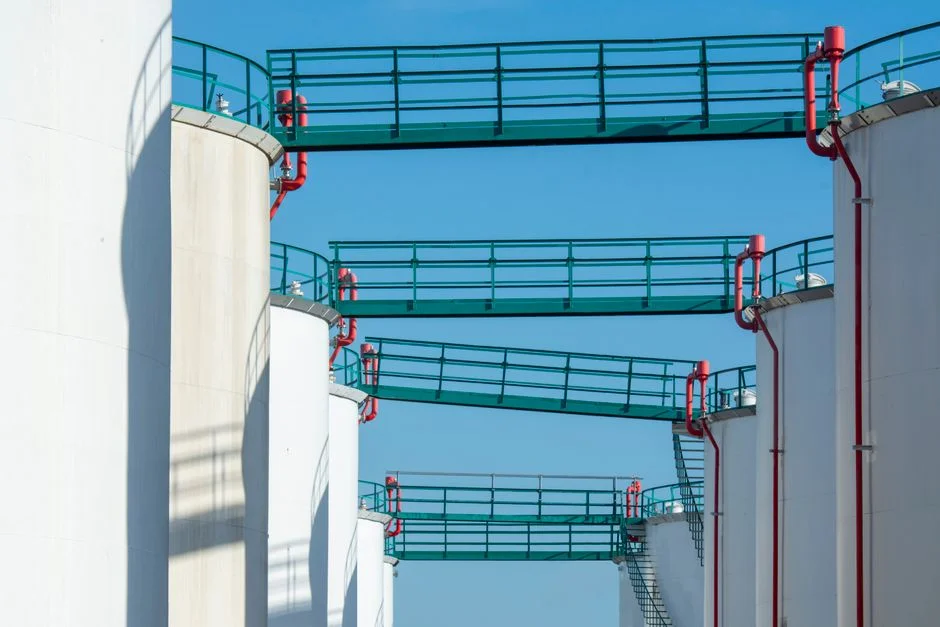
The water side is only half of 40 CFR Part 403 compliance. Local limits exist to protect the receiving stream from pass-through and to protect the POTW's sludge processing from interference per 40 CFR 403.3(k). The Martinsville WWTP runs four 200,000-gallon digesters feeding a two-meter belt press with landfill cake as the endpoint (per the city's published plant description). That downstream pathway is the reason the IU's sludge characteristics matter: high metals load or high oil content from a poorly dewatered sludge will show up in the POTW's biosolids and may push the receiving system out of compliance, with the chain of liability pointing back up the sewer to the industrial user. A plate-and-frame filter press on the IU side drops sludge volume before hauling, with filtration areas available from 1–500 m² to match plants producing 1–10 dry tons/day (HydropureWater product specification, 2026). Aim for cake dryness above 35% to minimize hauling cost and keep metals locked into the cake rather than bleeding back into the filtrate stream.
2026 Capex, Opex, and Monitoring: What to Budget and What to File
A 2026 packaged DAF + chemical dosing + lamella skid for a 10–30 m³/h transportation plant typically falls in the low-six-figure to mid-six-figure USD range as a planning-grade estimate; an MBR upgrade adds roughly 30–60% on top, driven by membrane modules and aeration system sizing. These are planning envelopes, not quotes, and they assume the building, electrical, and civil scope sit on the plant's existing pad. The most defensible budget conversations pair this envelope with a 30% contingency and an explicit allowance for the structural and electrical work that often doubles a "skid-only" quote once it lands in a real plant.
Opex drivers are predictable: coagulant and flocculant consumption in the 50–200 mg/L dose range, compressed air for the DAF recycle pump, sludge hauling at $40–80 per wet ton as a national mid-range, and electricity for any biological or membrane stage (a 20 m³/h MBR train typically draws 15–25 kW). On the compliance side, 40 CFR 403.12 sets the monitoring cadence: a baseline monitoring report on permit issuance, semiannual self-monitoring for significant industrial users, and categorical-standard sampling at the frequency specified in the applicable part (for example, 40 CFR Part 433 metal-finishing monitoring on the schedule defined in §433.12). Filing deliverables include a 40 CFR 403.8(f) slug control plan, BMP certification, accidental-spill prevention countermeasure plan, and the annual POTW pretreatment report where the receiving authority requires it.
| Line Item | 2026 Planning-Grade Range (USD) | Driver |
|---|---|---|
| Packaged DAF + dosing + lamella skid (10–30 m³/h) | $200,000–$650,000 | Tankage, instrumentation, controls |
| MBR upgrade adder (vs. DAF baseline) | +30–60% | Membrane modules, blowers, CIP |
| Plate-and-frame filter press | $50,000–$250,000 | Filtration area, automation |
| Install, electrical, civil (typical 40–80% of skid cost) | $100,000–$500,000 | Site-specific |
| Annual opex (chemicals, air, hauling, power) | $80,000–$250,000/yr | Load and reuse vs. discharge |
For related architectures in nearby transportation corridors, the Decatur transportation-plant pretreatment guide, the Little Falls transportation-plant compliance guide, and the Waco transportation pretreatment guide cover parallel 2026 design choices, while the engineering depth behind lamella selection sits in the inclined plate settler working principle guide.
Frequently Asked Questions
What categorical standard applies to a transportation equipment plant near Martinsville?
Transportation plants with machining, plating, or coated-parts lines typically fall under 40 CFR Part 433 (Metal Finishing), with end-of-pipe limits and monitoring frequency defined in §433.12. Plants without those operations are still subject to local limits and the 40 CFR 403.5 general prohibited discharge standards enforced by the Martinsville POTW and IDEM.
Does a transportation plant need a slug control plan in 2026?
Yes, if it is a significant industrial user discharging to a POTW with an approved pretreatment program. The plan is required by 40 CFR 403.8(f)(1)(viii) and must describe slug prevention, containment, and notification procedures for accidental spills of coolant, solvent, or concentrated cleaners that could pass through or interfere with the receiving 2.2 MGD activated-sludge plant.
How should a transportation plant choose between DAF, lamella, and MBR?
Use FOG/TSS load, footprint, and reuse intent as the decision drivers. DAF is the right pick when oil and grease exceed 200 mg/L or FOG swings are routine; lamella is the right pick when footprint is constrained and the load is TSS-dominant; MBR is the right pick when reuse or the tightest TSS/BOD target applies, accepting a 30–60% capex adder for a roughly 60% smaller biological footprint.
What monitoring and reporting does 40 CFR 403.12 require?
A baseline monitoring report on permit issuance, semiannual self-monitoring for significant industrial users, categorical-standard sampling per the schedule in the applicable part (for example §433.12 for metal finishing), and the annual POTW pretreatment report where the receiving authority requires it. Sampling points must be representative of the discharge covered by the permit, not just downstream of the equalization basin.
Why do local limits exist if categorical standards already cover metal finishing?
Categorical standards set technology-based end-of-pipe limits, but local limits under 40 CFR 403.5(c) are site-specific numeric or narrative limits the POTW develops to protect its own treatment processes, biosolids, and receiving waters from pass-through and interference. The Martinsville POTW's digesters, belt press, and West Fork of the White River discharge are the specific assets those local limits are written to protect (per the city's published plant description).