Why Waco pretreatment is a three-layer problem, not a one-rule problem
Transportation equipment plants near Waco, TX meet 2026 pretreatment limits by stacking three rule layers — federal categorical standards under 40 CFR Parts 405–471 (typically Part 433 for metal finishing), Texas TCEQ requirements under 30 TAC Chapters 305 and 307, and the City of Waco Water Utilities Industrial Pretreatment Program local limits — and by routing four segregated wastewater streams (parts wash, oily coolant, paint overspray, cafeteria FOG) through a four-stage train: rotary screening, oil/water separation with DAF, flow equalization with pH adjustment and hydroxide metals precipitation in a lamella clarifier, and plate-and-frame sludge dewatering. The City of Waco requires categorical users to hold a full industrial waste permit regardless of discharge volume, so the dominant process subpart — not facility size — sets the design floor.
Layer 1 is federal: the Clean Water Act Section 307 categorical standards, technology-based effluent limitations promulgated under 40 CFR 403.6 and codified across 40 CFR Parts 405–471, with the EPA Model Pretreatment Ordinance (EPA 833-B-06-002, January 2007) as the implementation template for any delegated POTW. Layer 2 is Texas: TCEQ administers the TPDES program under 30 TAC Chapter 305 and the industrial pretreatment delegation under 30 TAC Chapter 307, and for a Waco discharger the City of Waco Water Utilities is typically the Control Authority with TCEQ as the Approval Authority. Layer 3 is local: City of Waco Code of Ordinances Chapter 18 Article III (Industrial Wastewater) and the City of Waco Water Utilities Industrial Pretreatment Program local limits. For any single parameter, the most restrictive of the three layers governs — in practice that is almost always the categorical standard or the local limit, not the Texas rule.
NAICS codes 336111 (automobile), 336112 (light truck), 336411 (aircraft), 336611 (ship building and repairing), and 33651 (rail) pull a transportation plant into categorical status, and the dominant process subpart is the design floor regardless of plant size — a bus body fabricator with a chromate conversion line is treated identically to a Tier-1 aerostructures supplier for purposes of permit scope. Waco's Central WWTP is in active expansion on roughly 300 acres serving seven area cities (Waco Tribune-Herald, 2025-11), so local limits and capacity allocation can shift through 2026; verify against the current draft permit before ordering equipment. For a primer on the federal layer, see the EPA Clean Water Act categorical standards primer.
The four wastewater streams that actually trip a Waco transportation plant
Most pretreatment articles treat "industrial wastewater" as a single stream. A transportation plant actually generates four, and each one trips a different local limit. Mapping your floor drains to the right stream is the first step in right-sizing the equipment train — and mis-routing Stream 1 to the DAF is the single most common cause of foaming and FOG exceedances seen in Waco-area pretreatment audits.
Stream 1 is alkaline/acidic parts wash and conversion-coating rinsewater. Phosphate, chromate, and zirconium conversion-coating rinses drive pH excursions into both acid and alkaline territory and carry Zn, Ni, and Cr that hit the daily-average and instantaneous-maximum metals caps. The typical subpart is 40 CFR Part 433, with hexavalent chromium at 0.1 mg/L daily average. This stream drives the pH adjustment and metals precipitation stages of the train.
Stream 2 is oily machine coolant, hydraulic fluid leaks, and machine-floor wash. Tramp oils from CNC sumps, hydraulic drips from assembly cells, and routine floor wash generate the nonpolar FOG and petroleum hydrocarbons that the City of Waco local limits cap at 100 mg/L. The same stream is the one most likely to fail the closed-cup flash point (no discharge below 140°F / 60°C) and the LEL rule (≤5% successive, ≤10% single) under 40 CFR 403.5. This stream drives the oil/water separator and DAF stages.
Stream 3 is paint-booth overspray washwater and solvent-bearing rinses. Waterborne overspray and solvent gun-cup rinsing introduce VOCs and explosion hazards; any reading above the VOC screening level requires a permit amendment and may force a switch in solvent chemistry. Treatment here is segregation and source control rather than end-of-pipe removal.
Stream 4 is cafeteria and break-room polar FOG plus boiler blowdown. Polar FOG triggers a FOG control plan; boiler blowdown and hot process rinses drive the temperature limit of 150°F (65°C) at the sewer connection and the hard prohibition above 104°F (40°C) at the POTW headworks. This is the stream that gets plants cited during a Texas winter startup, when boilers and hot rinse tanks dump simultaneously into a cold sewer.
Waco local limits, EPA categorical subparts, and the HMI setpoints a compliant system actually holds
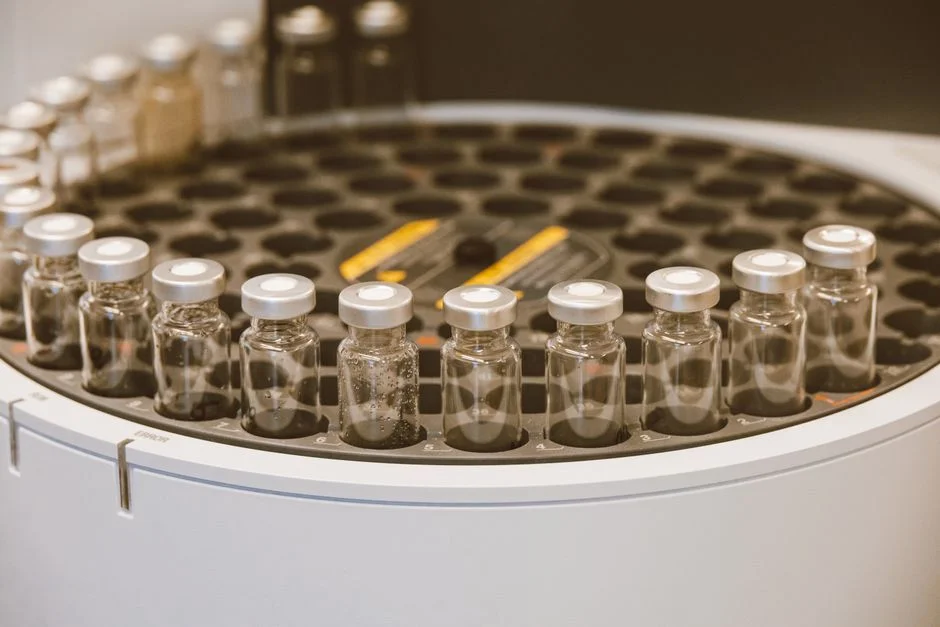
Regulatory text does not run a plant. The controller setpoints do. The table below maps the City of Waco local limits and the 40 CFR Part 433 categorical ceiling for hexavalent chromium to the HMI setpoints a compliant pretreatment system actually holds, plus the unit operation that delivers compliance. For the Waco plant, the pH ceiling is instantaneous 5.0–12.0 with a daily minimum trip on any 15-minute recording below 5.5; the design discharge band is 6.5–9.0 with PLC-controlled caustic/acid dosing and a redundant inline probe. The nonpolar FOG ceiling is 100 mg/L measured downstream of an approved oil/water separator with a separator plan reviewed by the control authority, and the design DAF outlet is set to ≤70 mg/L to leave 30 mg/L of headroom under the ceiling. Metals are reported at daily-average and instantaneous-maximum values per the City of Waco local limits table, with lamella overflow designed at ≤50% of the instantaneous-maximum to maintain compliance margin under upset. Sulfide is screened at 0.1 mg/L, dropped by ferric chloride dosing at a 4:1 Fe:S molar ratio in a reactor sized to 15 minutes of retention time at peak shift flow.
| Parameter | Regulatory limit | HMI setpoint / controller band | Delivering unit operation |
|---|---|---|---|
| pH | 5.0–12.0 instantaneous; daily-min trip on 15-min recording < 5.5 | Discharge 6.5–9.0; alarm before violation window | PLC-controlled chemical dosing with redundant inline probe |
| Nonpolar FOG | 100 mg/L cap (post-separator) | DAF outlet ≤ 70 mg/L | DAF for nonpolar FOG and emulsified oil removal |
| Total metals (Zn, Ni, Cr) | Daily avg / instantaneous max per Waco local limits | Lamella overflow ≤ 50% of instantaneous max | Lamella clarifier for hydroxide metals precipitation + two-stage pH reactor |
| Hexavalent Cr (40 CFR 433) | 0.1 mg/L daily average | Trivalent Cr precipitation band pH 8.0–9.0 | Two-stage pH reactor with PLC-controlled caustic ramp |
| Sulfide | 0.1 mg/L screening level | Fe:S molar ratio 4:1, 15-min HRT at peak flow | Ferric chloride dosing via PLC-controlled skid |
| Temperature | 150°F (65°C) max at sewer; prohibited > 104°F (40°C) at headworks | Discharge ≤ 100°F (38°C) | Plate heat exchanger + equalization tank |
| VOCs (paint stream) | Screening list; permit amendment above screening level | Source-control monitor, alarm at 50% LEL | Segregation, ventilation, source control |
Two design notes the controller logic has to honor. First, hydroxide precipitation requires a tight pH window for each metal — Zn precipitates cleanly between pH 9.0 and 10.0, Ni between pH 10.0 and 11.0, and trivalent Cr between pH 8.0 and 9.0 — so a single-stage pH adjustment will not hit all three simultaneously. A two-stage reactor with a PLC-controlled caustic ramp is required when Cr is the dominant metal. Second, on the categorical permit threshold: the 5,000 gpd "instantaneous-limits-only" carve-out does not apply to categorical users. A Waco plant classified under 40 CFR Part 433 (or Part 461 for battery assembly, or Part 432 for centralized waste treatment) must hold a full industrial waste permit regardless of volume, per 40 CFR 403.5 and City of Waco Code Ch. 18. For a regional pretreatment compliance analog on a similar stream profile, see the Kalispell petroleum pretreatment guide.
The four-stage pretreatment train that delivers Waco categorical compliance
The four-stage train that delivers City of Waco compliance for a transportation plant runs screen → oil/water separation with DAF → equalize/precipitate with lamella clarification → filter press. Each stage is non-negotiable for a categorical user.
Stage 1 is coarse screening. A rotary mechanical bar screen for headworks protection catches rags, machining swarf, and parts hangers before they reach the pumps. Continuous-duty screening handles the 24/7 three-shift flow typical of a Waco fabrication shop without the ragging that stops a perforated plate screen every shift. Stage 2 is oil/water separation and DAF. An API or coalescing plate separator removes free oil; the DAF polishes emulsified oils and nonpolar FOG down to the 70 mg/L design setpoint. DAF units in metalworking and parts-wash duty typically achieve 90%+ FOG removal across the 4–300 m³/h capacity range (HydropureWater field data, 2026). For the DAF-vs-clarifier decision specifically on fabricated metals wastewater, see the DAF vs. clarifier decision for fabricated metals wastewater.
Stage 3 is flow equalization, pH adjustment, and metals precipitation. Equalization dampens the diurnal shift-change swings that would otherwise push pH and FOG past the instantaneous limit; PLC-controlled chemical dosing with caustic (or acid) and a coagulant drives the metals into a hydroxide floc; the lamella clarifier for hydroxide metals precipitation runs at 20–40 m/h surface loading, roughly three times a conventional clarifier and translating into a 30% chemical saving at the same removal efficiency (HydropureWater field data, 2026). Stage 4 is sludge dewatering. Hydroxide sludge and DAF float land in a sludge holding tank and are pushed through a plate-and-frame filter press for sludge dewatering; plate-and-frame presses in the 1–500 m² filtration area range cover residuals from a 5,000–50,000 gpd transportation plant, and cake solids of 25–35% are typical for a metal-finishing sludge — dropping hauling cost by a factor of 4–6 versus liquid disposal.
What a 2026 turnkey pretreatment train costs a Waco transportation plant
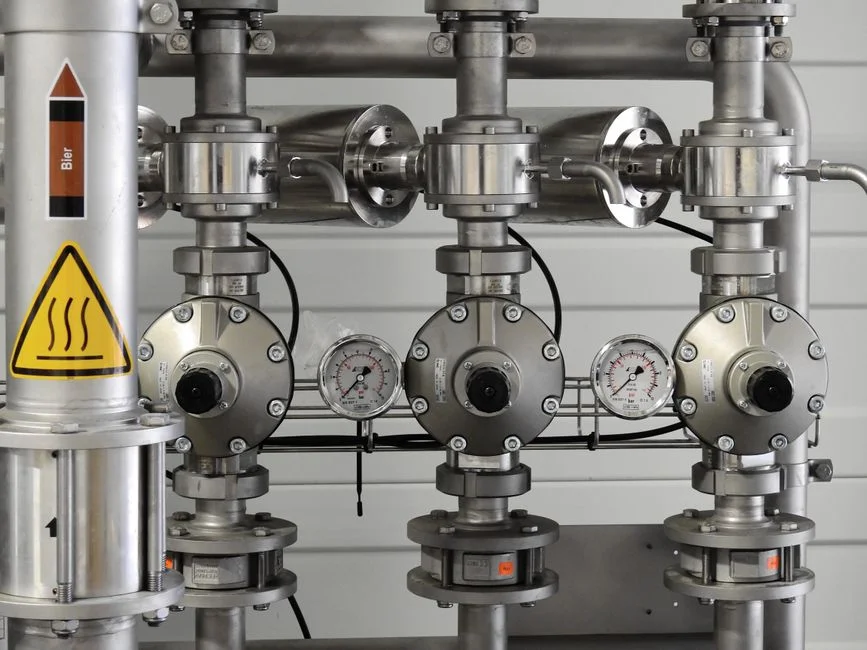
Procurement leads want a number. The CAPEX ranges below are 2026 turnkey vendor quote ranges covering screen, oil/water separator, DAF, equalization, dosing, lamella clarifier, and filter press; they are not formal offers, and site-specific factors — soil conditions, electrical service, building height, indoor versus outdoor installation, and Texas summer cooling-water demand on plate heat exchangers — push the number 20–40% above the range.
| Tier | Permit scope | 2026 turnkey CAPEX (USD) | What is included |
|---|---|---|---|
| 1 — Local limits only | Non-SIU, < 5,000 gpd, no categorical status | $60,000 – $140,000 | Rotary screen, oil/water separator, DAF, equalization, basic pH adjustment |
| 2 — Full categorical | 40 CFR Part 433 or Part 461 with mass-based metals | $350,000 – $700,000 | Tier 1 + PLC chemical dosing, lamella clarifier, two-stage pH reactor, filter press |
| 3 — Categorical + PFAS + SCADA | Full categorical plus PFAS polishing and remote monitoring | $900,000 – $1,600,000 | Tier 2 + carbon or ion-exchange PFAS stage, full SCADA, redundant probes |
Two procurement notes for a Waco buyer. First, do not order pretreatment equipment until the City of Waco draft permit is in hand, because the draft specifies local limits, monitoring frequency, and self-monitoring requirements that drive pH probe count and sampling port layout. Second, for a non-categorical plant, holding total process wastewater below 5,000 gpd through flow equalization and counter-current rinsewater reuse drops the daily-average metals compliance requirement — but this carve-out does not apply to categorical users, who must hold a full industrial waste permit regardless of volume. Treat the ranges above as 2026 vendor quote ranges, not formal offers; the TCEQ approval cycle and the Central WWTP capacity allocation both run on their own clocks through 2026.
Frequently Asked Questions
Does a Waco transportation plant under 5,000 gpd still need a categorical permit?
Yes, if the facility is a categorical discharger under 40 CFR Part 433 (metal finishing), Part 461 (battery manufacturing), or Part 432. Categorical users must hold a full City of Waco industrial waste permit regardless of discharge volume, per 40 CFR 403.5 and Waco Code Ch. 18 Art. III.
What is the nonpolar FOG limit for sewer discharge in Waco?
100 mg/L, measured downstream of an approved oil/water separator with a separator plan reviewed by the City of Waco Water Utilities. Design the DAF outlet to ≤ 70 mg/L to leave 30 mg/L of headroom under the ceiling.
What pH band must a Waco categorical discharger hold on the HMI?
Discharge band 6.5–9.0, with a regulatory window of 5.0–12.0 instantaneous and a daily-minimum trip on any 15-minute recording below 5.5. Use PLC-controlled dosing with a redundant inline probe.
What is the hexavalent chromium limit under 40 CFR Part 433?
0.1 mg/L daily average. Reduce Cr(VI) to trivalent Cr before the precipitation reactor; trivalent Cr precipitates cleanly between pH 8.0 and 9.0, which is why a two-stage pH reactor is required when Cr is the dominant metal.
What is the maximum sewer discharge temperature in Waco?
150°F (65°C) maximum at the sewer connection, prohibited above 104°F (40°C) at the POTW headworks per TCEQ-approved program limits. Equalize and cool boiler blowdown and hot rinsewater to ≤ 100°F (38°C) using a plate heat exchanger and equalization tank.
How is soluble sulfide controlled in a metal-finishing pretreatment train?
Ferric chloride dosing at a 4:1 Fe:S molar ratio in a reactor sized to 15-minute retention time at peak shift flow reliably drops soluble sulfide below the 0.1 mg/L screening level. Meter the dose off the PLC-controlled chemical dosing skid, not off a hand-set pump.