Separate the data center wastewater streams
A data center in Gombe, Nigeria, generally needs two separate treatment trains: a biological train for sanitary sewage and a physico-chemical train for cooling-tower blowdown. Blowdown should first be screened, equalized and treated for suspended solids, metals and treatment chemicals; filtration or UF should then protect any downstream RO used for cooling make-up reuse. Domestic sewage should not be mixed with biocide-bearing blowdown before biological treatment. Final equipment sizing requires measured blowdown flow, TDS, hardness, silica, biocide, zinc and phosphate levels, plus the intended discharge or reuse route and current Gombe permits.
Cooling-tower blowdown is a chemically formulated stream, not merely warm cooling water. Its composition reflects the circulating-water treatment program: corrosion inhibitor, scale inhibitor, biocide and dispersant accumulate as water evaporates and the remaining dissolved solids become concentrated. The Port Harcourt guide reports 1,500–4,000 mg/L TDS for its brackish coastal reference, but that value cannot be transferred to Gombe (HydropureWater, 2026). Gombe’s source-water analysis and operating cycles of concentration remain required design inputs.
Sanitary sewage has a different treatment basis. It contains biodegradable organic matter and requires biological treatment; the Port Harcourt reference reports BOD5 of 200–350 mg/L and TSS of 250–400 mg/L for its domestic-sewage stream (HydropureWater, 2026). Its guide warns that combining blowdown with sewage exposes MBR biology to biocide residual and elevated blowdown temperature. Keep the streams separate unless a validated combined process demonstrates otherwise.
| Design input | Cooling-tower blowdown | Sanitary sewage |
|---|---|---|
| Primary contaminant concern | Concentrated dissolved salts, treatment chemicals, metals, colloids and corrosion products | Biodegradable organics, suspended solids and sanitary contaminants |
| Indicative treatment route | Screening, equalization, physico-chemical clarification, filtration and optional RO or disinfection | Biological treatment with separate effluent polishing and disinfection |
| Gombe measurements required before sizing | Flow, cooling configuration, chemical program, temperature, pH, TDS, hardness, silica, TSS, iron, zinc, phosphate and biocide residual | Daily flow, peak and maintenance inflows, BOD5, COD, TSS, pH, temperature, nutrients and discharge route |
| Do not transfer | Port Harcourt coastal feed chemistry or assumed inland source chemistry | Port Harcourt sewage loads or site flows without local measurement |
The separation decision must be made before equipment bids are issued. Use the integrated MBR treatment basis for sanitary sewage and evaluate a separate DAF system for cooling-blowdown pretreatment. Neither train should be sized from another Nigerian city’s reference chemistry.
Decide whether Gombe blowdown should be discharged or reused
Cooling-tower blowdown is a practical reuse target because treatment can reduce freshwater withdrawal and discharge volume while permitting higher cooling-tower cycles of concentration, according to IDE Tech (2026). The Gombe decision should be based on three inputs: reliable freshwater availability, the tenant’s water-performance obligation, and the permitability and receiving capacity of the intended discharge route.
The Port Harcourt guide provides a useful decision structure: a short-cycle colocation project with acceptable sewer capacity may favor compliant discharge, while a reuse obligation or unreliable freshwater supply strengthens the case for RO (HydropureWater, 2026). That logic can apply to Gombe, but none of its coastal chemistry or permit conditions should be imported without confirmation.
| Decision factor | Discharge-focused train | Reuse-focused train |
|---|---|---|
| Primary output | Compliant effluent for the agreed sewer or surface-water route | Cooling-water make-up and, where required, additional reuse water |
| Main advantage | Simpler treatment scope when sewer capacity and acceptance conditions are satisfactory | Reduced freshwater withdrawal and lower blowdown discharge volume |
| Main technical burden | Meeting site-specific pH, suspended-solids, metals, residual-oxidant and nutrient limits | Controlling membrane scaling and fouling while maintaining a stable reuse-water quality |
| Reference recovery evidence | Not established by the supplied research for Gombe | Lagos guide: 75–85% BWRO recovery and 10–50 mg/L TDS permeate; Port Harcourt guide: 65–75% recovery (HydropureWater, 2026) |
| Decision evidence | Current discharge consent, sewer pretreatment agreement and receiving-system acceptance | Measured source chemistry, tenant water target, pilot or vendor design and quantified concentrate route |
Do not promise a Gombe WUE, recovery rate or permit outcome before utility-acceptance testing, source-water analysis and a current discharge consent are available. The broader data center blowdown treatment design guide provides useful reuse logic, but its site-specific results are not Gombe guarantees.
Build a pretreatment train that protects the membranes
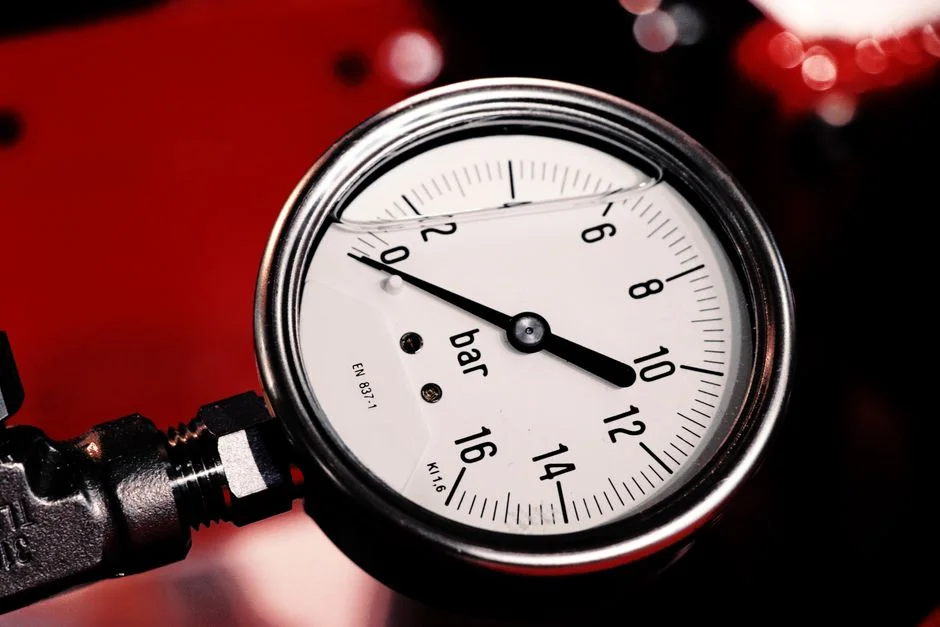
The pretreatment train should remove specific contaminants in sequence: protect pumps, smooth flow and chemistry, remove precipitable material, then reduce residual solids before UF or RO. Each unit needs a stated contaminant-control duty and an acceptance parameter; otherwise the equipment list is only a collection of tanks and skids.
- Mechanical screening: Remove rags, plastics and fibrous debris before they reach pumps or clarification equipment. The Port Harcourt process specifies a rotary mechanical bar screen with a 3–5 mm aperture (HydropureWater, 2026). A rotary mechanical bar screen for pump and equipment protection can be evaluated against that duty.
- Equalization and neutralization: Use an equalization basin to smooth blowdown variability and provide controlled pH for precipitation. The Port Harcourt reference uses 8–12 hours of storage and adjusts pH to 7.0–7.5; those figures belong to that reference design and must be rechecked against Gombe flow variability (HydropureWater, 2026).
- DAF or equivalent clarification: Remove suspended solids, colloids and relevant metals before membrane treatment. The Port Harcourt reference uses PAC at 30–80 mg/L and flocculant at 0.5–2 mg/L, with 10–15 minutes of hydraulic retention time (HydropureWater, 2026). Chemical demand must be established by jar testing on Gombe samples. Apply the DAF selection checklist for suspended solids before fixing the flotation area and recycle ratio.
- Media filtration: Use a multimedia filter for residual turbidity, iron and polymer control where the clarified water requires further polishing before UF or RO. Specify the required outlet turbidity, SDI and pressure drop rather than relying on the vessel diameter alone.
- UF, where justified: A 0.03-micron hollow-fiber UF system can protect downstream RO. The supplied HydropureWater product basis specifies 2,000–40,000 L/h capacity, 0.03-micron PVDF membranes, feed turbidity up to 300 ppm, automatic backwash and air scour (HydropureWater, 2026).
| Stage | Contaminant or protection problem | Information to request from the bidder |
|---|---|---|
| Screening | Rags, plastics and fibrous debris | Peak flow, aperture, duty method, extracted-solids handling and bypass arrangement |
| Equalization and pH control | Flow, temperature and pH variability | Volume basis, mixing method, aeration requirement, control ranges and standby power |
| DAF clarification | Suspended solids, colloids and metals subject to precipitation | Surface-loading basis, hydraulic retention time, recycle ratio, chemical consumption and jar-test support |
| Media filtration | Residual turbidity, iron and polymer | Filtrate turbidity, SDI, pressure-drop limit, backwash demand and media replacement |
| UF | Particulate and colloid protection for RO | Design flow, recovery, flux assumption, normalized permeability, cleaning method and feed limit |
DAF sludge is a separate disposal stream, not an incidental waste. The Port Harcourt reference reports 0.5–1.5% dry solids before dewatering and 25–35% cake after a plate-and-frame filter press (HydropureWater, 2026). Evaluate a plate-and-frame filter press for DAF sludge dewatering, but require Gombe-specific cake-moisture, disposal-route and haulier-acceptance guarantees.
Add RO only when the feed chemistry supports it
RO is appropriate when the project needs low-salinity cooling-tower make-up or another controlled reuse stream, but the design must be based on actual Gombe chemistry. The Lagos reference reports 75–85% recovery and 10–50 mg/L TDS permeate, while the Port Harcourt guide uses 65–75% recovery and specifies stricter feed targets (HydropureWater, 2026). These are reference-site results, not transferable Gombe guarantees.
IDE identifies silica, calcium carbonate and calcium sulfate as principal scaling constraints in cooling-tower blowdown (IDE Tech, 2026). Require the RO vendor to evaluate saturation, antiscalant compatibility, concentrate chemistry and cleaning demand from the measured feed. The Port Harcourt RO feed targets are SDI15 below 3, turbidity below 0.5 NTU, free chlorine below 0.1 mg/L, Fe below 0.05 mg/L and hardness below 50 mg/L as CaCO3 (HydropureWater, 2026). If the selected membrane manufacturer specifies tighter limits, apply those limits.
| RO decision item | Evidence or required action |
|---|---|
| Intended use | Define the required cooling make-up quality and whether permeate will be blended with another source. |
| Feed analysis | Measure TDS, silica, hardness, alkalinity, calcium, sulfate, iron, residual biocide, temperature and pH. |
| Recovery | Lagos reference: 75–85%; Port Harcourt reference: 65–75%. Select only after a chemistry-specific projection and pilot where scaling risk is material. |
| Permeate quality | Lagos reference reports 10–50 mg/L TDS. Require the bidder to guarantee the actual make-up specification for Gombe. |
| Concentrate route | Specify destination, expected flow and chemistry, residual-biocide management and disposal responsibility. |
| Higher-recovery claim | IDE reports an industrial example at around 95% recovery with silica near 1 mg/L, using a specific salt-precipitation architecture. This is not a standard Gombe outcome (IDE Tech, 2026). |
Conventional brackish RO commonly reaches 75–80% recovery before scaling becomes difficult in cooling-tower blowdown applications, according to IDE Tech (2026). Higher recovery requires a chemistry-specific salt-management design, additional equipment and a defined solid-residue route; it should not be inferred from a generic skid recovery claim.
Evaluate an RO water purification system for cooling make-up against the measured feed, and specify replacement elements using the RO and UF membrane element basis. Where scaling or chemical control cannot be demonstrated, require a vendor guarantee tied to the actual Gombe water analysis rather than recovery percentage alone.
Disinfect the discharge route without creating a new compliance problem
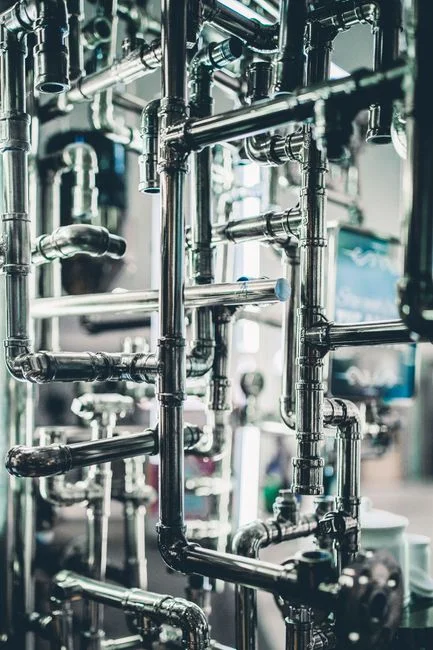
Disinfection must match the receiving route and the residual-oxidant limit; adding more disinfectant is not automatically better. The Port Harcourt reference uses chlorine dioxide at a 1–3 mg/L contact dose with a 30-minute contact basin for its discharge route (HydropureWater, 2026). That is a reference design, not a Gombe permit specification.
A chlorine dioxide generator for wastewater disinfection should be assessed against the flow, dose and contact-time duty. The supplied HydropureWater catalog range is 50 g/h compact manual units to 20,000 g/h fully automated systems (HydropureWater, 2026). The final dose must be confirmed through jar testing and pilot verification because demand, residual and reaction conditions are site-specific.
For preliminary screening, the Port Harcourt guide reports the following FMEnv envelope: pH 6–9, TSS at or below 30 mg/L, BOD5 at or below 50 mg/L, COD at or below 150 mg/L, total residual chlorine at or below 0.1 mg/L, total phosphorus at or below 2 mg/L and zinc at or below 1 mg/L (HydropureWater, 2026). Current FMEnv requirements, the issuing authority, the Gombe site permit and any sewer-acceptance agreement govern the final design; Lagos or Rivers State conditions should not be assumed to transfer unchanged.
The discharge train also needs controlled chemical addition for pH correction, coagulant, flocculant and, where RO follows, antiscalant. Evaluate an automatic chemical dosing system with process interlocks. The RFQ should define chemical storage, metering accuracy, low-level alarms, containment, calibration, duty rotation and the operating response to loss of dosing.
Obtain the site data and vendor guarantees before ordering
A 30-day water balance covering make-up, evaporation, blowdown and domestic sewage should precede final sizing. Include daily variability, peak storm or maintenance inflows, and the operating cycles of concentration selected for the cooling system. Use the industrial wastewater treatment sizing guide to document how the flow basis converts into hydraulic capacity.
Obtain at least two rounds of laboratory testing rather than relying only on a supplier questionnaire. One set cannot establish seasonal or batch variability. The Port Harcourt reference uses 8–12-hour equalization and a 20% hydraulic margin for its own variability and downtime assumptions (HydropureWater, 2026); neither value should be copied into Gombe without a site-specific basis.
| RFQ package | Mandatory bidder information | Required commercial clarification |
|---|---|---|
| Cooling blowdown | Flow basis, analysis, treated-water target, chemicals, power, footprint, controls and O&M assumptions | Identify civil works, chemical storage, utility connections and permit fees excluded from the price. |
| Sanitary sewage | Peak and average load basis, biological process basis, effluent target, sludge quantity and disposal assumptions | Separate package scope from sludge handling and offsite disposal. |
| Sludge treatment | Feed solids basis, dewatering method, cake target, runtime and disposal route | State haulier acceptance assumptions and polymer requirements. |
| Reuse branch | Recovery basis, permeate quality, concentrate route, antiscalant and cleaning requirements | Price high-recovery salt-management equipment only where justified by the Gombe analysis. |
Require guaranteed treated-water parameters, membrane-flux assumptions, cleaning strategy, backup-power requirements, critical spares and an acceptance-test protocol. For the DAF package, apply the DAF selection checklist for suspended solids and request the proposed hydraulic and contaminant-loading basis.
Ask every bidder to state exclusions explicitly, especially civil works, chemical storage, sewer connection fees, sludge disposal, permits, high-recovery salt-management equipment and long-term membrane replacement. A compliant, reusable answer for a Gombe data center depends more on defensible site inputs and performance guarantees than on selecting a familiar equipment package in advance.
Frequently Asked Questions
How much does a data center cooling blowdown treatment system cost in Gombe?
The supplied research does not provide a defensible Gombe price. Request a budgetary quotation after documenting measured flow, laboratory analysis, treated-water target, reuse or discharge route, civil-work boundaries and utility connections. Ask bidders to separate equipment, chemicals, power, sludge handling, permits and long-term membrane costs.
Should a Gombe data center use DAF, UF or RO for cooling blowdown?
DAF or comparable clarification handles physico-chemical contaminants, UF protects downstream membranes, and RO produces low-salinity make-up water. They are complementary rather than interchangeable. Select the sequence from the measured contaminant load and intended reuse or discharge specification, not from a preferred equipment name.
What blowdown flow should an RFQ request?
Calculate the site value from evaporation and cycles of concentration using blowdown flow equal to evaporation divided by cycles of concentration minus one. Then apply site-specific variability, maintenance and hydraulic-margin allowances. The integrated wastewater treatment basis should document the final flow calculation, and the RFQ should state every operating assumption.
Can sanitary sewage and cooling blowdown be treated together?
Keep them separate unless a validated combined process proves otherwise. The Port Harcourt guide warns that biocide-bearing blowdown can impair MBR biology, so the biological train should not be exposed to that residual as an unverified design assumption.
Which discharge limits and RO requirements should be used for Gombe?
Use the current FMEnv requirements, Gombe authority consent and any sewer pretreatment agreement for final discharge values. The Port Harcourt article’s cited limits are only a screening reference. For RO, require a vendor design based on the measured Gombe feed; the broader RO water purification basis should be adapted rather than treated as a site guarantee.
Related Equipment
- DAF system for cooling-blowdown pretreatment — specifications, capacity range, and technical data