What governs a chemical plant's discharge to the Sumter sewer?
Chemical plants near Sumter generally meet sewer pretreatment limits by controlling wastewater at the source, characterizing each discharge stream, treating contaminants that could interfere with the municipal plant, and verifying compliance at the end-of-pipe connection. The binding requirements come from Sumter’s sewer-use rules, the plant’s industrial-user permit, and applicable federal and state standards. EPA applies POTW local limits at the point of connection to the collection system; local limits may be numeric or narrative and may include best management practices. Because chemical wastewater can contain PFAS and other regulated or operationally harmful pollutants, treatment design should be pollutant-specific and supported by representative sampling, calibrated process control, compliance monitoring, and documented records.
City of Sumter Ordinance No. 2716 is the primary local sewer-use source reviewed here; the official PDF is 34 pages (City of Sumter, 2026). It must be checked against the plant’s current industrial pretreatment permit, any applicable state approval, and federal pretreatment prohibitions. These documents perform different functions: federal prohibitions address specific discharges, POTW local limits address the needs of the receiving wastewater plant, and the industrial-user permit implements applicable requirements at the discharger.
EPA states that POTW local limits are site-specific and may be numeric or narrative effluent limits, including best management practices (EPA, 2026). The decisive compliance point is the industrial user’s end-of-pipe discharge, where the user connects to the POTW collection system. For an engineering workflow, see the industrial pretreatment compliance workflow.
| Control layer | What it determines | Engineering action |
|---|---|---|
| City of Sumter Ordinance No. 2716 | Local sewer-use and discharge restrictions | Confirm the current requirements and any amendments |
| Industrial pretreatment permit | Site-specific monitoring, reporting, and discharge conditions | Use the permit as the primary operating document |
| Federal pretreatment requirements | Prohibited discharges and applicable national standards | Screen every industrial waste stream against applicable prohibitions |
| State permit or approval | Additional conditions where applicable | Confirm applicability with the issuing authority |
No numeric industrial discharge limit should be published until the plant has verified the current Sumter requirements and its own permit. A concentration shown in a generic treatment document cannot substitute for the limit applicable to that plant and outfall.
Characterize each chemical-process wastewater stream
Characterization should define the mass, concentration, variability, and origin of every discharge stream before equipment is selected. Begin with a wastewater map covering batch dumps, segregated process streams, cleaning water, floor drainage, laboratory drains, storm-water entry points, and equipment washdown. This map is more useful than a plant-wide average because it identifies where control can occur and which streams should never be combined.
Use representative sampling across normal production, batch discharges, cleaning cycles, and other relevant operating conditions rather than relying on one grab sample. Record production changes, cleanouts, chemical inventory, and operating events alongside analytical results. For streams that may be discharged to the sewer, request flow, pH, suspended solids, FOG, metals, COD or TOC, and PFAS information when those pollutants are reasonably expected or required by the permit or POTW.
Reportable results must use the laboratory and permit-specified methods. Online or surrogate measurements can support process control, but they do not silently replace required compliance sampling. Calculate loads using both concentration and flow; concentration alone cannot establish the mass reaching the sewer.
| Input to obtain | Why it matters | Treatment-design use |
|---|---|---|
| Representative flow profile | Distinguishes continuous flow from batch and slug loads | Determines equalization, hydraulic capacity, and peak treatment duty |
| pH and flow | Identifies acid or alkali excursions and changing discharge rate | Sets neutralization controls and mass-loading calculations |
| Suspended solids and FOG | Defines solids, oil, and grease treatment objectives | Supports screening, separation, flotation, and residual handling |
| Metals | Identifies pollutants requiring specific removal | Supports precipitation, filtration, solids capture, and monitoring design |
| COD or TOC | Characterizes soluble and particulate organic loading | Informs equalization, biological, and chemical treatment decisions |
| PFAS information | Tests whether PFAS-containing products or losses enter the discharge | Supports source control and advanced-treatment feasibility review |
| Production and chemical inventory | Connects wastewater changes to operating events | Supports source-control tracking and representative sampling |
Mechanical screening can address discrete solids and fibrous material before the wastewater reaches the main treatment train. A rotary mechanical bar screen is one equipment option to evaluate, but its selection still depends on the mapped solids, flow basis, and installation constraints.
Build a source-control and treatment train
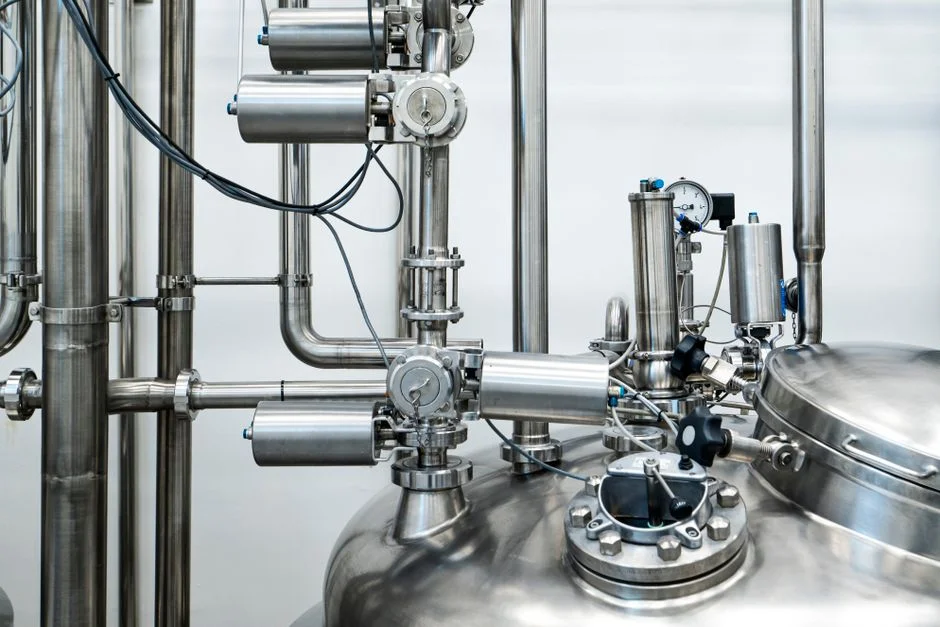
A reliable treatment train begins with prevention and segregation, not with a generic unit operation. Prevent spills, keep incompatible streams separate, control batch discharges, and use equalization where variable flow or slug loads could disrupt treatment or push an end-of-pipe result beyond the permitted condition. Source control often determines whether a downstream machine can perform consistently.
Then match each operation to the contaminant and objective. Screening or mechanical separation suits rags, suspended solids, and fibrous material that could burden the sewer or treatment train. Dissolved air flotation is an option where removable suspended solids, oil and grease, FOG, or colloidal material must be separated. HydropureWater’s stated DAF range is 4–300 m³/h across 13 models; that range is a vendor specification, not a site performance guarantee. An industrial DAF system for chemical-process wastewater must still be checked against the governing flow, loading, liquid properties, and removal objective.
Automatic chemical dosing should follow a defined process need. For pH adjustment, coagulation, or flocculation, identify the required chemical, reaction conditions, mixing, dose-control range, residual handling, and chemical storage before selecting a PLC-controlled automatic chemical dosing system. Screening equipment and DAF do not remove every dissolved contaminant.
PFAS requires a separate decision. Earth Island reported that Sumter’s treatment plant had no PFAS-removal technology. Do not assume that DAF, biological treatment, or municipal treatment will remove PFAS. If PFAS is present, source mapping and advanced-treatment feasibility must address pretreatment, energy demand, recovery, concentrate disposal, and residual management.
| Wastewater condition | Primary control decision | Verification needed |
|---|---|---|
| Disposable solids or fibrous material | Source exclusion, segregation, and screening | Screen performance and downstream solids carryover |
| Removable suspended solids, FOG, oil, or colloids | Evaluate DAF or another separation process | Removal efficiency under actual flow and loading |
| pH excursions | Neutralization and controlled dosing | Continuous trend plus required reportable samples |
| Metals requiring removal | Precipitation, coagulation, and solids separation | Permit method, removal objective, and sludge fate |
| PFAS in source-controlled streams | Eliminate or contain at source; evaluate advanced separation | Site-specific analysis, concentrate plan, and authority review |
| Variable or batch discharges | Segregation, controlled release, and equalization | Peak-flow response and end-of-pipe performance |
Sludge, FOG skimmings, and treatment concentrates remain managed waste streams. Give each one a collection, storage, disposal, and documentation route; none should bypass the plant’s industrial discharge controls by default.
Verify end-of-pipe compliance with a monitoring plan
Compliance verification must occur at the location and under the conditions required by the permit. For local limits, EPA identifies the industrial user’s end-of-pipe discharge at the point of connection to the POTW collection system as the enforcement location (EPA, 2026). Preserve requirements for access, sampling equipment, flow measurement, sampling conditions, and control actions.
For each monitored parameter, define three separate values: the binding permit limit, the internal process target, and the operational alarm threshold. Conflating them creates false confidence. A process target may provide operating margin, while an alarm threshold should trigger investigation before a compliance excursion occurs.
Continuous pH, flow, turbidity, conductivity, or organic-trend instruments can provide early warning where appropriate. They do not automatically replace laboratory reporting. WizSensor emphasizes that online sensors support process control while required sampling and approved reporting methods remain separate (WizSensor, 2026-08).
The monitoring record should include sample date and time, flow, production conditions, treatment settings, analytical results, excursions, corrective actions, and signed chain-of-custody information. A defined response should address approaching alarm thresholds or changed treatment performance: isolate a batch, increase treatment capacity, collect a confirmatory sample, and notify the authority when required.
- Confirm the permitted monitoring point and method.
- Separate the permit limit, process target, and alarm threshold.
- Use continuous instruments for early warning and laboratory methods for reportable results.
- Document operating conditions and corrective actions.
- Verify the monitoring and control architecture with the required valves, media, and instrumentation components.
Treat PFAS as a separate pretreatment risk
Earth Island reported PFAS sampling results of 118 parts per trillion upstream and 228 parts per trillion downstream of Sumter’s wastewater treatment plant, a reported increase of 107 percent (Earth Island, 2024). These findings demonstrate a regional risk and a pretreatment gap. They are not numerical limits that apply to a chemical plant’s end-of-pipe discharge, and they should not be converted into a plant permit requirement without confirmation from the authority.
The same Earth Island report discusses the Waterkeeper Alliance’s 2024 study of 22 wastewater facilities. Only one had PFAS limits in its discharge permit. That finding shows why municipal discharge limits and industrial pretreatment limits must be distinguished. The binding obligation for a Sumter-area chemical plant remains its current local requirements and industrial-user permit, subject to any applicable state or federal action.
Before selecting advanced treatment, map PFAS-containing products, process losses, washes, and laboratory drains. Identify whether release can be eliminated or contained at the source. If treatment remains necessary, evaluate reverse osmosis or another advanced separation together with upstream pretreatment, energy demand, recovery, concentrate disposal, and residual-management obligations.
| PFAS decision stage | Required output | Why it matters |
|---|---|---|
| Source mapping | Products, losses, washes, and drains linked to PFAS use | Identifies preventable releases and treatment candidates |
| Analytical review | Site-specific PFAS data using applicable methods | Establishes whether PFAS enters the industrial discharge |
| Advanced-treatment feasibility | Removal objective, pretreatment, energy, recovery, and footprint | Tests technical and operating feasibility |
| Concentrate and residual plan | Collection, storage, treatment, disposal, and records | Prevents captured contaminants from becoming an unmanaged waste stream |
| Authority review | Permit applicability and monitoring conditions | Confirms what may be discharged and how compliance will be demonstrated |
Earth Island notes that reverse osmosis and other advanced filtration can reduce PFAS in water by more than 99 percent. That is not a site-specific performance guarantee. Evaluate an reverse osmosis system only as part of a complete system. If filtration precedes the membrane, plate-and-press filtration may also need evaluation; its role, solids loading, and residual pathway must be defined by the design basis.
Plan equipment selection, sizing, and compliance risk
Equipment should be selected from the wastewater design basis, not from a headline capacity. Size pretreatment from the governing flow, contaminant loading, batch-discharge behavior, operating redundancy, and expected production changes. Identify which stream each unit will receive and whether equalization precedes it. A system sized only for average flow may fail during a batch release or future production increase.
Compare DAF, clarifier, and biological options by the contaminant being removed. Suspended-solids removal does not demonstrate metals, soluble-organic, or PFAS compliance. Use the DAF selection checklist for FOG and TSS to structure that comparison. For chemical manufacturing, account for pH shock, conductivity changes, solvent or hydrocarbon behavior, and variable organic loading rather than relying on a generic solids-removal claim.
HydropureWater’s stated DAF specifications cover 4–300 m³/h across 13 standard models. Verify actual duty, liquid properties, removal objective, footprint, utilities, controls, and available space during selection. Require every vendor guarantee to identify the guaranteed parameter, test method, loading conditions, sampling point, and exclusions.
| Budget or schedule item | Procurement check | Risk if omitted |
|---|---|---|
| Equipment price | Does the quotation match the verified flow, loading, and treatment objective? | Undersized or unsuitable equipment |
| Installation | Are utilities, controls, access, foundations, and safety requirements included? | Start-up delay and field change |
| Reagents or membranes | What replacement, conditioning, and consumption costs are documented? | Operating-cost and performance uncertainty |
| Monitoring | Are required methods, sampling points, alarms, and data records covered? | Compliance evidence gaps |
| Residuals | Who manages sludge, skimmings, concentrates, and spent media? | Unmanaged discharge or disposal exposure |
| Permit support | Will acceptance testing and permit changes be assigned before ordering? | Schedule and compliance delay |
Assign permit applicability, acceptance testing, operator training, maintenance, records, and residual disposal before the order is released. For broader comparisons, review DAF and clarifier selection for industrial wastewater.
Frequently Asked Questions
How do chemical plants near Sumter comply with pretreatment limits before sewer discharge?
They map and characterize each waste stream, control contaminants at the source, match treatment to the identified pollutants, and verify results at the permitted end-of-pipe connection. The current Sumter sewer-use requirements, industrial-user permit, and applicable state or federal requirements determine the binding conditions. EPA applies POTW local limits at the point of connection to the POTW collection system (EPA, 2026).
What wastewater data should a plant obtain before sizing treatment equipment?
Obtain representative flow profiles, pH, suspended solids, FOG, metals, COD or TOC, and PFAS information where reasonably expected or required. Include production conditions, batch-discharge behavior, chemical inventory, and cleanout history. Calculate loads from concentration and flow; do not size equipment from concentration alone.
How much should industrial wastewater pretreatment equipment cost?
No supported site-specific quotation is available. Request an itemized bid covering equipment, installation, utilities, reagents or membranes, monitoring, training, maintenance, residuals, and permit-change support. Require the supplier to state the guaranteed parameter, test method, loading conditions, sampling point, and exclusions. The final price depends on the verified design basis and current permit conditions.
How should a buyer choose and size a DAF system?
Size from governing flow, contaminant loading, batch behavior, redundancy, and future production changes—not nominal capacity alone. HydropureWater states a DAF range of 4–300 m³/h across 13 models, but the selected unit must be verified against actual liquid properties and removal objectives. Demand a performance test tied to a defined method and sampling point.
Does DAF or biological treatment remove PFAS from chemical wastewater?
Do not assume that it does. Earth Island reported that Sumter’s treatment plant had no PFAS-removal technology and found a regional pretreatment gap (Earth Island, 2024). Map PFAS at the source first; if advanced separation is necessary, evaluate pretreatment, recovery, energy, concentrate disposal, residual management, and applicable permit requirements as one design.