
Start with the wastewater, not the number of rooms
Hotel and resort wastewater treatment in Bangladesh requires a flow- and load-specific train rather than a domestic-sewage package selected from room count alone. A preliminary basis reported by HydropureWater uses 0.22 m³ per room per day, a 0.7 occupancy factor and a 2.8× hospitality peak factor, but the buyer must confirm these assumptions against operating records and site testing. Guest blackwater, kitchen FOG, laundry effluent, pool backwash and monsoon infiltration each affect either load, hydraulics or biological stability. This sizing workflow also provides a traceable basis for comparing an onsite wastewater treatment plant, WSZ, SBR or MBR.
Do not combine all streams without characterization. Kitchen and banquet FOG can overload aeration and cause foam or biomass washout. Laundry introduces lint, heat and surfactants; pool backwash introduces a concentrated chlorine slug. These streams need their own drainage, equalization or pretreatment decisions before entering the biological process.
| Design input | Supplied basis | Buyer verification required |
|---|---|---|
| Room wastewater | 0.22 m³/room/day; 0.7 occupancy factor; 2.8× peak factor | Room-use records, occupancy schedules, metering and flow monitoring |
| Occupancy swing | 30% weekday and 100% weekend occupancy | Weekend, banquet and tourist-season discharge profile |
| Peak-to-average ratio | 2.5–3.0× | Measured peak flows and equipment operating sequence |
| Monsoon | Hydraulic load may double from June through September | Infiltration survey, rainfall response and inflow/infiltration allowance |
| FOG, laundry and pool water | Separate characterization required | Sampling for oil and grease, temperature, surfactant, TSS and chlorine |
These values come from HydropureWater’s 2026 Dhaka process and compliance guide, which also reports 2024–2025 commissioning data from 14 properties. Treat them as preliminary design inputs rather than verified site facts. A regional hotel wastewater treatment guide can support early planning, but the final balance must reflect this property’s actual streams.
Build the treatment train around Bangladesh operating conditions
HydropureWater’s 2026 Dhaka guide specifies a four-stage logic: preliminary solids removal, primary or FOG treatment, secondary biological treatment, and tertiary filtration with disinfection; reuse polishing is optional. Each stage needs a measurable purpose rather than a generic “three-stage treatment” label.
- Preliminary treatment: A GX rotary mechanical bar screen with a 6 mm aperture precedes a vortex or aerated grit chamber sized at 60 seconds detention at peak flow.
- FOG removal: A DAF system for hotel FOG pretreatment is specified to reduce 50–150 mg/L FOG to below 20 mg/L at 4–6 kg/cm² saturator pressure and a 25–35% recycle ratio.
- Biological treatment: The supplied integrated MBR membrane bioreactor option uses submerged 0.1–0.4 µm PVDF membranes, 8,000–12,000 mg/L MLSS, more than 95% BOD removal and more than 99% TSS removal.
- Polishing and disinfection: Multi-media filtration can precede a UV disinfection system at 40 mJ/cm² or a chlorine dioxide generator maintaining 1–2 mg/L residual.
| Stage | Supplied design criterion | Function |
|---|---|---|
| 6 mm screen | 6 mm aperture | Remove large solids before pumps and biological equipment |
| Grit chamber | 60 seconds detention at peak flow | Separate mineral grit and protect downstream units |
| DAF | FOG below 20 mg/L from 50–150 mg/L | Protect aeration and prevent foam or biomass washout |
| MBR | 0.1–0.4 µm PVDF; 8,000–12,000 mg/L MLSS | Provide biological treatment and solids separation |
| Disinfection | UV at 40 mJ/cm² or ClO₂ at 1–2 mg/L | Reduce pathogens before discharge or reuse |
Site constraints can change the layout. HydropureWater’s 2026 guide places the Gulshan–Baridhara water table at 1–3 m below grade and caps underground tank depth at roughly 3.5 m. A buried WSZ may therefore need buoyancy, groundwater and access checks, while a compact above-grade system may be more practical. These figures describe the cited Gulshan–Baridhara condition, not every Bangladesh site.
Choose WSZ, SBR or MBR by site conditions
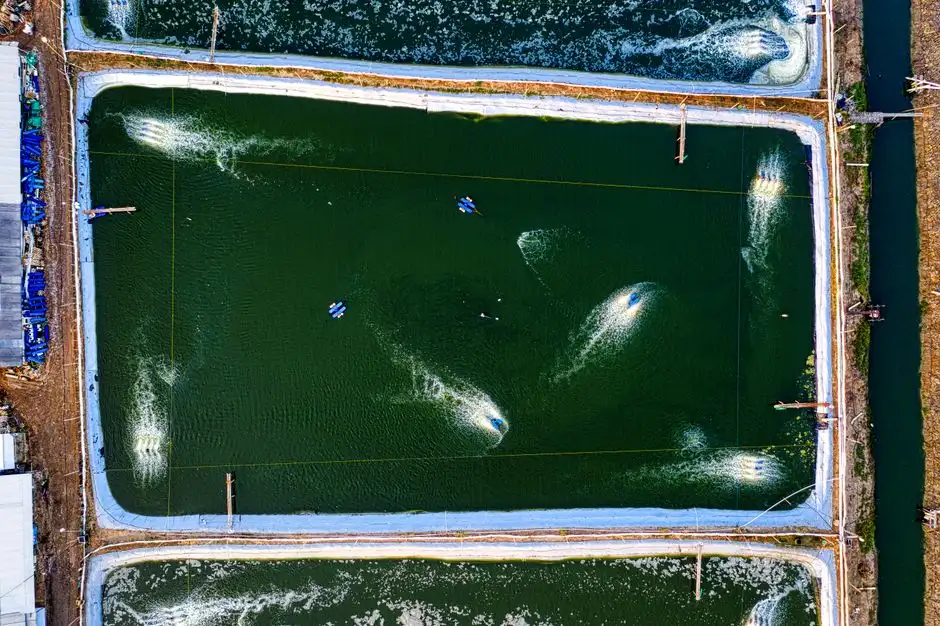
WSZ, SBR and MBR should be selected from verified flow, land, reuse and staffing constraints, not from purchase price alone. The supplied 2026 comparison positions WSZ for smaller, tightly constrained properties, SBR for mid-range resorts requiring biological-cycle control, and MBR where consistent reuse-quality effluent or a compact installation is needed.
| Selection condition | WSZ | SBR | MBR |
|---|---|---|---|
| Preferred application in supplied comparison | 20–150-room hotels | 200–400-room resorts | 250-room resort with 40% reuse; higher-flow applications |
| Hydraulic capacity stated for WSZ | 1–80 m³/h | Project-specific | Project-specific |
| Early-planning footprint | Under 20 m² visible footprint when buried | 80–120 m² basin layout | 60–90 m² for MBR skid, DAF and chlorine room |
| Reuse suitability | Primarily landscape irrigation in the supplied comparison | Needs additional consistency and polishing assessment | Preferred above 40% reuse or for stringent effluent consistency |
| Operator requirement | Simpler package operation | Trained operator able to tune cycles | Technical membrane, control and maintenance capability |
Use the buried WSZ package sewage treatment plant when lower capital cost, minimal visible footprint and irrigation reuse dominate the brief. Use SBR when the property can support cycle adjustment and sludge management. Use the integrated MBR membrane bioreactor when the reuse target exceeds 40%, effluent consistency must support toilet flushing or cooling, or underground installation is constrained.
These are planning positions, not guarantees. HydropureWater’s 2026 source also states that MBR becomes more credible than a packaged WSZ above approximately 200 m³/day, subject to final process validation. The final choice must also cover redundancy, sludge removal, remote alarms, power failure and the owner’s operator capability.
Size biological capacity for peak flow and membrane fouling
Room count can start an estimate, but peak flow and membrane fouling determine whether the biological system works. HydropureWater’s 2026 guide gives the preliminary calculation as:
Design flow = room count × 0.22 m³/room/day × 0.7 occupancy factor × 2.8 peak factor
Add laundry, kitchen-process water, pool backwash and monsoon infiltration only where separate records or site tests justify them. The supplied source gives a 400-room hotel example with a 364 m³/day design flow. Its MBR rule is approximately 0.1 m² of membrane area per 1 m³/day, with sustainable flux of 10–20 L/m²·h for hospitality loadings. At the stated design flow, that becomes roughly 760–1,500 m² of membrane area.
That range should not be treated as a procurement calculation because fouling, recovery, cleaning regime and redundancy remain unresolved. The MBR membrane bioreactor module should be quoted with a calculation matching the confirmed peak flow and influent characteristics.
- Confirm average and peak wastewater flow from meter data and a room-by-room balance.
- Determine FOG, temperature, surfactant, chlorine and suspended-solids loads through sampling.
- Check biological loading and oxygen demand against the selected reactor configuration.
- Calculate membrane area from the vendor’s sustainable flux and recovery assumptions.
- Require cleaning intervals, membrane replacement provisions, redundancy and performance decline limits.
Reject quotations that state only “rooms served” or a nominal m³/day figure without the calculation basis, sample results, hydraulic profile and fouling assumptions.
Prove discharge compliance and reuse quality separately
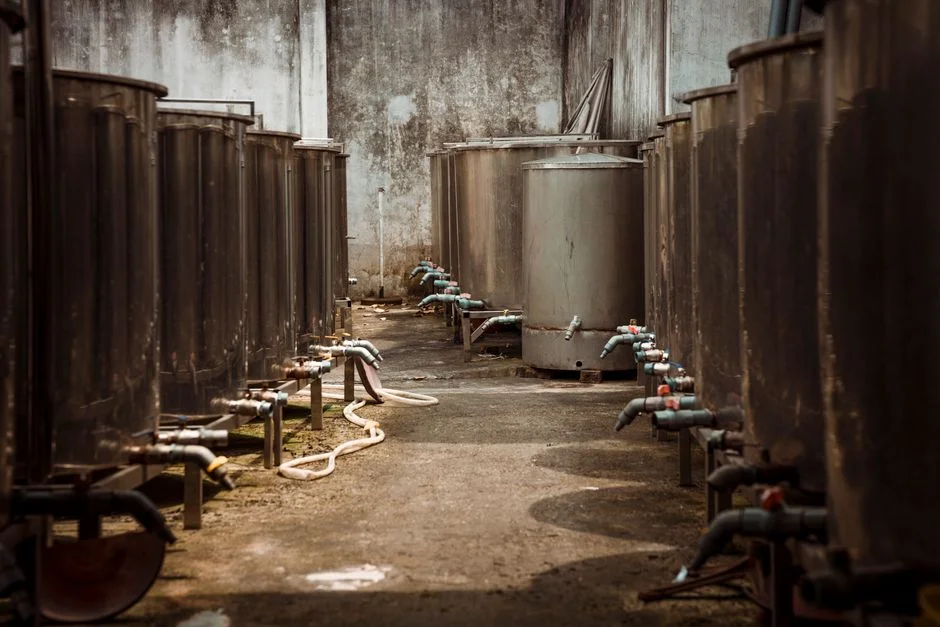
For a hotel STP generating more than 20 m³/day, HydropureWater’s 2024-amendment summary identifies the following DoE Schedule-10 discharge limits: BOD₅ ≤50 mg/L, TSS ≤150 mg/L, oil and grease ≤10 mg/L and NH₃-N ≤50 mg/L. These are discharge requirements, not automatic reuse specifications. The same source states a discharge faecal-coliform limit of 100/100 mL.
| Parameter | Schedule-10 discharge limit for facilities above 20 m³/day | Supplied reuse target |
|---|---|---|
| BOD₅ | ≤50 mg/L | ≤10 mg/L for toilet flushing; ≤30 mg/L for landscape irrigation |
| TSS | ≤150 mg/L | ≤10 mg/L for toilet flushing; ≤50 mg/L for landscape irrigation |
| Oil and grease | ≤10 mg/L | Not separately specified in the supplied reuse targets |
| NH₃-N | ≤50 mg/L | Not separately specified in the supplied reuse targets |
| Faecal coliform | 100/100 mL | ≤200/100 mL for landscape irrigation |
| Cooling-tower make-up | Not established by the cited discharge limits alone | Generally requires RO polishing and water softening |
The MBR performance reported by HydropureWater—more than 95% BOD removal and more than 99% TSS removal—must not be confused with an absolute effluent concentration. Its separate statement reports below 5 mg/L effluent TSS in hotel applications. A tender should therefore guarantee concentrations, removal efficiencies and reuse suitability as separate acceptance criteria.
Specify sampling points, test frequency, laboratory methods, bypass prevention, calibration records and a remedy for noncompliance. For reuse, obtain project-specific testing and public-health review; do not infer fitness for toilet flushing or irrigation from Schedule-10 compliance alone. An industrial reverse-osmosis system and industrial water softener may be required for cooling-tower make-up where the supplied design calls for RO polishing and softening.
The PMC Bangladesh study published in 2022 found that failures in links throughout the fecal-sludge management chain can leave sewage untreated. That finding supports requiring a complete onsite treatment, reuse, sludge and discharge chain rather than accepting treatment in isolation.
Compare lifecycle economics and approval timing
The financial case should compare total operating and compliance costs, not only the initial equipment price. HydropureWater’s 2026 Dhaka comparison gives an indicative 1.5–2.0-year payback on the MBR premium over WSZ for a 200-room resort handling 150 m³/day, provided reuse displaces 40–60 m³/day of freshwater.
The same source gives a freshwater tariff context of BDT 15–25/m³. That is an input, not a quotation. A refreshed case should replace it with the property’s current tariff and include energy, chemicals, membrane replacement, operator labour, sludge disposal, laboratory testing, maintenance and disposal of concentrated reject water. Where cooling-tower reuse requires RO and softening, include their capital, energy and replacement costs.
| Cost or schedule item | Supplied planning context | Contractual evidence to request |
|---|---|---|
| MBR premium versus WSZ | 1.5–2.0-year indicative payback where reuse displaces 40–60 m³/day | Discounted cash-flow calculation using current site tariffs and O&M prices |
| Freshwater tariff | BDT 15–25/m³ in the 2026 Dhaka comparison | Current tariff and metered consumption |
| ECC application | 90–120 days | Permit consultant’s scope and authority dependencies |
| Rajuk design approval | 30–60 days | Submission dates and approval conditions |
| Procurement, civil works and commissioning | 90–150 days | Delivery schedule, site milestones and acceptance criteria |
| Overall ECC-to-compliant-discharge period | 9–14 months | Project-specific critical-path schedule |
HydropureWater’s 2026 guide notes that these durations can vary with site and authority conditions. MBR offers reuse and compactness; WSZ offers lower capital cost and simpler installation; SBR occupies an intermediate position but depends more heavily on operator control. Sludge also affects lifecycle cost: the supplied guide recommends a plate-and-frame sludge filter press above 100 m³/day and reports sludge yields of 0.10–0.15 kg dry solids per kg BOD removed for MBR, versus 0.15–0.20 for WSZ and SBR.
Use a Bangladesh hotel STP tender checklist
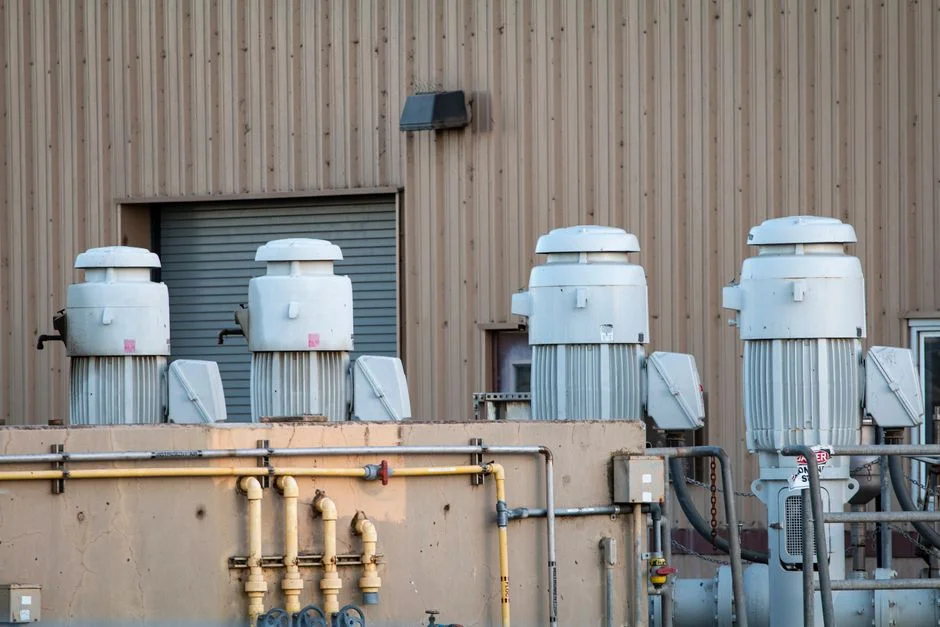
A defensible tender should require design evidence and performance obligations rather than accepting a process description and equipment list. The general three-stage pattern—preliminary removal, secondary biological oxidation and tertiary polishing for reuse—is a useful completeness check, but it is not enough for final design.
| Tender package | Minimum document or decision required |
|---|---|
| Wastewater balance | Verified flow data; room-by-room balance; kitchen FOG analysis; laundry characterization; pool-backwash details; monsoon and infiltration assessment |
| Engineering design | Process flow diagram; hydraulic and biological calculations; membrane-area calculation; plot plan; civil details; utilities; sludge balance |
| Performance | Guaranteed BOD₅, TSS, oil and grease, NH₃-N and faecal-coliform results; applicable compliance scope; sampling plan; noncompliance remedy |
| Operations | Startup report; operator training; manuals; preventive-maintenance schedule; spares; alarms; response time; complete O&M pricing |
| Sludge and resilience | Expected sludge yield; collection and disposal route; emergency bypass; power-failure response; membrane availability |
| Approvals | Defined responsibility for ECC, design approval, commissioning and authority acceptance |
Ask whether the bidder included an efficient sedimentation tank where required for sludge thickening and an automatic chemical dosing system for controlled FOG or disinfection dosing. These are optional components, not universal requirements; the bidder must show where they fit the selected process and how they affect guarantees.
Reject a bid that does not identify who guarantees reuse quality, who performs compliance sampling, how bypasses are prevented, what happens after failed tests, and where sludge and reject water go. The equipment price should be accepted only after the guaranteed outputs and responsibilities are enforceable.
Frequently Asked Questions
What is the correct way to size a hotel STP in Bangladesh?
Start with the supplied preliminary method: room count × 0.22 m³/room/day × 0.7 occupancy factor × 2.8 peak factor, then add separately justified flows from laundry, kitchen processes, pool backwash and monsoon infiltration. HydropureWater’s 2026 guide presents this as a preliminary estimate, not final engineering design. Require a measured wastewater balance and influent sampling before accepting equipment capacity.
Is WSZ, SBR or MBR the cheapest option for a hotel resort?
There is no universally cheapest technology. The supplied 2026 comparison identifies WSZ as the lowest-CAPEX route for 20–150-room hotels, SBR as suitable for 200–400-room resorts with a trained operator, and MBR as preferred where reuse exceeds 40% or effluent consistency is demanding. Compare total cost over the same reuse output, including power, chemicals, operator time, sludge disposal, maintenance and compliance testing.
What should a hotel wastewater treatment quotation guarantee?
Require concentration-based guarantees for BOD₅, TSS, oil and grease, NH₃-N and faecal coliform, together with the design flow, test methods, sampling points and remedy for noncompliance. For facilities above 20 m³/day, HydropureWater’s 2024-amendment summary gives Schedule-10 limits of BOD₅ ≤50 mg/L, TSS ≤150 mg/L, oil and grease ≤10 mg/L and NH₃-N ≤50 mg/L. Confirm the current permit and site conditions before acceptance.
How long should approval and commissioning take?
HydropureWater’s 2026 Dhaka guide gives 90–120 days for ECC application, 30–60 days for Rajuk design approval and 90–150 days for procurement, civil works and commissioning, with an overall 9–14 months from ECC submission to compliant discharge. Treat these as indicative planning ranges. When selecting a supplier, ask for its permit-submission responsibilities, authority-acceptance history, contractual delivery date and evidence from comparable projects, then cross-check the approach with the containerized MBR sizing guide.