Why Dhaka Hotels and Resorts Need a Dedicated STP in 2026
Bangladesh Department of Environment (DoE) Schedule-10 effluent limits, enforced through the Environment Conservation Rules 1995 (amended 2024/2025), set the binding discharge standard for any hotel or resort generating more than 20 m³/day of sewage: BOD₅ ≤50 mg/L, TSS ≤150 mg/L, oil & grease ≤10 mg/L, and NH₃-N ≤50 mg/L (per DoE ECR Schedule-10, 2024 amendment). Bangladesh National Building Code (BNBC) 2020 Part 8 Chapter 9 requires on-site treatment for buildings exceeding this threshold where municipal sewer connection is not available, and Rajuk building bylaws now require an Environmental Clearance Certificate for new hotel/resort construction above 10,000 ft² built-up area. A 2024 DoE enforcement notice specifically named the hospitality sector as non-compliant across 38 inspected properties in Dhaka Division, with 11 issued closure notices. Dhakā WASA's sewer network still covers only the old city core; Gulshan, Banani, Uttara, Baridhara, Bashundhara, and most peri-urban resort zones fall outside piped coverage, so on-site treatment is the only legal disposal path. The conceptual scaffold follows the three-stage logic used across municipal engineering practice — preliminary removal of coarse solids, secondary biological oxidation, and tertiary polishing for reuse — but each stage must be populated with Bangladesh-specific parameters, influent loads, and discharge limits rather than generic textbook values.
Hotel and Resort Wastewater Characteristics in Bangladesh
Hotel and resort effluent cannot be sized as plain domestic sewage because FOG from kitchens, surfactant and lint from on-site laundries, and backwash from swimming pools shift both the load and the peak factors. Typical Dhaka hospitality influent parameters, drawn from HydropureWater field data (2024–2025 commissioning logs across 14 properties), fall in the following envelope:
| Parameter | Unit | Typical range (Dhaka hotel/resort) | Design value |
|---|---|---|---|
| Flow per room | m³/room/day | 0.15–0.30 | 0.22 |
| BOD₅ | mg/L | 250–400 | 350 |
| COD | mg/L | 500–800 | 650 |
| TSS | mg/L | 200–350 | 280 |
| Oil & grease | mg/L | 50–150 | 100 |
| NH₃-N | mg/L | 20–45 | 35 |
| pH | — | 6.5–8.5 | 7.0–7.5 |
| Temperature | °C | 25–32 | 30 |
Kitchen and banquet FOG is the dominant grease source, often running 50–150 mg/L when no grease trap is fitted upstream, and it forms an emulsified layer that defeats biological treatment unless removed first. On-site laundry effluent contributes high TSS (lint), high temperature (40–60 °C), and surfactant load that can strip dissolved oxygen in the aeration tank; it should be cooled and equalized before mixing with main flow. Guest-room blackwater is the steady BOD base, while swimming pool backwash is a low-volume, high-chlorine slug that needs a dedicated buffer drain. Occupancy swings of 30% weekday versus 100% weekend and peak tourist season drive a peak-to-average ratio of 2.5–3.0×, so the plant must be sized to the peak, not the mean. Two Bangladesh-specific constraints shape the design envelope: monsoon infiltration can double the hydraulic load from June through September, and the high groundwater table in Gulshan–Baridhara (1–3 m below grade) caps underground tank depth at roughly 3.5 m, pushing designers toward compact above-grade packaged systems.
The 2026 Process Train: From Influent to Reuse-Quality Effluent
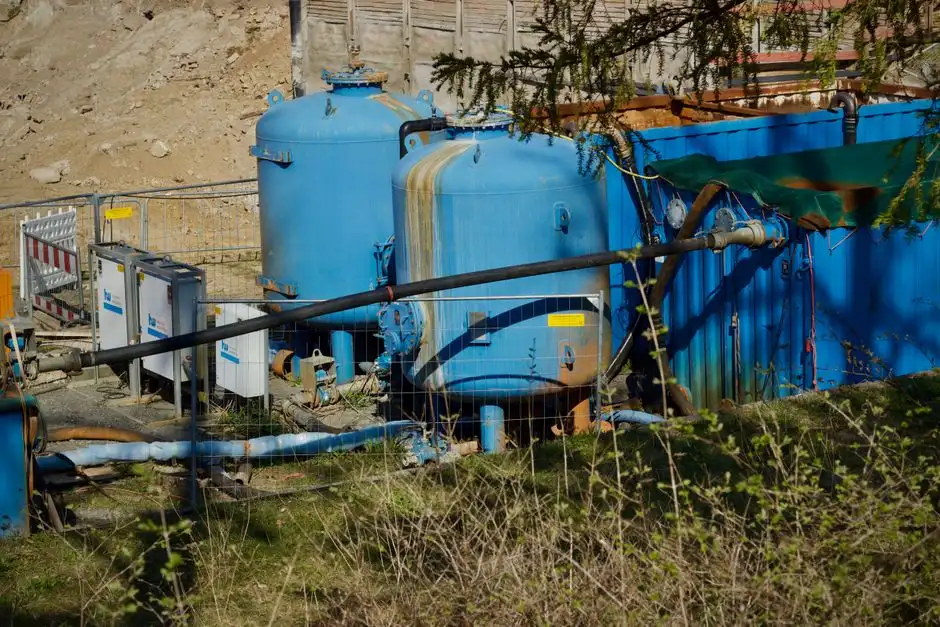
Every defensible tender for a Dhaka hotel STP should specify four unit operations in series, each with a measurable removal target tied to DoE Schedule-10. The process flows preliminary → primary/FOG → secondary biological → tertiary/disinfection, with the option of a fourth reuse-polishing stage for irrigation or cooling-tower make-up. The compliance parameter set the train must hit includes BOD, COD, ammonia, suspended solids, colour, oil & grease, and faecal coliform — the same conventional parameters called out in industry operator guidelines and applied to municipal and industrial discharges in Bangladesh.
| Stage | Unit operation | Influent → Effluent target | Design removal |
|---|---|---|---|
| 1 — Preliminary | 6 mm rotary bar screen + grit chamber | TSS 280 → ~180 mg/L | >50% large solids, >95% particles >6 mm |
| 2 — FOG / primary | Dissolved air flotation (DAF) | Oil & grease 100 → <20 mg/L | >80% O&G; >30% TSS; >15% BOD |
| 3 — Secondary biological | MBR (PVDF 0.1–0.4 µm) or A/O WSZ or SBR/MBBR | BOD₅ 280 → <20 mg/L; TSS → <5 mg/L | >95% BOD; >99% TSS; ~3-log E. coli |
| 4 — Tertiary / disinfection | Multi-media filter + ClO₂ or UV | FC <100/100 mL; residual ClO₂ 0.5–1.0 mg/L | 40 mJ/cm² UV dose, or 1–2 mg/L ClO₂ residual |
Stage 1 begins with a GX rotary mechanical bar screen at 6 mm aperture, followed by a vortex or aerated grit chamber sized for 60 s detention at peak flow. Stage 2 is the most often skipped — and the most often regretted. A dissolved air flotation unit strips free and emulsified oil from 50–150 mg/L down to under 20 mg/L using 4–6 kg/cm² saturator pressure and 25–35% recycle ratio; without DAF, restaurant-grade FOG overloads the biological stage and causes persistent foam and biomass washout. Stage 3 is the core biological step: a HydropureWater integrated MBR membrane bioreactor with submerged PVDF hollow-fibre membranes at 0.1–0.4 µm pore size delivers >95% BOD and >99% TSS removal in a single tank, with mixed liquor suspended solids (MLSS) of 8,000–12,000 mg/L. For buried or low-operator projects, a packaged A/O contact-oxidation WSZ unit is the alternative. Stage 4 closes the train with a chlorine dioxide generator sized 50–2,000 g/h at 1–2 mg/L residual for the hotel flow band, or a UV bank at 40 mJ/cm² dose; multi-media filtration ahead of disinfection is required if the effluent will be polished further for reuse.
Sizing the STP: A 2026 Engineering Worksheet for Dhaka Properties
Use this worksheet as a pre-tender sanity check before any vendor quotation. The headline formula is:
Average daily flow (m³/day) = rooms × 0.22 m³/room/day × occupancy factor 0.7
Design (peak) flow = ADF × 2.8 peaking factor per BNBC 2020 Part 8
The 0.22 m³/room/day unit flow covers guest-room water use, kitchen prep, laundry (when on-site), and staff facilities; the 0.7 occupancy factor reflects that the average room is not sold every night of the year. The 2.8× peaking factor is the BNBC value for hospitality with restaurant operation, which is more conservative than the 2.0–2.2× used for office blocks because weekend and banquet peaks are sharp. Three worked examples bracket the 5–500 m³/day design band that covers virtually every Dhaka hotel and resort:
| Property | Rooms | F&B / laundry | ADF (m³/day) | Peak (m³/day) | Design (m³/h) | Recommended train |
|---|---|---|---|---|---|---|
| 80-room city hotel, Gulshan | 80 | 1 restaurant, no laundry | 12.3 | 34.4 | 1.5 | WSZ package + ClO₂ |
| 200-room resort, Uttara / Bashundhara | 200 | 2 restaurants, on-site laundry | 55 | 154 | 6.4 | DAF + A/O MBBR + UV |
| 400-room convention hotel, Banani | 400 | 3 restaurants, laundry, pool | 130 | 364 | 15.2 | DAF + MBR + RO polish for reuse |
MBR membrane sizing follows a separate rule-of-thumb: 10–20 L/m²·h sustainable flux for hospitality loadings (lower than the 15–25 L/m²·h used for municipal sewage because of higher oil/surfactant fouling tendency), and approximately 0.1 m² of membrane area per 1 m³/day of design flow. For the 400-room example at 364 m³/day, that translates to roughly 760–1,500 m² of membrane area, which is why a real MBR skid rather than a packaged WSZ unit is the only credible answer above ~200 m³/day. For deeper troubleshooting once the MBR is running, the submerged MBR troubleshooting playbook is the field reference HydropureWater engineers use.
MBR vs Package WSZ vs SBR vs MBBR: Which Technology Fits Your Property?
Below 200 m³/day the technology choice is largely driven by footprint, reuse target, and whether the operator can be trained. Above 200 m³/day the choice is driven by discharge limits and reuse economics. The four-way comparison below uses 2025–2026 Dhaka EPC turnkey pricing and HydropureWater commissioning data:
| Criterion | MBR (HydropureWater integrated) | WSZ A/O package (buried) | SBR | MBBR |
|---|---|---|---|---|
| CAPEX (USD/m³/day) | 1,800–2,800 | 900–1,500 | 1,200–1,800 | 1,100–1,700 |
| Footprint | Smallest (~60% of CAS) | Smallest (buried) | Medium-large (batch tanks) | Medium |
| Effluent BOD₅ / TSS | <10 / <5 mg/L | <30 / <30 mg/L | <20 / <20 mg/L | <20 / <20 mg/L |
| Reuse quality | Toilet flush, irrigation, cooling | Limited (landscape only) | Irrigation, toilet flush | Irrigation, toilet flush |
| Operator skill | Medium (membrane cleaning) | Low (mostly automatic) | Medium (cycle tuning) | Low–medium |
| Power (kWh/m³) | 0.8–1.2 | 0.5–0.8 | 0.6–0.9 | 0.6–0.9 |
| Best fit (rooms) | 150–1,000+ | 20–150 | 100–400 | 100–400 |
A HydropureWater integrated MBR membrane bioreactor is the right call when footprint is under 300 m², when the hotel plans to reuse more than 40% of treated flow for toilet flushing or cooling-tower make-up, or when the developer needs Class-A reuse-quality effluent that can survive a DoE audit without a polishing step. The WSZ series buried package sewage treatment plant is the lowest-CAPEX route for 20–150-room hotels on tight sites where the tank can sit under a driveway or car park; the trade-off is reuse effluent that is borderline for toilet flushing and is realistically limited to landscape irrigation. SBR is a sound mid-range choice for 200–400-room resorts with an on-site operator who can tune cycle times; MBBR handles load swings better than SBR but produces higher effluent TSS and is not as compact as MBR. For MBBR-specific design and carrier-media selection, the MBBR selection guide for hospitality wastewater is the right second read. If the property must be unmanned overnight, add a remote monitoring system for sewage treatment to push alarms to the engineering team.
Sludge Management, Reuse Options, and 2026 Cost Benchmarks
Sludge handling closes the operational loop. Expected yield is 0.10–0.15 kg dry solids per kg BOD removed for MBR, and 0.15–0.20 kg DS/kg BOD for WSZ and SBR. Above 100 m³/day, a mechanical plate-and-frame filter press dewaters sludge to 22–25% DS cake, which can be co-composted with hotel garden waste or handed to a DoE-registered hauler. The high-efficiency sedimentation tank thickens waste-activated sludge before pressing. Reuse targets are the real cost offset: toilet flushing needs ≤10 mg/L BOD and ≤10 mg/L TSS, landscape irrigation ≤30 mg/L BOD, ≤50 mg/L TSS, and faecal coliform ≤200/100 mL, and cooling-tower make-up generally needs RO polishing after the biological step.
| Cost line | Unit | 2026 Dhaka range (EPC turnkey) | Notes |
|---|---|---|---|
| Package WSZ, 1–5 m³/h | USD | 18,000–35,000 | Buried, no reuse polish |
| MBR skid, 5–20 m³/h | USD | 55,000–140,000 | Includes DAF + ClO₂ |
| Civil works (tanks, building) | USD/m³/day | 250–500 | Site-dependent |
| OPEX (power, chemical, sludge) | USD/m³ treated | 0.25–0.55 | Grid power ~USD 0.09/kWh |
| Operator | USD/month | 180–320 | 1 shift, Dhaka rates |
For a 200-room resort at 150 m³/day design flow, expect 1.5–2.0 year payback on the MBR premium versus a WSZ unit once reuse displaces 40–60 m³/day of freshwater at Dhaka municipal tariff (BDT 15–25/m³).
Frequently Asked Questions
What are the binding 2026 Bangladesh discharge limits for a hotel STP?
DoE Schedule-10 (Environment Conservation Rules 1995, amended 2024) requires BOD₅ ≤50 mg/L, TSS ≤150 mg/L, oil & grease ≤10 mg/L, NH₃-N ≤50 mg/L, and faecal coliform ≤100/100 mL for any site generating more than 20 m³/day (per DoE ECR Schedule-10, 2024 amendment).
MBR or SBR for a 250-room resort with 40% reuse?
Pick MBR. SBR will meet DoE limits but produces 15–20 mg/L TSS, which clogs toilet-flush plumbing and irrigation emitters; MBR delivers <5 mg/L TSS and supports reuse without tertiary filtration (HydropureWater commissioning data, 2024–2025).
What footprint does a 100 m³/day hotel STP need?
Roughly 60–90 m² for an MBR skid plus DAF and chlorine room, or 80–120 m² for an SBR basin layout; a buried WSZ unit drops the visible footprint to under 20 m² but trades away reuse quality.
Can treated wastewater be used for hotel toilet flushing and irrigation?
Yes — DoE permits reuse when BOD₅ ≤10 mg/L, TSS ≤10 mg/L, and faecal coliform ≤200/100 mL, typically achieved by MBR + ClO₂ or UV; cooling-tower make-up additionally needs RO polishing and water softening.
How long does the DoE Environmental Clearance and STP commissioning take?
Plan 90–120 days for ECC application, 30–60 days for design approval through Rajuk, and 90–150 days for procurement, civil works, and commissioning; budget 9–14 months from ECC submission to compliant discharge (Dhaka project data, 2025).