What Makes Dresden Blowdown Different From a Generic Data-Center Stream
A data center in Dresden generally needs a two-stream treatment concept: source control and pretreatment for cooling-tower blowdown, followed by treatment matched to its destination. Blowdown can contain elevated salts, heavy metals, biocides, corrosion inhibitors, and altered pH because evaporation leaves dissolved solids and treatment chemicals behind. HydropureWater’s 2026 planning ranges cite TDS of 5,000–15,000 mg/L, COD of 100–500 mg/L, and TSS of 50–200 mg/L. DAF or multimedia filtration is indicated when TSS exceeds 50 mg/L; MBR is relevant to biodegradable organic load, and RO is used for dissolved-salts removal and reuse. Dresden discharge limits, permit procedures, and reuse criteria must be confirmed with the competent authority and receiving utility.
Cooling-tower blowdown is not simply the water remaining after evaporation. It is the concentrated remainder left when water leaves through evaporation while dissolved constituents and treatment chemicals remain in the circuit. Its composition therefore changes with cycles of concentration, makeup-water chemistry, seasonal operating conditions, and the chemical program. Water Utility Report, last updated April 14, 2026, identifies source water, chemistry, treatment program, and cycles of concentration as the key variables determining blowdown quality.
That makes a generic data-center template an inadequate basis for Dresden equipment selection. The project should separate cooling blowdown, domestic sewage, process wastewater, and storm water. Otherwise, a campus package treatment plant may be sized around flows and contaminants that do not belong in the same treatment train. The German wastewater acquisition and requirements framework provides a useful planning reference, but local permit evidence still governs the Dresden design.
Before selecting equipment, compile the makeup-water analysis, tower configuration, cycles-of-concentration target, chemical inventory, seasonal makeup changes, measured blowdown flow, proposed reuse point, discharge point, and identity of the receiving utility or authority. The supplied research contains no Dresden-specific discharge limits, sewer rules, or permit procedures. U.S. benchmark values therefore must not be presented as applicable Dresden requirements.
Build the Wastewater Treatment Process Around the Discharge Route
The destination determines the quality gate and therefore the treatment train. A sensible process sequence is segregated collection, equalization and screening, chemical control or pH adjustment where necessary, solids pretreatment, optional biological treatment, dissolved-solids removal, and disinfection or polishing where required before monitored discharge or reuse.
| Destination | Quality gate | Treatment implication |
|---|---|---|
| Indirect municipal discharge | Written pretreatment and sewer-discharge conditions from the receiving utility | Equalization, solids removal, pH control, and possibly biological treatment; final equipment specification remains open until the utility confirms requirements. |
| Direct or indirect surface-water discharge | Requirements confirmed with the competent German authority, including receiving-water conditions and monitoring | Treatment objectives must reflect the specified discharge route rather than generic industrial limits. |
| Cooling-tower makeup | Site-specific chemistry and operational controls for scaling, corrosion, biological growth, and pretreatment | Reclaimed source water may require more chemistry control or advanced polishing than potable makeup. |
| Domestic sewage | Separate sanitary treatment requirements | Keep sanitary treatment independent from the blowdown membrane train. |
For indirect municipal discharge, obtain the applicable German pretreatment and sewer-discharge conditions from the receiving utility before freezing the equipment specification. For direct or indirect surface-water discharge, confirm the competent authority’s treatment objectives, receiving-water conditions, and monitoring requirements. These are separate approval paths and should not be consolidated into one assumed permit.
Cooling-water reuse also needs an application-specific specification. Reclaimed source water may change scaling, corrosion, biological-control, and pretreatment requirements, so the treated-water quality must match the cooling system and the site’s water-management controls.
Domestic sewage should remain a separate sanitary stream. If decentralized sanitary treatment is required, the WSZ underground integrated sewage-treatment system combines A/O biological contact oxidation, sedimentation, and disinfection in a buried package unit handling 1–80 m³/h. Coarse solids can be addressed with a rotary mechanical bar screen, but the wastewater solution should not force domestic sewage and concentrated blowdown through one common biological process.
The U.S. values in the research are useful for pilot design and vendor discussions, not as German limits. Any equipment envelope should remain provisional until the Dresden destination requirements are documented in writing.
Characterize the Blowdown Before Sizing Filters or Membranes
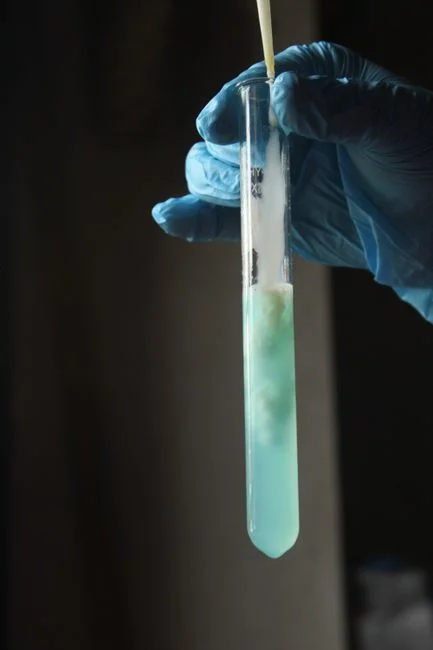
Equipment sizing should follow site-specific characterization because conductivity alone cannot distinguish suspended solids, biodegradable organics, scale-forming ions, or treatment-chemical residues. HydropureWater’s 2026 planning guide provides an initial screening envelope, but each Dresden value must be established by measurement.
| Parameter or method | Cited planning range or method | Dresden-specific value to establish |
|---|---|---|
| TDS | 5,000–15,000 mg/L, HydropureWater, 2026 | Measured normal, peak, and seasonal range |
| COD | 100–500 mg/L, HydropureWater, 2026 | Total and biodegradable COD |
| TSS | 50–200 mg/L, HydropureWater, 2026 | Normal and upset-condition loading |
| Conductivity | 8,000–25,000 µS/cm, HydropureWater, 2026 | Continuous trend by operating state |
| Hardness as Ca²⁺ and Mg²⁺ | 300–1,000 mg/L, HydropureWater, 2026 | Calcium, magnesium, and scaling tendency |
| pH | 8.0–9.5, HydropureWater, 2026 | Daily range and chemical-dose response |
| Initial screening | Handheld conductivity meter; Hach COD kit; portable particle counter, HydropureWater, 2026 | Approved field methods and calibration records |
The complete laboratory program should also cover alkalinity, chloride, sulfate, silica, calcium, magnesium, relevant metals, residual oxidant or biocide, and temperature. Those parameters are necessary to evaluate corrosion, scale formation, membrane compatibility, and residual-disposal risk; the generic benchmark does not supply Dresden values for them.
Sampling must represent normal operation and relevant seasonal makeup changes. HydropureWater’s 2026 guide advises repeating the parameter panel quarterly because seasonal shifts can move scaling indices faster than an annual review detects. A single grab sample is not an adequate design basis.
Also document the tower chemical program, including biocide and corrosion-inhibitor products, dosing ranges, and any change-control process. A sudden biocide increase can affect biological treatment, while phosphate, silicate, or other inhibitor changes can alter scaling and membrane-loading calculations. Use the field methods for screening and trend development, but base the final guarantee on representative laboratory data and agreed analytical methods.
Match Pretreatment to the Contaminant Load
Pretreatment should protect the next process barrier rather than become a collection of unspecified equipment. HydropureWater’s 2026 guide indicates DAF or multimedia pretreatment when TSS exceeds 50 mg/L, which covers a substantial part of its cited blowdown planning range.
| Measured condition | Route | Design function | Evidence and boundary |
|---|---|---|---|
| Suspended solids, colloids, oil and grease, or FOG require high-efficiency removal | DAF pretreatment system | Remove floatable material and suspended solids before biological or membrane treatment | HydropureWater, 2026: 4–300 m³/h across 13 standard models; required when TSS exceeds 50 mg/L |
| Primary objective is suspended-solids removal and downstream membrane protection | Multi-media filtration | Capture particulates and prepare feed for RO | HydropureWater product specification states that the filters achieve SDI values suitable for downstream RO |
| Bacteria, colloids, and suspended solids must be removed without chemicals | UF system | Provide a physical barrier before sensitive downstream processes | HydropureWater, 2026: 2,000–40,000 L/h, 0.03 μm PVDF membranes, automatic backwash and air scour |
| Measured chemistry requires pH adjustment, coagulation, flocculation, antiscalant, or another controlled dose | Automatic chemical dosing | Hold the required chemical condition within a defined operating range | Dose should follow feed characterization and downstream requirements, not a generic preset |
DAF is justified where suspended solids, colloidal material, oil and grease, or FOG must be removed efficiently before membranes. Multi-media filtration is the simpler solids-removal route when its established SDI performance covers the downstream design. UF adds a barrier against bacteria, colloids, and suspended solids without chemical addition, but it does not remove dissolved salts.
Automatic dosing should be tied to a measured variable: pH, coagulation demand, antiscalant loading, or another defined process function. Do not install DAF, UF, and a softener together without separate design functions. Each stage should remove or control a measured constituent and protect the next barrier. Actual flow, TSS, oil content, SDI, scaling tendency, and fouling rate must determine the configuration.
Compare MBR, RO, and Evaporation for the Final Treatment Stage

The final stage is a trade-off between organic degradation, dissolved-salt removal, recovery, and energy demand. HydropureWater’s 2026 guidance associates MBR with COD below 50 mg/L and TSS below 5 mg/L in its described design context and recommends MBR permeate ahead of RO when both biodegradable organic load and high TDS are present.
| Route | Typical contaminant target | Recovery | Energy | Indicative CAPEX | Indicative OPEX | Principal limitation |
|---|---|---|---|---|---|---|
| MBR | Organic load and suspended solids; cited design context: COD below 50 mg/L and TSS below 5 mg/L | Not established as a common recovery value in the supplied research | 3–5 kWh/m³ | $500K–$1.5M | $0.80–$1.50/m³ | Aeration demand and membrane maintenance; biocides may inhibit biomass |
| RO | Dissolved ions; cited effluent TDS typically below 500 mg/L | 70–85% for the cited route | 2–4 kWh/m³ | $300K–$800K | $0.50–$1.20/m³ | Requires pretreatment and produces concentrated reject |
| Evaporation crystallization | Near-complete liquid removal with dissolved residues transferred to solid handling | 95%+ for the cited route | 15–25 kWh/m³ | $1.2M–$3M | $2.00–$4.00/m³ | Highest energy demand and residue-disposal obligation |
All cost and energy values in the table are HydropureWater’s 2026 planning ranges, not Dresden quotations. They provide a basis for screening routes, not a bankable estimate.
Select MBR when biodegradable organic load is a primary issue. The integrated MBR system combines biological treatment and submerged PVDF membrane filtration; HydropureWater’s published range is 10–2,000 m³/day, with filtration below 1 μm. Size it on the biodegradable fraction rather than total COD, because biocide residuals can inhibit the biomass.
Select RO for dissolved-ion removal, blowdown recovery, and low-TDS reuse. HydropureWater’s industrial RO system specifies recovery rates up to 95%, but the project recovery remains bounded by feed chemistry, pretreatment, membrane condition, and operating controls. The cited guide reports 70–85% recovery for its blowdown route and effluent TDS typically below 500 mg/L.
Use evaporation only where a very high recovery objective or zero-liquid-discharge concept justifies the energy demand. The cited range is 95%+ recovery at 15–25 kWh/m³. If recovery above the practical single-stage desalination result is required, the cited guide reports that RO followed by evaporation can reach 90%+ recovery. That hybrid still requires an economic assessment using Dresden electricity tariffs, operating hours, and the cost of residue disposal.
Set Quality Gates for Discharge, Reuse, and Residual Management
The final specification must use written Dresden requirements, not a generic benchmark. For discharge, obtain the competent authority’s or receiving utility’s limits, sampling methods, reporting conditions, and treatment objectives. No Dresden-specific limits appear in the supplied research.
For non-potable reuse, the cited SEMI F63-0921 context uses TDS below 500 mg/L and turbidity below 0.1 NTU. These figures are a planning benchmark, not a Dresden approval condition. The final specification must reflect the intended cooling application and the site’s health, scaling, corrosion, biological-control, and pretreatment requirements.
Cooling-tower makeup and rack-level liquid-cooling are not equivalent reuse endpoints. A microchannel cooling loop can require tighter turbidity control to avoid clogging and loss of thermal performance. If reclaimed water is used as tower makeup, assess cycles of concentration, scaling, corrosion, biocide demand, and the fate of residual treatment chemicals before changing operating controls.
Residual management belongs in the process diagram from the beginning. HydropureWater’s 2026 guide reports sludge-disposal costs of $0.05–$0.20 per gallon and notes that RO reject remains salt-concentrated. Identify the authorized disposal route for MBR sludge, pretreatment sludge, RO reject, and evaporation residue, including containerization, transport, and responsibility for the receiving facility.
The permit and handover records should include routine influent and effluent monitoring, chemical-use records, membrane-flux or differential-pressure trends, calibration records, cleaning events, alarms, and bypass events. The cited monitoring and reporting cost of approximately $20K per year is a planning allowance from HydropureWater’s 2026 guide, not a Dresden quotation. A plate-and-frame filter press may be relevant if sludge dewatering is confirmed as a requirement; its selection should follow measured solids concentration and destination rules.
Build a Dresden Budget and Procurement Specification
The initial budget should compare complete treatment routes rather than isolated equipment prices. HydropureWater’s 2026 planning ranges provide a screening baseline, while Dresden quotations must include local civil work, residual handling, controls, utilities, and authority requirements.
| Cost item | RO | MBR | Evaporation crystallization |
|---|---|---|---|
| Indicative CAPEX | $300K–$800K | $500K–$1.5M | $1.2M–$3M |
| Indicative OPEX | $0.50–$1.20/m³ | $0.80–$1.50/m³ | $2.00–$4.00/m³ |
| Energy | 2–4 kWh/m³ | 3–5 kWh/m³ for aeration | 15–25 kWh/m³ |
All values above are HydropureWater’s 2026 commercial planning ranges, not Dresden bids. Tax, financing, authority charges, and unverified site-specific civil work should remain separate unless a bidder explicitly includes them.
Each bid should state guaranteed flow, feed-water envelope, recovery, product-water quality, reject quality, cleaning schedule, membrane life, utility demand, redundancy, monitoring, controls, and the acceptance-test protocol. It should also identify pretreatment, residual disposal, chemicals, membrane replacement, site works, and operator training. HydropureWater’s 2026 guide indicates that DAF pretreatment can add around $150K and chemical costs on membrane routes can be $0.10–$0.30/m³; these allowances should be tested against Dresden chemistry and operating conditions.
Do not allow a preliminary price band to replace a site-specific offer. The AI in wastewater-treatment engineering, cost, and ROI guide provides a commercial planning reference, but bidders should price against the same feed envelope and acceptance criteria. A bid that guarantees only nominal flow but omits seasonal chemistry, reject disposal, or membrane cleaning is not comparable.
Run the operating-cost sensitivity using the actual electricity tariff, water tariff, chemical prices, operating hours, membrane-cleaning frequency, and disposal charge. If the treatment train is intended to increase cycles of concentration, include the resulting reduction in blowdown volume and any change in tower chemistry. Avoid relying on generic payback claims from the research, which are not Dresden financial evidence.
Complete the Project Through Commissioning and Monitoring
The execution sequence is source characterization, authority and utility consultation, pilot testing where required, process design, equipment procurement, installation, hydraulic and membrane testing, independent performance demonstration, and operating authorization. This sequence keeps the permit evidence and the equipment guarantee aligned.
Agree the acceptance-test feed envelope and analytical methods before purchase. Seasonal source-water changes can alter scaling indices and membrane performance, so testing only with an average feed sample creates avoidable acceptance risk. The operating permit and vendor guarantee should use the same feed range, recovery definition, product-water parameters, and analytical methods.
During commissioning, trend conductivity, pTDS, pressure or differential pressure, flow, recovery, filtrate quality, chemical dose, cleaning events, and normalized membrane flux. Use automatic backwash and air scour for UF where applicable. Follow the membrane supplier’s chemical-cleaning requirements for RO rather than relying on a fixed calendar interval.
HydropureWater’s 2026 guide states that RO elements generally last 3–5 years and MBR membranes 5–7 years with disciplined maintenance. These figures are planning assumptions, not Dresden service-life guarantees. Operator training, chemical-safety review, critical spares, alarm setpoints, bypass rules, and a contingency disposal route should be completed before handover. The RO and UF membrane-element reference supports maintenance planning, but supplier-specific cleaning limits remain controlling.
Transfer the completed monitoring file with operating procedures, calibration records, chemical inventory, spare-parts list, acceptance results, and permit correspondence. This gives the facilities team an auditable operating baseline rather than relying on equipment vendor memory after commissioning.
Frequently Asked Questions
What inputs are needed for a Dresden cooling-blowdown equipment budget?
Request measured blowdown flow, seasonal makeup-water chemistry, tower configuration, cycles of concentration, chemical inventory, discharge or reuse destination, treatment objective, available footprint, operating hours, and utility requirements. Obtain written discharge or reuse conditions from the competent authority or receiving utility before requesting a budgetary offer. Without those inputs, a supplier cannot guarantee flow, recovery, product quality, pretreatment loading, or residual handling.
How should RO, MBR, and evaporation be compared for a Dresden data center?
Use measured contaminants and the required recovery. HydropureWater’s 2026 guidance associates MBR with biodegradable organics and solids, RO with dissolved-ion removal and blowdown recovery, and evaporation with very high recovery or zero-liquid-discharge objectives. Compare the full scope: pretreatment, energy, chemicals, membrane replacement, reject, sludge, evaporation residue, monitoring, and acceptance testing. The cited cost bands are screening allowances, not Dresden quotations.
How can an undersized pretreatment stage be avoided?
Confirm TSS through representative sampling. HydropureWater’s 2026 guide indicates DAF or multi-media pretreatment when TSS exceeds 50 mg/L; DAF is the stronger fit where floatable material or colloids also require removal, while multi-media filtration protects downstream RO where solids removal is the primary objective. Verify the next barrier’s SDI, fouling, and scaling requirements before fixing the equipment.
What should a wastewater-equipment supplier guarantee before selection?
Require guaranteed feed and product-water envelopes, recovery, energy consumption, reject quality, residual-disposal obligations, maintenance schedule, instrument package, local controls, redundancy, monitoring, operator training, service support, and an acceptance-test protocol. Include seasonal feed conditions and analytical methods in the guarantee. The data-center blowdown treatment framework and site-specific treatment decision framework can help structure those technical questions, but neither replaces Dresden permit evidence.
Which Dresden discharge limits should appear in the equipment specification?
No universal Dresden permit limit is established in the supplied sources. Obtain the applicable requirements in writing from the competent authority or receiving utility, including constituent limits, pH, flow basis, monitoring frequency, sampling methods, and residual-disposal conditions. Convert those requirements into contractual guarantees and the commissioning protocol. U.S. figures and SEMI benchmarks can support preliminary testing, but they are not Dresden permit limits.