Why a Saitama Data Center Cannot Afford to Dump Cooling Tower Blowdown
A 100 MW data center can require up to ~2 million liters of water per day, per IDE Tech (2026), placing large hyperscale facilities in direct competition with municipal and agricultural users in water-stressed catchments. Saitama draws much of its industrial supply from the Tone–Arakawa river system, which serves domestic, agricultural and industrial demand across the Kanto plain; any new high-volume withdrawal or discharge faces regulatory and community scrutiny before construction permits are issued.
IDE Tech (2026) reports that heated and concentrated waste streams are subject to rising restrictions on discharge to rivers, lakes and coastal waters, and that water-supply frameworks are now functioning as location determinants for new builds — a trend the same source expects to intensify through 2026. The operating cost of doing nothing is also concrete: Genesis Water Tech (2026) puts direct discharge fees at $5–15 per 1,000 gal in water-stressed regions, and notes that some jurisdictions already enforce blowdown discharge limits below 1,500 mg/L TDS, which makes untreated disposal a measurable line item on the OPEX side of the business case. For a Saitama project, the practical conclusion is that cooling tower blowdown (CTBD) reuse is no longer an ESG add-on — it is a baseline requirement for permit risk, freshwater demand and discharge cost.
Saitama also sits inside the Tokyo Metropolitan Government's wider industrial-water planning area, where industrial users are expected to demonstrate efficient water use before new abstractions are approved. The combination of catchment pressure, permit risk and discharge cost is what converts CTBD from a waste stream into the cheapest available source of cooling-tower makeup water on site.
CTBD Chemistry: Why Cycles of Concentration Drive the Whole Design
Every downstream equipment choice — pump pressure, antiscalant dose, membrane area, ZLD scope — traces back to one decision: what cycles of concentration (CoC) the cooling tower will run at. Genesis Water Tech (2026) states that blowdown volume is governed by CoC, with a typical data center cooling tower at 4 CoC losing roughly 25–30% of makeup water as blowdown. The same source puts CTBD TDS at 4–8× the makeup water TDS — typically 1,200–6,000 mg/L — with calcium, magnesium, silica and alkalinity concentrated enough to drive scaling on heat-exchange and membrane surfaces. Suspended solids in CTBD run 10–50 mg/L even with basin filtration in place, comprising corrosion products, biofilm fragments and airborne dust (Genesis Water Tech, 2026). Treatment chemicals — biocides, corrosion and scale inhibitors — accumulate with CoC; legacy chromate and high-phosphate programs are flagged as particularly problematic for either reuse or discharge (Genesis Water Tech, 2026).
IDE Tech (2026) emphasises that silica, calcium carbonate and calcium sulfate are the three species that most often limit RO recovery in CTBD, because they are sparingly soluble and concentrate faster than NaCl. Conventional brackish water RO is normally capped at 75–80% recovery before scaling becomes unmanageable, which is why pushing CoC higher without redesigning the treatment train is the most common way engineers get into trouble. The design target for a 2026 Saitama facility should be expressed as a CoC band (5–8) and a corresponding permeate quality, with the equipment sized to deliver both.
| Parameter | Typical CTBD range (Genesis Water Tech, 2026 / IDE Tech, 2026) | Design implication |
|---|---|---|
| CoC (cycles of concentration) | 4 baseline; 5–8 target with reuse train | Sets blowdown volume % of makeup |
| TDS | 1,200–6,000 mg/L | Sets RO feed osmotic pressure and pump size |
| Silica (SiO₂) | Sparingly soluble; RO recovery capped at 75–80% in conventional BWRO | Defines need for softening, NF, or ZLD polish |
| Calcium / magnesium / alkalinity | Concentrated 4–8× vs. makeup | Sets softener capacity and antiscalant dose |
| Suspended solids | 10–50 mg/L | Defines side-stream filter rating and UF pore size |
| Treatment chemicals | Biocide, scale/corrosion inhibitors; legacy chromate/phosphate flagged | Drives compatibility with RO membranes and discharge rules |
Building the Treatment Train for a Saitama Site
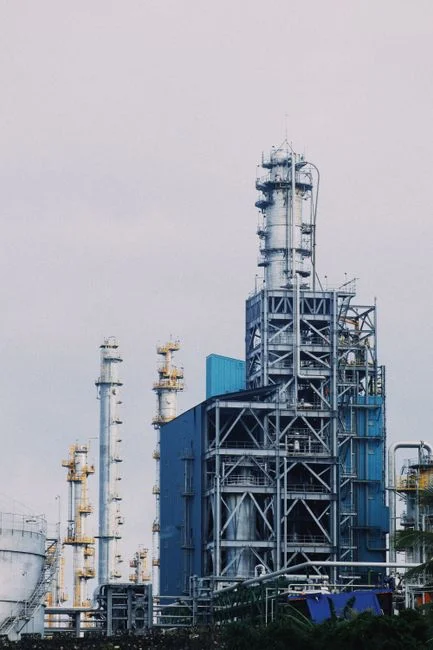
The unit operations should be designed in the order the water sees them, with each stage sized to protect the next. Step 1 is side-stream filtration: Genesis Water Tech (2026) recommends installing filtration at 1–5% of circulation flow with 10–25 µm self-cleaning filters, with CAPEX of $50,000–$200,000 for a typical data center installation. The role is to keep heat exchangers clean and to drop blowdown suspended solids low enough that downstream membranes are not fouled; a multi-media filter unit on the side-stream loop is a standard way to deliver this.
Step 2 is softening. An industrial twin-tank softener sized to the makeup hardness protects the RO from calcium fouling and lets the antiscalant program focus on silica and sulfate scales. Step 3 is ultrafiltration: a PVDF UF system at 0.01–0.1 µm removes residual suspended solids, bacteria and colloids, tolerating up to ~300 ppm turbidity with automatic backwash, and produces an SDI that RO membranes can live with. Step 4 is the RO itself: Genesis Water Tech (2026) puts RO removal at 95–99% of dissolved solids, operating pressure 150–400 psi, permeate TDS 10–50 mg/L, and recovery 50–85% for blowdown service; a 50,000 GPD unit is budgeted at $250,000–$500,000 installed, with OPEX of $1.50–$3.00 per 1,000 gal including energy, chemicals, membrane replacement and maintenance.
Where hardness — not total TDS — is the limiting species, nanofiltration is the cheaper variant: 75–150 psi operating pressure, 70–85% recovery, permeate TDS around 30–50% of feed, with no high-pressure RO pump. For sites where discharge is effectively prohibited, the optional polish is mechanical vapor compression or full ZLD. Genesis Water Tech (2026) reports MVC distillate at TDS <10 mg/L with 95–98% recovery of the RO concentrate, and full ZLD at 95–99% overall recovery with CAPEX $3–8 M and OPEX $5–15 per 1,000 gal. ZLD is justifiable only when the alternative is hauling brine off-site or losing the discharge permit.
| Unit operation | Function | Key parameters (Genesis Water Tech, 2026) | Indicative budget |
|---|---|---|---|
| Side-stream multimedia filter | Bulk SS removal on cooling loop | 1–5% of circulation flow; 10–25 µm | $50,000–$200,000 CAPEX |
| Twin-tank softener | Hardness removal before RO | Sized to makeup hardness | Per flow / hardness spec |
| UF (PVDF) | RO pretreatment; SDI control | 0.01–0.1 µm; 10–30 psi; 90–95% recovery | Per flow / rack spec |
| RO (single-pass) | Dissolved solids removal | 150–400 psi; permeate 10–50 mg/L TDS; 50–85% recovery | $250,000–$500,000 installed (50,000 GPD); OPEX $1.50–$3.00/1,000 gal |
| NF (alternative) | Partial softening at lower pressure | 75–150 psi; 70–85% recovery; permeate 30–50% of feed TDS | Lower than RO at same flow |
| MVC / ZLD (optional) | Concentrate volume reduction | MVC distillate <10 mg/L TDS; ZLD 95–99% overall recovery | ZLD CAPEX $3–8 M; OPEX $5–$15/1,000 gal |
Saitama-Specific Siting, Compliance and Procurement Reality
Generic global CTBD guides do not cover what a Saitama hyperscaler actually asks for in the RFQ. The first constraint is seismic: Japan building and equipment standards require seismic anchoring and vibration isolation for rotating equipment, control panels and membrane skids; specify JIS-grade fasteners and confirm seismic-load calculations for the RO high-pressure pump base and any chemical dosing skid. The second is electrical conformity: control panels, VFDs and RO pumps must carry the PSE / Denan mark, and 200 V class equipment is the default for Japanese sites.
Delivery and installation drive the third constraint. Containerized or skid-mounted RO/UF trains cut on-site civil work in tight Saitama urban-industrial zones and shorten the construction schedule; the trade-off is that envelope dimensions, crane reach and the delivery route to the pad must be confirmed before the RFQ is issued, not after. The fourth constraint is documentation. Tender documents in Japan typically demand guaranteed permeate quality, guaranteed recovery, membrane life, chemical consumption per m³ of permeate, and an O&M manual in Japanese — these should be listed as bidder deliverables in the RFQ so that evaluators can compare bids on a like-for-like basis.
| Constraint | What the RFQ must require | Why it matters in Saitama |
|---|---|---|
| Seismic | JIS-grade fasteners; seismic-load calc for skids and RO pump base | Code compliance; insurance |
| Electrical | PSE / Denan mark; 200 V class on panels and VFDs | Legal conformity for connection |
| Delivery | Containerized/skid envelope dimensions; crane reach; route survey | Tight urban-industrial sites; schedule |
| Documentation | Guaranteed permeate quality, recovery, membrane life, chemical use per m³; O&M manual in Japanese | Comparable bids; operator handover |
Recommended Equipment Configuration and Indicative Budget
The baseline train for a Saitama site targeting 5–8 CoC is: side-stream multi-media filter as side-stream filtration → twin-tank industrial softener for hardness control → PVDF ultrafiltration system as RO pretreatment → high-recovery industrial RO unit for CTBD reuse → CIP / automatic antiscalant and biocide dosing skid → UV or ClO₂ polishing for the makeup loop, with replacement RO and UF membrane elements called out as a scheduled consumable line. For sites where the discharge permit is the binding constraint, append an NF softening stage or a small MVC unit on the RO concentrate to lift overall system recovery into the 85–95% range before full ZLD is considered (Genesis Water Tech, 2026).
Budget envelopes to carry into the RFQ: side-stream filter $50,000–$200,000; RO (50,000 GPD class) $250,000–$500,000 installed; OPEX $1.50–$3.00 per 1,000 gal (Genesis Water Tech, 2026). Softener, UF and dosing skids are sized to flow and feed quality — request bidder sizing sheets rather than assuming a number. For a comparable framing of the broader train, see the broader data center wastewater management guide, and for cross-region context, the comparable Africa data center blowdown case study and the comparable Latin America data center blowdown case study.
Frequently Asked Questions
What budget should we plan for a 50,000 GPD CTBD reuse train in Saitama?
For the RO block alone, Genesis Water Tech (2026) gives $250,000–$500,000 installed for a 50,000 GPD unit treating blowdown, with operating cost of $1.50–$3.00 per 1,000 gal. Side-stream filtration adds $50,000–$200,000 (Genesis Water Tech, 2026). Softener, UF, dosing skid and seismic/PSE compliance are sized to feed water and flow — request itemized pricing from each bidder rather than extrapolating, because Japanese seismic anchoring, PSE panels and containerization typically add a measurable percentage to the global baseline.
How do we choose between RO and nanofiltration for CTBD reuse?
Select on the limiting species. If silica and total TDS are the binding constraints, RO is required (Genesis Water Tech, 2026 reports 95–99% dissolved solids removal, permeate 10–50 mg/L TDS, 150–400 psi). If hardness is the binding constraint and chlorides can pass, NF at 75–150 psi and 70–85% recovery gives a lower-capex, lower-energy partial-softening path with permeate TDS around 30–50% of feed (Genesis Water Tech, 2026). The decision should be made against the Saitama site's discharge permit and the makeup water analysis, not against the membrane vendor's preference.
What cycles of concentration should we target for a Saitama facility?
Plan the train for 5–8 CoC. Genesis Water Tech (2026) puts a 4 CoC baseline at 25–30% of makeup lost to blowdown, and notes that as CoC rises, blowdown volume drops but scaling and fouling risk on downstream membranes rises. The design should target the highest CoC the RO and antiscalant program can hold without breaching the silica or calcium sulfate scaling limits that IDE Tech (2026) flags as the three species most likely to cap BWRO recovery at 75–80%.
What Saitama-specific compliance items must appear in the RFQ?
Specify seismic anchoring to Japanese building standards with JIS-grade fasteners, PSE / Denan conformity on control panels and VFDs, and a containerized envelope that fits the site delivery route and crane reach. Also require guaranteed permeate quality, guaranteed recovery, membrane life, chemical consumption per m³ of permeate, and an O&M manual in Japanese as bidder deliverables — these are the items Saitama hyperscalers typically list so that bids are evaluated on a like-for-like basis.
Related Equipment
- high-recovery industrial RO unit for CTBD reuse — specifications, capacity range, and technical data