Separate the data center's wastewater into three managed streams
A Meknes data center should normally use separate treatment trains for cooling-tower blowdown and sanitary sewage, with a third route for contaminated drains whose composition differs from either stream. Cooling blowdown is the portion of recirculating cooling water removed to control accumulated dissolved materials; evaporation leaves minerals and treatment chemicals behind. Domestic wastewater comes from restrooms, kitchens and staff facilities. A regional data center blowdown treatment guide and a data center wastewater treatment guide provide useful comparative context, but neither establishes Meknes feed chemistry, sewer capacity or Moroccan discharge limits.
ASCE identifies domestic wastewater and cooling effluent as the two main data center wastewater streams and reports that cooling effluent is the larger share. Combining them is technically inefficient: blowdown requires removal of dissolved solids and control of treatment chemicals, while sewage requires biological treatment of biodegradable material and disinfection. A shared train would increase membrane and chemical loading, obscure the sanitary effluent quality and complicate both reuse and permit reporting.
Create a conditional third stream for glycol-bearing closed-loop drains, chiller flushes, humidification bleed-off and fire-test water. Each flow should be classified by analysis, concentration and intended disposal route rather than by volume alone. Under normal operation, glycol should remain contained in the closed loop. HOBI notes that ethylene and propylene glycol can create oxygen demand if released to surface water, reducing dissolved oxygen; leak detection, segregation and documented disposal are therefore required.
| Stream | Typical origin | Design boundary |
|---|---|---|
| Cooling blowdown | Evaporative cooling loop | Separate pretreatment and recovery train |
| Sanitary sewage | Restrooms, kitchens and staff facilities | Separate biological treatment train |
| Conditional drains | Glycol loops, flushes, humidification and fire tests | Characterize before assigning a route |
ASCE also states that exact water consumption is difficult to determine and recommends a water-balance study covering supply sources, climate, cooling design, reclaimed-water options and discharge routes. That study is the first design gate for Meknes, not an administrative exercise.
Build the Meknes water balance before selecting equipment
The cooling configuration, climate and measured source-water chemistry determine the blowdown flow and recovery design; generic Meknes assumptions should not be carried into equipment sizing. ASCE’s 2024 primer identifies location, rack arrangement, cooling system, available water quality and operating demand as inputs to water-consumption calculations. It also states that reclaimed water can increase corrosion, scaling and microbiological growth in cooling equipment compared with potable water.
- Obtain hourly and seasonal cooling-load data, including current and projected rack load.
- Record the cooling-system configuration, evaporation estimate, cycles of concentration, make-up source, average and peak blowdown, sanitary flow and expansion phases.
- Obtain seasonal source-water analysis and a separate current blowdown analysis.
- Install flow metering on make-up, blowdown, permeate, reject and sanitary streams.
ASCE specifies seasonal sampling, pH, conductivity, total dissolved solids, chlorides, silicon, hardness, alkalinity and microbial counts for source-water evaluation. The Fes guide additionally lists TDS, hardness as CaCO3, alkalinity, silica, chloride, free chlorine, iron and manganese as procurement inputs. These are measurement requirements, not assumed Meknes values. A current sample is required before selecting reverse osmosis recovery, antiscalant dosing, softening or nanofiltration.
Use the online TSS sensor selection framework as a measurement reference when defining monitoring, but do not substitute a generic sensor specification for site analysis. The ASCE cooling-effluent example installed a flowmeter because the wastewater volume was difficult to predict and initially allowed for roughly 20–30% of total water supplied. Meknes bidders should meter actual flows and reconcile them with the water balance as operating data replace assumptions.
| Design-basis document | Required content | Decision supported |
|---|---|---|
| Cooling and utility model | Hourly load, climate, configuration, evaporation, cycles and expansion | Average and peak blowdown |
| Source-water analysis | Seasonal chemistry and microbial results | Cooling control and pretreatment |
| Blowdown analysis | TDS, temperature, pH, biocide, inhibitors and corrosion products | Recovery and discharge design |
| Sanitary flow model | Staff population, fixtures, kitchen flow, peak factors and expansion | Biological train sizing |
Reduce blowdown before treating it
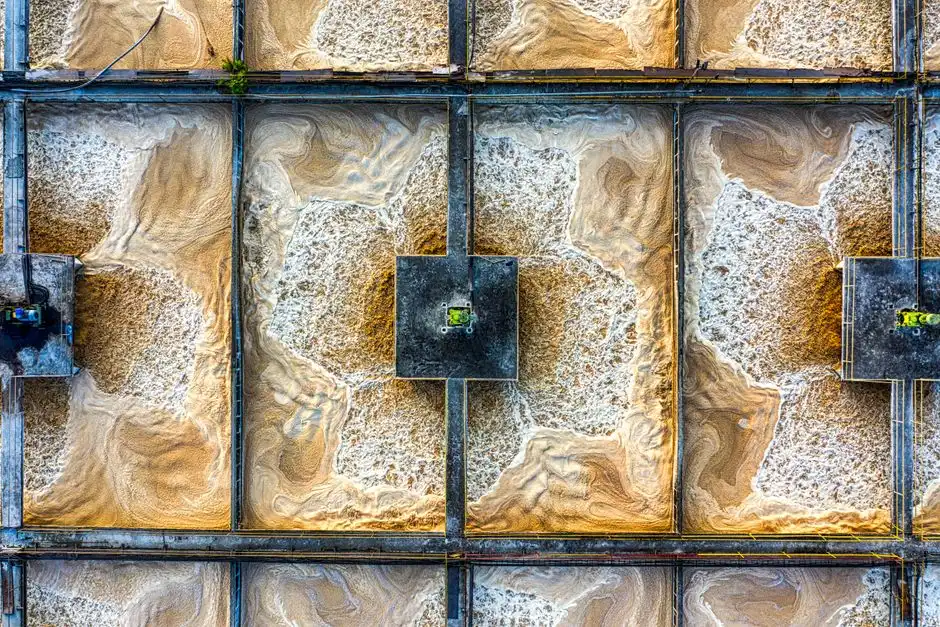
Cooling-system optimization should precede the selection of a high-recovery treatment skid because it reduces both make-up demand and the flow that must be treated. The DOE cooling guidance summarized by HOBI states that raising cycles of concentration from three to six can reduce make-up water by about 20% and blowdown by about 50%.
That change is conditional, not automatic. Increasing cycles concentrates hardness, alkalinity, silica, chlorides and treatment chemicals, so the operator must review make-up chemistry, cooling materials, corrosion control, scale control and microbiological growth. The selected value should follow pilot or operating evidence rather than a default copied from another Moroccan site.
Evaluate evaporative, hybrid and liquid-cooling arrangements together. HOBI notes that air-cooled or hybrid designs can reduce direct water use, often at the expense of higher electricity consumption for cooling. The correct comparison is therefore a combined water-energy assessment, not a water-only selection. A drought and heat-wave plan should define operating limits for peak cooling demand, increased blowdown and restricted discharge access.
Measurement and reporting must begin with operation. ASCE cites a 2021 Uptime Institute survey in which only 51% of operators tracked water use and only 10% tracked it across all facilities. For a Meknes site, specify site-level metering, water-use reporting, leak detection and a WUE baseline. The local authority may require project-specific reporting rather than WUE, so the reporting basis should be confirmed during the design-gate review.
The decision sequence is straightforward:
- Measure and model existing flows.
- Reduce leakage and unnecessary blowdown.
- Test feasible cycles of concentration against cooling chemistry.
- Compare cooling alternatives on water and electricity demand.
- Size treatment only for the resulting average and peak flows.
Treat cooling blowdown as a staged recovery train
Cooling blowdown should be treated as a sequence of controlled steps: equalization and filtration, chemistry-based pretreatment, membrane recovery, reuse assessment and a verified reject route. The relevant feed and blowdown parameters identified by Black Forge are dissolved solids, temperature, pH and residual treatment chemicals, including biocides, scale inhibitors and corrosion inhibitors.
Start with equalization to stabilize flow and composition, followed by side-stream filtration to remove suspended solids and biological loading. The Fes guide cites a 10–25 micrometer filter range as a design lead, but the selected equipment manufacturer must confirm the required particle specification and SDI. A multimedia pretreatment filter may be required after site analysis identifies a suitable role for it; antiscalant injection, pH adjustment, softening or nanofiltration should likewise be conditional rather than universal.
Use the automated chemical dosing skid only after the cooling chemistry and pretreatment review establish the required chemical, dose range, controls and residual-monitoring obligations. The blowdown analysis must also determine whether biocide exposure or compatibility requires changes before the water enters the recovery train.
Industrial reverse osmosis is the core recovery option when permeate reuse and a lawful reject route are available. The Fes guide, published in 2026, cites 95–99% salt rejection, a 50–85% first-pass recovery range and a conventional brackish-water recovery ceiling of approximately 75–80% before silica and calcium sulfate scaling dominate. Those values define a screening framework, not a guaranteed recovery rate for Meknes. An industrial reverse osmosis system should be selected against the measured feed chemistry, recovery target, permeate use and reject destination.
| Stage | Function | Procurement condition |
|---|---|---|
| Equalization | Flow and composition stabilization | Average, peak and upset flows |
| Side-stream filtration | Suspended-solids and biological-load removal | Manufacturer-confirmed particle and SDI criteria |
| Multimedia and conditioning | Polishing and scale control | Current source and blowdown analysis |
| First-pass RO | Dissolved-solids separation | Permeate reuse and reject route confirmed |
| High-recovery polish | Additional recovery with precipitation or staged RO | Site mass balance and solids-disposal route |
| MVC or full ZLD | Concentrate minimization and liquid-free disposal | Permit, freshwater and whole-life-cost justification |
Permeate may return as cooling make-up only if its chemistry, temperature and residual treatment requirements are compatible with the cooling system. Otherwise, the RO concentrate remains a wastewater requiring an approved route. High-recovery precipitation and polishing, mechanical vapor compression and full zero liquid discharge are conditional additions.
The Fes guide cites MVC energy use of 15–25 kWh per 1,000 US gallons and full ZLD recovery of 95–99%. A filter press for RO pretreatment sludge may manage separated solids from a precipitation stage, but solids classification and disposal still require confirmation. The RO membrane and pressure-vessel package should be specified from the recovered water quality and design recovery, not selected independently of the full feed and reject balance.
Keep sanitary sewage on a dedicated biological train
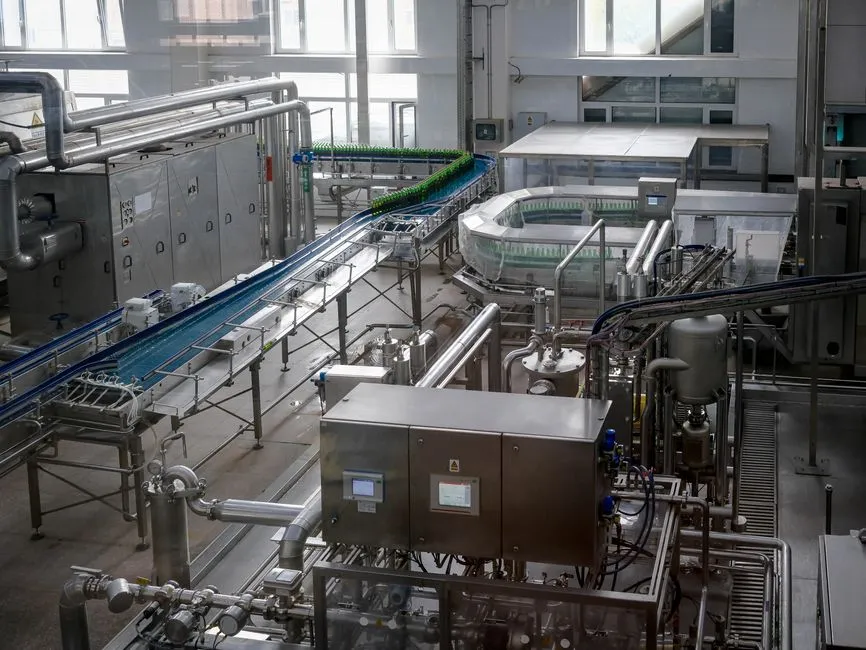
Sanitary sewage should be sized from its own flow and effluent route rather than from the much larger cooling-blowdown stream. The design inputs are staff population, fixture flow, kitchen and canteen contributions, peak factors, expansion and the intended reuse or discharge route.
A packaged anaerobic/oxic system can provide straightforward biological treatment where the flow, footprint and discharge requirements fit that architecture. MBR is more appropriate where compactness, automated solids separation and membrane filtration justify the added equipment and where near-reuse-quality filtration is needed. These are process comparisons, not a recommendation to select MBR without project data.
The HydropureWater MBR catalog gives an equipment-selection range of 60–2,000 m3/day and filtration below one micron. That range is not a sizing recommendation for the Meknes data center. An MBR sanitary wastewater treatment system becomes credible only after the sanitary flow model, reuse target, peak factor, footprint and confirmed effluent limits are issued.
Where the route permits a packaged sanitary solution, evaluate an underground integrated sewage treatment unit against access, odor control, excavation constraints, maintainability and above-ground alternatives. Humidification bleed-off, chiller flushes and periodic fire-test water may join the biological train only after their chemistry, temperature and routing are confirmed compatible.
Include disinfection and flow metering in the discharge design. If disinfection is required, the chlorine dioxide generator should be evaluated against the confirmed route, contactor design, safety requirements, residual monitoring and chemical supply arrangements. This is a candidate package, not a selected treatment train.
| Decision | Choose when | Required evidence |
|---|---|---|
| Packaged A/O | Conventional biological treatment and standard effluent controls fit the route | Sanitary flow, peak factor, footprint and discharge limits |
| MBR | Compact solids separation or membrane filtration is justified | Sanitary flow, reuse target, pretreatment needs and maintenance plan |
| Route drains to biological treatment | Composition and temperature are confirmed compatible | Representative analyses and documented routing |
Choose a phased discharge and reuse strategy
The discharge route is a design gate because it determines whether partial recovery, concentrate treatment or zero liquid discharge is technically and economically justified. The buyer must confirm with the Meknes utility and control authority whether cooling blowdown can enter the sewer, whether industrial-user or significant-industrial-user requirements apply, and what monitoring, reporting and pretreatment obligations accompany the connection.
Black Forge cites a 25,000-gallon-per-day threshold as U.S. regulatory context. It is not a Moroccan legal threshold, and the reference material expressly notes that the count excludes sanitary, non-contact cooling and boiler blowdown flows. Morocco’s applicable criteria must be verified with the responsible authorities.
The base case should normally be blowdown minimization, pretreatment, partial-recovery RO and permeate reuse, with space and interfaces reserved for a later concentrate-concentration step. MVC or ZLD should be added only when discharge is prohibited, freshwater is genuinely unavailable, or verified limits and capacity growth make lower-recovery options impractical.
| Option | Published cost context | Scope and qualification |
|---|---|---|
| RO | US$250,000–US$500,000 capital; US$1.50–US$3.00 per 1,000 gallons treated | Approximately 50,000 GPD configuration in the Fes guide |
| MVC | US$1–US$3 million capital; 15–25 kWh per 1,000 US gallons | 10,000–30,000 GPD concentrate service in the Fes guide |
| Full ZLD | US$3–US$8 million capital; US$5–US$15 per 1,000 gallons | Published data-center context in the Fes guide |
The figures above come from the 2026 Fes guide and are screening benchmarks, not Meknes quotations. Currency, freight, taxes, civil works, membranes, solids disposal, energy tariffs and local service costs must be added through a site-specific financial model.
Before equipment procurement, obtain written confirmation of wastewater-plant capacity, connecting-pipe and lift-station capacity, peak-flow restrictions, discharge-route approval and any sewer or infrastructure contribution. Average headroom is insufficient if the summer discharge peak exceeds the sewer system’s practical capacity. The separate DAF and clarifier guide and filter-press selection guide can support review of solids-handling alternatives, but neither establishes the legal discharge route for Meknes.
Turn the design basis into a supplier-ready procurement package
A bid becomes comparable only when every bidder receives the same measured site basis and must demonstrate performance against agreed outcomes. Issue one package containing the current source-water analysis, blowdown analysis, flow projections, cooling chemistry, domestic flow data, expansion plan, reuse targets and confirmed discharge limits. A quote based on generic feed chemistry should be returned for clarification.
Require each bidder to define pretreatment, recovery target, permeate quality, reject destination, chemical consumption, cleaning schedule, redundancy, PLC controls and remote telemetry. Ask for operating references involving cooling-tower blowdown recovery and a documented feed-water-analysis review before final pricing.
Include membrane elements, pressure vessels, energy-recovery devices, dosing pumps, filter media and critical instrumentation in commissioning and spares discussions. Use the RO membrane selection framework to evaluate compatibility between membranes, feed chemistry, recovery and cleaning strategy. Use the RO operating-cost breakdown to define the energy and consumable assumptions bidders must price.
| Evaluation criterion | Required bidder response | Evidence for award |
|---|---|---|
| Technical fit | Process flow, guarantees and design assumptions | Feed-analysis review and performance model |
| Whole-life cost | Energy, chemicals, cleaning, membranes and disposal | Transparent site-specific calculation |
| Delivery schedule | Equipment, membranes, vessels and spares | Confirmed manufacturing and delivery dates |
| Local service | Installation, commissioning and maintenance support | Named capability and response model |
| Controls | PLC, interlocks, alarms and telemetry | Functional description and interface schedule |
| Spares | Critical consumables and replacement strategy | Recommended initial stock |
| Permit support | Design information and monitoring package | Cross-reference to confirmed local requirements |
Require guarantees against agreed flow, recovery, permeate quality, energy use and monitored discharge parameters, not nominal skid capacity. Confirm lead times separately because long-lead equipment can determine the site schedule. The contract should also define membrane and media compatibility, chemical storage, cleaning acceptance, operator training, data logging, spare parts and performance testing.
Frequently Asked Questions
Can cooling blowdown and sanitary sewage share one treatment plant?
They should normally remain separate. Cooling blowdown requires control of dissolved solids, temperature and treatment chemicals; sanitary sewage requires biological treatment and disinfection. Combining the streams would increase membrane and chemical loading, make sanitary reuse more difficult and obscure compliance with the applicable discharge route.
What determines the RO skid size?
The skid is sized from measured average and peak blowdown, feed chemistry, selected recovery, permeate reuse, cooling demand and the reject destination. Request the current source and blowdown analyses, measured flow data and a site mass balance before requesting a fixed-capacity quotation.
When is zero liquid discharge justified?
ZLD is justified when discharge is prohibited, freshwater is genuinely unavailable, or verified limits and projected growth make lower-recovery systems impractical. The Fes guide’s 2026 figures place full ZLD at US$3–US$8 million capital and US$5–US$15 per 1,000 gallons operating cost, so the decision requires a local whole-life comparison rather than a default selection.
Which information should a buyer request before selecting a supplier?
Request current source and blowdown analyses, average and peak flow projections, cooling configuration, domestic flow data, expansion plans, reuse targets and written confirmation of the discharge route and limits. Also ask each bidder to demonstrate feed-analysis review, operating references, guarantees, delivery dates, local service capability, controls and spares. This separates a vendor quoting nominal capacity from one capable of supporting the project.
Can cooling blowdown be discharged directly to the municipal sewer?
Not until the Meknes utility and control authority confirm sewer acceptance, capacity, local limits, monitoring duties and any industrial-user permit requirements. Black Forge’s 25,000-gallon-per-day figure is U.S. regulatory context, not a Moroccan threshold, and sewer or treatment-plant headroom must be checked at the site’s peak discharge condition.