An industrial reverse osmosis (RO) membrane system is a pressure-driven filtration process that removes up to 99% of dissolved salts, heavy metals, and microorganisms from water by forcing feed water through a semi-permeable membrane (pore size ~0.1 nm). Operating at 10–80 bar, these systems achieve recovery rates of 50–95% and are critical for wastewater treatment, boiler feedwater, and semiconductor manufacturing. Key performance metrics include flux (10–30 L/m²·h), rejection rates (>95% for TDS), and membrane lifespan (3–5 years with proper pretreatment).
How RO Membrane Systems Work: Engineering Mechanics and Process Flow
Osmotic pressure is the fundamental physical barrier that an industrial RO system must overcome, requiring an applied hydraulic pressure greater than the solution's natural osmotic potential to drive water molecules through a semi-permeable barrier. The osmotic pressure (π) of a solution is calculated using the formula π = iCRT, where i is the van’t Hoff factor, C is the molar concentration of solutes, R is the ideal gas constant, and T is the absolute temperature. In industrial applications involving high-TDS (Total Dissolved Solids) wastewater, this pressure can exceed 15–20 bar, necessitating high-pressure pumps capable of delivering 20–80 bar to maintain adequate flux.
Unlike conventional dead-end filtration, RO utilizes a crossflow filtration mechanism where the feed water flows tangentially across the membrane surface. This turbulence minimizes concentration polarization—the accumulation of solutes at the membrane interface—by continuously sweeping rejected contaminants into the concentrate stream. This process results in two distinct outputs: the permeate (purified water) and the concentrate (brine), which typically contains a 4–5× higher concentration of TDS than the feed water. For a detailed engineering mechanics of industrial RO systems, engineers must account for the specific energy consumption (SEC) required to maintain these flow dynamics.
The industrial RO process flow follows a rigid three-stage architecture:
- Pretreatment: This stage utilizes sand filtration, multi-media filters, and activated carbon to reduce the Silt Density Index (SDI) to <3. Chemical conditioning via PAM dosing for RO pretreatment optimization and antiscalant injection is mandatory to prevent irreversible fouling.
- High-Pressure Pumping: Centrifugal or positive displacement pumps elevate the feed pressure to overcome osmotic resistance.
- Post-treatment: Depending on the application, the permeate may undergo pH adjustment, UV sterilization, or on-site ClO₂ generation for RO permeate disinfection to meet ultrapure or potable standards.
System performance is measured by flux (L/m²·h) and recovery rate. Standard industrial flux ranges from 10 to 30 L/m²·h at a 25°C baseline. Because water viscosity increases as temperature drops, flux typically decreases by approximately 2% for every 1°C decrease in feed water temperature. The recovery rate—calculated as (Permeate Flow / Feed Flow) × 100%—is usually capped at 75–85% for single-stage systems to prevent the concentrate stream from reaching the solubility limits of salts like calcium sulfate or silica, which would cause catastrophic scaling.
RO Membrane Materials and Construction: Spiral Wound vs. Flat Sheet vs. Hollow Fiber
Spiral wound membrane elements are the industry standard for 90% of industrial RO applications due to their high packing density, which provides 350–400 ft² of active surface area within a single 8-inch diameter by 40-inch long element. The construction involves a "leaf" design where the membrane material is folded over a feed spacer (typically 28–34 mil, though 80 mil spacers are used for high-solids wastewater), with permeate carriers and glue lines directing the purified water to a central collection tube. This design balances high permeate production with manageable pressure drops across the vessel.
Alternative configurations like flat sheet and hollow fiber membranes serve niche industrial roles. Flat sheet membranes are primarily integrated into Membrane Bioreactors (MBR) or specialized high-fouling wastewater reuse systems. While they offer easier mechanical cleaning and superior fouling resistance, their packing density is significantly lower (100–200 m²/m³) compared to spiral wound elements (800–1,000 m²/m³). Hollow fiber membranes, consisting of thousands of self-supporting microscopic tubes, offer the highest packing density but are highly susceptible to breakage and irreversible particulate plugging, making them rare in modern heavy-industrial RO applications.
Material science dictates the chemical resistance and rejection efficiency of the system. The three primary materials used in industrial settings are:
- Polyamide Thin-Film Composite (TFC): The current gold standard, offering 99%+ rejection and operating across a pH range of 2–11. However, they are highly sensitive to oxidizing agents like chlorine.
- Cellulose Acetate (CA): Used in applications where chlorine must remain in the feed water to control biofouling. CA membranes are chlorine-tolerant but have lower rejection (~90%) and a narrow pH tolerance (4–8).
- Ceramic Membranes: Capable of withstanding extreme temperatures and aggressive solvents, though their high CAPEX limits them to specialized chemical processing rather than general water treatment.
| Configuration | Packing Density (m²/m³) | Flux (L/m²·h) | Fouling Resistance | Energy Consumption | Typical Applications |
|---|---|---|---|---|---|
| Spiral Wound | 800–1,000 | 15–30 | Moderate | Low to Moderate | Brackish water, Boiler feed |
| Flat Sheet | 100–200 | 10–20 | High | Moderate | MBR, Industrial wastewater |
| Hollow Fiber | >1,200 | 5–15 | Low | Low | Seawater, Brackish water |
For facility managers selecting a system, HydropureWater’s industrial RO systems for wastewater treatment and process water utilize high-surface-area spiral wound TFC membranes to maximize throughput while minimizing the footprint.
Contaminant Rejection Rates: What RO Membranes Remove (and What They Don’t)
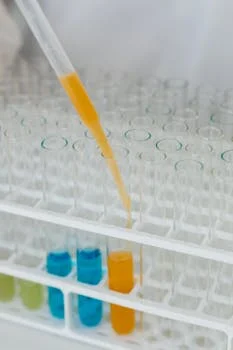
Industrial RO membranes achieve rejection rates exceeding 99% for multivalent ions and 95-98% for monovalent ions, making them the most effective single-stage desalination technology available. The rejection efficiency is governed by the size-exclusion principle and electrostatic repulsion. Divalent ions like Calcium (Ca²⁺) and Magnesium (Mg²⁺) are rejected at higher rates (98–99.5%) than monovalent ions like Sodium (Na⁺) or Chloride (Cl⁻), which typically see 95–98% rejection depending on the feed pressure and membrane age.
In heavy metal remediation, RO systems effectively remove Lead, Arsenic, Cadmium, and Chromium to levels well below EPA and WHO Maximum Contaminant Levels (MCLs). For example, lead rejection is consistently >99%, while hexavalent chromium rejection ranges from 90% to 98%. However, engineers must be aware of "leakage" issues with neutral molecules. Boron, for instance, exists as boric acid at neutral pH and passes through the membrane easily; rejection only improves to >90% when the pH is raised above 9.5 to ionize the boron.
While RO membranes are absolute barriers to bacteria and protozoa (>99.9% removal), they should not be relied upon as the sole disinfection barrier in industrial-to-potable reuse. Mechanical failures, such as compromised O-rings or "telescoping" of the membrane element, can allow bypass. Therefore, RO should always be paired with secondary disinfection like UV or chlorine dioxide.
| Contaminant | Molecular Weight (Da) | Rejection Rate (%) | Notes |
|---|---|---|---|
| Total Dissolved Solids (TDS) | Varies | 95–99.7% | Pressure dependent |
| Sodium / Chloride | 23 / 35.5 | 92–98% | Standard monovalent ions |
| Lead / Mercury | 207 / 200 | >99% | High removal for heavy metals |
| Bacteria / Viruses | N/A | 99.9% / 95%+ | Mechanical integrity is key |
| Boron | 10.8 | 30–90% | Highly pH-dependent |
| Dissolved Gases (CO₂, O₂) | <44 | 0% | Requires degasification post-RO |
Industrial RO System Configurations: Single-Pass vs. Double-Pass vs. Two-Stage
The configuration of an industrial RO system is determined by the required permeate purity and the target recovery rate, with single-pass, double-pass, and two-stage designs offering distinct engineering trade-offs. A single-pass system is the most straightforward, where feed water passes through a single set of membrane vessels. This configuration typically yields 50–75% recovery and is suitable for general process water or boiler feed where the input TDS is relatively low (<2,000 mg/L).
Double-pass RO systems are engineered for high-purity applications, such as semiconductor manufacturing or pharmaceutical production. In this setup, the permeate from the first pass becomes the feed water for the second pass. This drastically improves water quality; if the first pass removes 98% of TDS, the second pass removes 98% of the remaining 2%, resulting in ultra-low conductivity. To optimize energy, the second pass often utilizes low-energy membranes since the osmotic pressure of the first-pass permeate is negligible. For extreme purity requirements, engineers should consult an RO vs. EDI cost comparison for ultrapure water applications.
Two-stage RO (not to be confused with double-pass) is designed to maximize water recovery. In a two-stage system, the concentrate from the first stage is used as the feed for the second stage. This allows the system to reach recovery rates of 85–95% by "squeezing" more water out of the brine. This configuration is common in zero-liquid discharge (ZLD) pre-concentration and wastewater reuse. However, it requires careful monitoring of scaling precursors, as the second stage operates at much higher solute concentrations.
| Application | Required Permeate Quality | Recommended Configuration | Estimated Recovery (%) | Energy (kWh/m³) |
|---|---|---|---|---|
| Food & Beverage | TDS <50 mg/L | Single-Pass | 60–75% | 0.5–1.5 |
| Semiconductor UPW | TDS <1 mg/L | Double-Pass | 75–90% | 1.0–2.5 |
| Wastewater Reuse | TDS <100 mg/L | Two-Stage | 85–95% | 0.8–2.0 |
Systems integrated with Energy Recovery Devices (ERDs), such as isobaric chambers or turbochargers, can reduce the energy consumption of high-pressure configurations by up to 40% (HydropureWater field data, 2025).
Cost-Benefit Analysis: RO Membrane System CAPEX, OPEX, and ROI for Industrial Applications
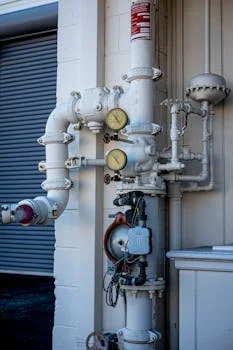
The total cost of ownership for an industrial RO system is split between significant upfront capital expenditure (CAPEX) and ongoing operating expenses (OPEX), where energy and membrane replacement represent the largest variable costs. CAPEX for a standard 50 m³/h system typically ranges from $150,000 to $350,000. This includes the high-pressure pump (20–30% of cost), membrane elements ($150–$600 per 8-inch element), and the stainless steel or FRP pressure vessels. Pretreatment equipment, including automated antiscalant and pH adjustment dosing for RO pretreatment, can add another 15–25% to the initial investment.
OPEX is dominated by energy costs, which account for 40–60% of the total operating budget. At an average industrial electricity rate of $0.12/kWh, the energy cost to produce permeate ranges from $0.06 to $0.30 per cubic meter, depending on the feed water salinity and system efficiency. Membrane replacement is the second-largest expense; while membranes are rated for 3–5 years, poor pretreatment can reduce this to 1–2 years, doubling the effective membrane cost per m³ of water produced.
The Return on Investment (ROI) for industrial RO is primarily driven by three factors: water purchase savings, reduced wastewater discharge fees, and improved product yield. For a facility paying $1.50/m³ for municipal water and $1.00/m³ for sewer discharge, a 50 m³/h RO system operating at 75% recovery can save over $400,000 annually in raw water and discharge costs. In such scenarios, the payback period is typically 18 to 36 months.
| System Capacity (m³/h) | CAPEX ($ Range) | OPEX ($/m³) | Payback Period (Years) | Notes |
|---|---|---|---|---|
| 10 | $40k – $80k | $0.25 – $0.45 | 3.5 – 5.0 | High relative labor cost |
| 50 | $150k – $350k | $0.18 – $0.35 | 2.0 – 3.5 | Economy of scale kicks in |
| 200 | $600k – $1.2M | $0.12 – $0.25 | 1.5 – 2.5 | Includes ERD & advanced VFDs |
Operational Best Practices: Preventing Fouling, Scaling, and Membrane Damage
Membrane fouling is the primary cause of permeate flux decline and increased energy consumption in industrial systems, often manifesting as a 10–15% increase in differential pressure (ΔP) across the vessel. Fouling is categorized into four types: particulate (silt/clay), organic (humic acids/oils), biological (biofilms), and scaling (mineral precipitates). Biofouling is particularly insidious, appearing as a slimy brown deposit on the feed spacers that creates high pressure drops and eventually physically deforms the membrane leaves.
Effective pretreatment is the only defense against irreversible membrane damage. Operators must maintain a Silt Density Index (SDI) of less than 3.0 to prevent particulate fouling. For biological control, non-oxidizing biocides should be dosed periodically, or chlorine must be used and subsequently removed via sodium bisulfite or activated carbon before reaching the polyamide membranes. maintaining the correct Langelier Saturation Index (LSI) through acid or antiscalant dosing is critical; an LSI > 1.5 in the concentrate stream significantly increases the risk of calcium carbonate scaling.
Cleaning-In-Place (CIP) protocols should be triggered when normalized flux drops by 10% or the feed-to-concentrate pressure drop increases by 15%. A typical CIP involves a high-pH wash (pH 11–12) to remove organics and biofilms, followed by a low-pH wash (pH 2–3) to dissolve mineral scales and metal hydroxides. Using automated antiscalant and pH adjustment dosing for RO pretreatment ensures these parameters remain within the "safe zone" (pH 6.5–7.5 for TFC membranes), extending the membrane lifespan to the upper end of the 5-year average.
Troubleshooting Tip: If permeate TDS increases suddenly, check for O-ring failure in the permeate tubes or "probing" the vessel to find the specific element that has failed. If flux declines but TDS remains stable, the issue is likely fouling or scaling rather than physical membrane damage.
Frequently Asked Questions

How long do industrial RO membranes last?
In a well-maintained industrial system with an SDI < 3 and quarterly CIP cycles, RO membranes typically last 3 to 5 years. Lifespan is shortened by high temperatures (>45°C), extreme pH excursions, or exposure to free chlorine, which causes oxidation and permanent loss of rejection efficiency.
What is the difference between RO recovery and rejection?
Rejection refers to the percentage of contaminants removed from the feed water (typically 95–99.7%). Recovery refers to the percentage of feed water that is converted into purified permeate (typically 50–85%). High recovery rates are desirable for water savings but increase the risk of membrane scaling due to higher salt concentration in the brine.
Can RO membranes remove PFAS and other "forever chemicals"?
Yes, high-pressure RO membranes are highly effective at removing long-chain PFAS (like PFOS and PFOA) with rejection rates typically exceeding 95–99%. Smaller, short-chain PFAS molecules may have slightly lower rejection rates (80–90%), often requiring a second pass or specialized membrane selection for full remediation.
Why is pretreatment necessary for RO systems?
Polyamide RO membranes are sensitive to fouling and chemical degradation. Pretreatment removes large particles, organics, and oxidants that would otherwise plug the 0.1 nm pores or chemically "burn" the membrane surface. Without pretreatment, an RO membrane could fail in as little as a few weeks of operation.