Why PAM Dosing Systems Fail in Real Plants: 3 Common Scenarios
Inconsistent PAM dosing in industrial wastewater treatment often leads to significant operational inefficiencies and regulatory non-compliance, with common failures resulting in increased costs and reduced treatment efficacy. Plant managers frequently encounter scenarios where seemingly minor issues cascade into major operational headaches, impacting both environmental compliance and the bottom line.Scenario 1: Overdosing Leads to Excess Chemical Costs and Secondary Pollution
Many plants, in an attempt to ensure adequate flocculation, default to higher-than-necessary PAM dosages. This overdosing can inflate chemical costs by 20–40% annually. Beyond the financial drain, excess PAM can lead to secondary pollution, with residual polyacrylamide in the effluent potentially exceeding 0.5 mg/L, violating stringent regulations such as EPA 40 CFR Part 403. This typically stems from a lack of precise metering control or the absence of real-time feedback mechanisms to optimize dosing rates.
Scenario 2: Underdosing Causes Poor Floc Formation and Increased Downstream Load
Conversely, underdosing PAM results in insufficient flocculation, where suspended solids fail to agglomerate effectively. This leads to cloudy effluent and a reduction in Total Suspended Solids (TSS) removal efficiency, often dropping from an expected 95% to below 70%. Poor floc formation significantly increases the load on downstream equipment like clarifiers, dissolved air flotation (DAF) units, and filter presses. For instance, a 30–50% increase in solids entering a filter press can drastically reduce its dewatering efficiency, requiring longer cycle times and higher energy consumption. This scenario points to issues such as improper metering pump selection, inadequate PAM solution concentration, or insufficient mixing energy.
Scenario 3: Inconsistent Mixing Creates 'Fish Eyes' and System Clogging
One of the most insidious problems is the formation of 'fish eyes' – undissolved clumps of PAM powder. This occurs when the dry polymer is not properly wetted and dispersed in the solution tank, often due to inadequate high-shear mixing. These sticky, gelatinous clumps can clog critical components, particularly the delicate internal mechanisms of metering pumps and inline static mixers. Such blockages can reduce system uptime by 15–25% annually, necessitating frequent manual intervention, cleaning, and part replacement. The root cause is typically a poorly designed or maintained chemical preparation system, lacking the necessary agitator speed (e.g., <300 RPM for initial wetting) or proper powder induction mechanisms.
PAM Dosing System Components: Engineering Specs and Selection Criteria

Solution Tank: These tanks store the prepared PAM solution. Typical volumes range from 1 to 10 m³, with custom sizes available for larger industrial applications. Materials of construction are critical for chemical compatibility and longevity: High-Density Polyethylene (HDPE) is a cost-effective choice for many PAM types, while stainless steel (304 or 316) offers superior durability and corrosion resistance for aggressive environments or specific chemical formulations. Fiber-Reinforced Polymer (FRP) provides a balance of chemical resistance and structural integrity. Mixing requirements dictate agitator type and speed; high-shear dispersers (300–1200 RPM) are essential for initial powder wetting to prevent 'fish eyes,' transitioning to lower-speed paddle agitators (100–300 RPM) for gentle aging and maintaining homogeneity.
Metering Pumps: These devices accurately inject the PAM solution into the wastewater stream. Selection depends on flow rate, pressure, and solution viscosity. Diaphragm pumps are ideal for lower flow rates (0.1–100 L/h) and moderate pressures (up to 7 bar), offering good chemical resistance and minimal maintenance for abrasive PAM solutions. Plunger pumps provide higher flow rates (10–500 L/h) and pressures (up to 10 bar) but may require more frequent maintenance for viscous fluids. Progressive cavity pumps are excellent for highly viscous PAM solutions (up to 1000 cP) and deliver constant, pulse-free flow at rates from 1 to 200 L/h. Material compatibility (e.g., Viton, EPDM, PTFE diaphragms; SS316 pump heads) with anionic or cationic PAM is paramount.
Control System: The brain of the dosing system, a Programmable Logic Controller (PLC) offers superior flexibility and automation compared to basic relay logic. Touchscreen Human-Machine Interfaces (HMIs) provide intuitive operation, data visualization, and alarm management. Integration with plant-wide Supervisory Control and Data Acquisition (SCADA) systems via protocols like Modbus or Profibus enables remote monitoring, centralized control, and data logging, optimizing overall plant performance.
Flow Meters: Accurate measurement of PAM solution flow is vital for precise dosing control. Electromagnetic flow meters are highly accurate (±0.5%) for conductive PAM solutions, robust, and have no moving parts. Ultrasonic flow meters offer good accuracy (±1.5%) for non-conductive or higher viscosity solutions (up to 1000 cP) and are non-invasive. Proper sizing and installation ensure reliable feedback for the control system.
Static Mixers: These inline devices promote rapid and uniform distribution of PAM into the wastewater, initiating floc formation. Inline static mixers with 4–12 mixing elements are common, designed to create turbulent flow and achieve optimal flocculation within a short residence time (typically 2–5 seconds) while minimizing shear. Tank-side mixers are used when longer contact times or gentler mixing is required. Pressure drop across a static mixer typically ranges from 0.1 to 0.5 bar, a factor to consider in pump sizing.
Material selection significantly impacts both Capital Expenditure (CAPEX) and Operational Expenditure (OPEX). While an HDPE solution tank might have a lower initial CAPEX, a stainless steel 316 tank, with its superior chemical resistance and longer lifespan, could result in lower OPEX over a 10-year lifecycle due to reduced maintenance and replacement costs.
| Component | Type / Material Options | Key Performance Specs | Selection Criteria |
|---|---|---|---|
| Solution Tank | HDPE, SS304/316, FRP | Volume: 1–10 m³; Agitator: 100–1200 RPM | Chemical compatibility, required volume, mixing energy |
| Metering Pump | Diaphragm, Plunger, Progressive Cavity | Flow Rate: 0.1–500 L/h; Pressure: 1–10 bar | Viscosity, flow rate, pressure, chemical type (anionic/cationic) |
| Control System | PLC, HMI (Touchscreen) | SCADA integration (Modbus, Profibus) | Automation level, data logging, remote access |
| Flow Meter | Electromagnetic, Ultrasonic | Accuracy: ±0.5% (Mag), ±1.5% (Ultra) | Solution conductivity, viscosity, required precision |
| Static Mixer | Inline (4–12 elements) | Pressure Drop: 0.1–0.5 bar; Residence Time: 2–5 sec | Pipe diameter, required mixing intensity, floc size target |
Step-by-Step PAM Dosing Process: From Powder to Floc
Effective PAM dosing relies on a precisely controlled multi-stage process, transforming dry polymer powder into an activated flocculant solution ready for wastewater treatment. Each step is critical for achieving optimal flocculation efficiency and extending the life of the wastewater treatment equipment. Learn how to optimize flocculant dosing for maximum efficiency.Step 1: Wetting and Dispersion
The process begins with the careful wetting and dispersion of dry PAM powder into water. This initial stage, lasting 0.5–2 minutes, is crucial to prevent the formation of 'fish eyes' (undissolved clumps). A high-shear agitator (300–600 RPM) vigorously mixes the powder into the water, typically achieving an initial concentration of 0.1–0.5% w/v. This ensures individual polymer chains are fully wetted and begin to unravel without agglomerating, which would otherwise lead to clogging of downstream components and reduced polymer effectiveness.
Step 2: Aging (Polymer Activation)
Following wetting, the PAM solution enters an aging phase, typically in a separate tank or compartment. This stage, lasting 30–60 minutes, allows the long-chain polymer molecules to fully hydrate and uncoil, exposing their active sites. Gentle mixing (100–300 RPM) is maintained to prevent shear degradation of the fragile polymer chains while ensuring homogeneity. Maintaining a solution temperature between 15–30°C is optimal to achieve full polymer activation; temperatures outside this range can slow down or hinder the hydration process, impacting flocculation performance. Activated PAM solution is essential for the effective binding of suspended solids.
Step 3: Dilution (Optional)
For some high-flow applications or specific flocculant types, an optional dilution step may be employed. The concentrated PAM solution (0.1–0.5%) is further diluted to a final concentration of 0.05–0.2% just before injection into the wastewater. This often occurs via an inline static mixer, with a short residence time of 2–5 seconds, ensuring uniform dilution and preparing the polymer for optimal interaction with wastewater particles. Dilution can improve dispersion at the injection point and prevent localized overdosing.
Step 4: Dosing and Mixing
The prepared PAM solution is then accurately metered into the wastewater stream using a precision metering pump at a flow rate typically between 0.1–500 L/h. The injection point is strategically chosen, ideally 3–5 pipe diameters upstream of the flocculation tank or clarifier. This ensures adequate initial mixing with the wastewater, allowing the polymer to rapidly contact and destabilize suspended particles. The gentle mixing in the flocculation tank promotes the growth of flocs through particle collisions. The design of DAF systems optimized for PAM-flocculated wastewater, for example, accounts for these critical mixing parameters.
Step 5: Monitoring and Adjustment
Continuous monitoring is vital to ensure consistent floc quality and optimize chemical consumption. Turbidity sensors or streaming current detectors provide real-time feedback on effluent clarity and charge neutralization, respectively. Plant operators also perform manual jar tests periodically to verify floc quality, size, and settling characteristics. Based on this data, the PLC control system or operator can adjust the PAM dosing rate dynamically. The target floc size distribution varies by downstream process: 0.5–5 mm flocs are ideal for sedimentation, while 0.1–1 mm flocs are preferred for Dissolved Air Flotation (DAF) due to their shear sensitivity and buoyancy requirements. Over-shearing can break down fragile flocs, reducing treatment efficiency.
PAM Dosing System Configurations: Which One Fits Your Application?
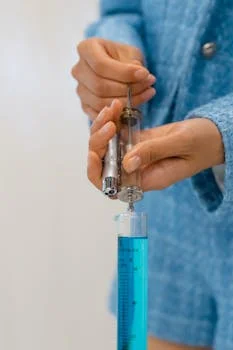
Single-Tank vs. Dual-Tank Systems:
- Single-tank systems are simpler, with lower CAPEX. They prepare and dose from the same tank, meaning dosing must pause during preparation cycles. This is suitable for lower-flow applications (<50 m³/h) or those with intermittent dosing requirements.
- Dual-tank systems offer continuous operation and redundancy. While one tank is preparing a fresh batch, the other is actively dosing. This configuration is typical for plants treating 50–500 m³/h of wastewater, where uninterrupted operation is critical. The added CAPEX is often justified by increased uptime and operational flexibility.
Manual vs. Automatic Dosing:
- Manual dosing systems require operators to manually prepare batches and adjust pump flow rates. While initial CAPEX is lower, OPEX is significantly higher due to labor costs. In 24/7 operations, automatic systems can lead to labor cost savings of $15,000–$50,000 per year by reducing the need for constant supervision and manual adjustments.
- Automatic dosing systems utilize PLCs, sensors (e.g., turbidity, flow meters), and variable speed drives to prepare and dose PAM precisely and continuously. They offer superior flocculation efficiency, chemical savings (up to 30%), and reduced human error.
Batch vs. Continuous Preparation:
- Batch preparation involves preparing a fixed volume of PAM solution and then dosing from it until it's depleted, after which a new batch is prepared. This is common for single-tank systems or low-flow applications (<10 m³/h).
- Continuous preparation systems are designed for high-flow applications (>100 m³/h). They continuously feed dry polymer and water into a multi-chamber tank where wetting, aging, and dilution occur simultaneously, ensuring an uninterrupted supply of fresh PAM solution.
Mobile vs. Fixed Systems:
- Mobile systems are compact, often skid-mounted units designed for temporary projects, pilot testing, or emergency backup. They offer flexibility but may have smaller capacities.
- Fixed systems are permanent installations, integrated into the plant infrastructure, and designed for long-term, high-capacity operation.
Influent variability significantly affects system selection. Wastewater with highly fluctuating characteristics (e.g., pH 5–11, TSS 50–5000 mg/L) benefits greatly from automatic systems with real-time monitoring and feedback loops. These systems can dynamically adjust dosing rates to maintain optimal flocculation despite changes in influent quality, preventing both overdosing and underdosing.
| Configuration Type | CAPEX Implication | OPEX Implication | Best Use Case | Redundancy/Automation |
|---|---|---|---|---|
| Single-Tank Batch | Low | Higher (labor, less precise) | Low-flow (<50 m³/h), intermittent dosing | Low redundancy, manual/semi-auto |
| Dual-Tank Continuous | Medium-High | Lower (chemical savings, less labor) | Medium-High flow (50–500 m³/h), 24/7 operation | High redundancy, fully automatic |
| Manual Dosing | Lowest | Highest (labor, waste) | Very low flow, non-critical applications | Minimal, operator-dependent |
| Automatic Dosing | Medium-High | Lowest (optimized, reduced labor) | All critical applications, variable influent | High, sensor-driven control |
| Mobile System | Medium | Variable (setup/takedown) | Pilot tests, temporary projects, emergency | Flexible, transportable |
| Fixed System | High | Stable, long-term | Permanent, high-capacity installations | Integrated into plant infrastructure |
Performance Benchmarks: What to Expect from a Well-Designed PAM Dosing System
A properly designed and operated PAM dosing system consistently achieves 90–98% TSS removal efficiency, significantly improving effluent quality and reducing downstream processing loads. These systems are engineered to deliver measurable improvements across various operational metrics, providing substantial return on investment. Get 2025 PAM dosing system specifications and selection criteria for detailed insights.Flocculation Efficiency: High-performance PAM dosing systems, when correctly calibrated for the specific wastewater matrix, can achieve outstanding Total Suspended Solids (TSS) removal rates. For influent with TSS concentrations ranging from 500–3000 mg/L, these systems typically deliver effluent TSS concentrations below 50 mg/L, translating to 90–98% removal efficiency. This performance is critical for meeting stringent discharge limits and preparing water for further advanced treatment.
Chemical Savings: One of the most significant benefits of an automatic PAM dosing system is the reduction in chemical consumption. Compared to manual dosing, which often relies on conservative (and frequently excessive) dosages, automated systems with real-time feedback loops can reduce PAM consumption by 15–30%. This is achieved by dynamically adjusting the dose based on influent flow, turbidity, or streaming current data, optimizing chemical usage to the exact requirements of the wastewater. These savings are consistently verified in industry benchmarks, including EPA 2023 reports on chemical optimization.
Downstream Benefits: Improved flocculation has a ripple effect throughout the entire wastewater treatment train. For plants utilizing filter presses for sludge dewatering, well-conditioned sludge from an optimized PAM system can lead to a 20–40% reduction in sludge volume, producing drier cake and reducing disposal costs. enhanced settleability of solids from PAM flocculation can result in 10–25% energy savings in aeration tanks due to reduced organic load and improved oxygen transfer efficiency. HydropureWater filter presses for PAM-conditioned sludge are specifically designed to leverage these benefits.
Uptime: Modern PAM dosing systems, especially those with redundant pumps and real-time monitoring capabilities, boast an impressive uptime of 95–99%. This contrasts sharply with manual or less sophisticated systems, which often experience 80–90% uptime due to frequent clogs, calibration issues, or manual interventions. High uptime ensures continuous treatment and minimizes the risk of non-compliance.
Performance can vary depending on the PAM type (anionic, cationic, nonionic) and the specific wastewater matrix. For example, cationic PAM is highly effective for organic-rich wastewater (e.g., food processing), while anionic PAM excels with inorganic solids (e.g., mining effluents). Discover PAM dosing solutions tailored for food processing wastewater to see how specific applications benefit from optimized systems. Nonionic PAM offers versatility for neutral or variable pH conditions. A well-designed system accounts for these specific interactions to maximize efficiency.
Cost Breakdown: CAPEX, OPEX, and ROI for PAM Dosing Systems
Capital Expenditure (CAPEX):
The initial investment for a PAM dosing system can range from $15,000 to $150,000. This cost is highly scalable and depends on several factors:
- Flow Rate: Larger systems for higher flow rates (e.g., 500 m³/h) will naturally cost more than smaller systems (e.g., 50 m³/h).
- Materials of Construction: Stainless steel tanks and components increase CAPEX compared to HDPE or FRP.
- Automation Level: Fully automatic systems with PLC control, touchscreen HMIs, and sensor feedback loops are more expensive upfront than manual systems. For example, a 50 m³/h manual system might cost around $30,000, while a 500 m³/h automatic, dual-tank system could be upwards of $120,000.
- Redundancy: Dual pumps, standby tanks, and redundant sensors add to the initial cost but enhance reliability and uptime.
Operational Expenditure (OPEX):
Ongoing operational costs typically fall within $0.05–$0.30 per m³ of treated wastewater. Key OPEX components include:
- PAM Chemical Cost: This is often the largest OPEX component, ranging from $2–$5/kg for various PAM types. Optimized dosing directly impacts this cost.
- Energy Consumption: Power for agitators, pumps, and control systems typically amounts to $0.01–$0.05/m³.
- Labor: For manual systems, labor costs can be substantial ($0.02–$0.10/m³), covering preparation, monitoring, and adjustments. Automatic systems drastically reduce this.
- Maintenance: Routine maintenance, including pump rebuilds, sensor calibration, and cleaning, can cost $1,000–$5,000 per year, depending on system complexity and operational hours.
Return on Investment (ROI):
Automatic PAM dosing systems often demonstrate a rapid ROI, typically within 6–24 months. This quick payback is primarily driven by significant chemical savings and reduced operational labor. A case study from a 200 m³/h textile wastewater plant, for instance, reported a 12-month payback period due to a 25% reduction in PAM consumption and decreased labor requirements. The formula for calculating ROI is: (Annual Savings - Annual OPEX) / CAPEX.
Hidden Costs:
Beyond direct CAPEX and OPEX, consider:
- Maintenance: Beyond routine, unexpected pump failures or sensor replacements can incur additional costs.
- Training: Initial and ongoing training for operators ($2,000–$10,000) ensures correct system operation and troubleshooting.
- Disposal: While PAM helps dewater sludge, the cost of disposing of the resulting sludge still needs to be factored in.
| Cost Type | Typical Range | Factors Affecting Cost | Notes/Examples |
|---|---|---|---|
| CAPEX (System Purchase) | $15,000–$150,000 | Flow rate, automation level, materials, redundancy | $30,000 for 50 m³/h manual; $120,000 for 500 m³/h automatic |
| OPEX (per m³ treated) | $0.05–$0.30 | PAM cost, energy consumption, labor, maintenance | PAM cost: $2–$5/kg; Energy: $0.01–$0.05/m³ |
| ROI (Automatic Systems) | 6–24 months | Chemical savings, reduced labor, improved efficiency | 12-month payback for 200 m³/h textile plant |
| Annual Maintenance | $1,000–$5,000 | Pump rebuilds, sensor calibration, cleaning | Excludes major component replacement |
| Operator Training | $2,000–$10,000 | Initial setup, ongoing certification | Ensures proper system operation |
Troubleshooting Guide: 5 PAM Dosing Problems and How to Fix Them
Addressing common operational issues in PAM dosing systems can prevent significant downtime and maintain consistent flocculation performance, with pump clogging and poor floc formation being among the most frequent challenges. Proactive diagnosis and resolution are key to optimizing wastewater treatment.Problem 1: Clogged Metering Pump
- Symptoms: Erratic flow rate, pump cavitation (gurgling sounds), reduced or no PAM solution being dosed, increased motor load.
- Causes: Undissolved PAM clumps ('fish eyes') from inadequate mixing, high solution viscosity exceeding pump limits, foreign debris in the solution.
- Fixes:
- Install a 100-mesh (or finer) strainer on the pump suction line to filter out undissolved particles.
- Reduce the PAM solution concentration to below 0.2% w/v to lower viscosity.
- Verify agitator speed and design in the solution tank to ensure proper initial wetting and aging.
- Regularly clean the pump head and check valves.
Problem 2: Poor Floc Formation
- Symptoms: Cloudy effluent, poor settling in clarifiers, low TSS removal efficiency, small or wispy flocs, no distinct floc formation.
- Causes: Incorrect PAM type (e.g., using anionic for organic sludge), insufficient mixing energy at the injection point, incorrect dosing rate (underdosing or overdosing), improper pH for PAM activation.
- Fixes:
- Conduct jar tests to verify the optimal PAM type (anionic, cationic, nonionic) and charge density for your specific wastewater.
- Increase the number of elements in the inline static mixer or adjust the injection point to ensure adequate initial dispersion.
- Calibrate the metering pump and check flow meter accuracy. Adjust dosing rate based on jar test results or real-time feedback.
- Verify and adjust wastewater pH to the optimal range for the selected PAM (typically 6–8 for many applications).
Problem 3: Overdosing
- Symptoms: Unusually high chemical costs, residual PAM in the treated effluent (can cause foaming or stickiness), excessive sludge volume with poor dewaterability, very large, fragile flocs that easily break apart.
- Causes: Faulty flow meter providing incorrect wastewater flow data, incorrect metering pump calibration, lack of real-time feedback control, manual adjustments being too conservative.
- Fixes:
- Recalibrate the metering pump and the wastewater flow meter.
- Implement a turbidity feedback loop or streaming current detector to automatically adjust the dosing rate based on effluent quality.
- Perform regular jar tests to determine the minimum effective dose.
- Review and optimize PLC programming for precise dose control.
Problem 4: Solution Tank Stratification
- Symptoms: Inconsistent PAM solution concentration delivered to the pump, resulting in erratic dosing; 'fish eyes' appearing in the solution tank even after initial mixing; variations in floc quality over time.
- Causes: Inadequate agitator speed or poor agitator design, insufficient baffling in the solution tank, short-circuiting flow patterns within the tank.
- Fixes:
- Increase agitator speed to 600 RPM during initial wetting and maintain 100-300 RPM during aging to ensure homogeneity.
- Install or modify baffles within the solution tank to prevent swirling and promote thorough mixing.
- Ensure the agitator is correctly sized and positioned for the tank volume.
- Consider a multi-chamber tank design for continuous mixing and aging.
Problem 5: Control System Errors
- Symptoms: Alarm triggers, system stops dosing, incorrect data display on HMI, unresponsive controls, pump not starting or stopping as programmed.
- Causes: Sensor drift or failure, PLC programming errors, electrical grounding issues, power fluctuations, communication errors with SCADA.
- Fixes:
- Recalibrate all sensors (e.g., level, flow, turbidity) regularly and replace faulty ones.
- Check all electrical connections and ensure proper grounding to prevent interference.
- Review PLC program logic for errors or unexpected conditions.
- Inspect communication cables and network settings if integrated with SCADA.
- Ensure stable power supply to the control panel.
Frequently Asked Questions
Understanding the nuances of PAM dosing systems is crucial for engineers and operators, with common questions addressing optimal concentrations, PAM type selection, and pump differences.What is the optimal PAM concentration for dosing?
The optimal PAM concentration for dosing typically ranges from 0.05–0.2% w/v for most industrial wastewater applications. However, it can vary significantly: high-flow systems might use lower concentrations (e.0.01%) for better dispersion, while low-flow, high-TSS applications might use slightly higher concentrations (up to 0.5%). Exceeding 0.5% w/v can increase solution viscosity dramatically, leading to pump clogging and difficulty in mixing and dispersion.
How do I select the right PAM type for my wastewater?
Selecting the correct PAM type (anionic, cationic, or nonionic) is critical for effective flocculation. The best method is to conduct comprehensive jar tests with samples of your specific wastewater. Generally, anionic PAM works best for wastewater containing predominantly inorganic suspended solids, such as those from mining or mineral processing, where particles carry a negative charge. Cationic PAM is most effective for organic solids, common in food processing, municipal wastewater, or pulp and paper industries, where particles are often positively charged. Nonionic PAM is suitable for neutral pH wastewater or situations with highly variable pH, as its performance is less sensitive to charge effects.
What is the difference between a diaphragm pump and a plunger pump for PAM dosing?
Diaphragm pumps and plunger pumps are both positive displacement metering pumps used for PAM dosing, but they differ in design and application. Diaphragm pumps handle higher viscosities (up to 1000 cP) and are more resistant to abrasion due to having no seals or packing in contact with the fluid. They typically offer lower flow rates (0.1–100 L/h) and moderate pressures. Plunger pumps, conversely, offer higher flow rates (10–500 L/h) and can achieve higher pressures, making them suitable for larger applications. However, they are generally less tolerant of viscous or abrasive fluids and require more frequent maintenance of seals and packing.
Can I use a PAM dosing system for drinking water treatment?
No, PAM is generally not approved for direct use in potable (drinking) water treatment applications in many regions, including under stringent EPA guidelines. The primary concern is the presence of residual acrylamide monomer, a neurotoxin and probable human carcinogen, which is an impurity in polyacrylamide. The EPA limits for acrylamide monomer in PAM for drinking water applications are typically very low (e.g., 0.05% w/w in the polymer). For drinking water treatment, polyaluminum chloride (PAC), aluminum sulfate (alum), or other NSF-approved coagulants and flocculants are used instead, which do not pose the same acrylamide monomer risks.
How often should I calibrate my PAM dosing system?
The calibration frequency for a PAM dosing system depends on its level of automation and criticality. For manual or semi-automatic systems, monthly calibration is generally recommended to ensure accuracy. For fully automatic systems equipped with real-time monitoring sensors (e.g., turbidity, flow meters), weekly verification and calibration are advisable, especially if influent conditions are variable. Calibration involves verifying the actual flow rate of the metering pump against its setpoint, checking the accuracy of all sensors, and confirming the concentration of the prepared PAM solution. Regular calibration is crucial for maintaining optimal flocculation efficiency and preventing chemical waste.
Related Equipment
- HydropureWater automatic chemical dosing systems for precise PAM injection — view specifications, capacity range, and technical data
- DAF systems optimized for PAM-flocculated wastewater — view specifications, capacity range, and technical data
- HydropureWater filter presses for PAM-conditioned sludge — view specifications, capacity range, and technical data
Need a customized solution? Request a free quote with your specific flow rate and pollutant parameters.