What Greater Lyon's treatment infrastructure means for industrial manufacturers
Greater Lyon's metropolitan treatment network provides context, not a guarantee that a factory can discharge untreated high-COD trade waste directly. Veolia's contract covers modernization and operation of the Saint-Fons plant, which treats wastewater from the left bank of the Rhône and some regional industrial groups equivalent to one million inhabitants. The six-year contract has a stated value of €100 million, according to Veolia.
Saint-Fons is operating under a municipal and industrial-wastewater service that is simultaneously addressing several constraints. Veolia identifies biological-treatment compliance, asset condition, heavy-rain management, operational efficiency, energy and environmental performance, carbon-footprint reduction, and raw-material consumption as priorities.
For a Lyon-area manufacturer, the implication is narrower than “the metropolitan system will treat the stream.” The generator remains responsible for characterizing its waste, controlling contaminants at source, providing reliable pretreatment and protecting the receiving system from hydraulic, organic or toxic shocks. Process performance must be traceable against the route actually authorized: sewer discharge, a controlled pretreatment discharge, or industrial water reuse. A supplier should therefore demonstrate performance on a representative industrial matrix, not substitute the Saint-Fons operating context for factory-specific evidence.
Characterize the trade waste before selecting equipment
COD alone cannot size an industrial trade waste pretreatment system because flow variability, FOG, suspended solids and toxicity can determine whether biological treatment is stable. The first deliverable should therefore be a representative characterization campaign, not a single grab sample.
Sample production batches, cleaning cycles, variable-strength discharges and dilution-water periods. Request flow measurements over both normal operation and peak discharge conditions, together with COD, BOD, pH, temperature, TSS, oil and grease, colloids, nutrients, conductivity, toxicity indicators and the biodegradability ratio relevant to the proposed biological stage.
Temperature belongs in the design basis rather than being treated as a constant assumption. In a laboratory MBBR study, COD removal increased from approximately 70% to approximately 90% as temperature rose from 20°C to 25°C; the study also found that the rate of improvement reduced beyond 25°C (Juniper Publishers, Application of Lab-Scale MBBR to Treat Industrial Wastewater using K3 Carriers).
Identify the destination before selecting final equipment. Direct sewer discharge, controlled pretreatment and process-water reuse have different acceptance criteria. A supplier must identify which inputs were measured, which values are design assumptions, and which guarantees are supported by comparable wastewater. For solids-prone streams, assess a rotary mechanical bar screen as a possible upstream protection measure, but do not treat screening as a substitute for flow and pollutant characterization.
| Input | Why it affects selection | Evidence required |
|---|---|---|
| Flow regime | Sets equalization, peak hydraulic load and equipment duty | Representative flow record covering production and discharge cycles |
| COD and BOD | Define organic loading and the biodegradation requirement | Analytical campaign plus the analytical method |
| FOG, oil and colloids | Determine flotation, separation and biological pretreatment needs | Composite and time-related samples |
| pH, temperature and nutrients | Influence biological activity, dosing and reactor stability | Seasonal or production-dependent measurements |
| TSS and toxicity | Protect biological biomass and solids-handling systems | Solids profile and inhibition indicators |
| Destination and end use | Sets final polishing, monitoring and acceptance requirements | Written sewer acceptance conditions or reuse specification |
Build a pretreatment train that protects the biological process
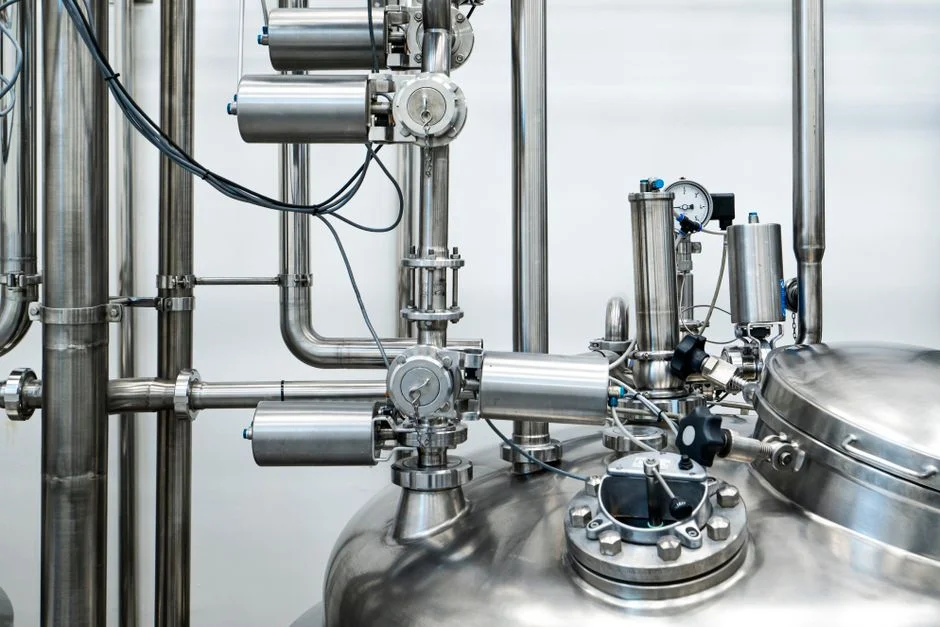
A defensible high-strength industrial wastewater process train starts with source control, then follows screen and balance, equalization, contaminant-specific pretreatment, biological treatment, solids separation and final polishing. High-flow alarms and controlled bypasses should protect the biological stage from shock loads and prevent untreated discharge.
Use dissolved air flotation when oil, FOG, colloids or floatable solids are present. HydropureWater's catalog describes industrial DAF pretreatment using micro-bubble flotation for suspended solids, FOG, oil and grease, and colloidal material, with automatic skimming. It lists 13 models from 4 to 300 m³/h; these are equipment capacities, not guaranteed treatment performance for a particular waste stream.
For biologically treated or chemically conditioned water, lamella clarification is an option where flocculation and sludge recirculation can provide the required solids separation. The published system range is 20–40 m/h surface loading. Lamella clarification equipment should be selected against the required hydraulic rate and measured solids characteristics, not copied from the published range without confirmation.
Set chemical dosing only after identifying the contaminant and required pH or coagulation conditions. HydropureWater describes PLC-controlled chemical dosing for coagulants, flocculants, pH adjusters and specialty chemicals on skid-mounted assemblies. Jar tests should establish dose, mixing and resulting solids characteristics before automatic control is specified.
Electrocoagulation is a specialist option, not a default substitute for DAF or conventional pretreatment. A 2025 MDPI study examined it using mineral-processing wastewater with an initial COD of 424.29 mg/L and investigated anode material, current density, initial pH and additives (MDPI, Electrocoagulation: A Promising Method to Treat and Reuse Mineral Processing Wastewater with High COD). That matrix does not establish performance for Lyon food-processing or other trade waste.
| Process step | Primary target | Selection condition |
|---|---|---|
| Screening | Large solids and debris | Measured solids generation and disposal route |
| Equalization | Flow, strength and batch variability | Documented flow and load profile |
| DAF | Oil, FOG, floatable solids and colloids | Representative flotation and sludge tests |
| Chemical dosing | Destabilized colloids or pH control | Jar-test dose and residual chemistry |
| Lamella clarification | Flocculated solids separation | Hydraulic loading and sludge settleability |
| Biological treatment | Soluble biodegradable COD | Biodegradability, toxicity, temperature and loading data |
Choose anaerobic, aerobic or combined biological treatment
Anaerobic treatment is the high-strength option when the waste contains sufficient biodegradable organic matter and a recovery of methane is operationally valuable. Aerobic treatment provides an alternative where the required loading, biodegradability, retention time and treatment objective can be met without an anaerobic stage.
The principal anaerobic evidence is historical. A 1991 Murdoch University dissertation tested a 1.3 m³ hybrid reactor combining suspended-growth and fixed-film zones, with effluent and sludge recycle. On abattoir wastewater, total COD removal was 70% and increased to 80% after post-settling; the full-scale design used a spatial COD loading rate of 8 kg/m³/d (Murdoch University Research Portal, High rate anaerobic treatment of wastewaters – two pilot studies).
The same dissertation reports a septage design with 70% COD removal at 7 kg/m³/d and hydraulic retention time greater than 7 hours. It required tight pH control and exclusion of industrial streams containing high sulfate and heavy metals. These findings provide engineering evidence for concept selection, but they are historical pilot and design data, not current guarantees for a Lyon facility.
For aerobic carrier-based treatment, the supplied laboratory MBBR study tested influent COD from 1,000 to 3,500 mg/L. An eight-hour hydraulic retention time achieved more than 80% COD removal, while 12 hours achieved approximately 86% (Juniper Publishers, Application of Lab-Scale MBBR to Treat Industrial Wastewater using K3 Carriers). The same study reported 80% MBBR COD removal against 60–70% for activated sludge in its comparison; those results apply to the studied conditions and should not be generalized without comparable-matrix evidence.
An anaerobic-to-aerobic sequence is justified when anaerobic conversion reduces the organic load while an aerobic stage provides the required polishing or ammonia control. The decision must reflect biodegradability, hydrolysis behavior, nutrient balance, pH, temperature, toxicity and the reuse target. For compact biological treatment with integrated solids separation, an integrated MBR wastewater treatment can be evaluated when the feed and required effluent quality justify its footprint and solids-retention requirements.
| Biological option | Supported evidence | Main qualification |
|---|---|---|
| Hybrid anaerobic reactor | Abattoir pilot: 70% COD removal; 80% after post-settling; design loading 8 kg/m³/d | 1991 pilot evidence; feed-specific applicability |
| Anaerobic septage treatment | Design: 70% COD removal at 7 kg/m³/d and HRT greater than 7 hours | Requires pH control and feed exclusions |
| MBBR | Influent COD 1,000–3,500 mg/L; over 80% removal at 8-hour HRT | Laboratory study with K3 carriers |
| Anaerobic followed by aerobic | Combination justified by load reduction, polishing and nutrient needs | Must be demonstrated on the actual waste matrix |
Decide whether tertiary treatment is justified by the reuse target
Water reuse quality is a project requirement, not an automatic consequence of COD removal. Before selecting membranes or disinfection, define the receiving process, intended reuse and the analytical parameters required by that application.
Use MBR where compact biological treatment and integrated solids separation are priorities. HydropureWater specifies submerged PVDF membranes, filtration below 1 μm, a footprint stated as 60% smaller than conventional systems, and capacities from 10 to 2,000 m³/day. These are catalog specifications; they do not establish that MBR is required for every reuse case or that the stated footprint will apply at the proposed site.
UF is relevant as a solids barrier or RO pretreatment where the feed satisfies the equipment's operating conditions. HydropureWater lists hollow-fiber PVDF membranes, 2,000–40,000 L/h, 0.03 μm pore size, backwash and air scour, and turbidity up to 300 ppm. For a reuse project, UF pretreatment for reuse should follow confirmation of feed chemistry, membrane compatibility, cleaning regime and the required recovery rate.
The MDPI electrocoagulation study is a reuse-focused example with a narrow scope: it investigated treatment and reuse potential for Pb/Zn sulfide mineral flotation wastewater at an initial COD of 424.29 mg/L (MDPI, 2025). It cannot substitute for pilot or acceptance data on the manufacturer's actual stream. Any UV disinfection equipment should likewise be selected against the intended reuse application, inlet optical quality and dose requirement.
| Technology | Published or catalog scope | Evidence needed before selection |
|---|---|---|
| MBR | Submerged PVDF; below 1 μm; 10–2,000 m³/day | Actual wastewater COD, TSS, filtration behavior and reuse target |
| UF | PVDF hollow fiber; 0.03 μm; 2,000–40,000 L/h; turbidity up to 300 ppm | Feed compliance, recovery, cleaning and downstream acceptance |
| Electrocoagulation | 2025 MDPI study on Pb/Zn flotation wastewater at initial COD 424.29 mg/L | Matrix-specific testing and residual-metal assessment |
| UV disinfection | Final treatment selected after the reuse specification is defined | Use-specific quality, dose and validation requirements |
Turn the treatment concept into a procurement-ready specification
A procurement specification should convert the process concept into measurable guarantees, explicit scope boundaries and documented acceptance tests. The quotation should state design flow, peak flow, influent COD range, temperature, pH, FOG, TSS, toxicity, operating hours, and the intended reuse or discharge route.
Define responsibility for pretreatment, biological equipment, solids separation, sludge handling, instrumentation, power, utilities, controls and operator training. Identify which items are included, excluded or supplied by others. This prevents a supplier from pricing a complete performance outcome while leaving key pretreatment or sludge-removal work outside its scope.
Require guaranteed duty points, analytical methods, sampling locations, startup criteria and consequences of failed acceptance tests. “High COD removal” is not a sufficient guarantee: it does not identify the influent envelope, effluent parameter, operating condition or measurement method.
Operating flexibility should include shock protection, controlled bypasses, equalization, maintenance access and provisions for future loading or reuse requirements. Where residuals are expected, require a plate-and-frame sludge dewatering solution or another defined solids route. Hydraulic and mechanical accessories should be specified through treatment valves, media and engineered parts rather than left as unspecified exclusions.
Compare lifecycle inputs: energy, chemicals, membrane or carrier replacement, consumables, sludge volume, operator labor and maintenance. Separate source-test results, pilot results and commercial guarantees; they have different evidentiary weight and should never be merged into one performance claim.
| Procurement field | Required content | Acceptance focus |
|---|---|---|
| Design basis | Measured flow, COD, temperature, pH, FOG, TSS and toxicity | Matches the characterized waste envelope |
| Process guarantees | Named parameters, duty points and operating hours | Reproducible test method and sampling point |
| Scope boundaries | Equipment, utilities, controls, sludge handling and training | No unresolved exclusions |
| Acceptance | Startup procedure, test protocol and failure remedy | Objective pass/fail criteria |
| Lifecycle comparison | Energy, chemicals, consumables, sludge, labor and maintenance | Comparable assumptions across bids |
| Evidence | Source test, pilot and commercial guarantee separated | Comparable wastewater and operating conditions |
Frequently Asked Questions
How should a Lyon manufacturer choose between DAF, MBBR and MBR?
Choose DAF when measured oil, FOG, colloids or floatable solids require removal before biological treatment. Compare MBBR and MBR only after equalization and contaminant removal have established a stable biological feed. The MBBR study supports its laboratory performance only within its tested conditions, while MBR should be justified by compact biological treatment, integrated solids separation and the required reuse quality.
What should a buyer request when comparing price and budget?
Request a priced scope that lists capital equipment, installation, utilities, chemical consumption, membrane or carrier replacement, sludge handling, operator labor and maintenance. Ask suppliers to state which costs come directly from the historical evidence and which are project-specific estimates. No current quotation or cost range for a Lyon installation is supported by the supplied research, so a defensible budget requires a defined design flow, wastewater analysis and delivery scope.
What evidence should be used to select and size a biological reactor?
Request wastewater-specific evidence that states the influent COD range, flow, temperature, pH, biodegradability, toxicity, retention time and guaranteed duty point. Pilot data, source-test data and commercial guarantees must remain distinct. Peak flow alone is insufficient because biological capacity also depends on the organic load and the characteristics of the equalized feed.
Does good process performance establish discharge compliance or permit a reuse claim?
No. Process capability does not replace the applicable discharge authorization or sewer-acceptance conditions. The manufacturer must confirm those requirements with the competent authority and receiving system. For reuse, define the end use and required water quality first, then validate the complete treatment train on the actual industrial matrix before claiming suitability.