What Changes for Guayaquil Manufacturers in 2026?
Manufacturers in Guayaquil generally treat high-COD trade waste in stages: equalize and screen the effluent, remove settleable solids, oil, grease and other floatables where present, then use biological treatment to reduce soluble biodegradable organic load before clarification, polishing and disinfection. The correct train depends on measured COD, flow variability, pH, toxicity, nutrients, solids and discharge conditions—not on COD alone. Guayaquil’s municipal system is expanding, but factory pretreatment and sewer-acceptance obligations remain site-specific decisions.
Guayaquil’s improved collection and treatment capacity changes the background against which factories operate, but it does not automatically authorize every industrial discharge. The World Bank reports that the city is moving from treating only a fraction of its wastewater to nearly 100% treatment. This is municipal infrastructure context: each manufacturer must still establish what enters the sewer, which unit operations it owns and operates, and what evidence the receiving authority requires.
The EIB-supported project included treatment facilities, pumping stations, major sewage collectors, around 30,000 wastewater house connections and rehabilitation of 41 km of main sewers in La Chala. That scale shows the extent of collection-system development, but it does not remove the need for a factory-specific treatment basis. Obtain current sewer-acceptance rules, characterize the discharge, define treatment objectives and establish monitoring before selecting equipment. Regional comparisons in the Bogotá trade-waste treatment guide and the Santiago high-COD pretreatment approach can inform the questions to ask, but they do not replace Guayaquil’s current requirements.
Characterize the Trade Waste Before Choosing Equipment
Representative wastewater characterization must come before equipment sizing because the same measured COD can contain fractions that require different removal mechanisms. Build a sampling program across production, cleaning, dumping and idle periods, then use the resulting flow and contaminant data to define the design basis.
| Parameter | Design relevance | Buyer or operator input required |
|---|---|---|
| Flow rate and variability | Sets equalization, pumping and treatment capacity. | Representative flow record across production and non-production periods. |
| COD and BOD | Defines the organic load and biodegradability assessment. | Paired laboratory results, sampling points and analytical method. |
| Suspended solids | Indicates solids separation, screening and sludge-management needs. | Representative concentrations and settleability information. |
| Oil and grease | Identifies the need for physical removal before biological treatment. | Concentrations and the presence of free or emulsified oil. |
| pH and temperature | Affects chemical dosing, biological activity and equipment operation. | Range and duration of excursions, not only an average. |
| Nutrients and toxicity indicators | Establish whether biological treatment requires nutrient balancing or toxicity control. | Results relevant to the manufacturing process and receiving sewer. |
Distinguish soluble biodegradable COD from particulate or floatable COD. Screening and clarification remove different material, while a food and beverage plant’s sewer-limit approach illustrates why physical pretreatment must be defined around actual contaminants rather than a single aggregate COD result. Flotation targets oil, grease, floatables, colloids and suspended solids; it does not remove the entire dissolved organic load. Clarification addresses settleable solids, while biological treatment addresses biodegradable material that remains in solution.
Seasonal variation is a design warning, not an excuse for averaging away peaks. The Procedia CIRP study of an oxidation-pond system in Marcelino Maridueña reported that organic load in the effluent varied with season and treated volume. For an industrial plant, the equivalent control is to preserve representative load data and test whether production, discharge or dilution patterns create seasonal peaks.
Request the current sewer or regulator requirements before buying: permitted flow, discharge schedule, pretreatment standards, monitoring parameters, sampling protocol and record-retention requirements. Industry examples such as the mining and metals pretreatment framework are useful for structuring those requests, but no generic COD or suspended-solids limit should be assumed for Guayaquil.
Build a Treatment Train from the Front of the Plant
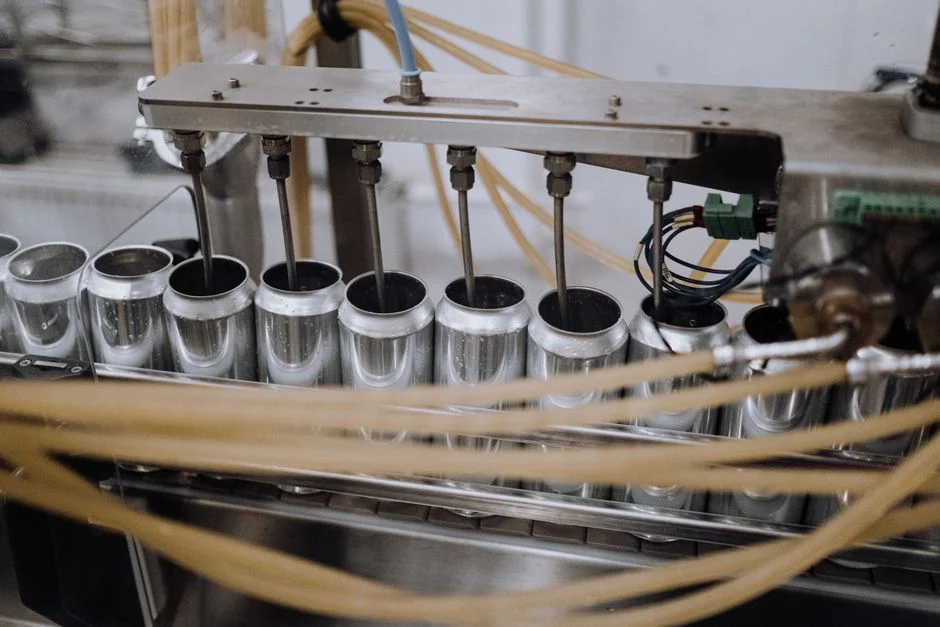
A defensible treatment train starts with protection of downstream equipment and controlled delivery of the wastewater load. Each stage should have a defined contaminant-removal function and a measurable operating envelope.
- Screen the incoming flow. A rotary mechanical bar screen removes suspended solids, rags, plastics and fibrous debris that could damage pumps or overload downstream biological treatment.
- Equalize flow and load. Equalization buffers production-driven variation before biological or solids-separation equipment. Chemical dosing may be required for pH control, coagulation or flocculation, depending on the wastewater chemistry.
- Remove floatables and suspended material. A DAF system for high-COD pretreatment is most relevant where the wastewater contains oil, grease, floatables, colloids or a high suspended-solids load. The application may extend to food processing, pulp and paper, textiles, metalworking and petrochemical operations, subject to characterization.
- Reduce soluble biodegradable COD biologically. Flotation and clarification cannot substitute for biological treatment of soluble organic matter.
- Separate biological solids. Lamella clarification is an option where compact, high-rate solids separation is needed. The supplied product specification lists surface loading rates of 20–40 m/h and chemical-consumption reductions of up to 30%; these are supplier claims that must be validated against the actual wastewater and process design.
- Add membrane polishing when justified. The supplied MBR specification identifies submerged PVDF filtration below 1 μm and an available capacity range of 10–2,000 m³/day. Those specifications do not establish that membrane treatment is necessary or correctly sized for a particular factory.
| Process stage | Primary function | Selection evidence required |
|---|---|---|
| Mechanical screening | Removes debris that may damage pumps or overload the train. | Solids characteristics, flow profile and screen selection criteria. |
| Equalization | Buffers hydraulic and organic variation. | Representative flow and load ranges, including peak periods. |
| DAF or clarification | Separates floatables, oil, grease and settleable solids. | Oil and grease, suspended solids, settleability and required removal performance. |
| Biological treatment | Reduces soluble biodegradable COD. | BOD-to-COD relationship, temperature, pH, toxicity and nutrient availability. |
| Membrane polishing | Provides fine solids separation and can support reuse objectives. | Required output quality, membrane fouling risk and disposal route. |
Choose Between Biological Treatment and Membrane Polishing
Biological treatment and membrane polishing solve different parts of the problem: biological systems reduce biodegradable organic load, while membranes provide solids separation and can polish the resulting effluent. The appropriate configuration depends on footprint, loading sensitivity, required output quality, automation and residual-sludge obligations.
| Option | Configuration and application | Decision checks |
|---|---|---|
| Conventional activated sludge | Established biological treatment followed by separate solids separation. | Biodegradability, peak loading, temperature, pH, nutrients, footprint and sludge handling. |
| Integrated MBR | Activated sludge combined with submerged PVDF filtration. | Final quality requirement, membrane fouling, cleaning, energy demand and available footprint. |
| Package biological treatment | Compact, buried treatment for smaller or distributed non-residential applications. | Representative peak flow and load, biodegradability, utilities, access and maintenance arrangements. |
The supplied WSZ package plant combines A/O biological contact oxidation, sedimentation and disinfection in a buried package serving flows from 1–80 m³/h. The underground integrated package treatment system may therefore suit smaller distributed applications, but the operating envelope must be checked against the factory’s actual flow and load.
The integrated MBR membrane bioreactor combines activated sludge with submerged PVDF filtration in one configuration. The supplied product information describes its footprint as 60% smaller than conventional systems. That comparison is a product claim, not a universal sizing conclusion. Influent biodegradability, peak organic and hydraulic loading, temperature, pH, nutrient balance and reuse criteria remain the governing inputs.
Industry-specific comparisons can refine the biological choice. The MBR versus conventional activated-sludge analysis for plastics wastewater is one useful reference, while the available fabricated-metals comparison provides a second application-specific reference. Neither should be applied without site data.
Manage Solids, Methane and the Final Compliance Case
Excess biological sludge can carry COD and organic load into the municipal system, so the solids route must be developed with the wastewater train rather than added after commissioning. Decide whether residuals will be thickened, dewatered, stored, transported or accepted through another contracted route, and include those duties in the process design and operating plan.
Where sludge dewatering is required, the supplied range for a plate-and-frame sludge dewatering press spans filtration areas from 1 m² to 500 m², with manual, hydraulic and fully automatic PLC-controlled operation. Selection still requires sludge characteristics, target moisture content, operating schedule and cake-disposal arrangements.
Guayaquil’s plants provide a useful circular-economy signal. The World Bank reports that both facilities use chemically assisted primary treatment and can generate electricity from methane produced by sludge. Factory planning should therefore distinguish between the municipal system’s methane recovery and the manufacturer’s responsibility for biological residuals: exporting or discharging untreated sludge can transfer the pollutant load downstream.
The broader Ecuador context is material. The CATFUS Ecuadorian Waste Sector Methane Analysis, published in 2025-04, reports that wastewater represented 35% of approximately 2.5 million metric tons CO2e from the waste sector in 2018, while the sector accounted for 18% of annual national methane emissions. These historical figures identify the sector’s significance; they are not a factory emissions inventory or a current operating target.
The compliance package should include the permit and sewer-acceptance conditions, final treatment objectives, mass-balance calculations, operating logs, instrument calibration evidence, bypass controls and an emergency response plan. A treatment proposal that cannot connect design performance to those documents is incomplete.
A Practical Selection and Sizing Decision Framework
Start with the discharge route and current acceptance requirements, then convert the resulting treatment objective into a documented sizing basis. The sequence below keeps commercial decisions tied to wastewater evidence.
- Confirm the route. Establish whether discharge to the municipal sewer is permissible, under what flow and monitoring conditions, and what pretreatment controls apply.
- Define the objective. State the required pollutant reductions, discharge schedule and whether any reuse criterion applies.
- Characterize representative loads. Include peak flow, COD, BOD, suspended solids, oil and grease, pH, temperature, nutrients and toxicity indicators.
- Select pretreatment by contaminant. Use screening for debris, equalization for variability, and DAF or clarification where floatables, oil, grease or suspended solids require removal.
- Size biological treatment around representative loads. Verify biodegradability, peak conditions, nutrients, temperature and the chosen solids-separation arrangement.
- Add polishing only where required. A membrane stage should answer a stated quality or reuse requirement and include fouling, cleaning and residual-management provisions.
- Compare installed scope and operating cost. Evaluate equalization, screening, pumping, chemicals, aeration, controls, sludge handling, utilities, monitoring and operator training—not equipment price alone.
Ask shortlisted suppliers to identify their assumptions, design basis, performance criteria, utility demand, control philosophy, maintenance requirements and scope boundaries. Request application-relevant testing or reference evidence. For DAF capacity questions, the DAF capacity assessment guide illustrates the inputs a buyer should request; the fabricated-metals MBR comparison shows why matching the process to the actual wastewater matters.
Frequently Asked Questions
What size DAF or MBR system does a Guayaquil manufacturer need?
No universal DAF or MBR size applies. The buyer must provide representative flow, COD, suspended solids, oil and grease, biodegradability information, treatment objective and applicable discharge conditions. Peak conditions should be identified separately from the average.
How should a buyer compare treatment-system quotations and budget?
Request separate pricing for equipment supply, civil works, utilities, controls, chemical systems, sludge handling, commissioning and ongoing operation. A comparable budget should include chemical consumption, aeration, membrane cleaning, maintenance, operator training and residual disposal. No defensible price can be calculated without the site data and scope boundaries.
Does factory wastewater treatment remove the need to verify sewer-acceptance requirements?
No. Manufacturer-owned pretreatment does not replace the need to obtain current sewer-acceptance information, applicable pretreatment limits, monitoring obligations and discharge procedures. The permit conditions should also be checked against the proposed treatment train before equipment selection.
When is DAF preferable to biological or membrane treatment?
DAF is most relevant where floatables, oil, grease, colloids or high suspended-solids removal is needed. Biological treatment addresses biodegradable soluble COD, while membrane treatment provides fine solids separation and polishing. These functions may be combined, but each stage should have a defined purpose.
How should a buyer select and verify a treatment supplier?
Give shortlisted suppliers the same characterization package and require each to state the design basis, treatment assumptions, performance criteria, utilities, controls, maintenance and scope exclusions. Request test evidence or comparable references appropriate to the industry. Verify that chemical dosing is included where needed by reviewing the automatic chemical dosing system, and compare local pretreatment decisions with the Vancouver high-COD trade-waste framework.