Why Santiago Factories Need a Stream-Specific Treatment Train
In 2026, manufacturers in Santiago generally treat high-COD trade waste with a source-separated treatment train rather than one universal machine: equalize and screen the flow, remove oil, grease and settleable solids where present, reduce biodegradable COD through biological or electrochemical treatment, and use membranes when discharge or reuse requirements demand additional solids separation. The MDPI study S1 tested electrocoagulation on mineral-processing wastewater with an initial COD of 424.29 mg/L; its results cannot be treated as a blanket design value for every factory. Equipment selection should begin with a wastewater analysis covering COD fractions, toxicity, pH, suspended solids, oil and grease, flow variability and the intended reuse or discharge route.
A high-COD label describes an organic load, not a treatment method. Two streams with similar total COD can differ substantially in soluble and biodegradable fractions, suspended solids, oil content, toxicity, pH and flow variability. A unit selected from COD alone could therefore be inappropriate even when its nominal removal claim appears satisfactory.
Study S1 provides a bounded example rather than a general specification. It investigated electrocoagulation for wastewater from a Pb/Zn sulfide mineral flotation plant with an initial COD of 424.29 mg/L, examining anode material, current density, initial pH and additives as operating parameters (MDPI AG, “Electrocoagulation: A Promising Method to Treat and Reuse Mineral Processing Wastewater with High COD”). Its scope was mineral processing, not every manufacturing sector.
The central-zone water context strengthens the case for evaluating recovery and reuse during plant investment decisions. Study S2 reports that about 50% of Chile’s irrigated agricultural land is in the central zone, where the water supply is described as 100–4000 m³/s, while also identifying seasonal availability of water resources as a vulnerability (Water, “Reuse and Recycling of Livestock and Municipal Wastewater in Chilean Agriculture: A Preliminary Assessment”). Industrial effluent is not automatically suitable for agricultural reuse, but discharge compliance, process-water reuse and resource recovery should be evaluated together rather than reducing the decision to COD removal alone.
The World Bank’s Santiago case-study record describes resource recovery, regulatory and project-design experience, but its linked document could not be substantiated because the download returned a 403 Forbidden response (World Bank, “Wastewater: From Waste to Resource”; AGRIS, “Wastewater | From Waste to Resource - The Case of Santiago, Chile”). Buyers should request an accessible, authoritative copy before relying on it for a design or compliance assumption.
For broader regional context, see regional treatment methods for high-COD trade waste.
Characterize the Waste Before Choosing Equipment
Representative sampling distinguishes a treatable industrial stream from a batch-discharge problem. Obtain samples across production, cleaning, start-up and dump periods, because a single spot sample can conceal toxicity, oil surges or batch concentrations that destabilize downstream equipment. The sample plan should identify the wastewater stream, production state and flow condition for every result.
At minimum, request total and soluble COD, biochemical oxygen demand, suspended solids, oil and grease, pH, temperature, conductivity and toxicity where relevant. The exact analytes should reflect the process and the receiving route. Soluble COD alone does not establish biodegradability, and total COD does not distinguish material that can be physically removed from material that requires biological or electrochemical oxidation.
| Analysis input | What the buyer should establish | Equipment decision affected |
|---|---|---|
| Representative flow record | Average flow, batch peaks, duration and variability | Tank volume, treatment capacity and controls |
| Total and soluble COD | Organic load and soluble fraction | Biological, electrochemical or membrane route |
| BOD and toxicity | Biodegradability and possible biological inhibition | Whether biological treatment is viable |
| Suspended solids and oil and grease | Physical removal load and settleability | Screening, clarification, flotation and pretreatment |
| pH, temperature and conductivity | Chemical demand and operating constraints | pH control, electrical equipment and membrane conditions |
| Intended endpoint | Sewer, treated discharge, process reuse or external reuse | Required solids separation, polishing and testing |
Ask the laboratory to identify its methods, detection limits and sampling procedures, then attach those results to the equipment tender. Suppliers should be comparing proposals against the same wastewater and endpoint. If a parameter was not measured, the appropriate response is to obtain it—not to substitute a generic industry value.
Also examine contaminant behavior. Determine whether organics are biodegradable, inhibitory to biological treatment, amenable to coagulation or precipitation, or capable of fouling membranes. Consider whether metals, surfactants, solvents or other process chemicals require a separate removal step. This avoids treating a material-specific contaminant as though an organic-load measurement alone could capture it.
Define the receiving route early. A sewer discharge, direct discharge, internal process reuse and external reuse have different solids, salinity, microbiological and application requirements. For equipment selection, compare a treatment train against the intended endpoint rather than against a generic claim of “high-COD removal.”
Equalization, Screening and Front-End Protection
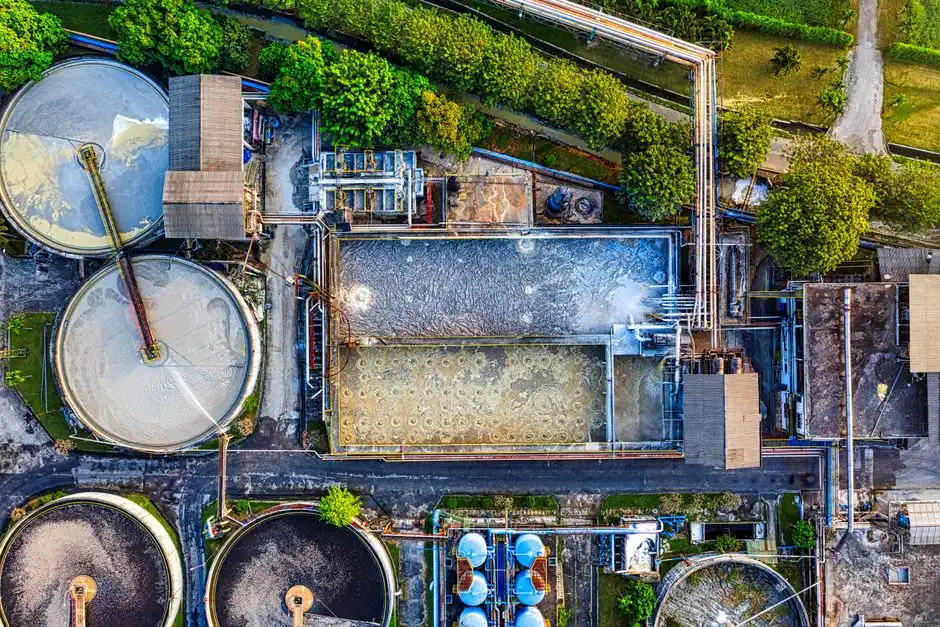
Equalization protects downstream processes from batch discharges when the wastewater record supports it as an operating strategy. It smooths hydraulic and concentration peaks, but dilution does not remove oil, solids or toxic constituents. Tank sizing and mixing therefore need to reflect actual batch volumes, discharge duration and the downstream process’s shock-load tolerance.
Screening protects pumps, valves, nozzles and biological equipment from plastics, fibers and other debris. Mechanical screening should follow the relevant source-control and equalization arrangement rather than compensate for poor segregation upstream. A rotary mechanical bar screen can be evaluated where its capacity, drive arrangement and retained-solids handling match the plant’s flow and debris characteristics.
| Front-end function | Use it when | Design question |
|---|---|---|
| Source segregation | Different production streams cannot be combined safely | Which streams require independent collection, analysis and treatment? |
| Equalization | Batch discharges create hydraulic or concentration peaks | What volume, mixing and control strategy address the documented peaks? |
| Screening | Debris could obstruct pumps, nozzles or downstream equipment | What solids are trapped, where do they go and how are they removed? |
| Oil and solids removal | Measurements show free oil, grease or settleable material | Should clarification or flotation precede the COD-reduction process? |
| pH and chemical control | Analysis identifies a process requirement | Which chemical, dose range and control response are justified? |
Free oil and grease should be removed before biological treatment when present. These fractions can interfere with oxygen transfer, microbial activity and membrane surfaces. Where suspended solids, colloids or oily material are significant, evaluate a clarification or flotation stage based on measured loads rather than COD alone.
pH adjustment and chemical dosing are feed-specific. The wastewater analysis should establish whether neutralization, coagulant, antiscalant or another chemical is required and what the downstream process can tolerate. An automatic chemical dosing system should be justified by the required control response, tank arrangement and measured variability—not included automatically in every package.
Automatic controls and alarms become important where variable industrial flows could overload a selected unit. Include high-flow, high-level and abnormal-quality interlocks, together with a defined response for an upset upstream stream. Front-end protection is part of the process guarantee, not an accessory that sits outside the supplier’s scope.
Compare the Main Options for High-COD Treatment
No single process removes solids, oil, biodegradable organics and dissolved contaminants equally well. The appropriate route follows the wastewater characterization and required endpoint. Biological treatment addresses biodegradable organic load; flotation and clarification remove physical fractions; membrane separation provides solids retention; electrochemical treatment generates coagulants in situ and was evaluated in S1 for a specific mineral-processing stream.
| Technology | Suitable feed condition | Principal limitation | Key acceptance evidence |
|---|---|---|---|
| DAF | Measured suspended solids, colloids, oil and grease justify flotation | Does not destroy COD and depends on pretreatment chemistry and solids loading | Feed characterization, removal results, sludge handling and operating controls |
| Biological treatment | Organic load is demonstrably biodegradable and not persistently inhibitory | Toxicity, unsuitable pH and shock loading can destabilize the process | Biodosability, toxicity response, loading and residual-ssludge data |
| MBR | Biodegradable feed requires biological treatment and membrane solids separation | Remains dependent on suitable feed chemistry and upstream control | Flux, membrane cleaning, biological performance and reject-management provisions |
| Electrocoagulation | Project-specific testing identifies a suitable response to the wastewater chemistry | S1 does not establish universal removal, electrode life or cross-sector suitability | Anode material, current density, initial pH, additives, energy and sludge results |
| Ultrafiltration | Clarification or polishing is required to retain solids | It does not replace a COD-destruction process | Feed fit, flux, fouling response, cleaning and concentrate disposal |
DAF is a front-end option where suspended solids, colloids, oil and grease require removal. Evaluate an industrial DAF system for high-COD pretreatment against measured oil, solids and solids-loading characteristics. A favorable COD removal result does not by itself establish that flotation is the controlling process.
Biological treatment is suitable when the organic load is biodegradable and the stream will not inhibit the microbial population. Resolve toxicity and pH problems before relying on biological performance. An MBR system for industrial wastewater treatment combines biological treatment with membrane solids separation where the endpoint requires both, but it still needs suitable feed characteristics and upstream protection. For the underlying comparison, see MBR versus conventional activated sludge for chemical wastewater.
Study S1 investigated electrocoagulation for high-COD mineral-processing wastewater and evaluated its effect on water reuse. Its parameter list—anode material, current density, initial pH and additives—shows what a credible electrocoagulation trial must disclose (MDPI AG, 2026, “Electrocoagulation: A Promising Method to Treat and Reuse Mineral Processing Wastewater with High COD”). It does not establish a universal performance rate, electrode life or suitability for all manufacturing sectors.
Ultrafiltration is a clarification and membrane-polishing option. It can retain suspended material, but it does not destroy dissolved COD; a UF system for solids separation must be paired with an appropriate upstream process and evaluated for fouling and concentrate handling.
Build a Treatment Train That Matches the Reuse Objective
A defensible treatment train starts with the wastewater and ends at a defined receiving condition. A typical sequence is screening and equalization, then clarification or flotation for recoverable oil and solids, followed by the selected COD-reduction process. Add clarification and membrane polishing only when the target quality or reuse application requires them.
For solids-bearing streams, evaluate a sedimentation tank where settleable material is present and clarified flow is required by the next process. Where the separated solids require further dewatering, define the residual route during equipment selection. A plate-and-frame filter press should be evaluated from measured residual solids characteristics, including the required dewatering endpoint and cake handling.
Study S2 supports considering non-conventional water sources in Chile’s central zone because it reports about 50% of the country’s irrigated agricultural land in that zone, with a described supply of 100–4000 m³/s and vulnerability from seasonal water availability (Water, “Reuse and Recycling of Livestock and Municipal Wastewater in Chilean Agriculture: A Preliminary Assessment”). That assessment provides context for reuse planning; it does not establish that any industrial effluent is suitable for agriculture. Salinity, salts, metals, surfactants, pathogens and application-specific criteria still require evaluation.
The design must include residual management. Biological treatment produces sludge; flotation produces floated solids; membranes generate concentrate; and electrocoagulation produces electrode-related solids. A RO and UF membrane-element package therefore requires an explicit route for the displaced contaminants rather than only a treatment claim for the permeate.
Align disinfection and reuse testing with the receiving application and the applicable current Chilean requirements. Potable-water quality is not the default for industrial reuse, and industrial reuse is not automatically suitable for agricultural or municipal reuse. Obtain the receiving authority’s current criteria, the proposed reuse endpoint and any contractual specification before fixing the final treatment target.
Validate Performance Before Purchasing a Full-Scale System
Site-specific validation is the main control against an untested treatment proposal. Require a pilot or justified engineering trial when the stream has unusual chemistry, toxicity, variable flow or uncertain biodegradability. A generic package cannot substitute for evidence generated with the actual industrial wastewater.
Define acceptance measurements before selecting a supplier. They should cover the relevant inlet and outlet parameters, the sampling method, operating conditions, duration and how batch discharges are captured. If the proposal claims COD reduction, specify whether total, soluble or unfiltered COD is measured and identify the laboratory method. Do not accept a claim without a defined basis.
| Validation item | Information the buyer should require | Decision enabled |
|---|---|---|
| Wastewater characterization | Representative analytical dataset and sampling plan | Confirms that the proposed process fits the feed |
| Acceptance protocol | Parameters, test methods, sampling frequency and batch conditions | Creates an enforceable performance comparison |
| Control philosophy | Automation, interlocks, alarms and manual operating steps | Determines operability and failure response |
| Consumption and residuals | Energy, chemicals, sludge or concentrate, electrodes and maintenance requirements | Supports life-cycle cost and residual planning |
| Implementation | Duty/standby arrangement, site services, access and local support | Tests deliverability and long-term operability |
Ask each supplier to document control philosophy, duty and standby requirements, chemical consumption, sludge yield, maintenance access and residual handling. For electrocoagulation, use S1’s parameter list—anode material, current density, initial pH and additives—as a minimum disclosure framework, then add energy demand, electrode consumption, solids generation and cleaning requirements from actual trials (MDPI AG, 2026, “Electrocoagulation: A Promising Method to Treat and Reuse Mineral Processing Wastewater with High COD”).
Study S4 uses life-cycle sustainability assessment, social life-cycle assessment, life-cycle costing and multi-criteria decision-making to evaluate wastewater circular-economy options in Chile (Sustainability, “The Biofactory: Quantifying Life Cycle Sustainability Impacts of the Wastewater Circular Economy in Chile”). Use that environmental, social and life-cycle-cost lens to compare project-specific alternatives; it does not supply a generic purchase price or prove that one treatment train is best for every factory.
Where salt accumulation or concentrate disposal is central to the route, require RO design for high-TDS industrial wastewater to address feed chemistry, concentrate volume, pretreatment and recovery assumptions rather than rely on nominal permeate capacity.
Frequently Asked Questions
How much does a high-COD treatment train cost in Santiago?
There is no defensible equipment price without a wastewater-specific quotation. Request separate pricing for equipment, installation, civil works, controls, chemicals, commissioning and local service, then request operating estimates for energy, chemicals, sludge disposal, membrane cleaning or replacement, electrode consumption, maintenance and monitoring. Compare life-cycle cost against the documented waste and endpoint rather than ranking bids by equipment price alone. The effluent treatment plant buyer’s guide provides a useful structure for that comparison.
Which treatment option is most suitable for high-COD industrial effluent?
Choose based on the measured stream and receiving route: use flotation or clarification for measured oil and solids, biological treatment for biodegradable organic load, and membrane separation where the endpoint requires solids retention. Electrocoagulation requires project-specific evidence of electrode material, current density, initial pH, additives, energy use and residual handling. S1’s 424.29 mg/L initial COD applies to wastewater from a Pb/Zn sulfide mineral flotation plant and is not a general sizing value.
How should suppliers be evaluated for sizing, capacity and delivery?
Give suppliers the same representative dataset, sampling record, batch peaks and endpoint, then require a process calculation, single-line diagram, equipment list, controls narrative, utility demand, duty/standby proposal, commissioning plan and residual-management scope. Check whether the proposed capacity reflects peak and batch conditions rather than only average flow. Obtain documented local service capability and clarify scope exclusions, contractual deliverables and acceptance tests before ranking offers.
What compliance risks should be addressed before discharge or reuse?
Make the receiving authority’s current discharge or reuse requirements part of the design basis and identify who must verify them. Include the specified sampling method, constituent limits, treatment guarantees, monitoring, recordkeeping and response to noncompliance; the supplied research does not provide a general Santiago COD limit for this waste type. For reuse, test the intended application rather than assuming one quality standard applies. If the World Bank Santiago case study is cited in a submission, request an accessible copy because the supplied download returned a 403 Forbidden response.