Choose the compliance route before choosing equipment
Manufacturers in Manama generally treat high-COD industrial trade waste with source control and pretreatment, oil and suspended-solids removal, biological COD reduction, and membrane polishing where reuse requires it. A defensible 2026 design is selected around three questions: whether the final discharge enters the municipal sewer, a marine outfall or an on-site reuse system; what contaminants will damage biological and membrane stages; and what evidence supports the proposed performance. The reference train is DAF → MBR → two-pass RO → chlorine dioxide, but the final configuration depends on the applicable permit, sewer acceptance criteria, reuse specification and measured wastewater characteristics rather than on a package configuration alone.
HydropureWater’s 2026 industrial wastewater treatment guide for Manama identifies three distinct routes: EWA sewer-use requirements for discharge to municipal collection; SCE environmental permitting for marine outfall or on-site reuse; and site-specific operating permits. EWA governs the physical sewer connection and reuse-pipeline tie-in, while SCE governs the environmental envelope, including ambient monitoring, marine-outfall impact and discharge permits.
Do not use reconstructed benchmark values as a substitute for current approval. Before accepting a process guarantee, request the legal discharge route, current limit set, reuse endpoint, permit conditions, sewer connection requirements and the party responsible for each approval. The buyer also needs the commissioning sequence from the 2026 wastewater treatment commissioning timeline so that permit evidence, testing and handover are aligned.
| Decision route | Governing interface | Information required before design |
|---|---|---|
| EWA sewer connection | Physical sewer connection and sewer-use requirements | Current sewer acceptance criteria, prohibited discharges, sampling point, sampling frequency and connection approval |
| SCE marine outfall | Environmental permit, ambient monitoring and outfall impact | Current permit limits, marine-outfall conditions, monitoring requirements and operating permit conditions |
| On-site reuse | SCE permitting and reuse-pipeline tie-in | Approved reuse endpoint, water-quality specification, user operating constraints and pipeline tie-in requirements |
Characterize the trade waste before sizing the plant
An average COD result cannot define the capacity or process train of an industrial high-COD wastewater plant. HydropureWater’s 2026 Manama material reports COD from 500 to 5,000 mg/L, oil and grease from 50 to 500 mg/L in BAPCO desalter overflow, and influent temperature from 35 to 45 °C. It also shows why TDS must be characterized stream by stream: hotel greywater is reported at 1,500 mg/L, compared with 35,000 mg/L in refinery brine. That contrast governs membrane pretreatment, scaling exposure and the case for RO polishing.
Request COD and BOD, oil and grease, TSS, TDS, pH, temperature, conductivity, toxicity and relevant industrial contaminants from the actual production stream. DESOTEC states that COD is often preferred for rapid operational decisions because COD measurement uses a chemical oxidation method, while BOD assessment relies on microorganisms and is slower. That makes COD useful for operating control, but it does not remove the need for BOD where biological treatability or permit compliance must be demonstrated.
The sampling plan should cover average flow, intermittent discharges, peak flow, batch dumps, cooling blowdown, cleaning chemicals and production-cycle changes. Samples taken only during a stable shift can conceal the slug loading that destabilizes equalization, DAF or biological treatment.
SSI Aeration, in its 2025-08 article on COD reduction, identifies real-time COD monitoring as an operational control for detecting deviations and adjusting treatment early. It is not a substitute for laboratory characterization: sensors do not independently establish oil, toxicity, dissolved salts or the composition of a batch dump. Any automatic chemical dosing system should therefore operate from the approved mass balance and a sampling plan that includes production-cycle changes. The PAC and PAM dosing optimization guide is useful for defining the operating checks, but the required chemical dose must be established on site wastewater.
| Parameter | Scope reported by HydropureWater, 2026 | Why it affects selection |
|---|---|---|
| COD | 500–5,000 mg/L across the Manama industrial examples | Determines biological loading and whether pretreatment or oxidation is needed |
| Oil and grease | 50–500 mg/L in BAPCO desalter overflow | Sets the DAF pretreatment duty and membrane-protection requirement |
| TDS | 1,500 mg/L in hotel greywater; 35,000 mg/L in refinery brine | Controls RO need, scaling risk and pretreatment |
| Temperature | 35–45 °C | Affects biological oxygen transfer and process selection |
Build a pretreatment train that protects biological and membrane equipment
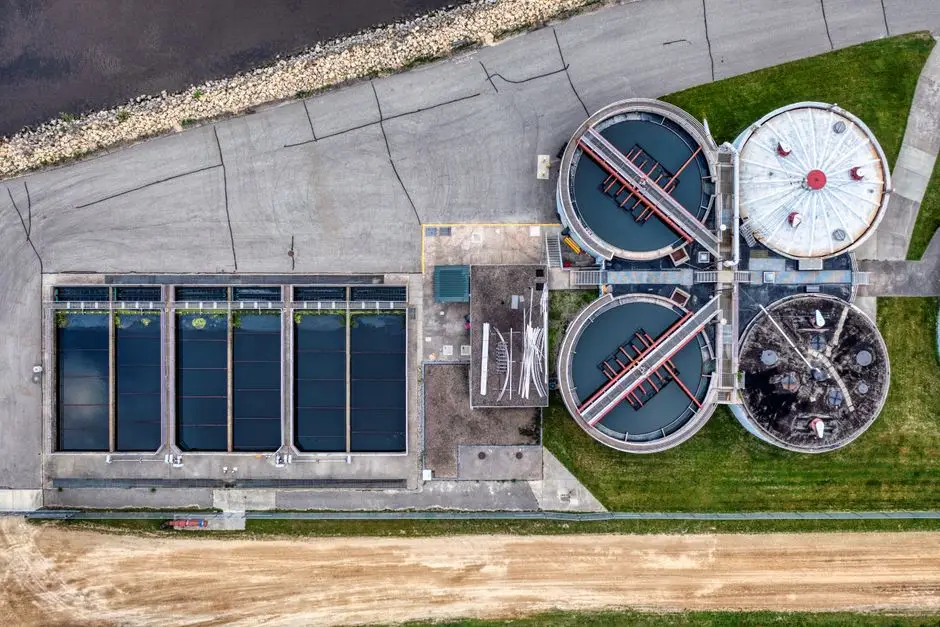
A resilient trade-effluent pretreatment train follows a conditional sequence: screening → equalization → DAF and chemical pretreatment → biological treatment → polishing → disinfection → sludge handling. Each stage must have a defined contaminant-removal duty. Screening protects pumps, valves and biological equipment; equalization moderates batch and production-cycle peaks; DAF removes recoverable oil and solids; coagulation creates removable flocs; and activated carbon can address selected dissolved pollutants or polish the final stream.
HydropureWater’s 2026 DAF reference case reduces 50–500 mg/L oil and grease to below 10 mg/L after 15–20 minutes of hydraulic residence, using saturator water at 4–6 bar with a 20–40% recycle ratio. These are design benchmarks from its 2026 Manama material, not site guarantees. The DAF pretreatment system should be selected against measured oil, solids, flow variability and the required downstream effluent condition.
Upstream oil removal is a membrane-protection requirement, not an optional polishing feature. Heavy metals and hydrocarbons should not enter biological treatment untreated because they can impair biomass activity and bind contaminants to the process. The GX rotary mechanical bar screen provides the headworks barrier against solids, rags, plastics and fibrous debris that could obstruct subsequent equipment.
Coagulation and flocculation can reduce suspended solids and COD, according to SSI Aeration in 2025-08, but successful operation requires controlled dosing and proper sludge disposal. An automatic chemical dosing system should therefore be specified with the DAF and biological mass balance rather than selected independently.
DESOTEC identifies activated carbon as a standalone treatment, pretreatment or polishing option. Before full-scale deployment, it recommends laboratory-scale isotherm testing on the actual wastewater to determine adsorption performance and the required carbon loading.
Chemical oxidation can reduce COD rapidly at high pollutant loads, but SSI Aeration identifies its higher cost and potential hazardous by-products, which require additional treatment. It should therefore be evaluated as a targeted response to a defined non-biodegradable or rapidly oxidizable load, not automatically added to the base train.
Compare biological options for high-COD effluent
Activated sludge and MBR can both reduce COD, but they trade initial capital and footprint against membrane operating complexity. HydropureWater’s 2026 comparison states that its integrated MBR reduces COD from 5,000 mg/L to below 50 mg/L and occupies approximately 60% less footprint than conventional activated sludge. The cited conventional activated-sludge case is COD 1,500 → below 50 mg/L, with lower initial capital cost, a larger footprint and sensitivity to oil upsets.
The same 2026 source gives the MBR reference envelope as 10–2,000 m³/day, 0.1 μm PVDF flat-sheet membranes, MLSS of 8,000–12,000 mg/L, SRT of 30–60 days and effluent suspended solids below 1 mg/L. These values describe the reference configuration; the selected capacity must reflect the site’s measured hydraulic and organic loading.
| Criterion | Conventional activated sludge | Integrated MBR |
|---|---|---|
| COD reference performance | 1,500 to below 50 mg/L in HydropureWater’s 2026 cited case | 5,000 to below 50 mg/L in HydropureWater’s 2026 cited case |
| Footprint | Larger footprint | Approximately 60% smaller in the cited comparison |
| Initial cost | Lower | Higher because of membrane equipment |
| Oil sensitivity | Vulnerable to oil upsets above 50 mg/L in the cited case | More resilient when preceded by DAF |
| Operating issues | Space, maintenance and process-control demand | Membrane aeration, cleaning and eventual replacement |
| Reference range | Not stated in the supplied comparison | 10–2,000 m³/day |
SSI Aeration describes activated sludge as a biological process in which microorganisms decompose organic matter during aeration. It is comparatively affordable but requires significant space, maintenance and condition control. By contrast, HydropureWater’s 2026 MBR operating benchmark gives membrane aeration of 0.3–0.6 kWh/m³ and a PVDF replacement cycle of 5–8 years.
For oily trade waste, the reference arrangement is DAF before the biological stage. CAS remains vulnerable to oil upsets above 50 mg/L in the cited comparison, so it should not be accepted as equivalent to DAF-pretreated MBR without wastewater-specific evidence. The MBR versus conventional activated sludge comparison provides a useful framework, but the process selection must still be based on Manama wastewater and discharge conditions.
An integrated MBR membrane bioreactor is relevant where the design range and wastewater characteristics align with the cited 10–2,000 m³/day application envelope. The DF membrane bioreactor module should be evaluated as part of the biological process design, not as a substitute for equalization, DAF or adequate upstream pretreatment.
Add RO and disinfection only for the required reuse quality
RO is justified when dissolved salts and other contaminants must be removed for a defined reuse endpoint. HydropureWater’s 2026 reference design uses two-pass RO at 95% recovery to produce TDS below 500 mg/L and residual COD below 10 mg/L. These are design benchmarks from that article, not universal Manama discharge limits.
Ultrafiltration, RO and disinfection perform different functions. UF removes bacteria, colloids and suspended solids without chemicals and is used to condition water before RO. RO removes dissolved salts. Disinfection controls microbial risk. The ultrafiltration water treatment system should therefore be justified by RO pretreatment and solids requirements, while an industrial RO polishing system should be selected against the required TDS, recovery and scaling envelope.
The supplied 2026 chlorine-dioxide reference is 0.5–2 mg/L residual for a 1–2 km reuse pipeline. A chlorine dioxide generator provides a measurable residual through the distribution network and is presented for industrial cooling, process-water and wastewater-disinfection applications. UV is an alternative for microbial control without chemical addition, but it leaves no continuing disinfectant residual in the distribution network.
| Reuse endpoint | Treatment implication | Decision input |
|---|---|---|
| Industrial cooling make-up | Evaluate biological treatment followed by RO and residual disinfection | TDS, scaling potential, cooling-water chemistry and pipeline length |
| Process-water reuse | Match membrane and disinfection to the process specification | Contaminant limits, process temperature and reuse rate |
| Irrigation reuse | Confirm the approved quality specification and microbial controls | Permit conditions, reuse endpoint and distribution arrangement |
The reuse endpoint must be fixed before membrane selection. For cooling make-up, process reuse and irrigation, the required quality differs, and adding RO without a defined endpoint increases capital, energy, membrane replacement and disposal obligations without establishing whether the polished water has a use.
Price the system by operating risk as well as purchase cost
A purchase-price comparison is incomplete unless it includes the operating risks associated with the selected wastewater and reuse targets. HydropureWater’s 2026 benchmark for a 300 m³/day DAF + MBR + chlorine-dioxide plant is $450–$900 per m³/day, or $135,000–$270,000 turnkey before civil works. The cited annual operating cost is approximately $55,000–$130,000 for a 300 m³/day MBR-based plant, with actual cost dependent on loading, reuse targets and operating assumptions.
For a full reuse train, the same 2026 source attributes approximately 25–35% of CAPEX to membrane and RO elements and 10–15% to stainless-steel skid fabrication. For OPEX, energy is cited at 45–60%, membrane replacement at 10–20% and chemicals at 10–15%. These are benchmark allocations, not a substitute for a measured flow-and-load model.
| Cost element | HydropureWater benchmark, 2026 | Buyer check |
|---|---|---|
| 300 m³/day DAF + MBR + chlorine-dioxide CAPEX | $135,000–$270,000 before civil works | Confirm process scope, civil works, utilities, installation, taxes and freight |
| Annual OPEX for the cited 300 m³/day MBR-based plant | Approximately $55,000–$130,000 | Reprice using measured loading, energy tariff, chemicals, sludge and staffing |
| Membrane and RO elements | Approximately 25–35% of full reuse-train CAPEX | Obtain replacement schedule and delivered-price basis |
| Stainless-steel skid fabrication | 10–15% of CAPEX | Confirm ASTM A240 scope and wetted-part certificates |
| Energy | 45–60% of OPEX | Model aeration, RO high-pressure pumping and DAF compression |
| Membrane replacement | 10–20% of OPEX | Test the supplier’s replacement assumptions against actual water quality |
| Chemicals | 10–15% of OPEX | Use site trials to establish dose and consumption |
Sludge disposal belongs in the economic comparison. HydropureWater’s 2026 reference uses a plate-and-frame press at 6–8 bar to obtain cake dryness above 30%; the plate-and-frame filter press should be matched to the sludge volume and disposal route rather than treated as a minor accessory.
Schedule assumptions also affect cost. HydropureWater’s export logistics, dated 2025-12, estimated skid freight to Khalifa Bin Salman Port at 6–10 weeks and Asian membrane freight at 6–8 weeks by sea. Critical-spares commitments should therefore be contractual rather than implied. The industrial RO engineering and operating-data review can inform that comparison, but the procurement model should use the buyer’s measured flow, wastewater characteristics and reuse targets.
Pilot the process and prequalify the supplier before ordering
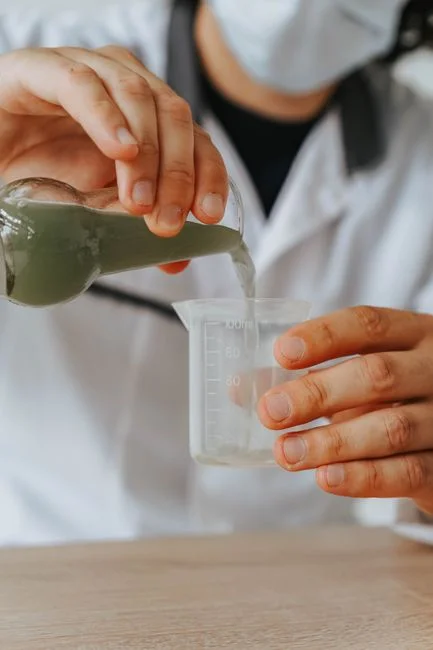
Wastewater-specific treatability evidence is more reliable than a generic equipment guarantee. DESOTEC recommends laboratory-scale activated-carbon isotherm testing before pilot or full-scale deployment and states that the need for a broader pilot depends on the wastewater, available data, treatment objective and required confidence. For a complex high-COD stream, require bench or pilot testing on actual site influent.
Comparable influent-to-effluent data should be mandatory, particularly for projects with similar COD, TDS and oil-and-grease loading. Ask the supplier to state the test wastewater characteristics, analytical methods, operating conditions and mass balance; a chemical-consumption figure without those inputs is not evidence that the process will meet the permit.
HydropureWater’s 2026 Manama prequalification checklist specifies documented CE and ASTM compliance, including material certificates for wetted parts. It also calls for bilingual Arabic and English operating manuals, commissioning protocols and permit-support documentation. Gulf references should be checked for comparable wastewater rather than count alone.
Commercial checks should cover containerized 40-ft ISO delivery planning, a 24-month performance warranty, critical-spares commitments and a defined service-engineer callout window. Refusal to provide a wastewater-specific pilot or a mass balance is a technical red flag. A PLC-control engineering guide can support control design, but the controls must be tied to the final mass balance so flow, chemical dosing, aeration and membrane operation are commissioned as one system.
| Procurement gate | Evidence required | Disposition if absent |
|---|---|---|
| Wastewater treatability | Site-wastewater bench or pilot results with analytical inputs | Do not convert pilot claims into a full-scale performance guarantee |
| Process design | Complete mass balance covering equalization, pretreatment, biology, polishing, disinfection and sludge | Reject the proposal as an incomplete package |
| Materials and standards | CE and ASTM documentation plus wetted-part material certificates | Hold technical approval |
| Documentation | Arabic/English manuals, commissioning protocol and permit-support records | Hold handover acceptance |
| Commercial support | Comparable Gulf references, warranty, spares commitment and service-response window | Escalate as a commercial risk |
| Delivery | 40-ft ISO delivery plan, freight basis and inland transport schedule | Do not include an unqualified delivery date in the award |
Frequently Asked Questions
What should a 300 m³/day Manama high-COD treatment system cost?
HydropureWater’s 2026 benchmark is $135,000–$270,000 for a 300 m³/day DAF + MBR + chlorine-dioxide plant, excluding civil works. A firm quotation must state the wastewater characterization, civil scope, utilities, RO and reuse requirements, site conditions, freight and installation basis. Compare bids using the same scope rather than treating the benchmark as a universal price.
How should a manufacturer size an industrial high-COD treatment plant?
Size from measured average and peak flow, batch and intermittent loads, COD, oil and grease, toxicity, TDS, temperature and required effluent quality, not average daily flow alone. The sampling plan should cover production-cycle changes and cleaning discharges because these can determine equalization, DAF and biological capacity.
When does a project need RO rather than biological treatment alone?
RO is generally used for dissolved-solids removal and reuse polishing, while MBR or activated sludge performs the core biological COD reduction. The final choice depends on the discharge permit and reuse endpoint: sewer or marine-outfall objectives may not justify the same polishing train as cooling make-up or process reuse.
Which supplier qualifications should a buyer require before ordering?
Require wastewater-specific pilot data, comparable references, a completed mass balance, CE and ASTM documentation, Arabic/English operating and commissioning documents, warranty terms, critical-spares commitments and delivery planning. Confirm that suppliers have addressed the actual COD, TDS and oil-and-grease loading rather than offering a chemical-only package without process evidence. Verify all figures against current SCE, EWA and site-specific permit requirements.