What Changes When Semiconductor Wastewater Meets Biological Treatment
For semiconductor wastewater, MBR is usually the stronger option when the plant needs compact biological treatment, low suspended-solids effluent, reliable reuse potential and frequent process changes, while conventional activated sludge is generally simpler to operate and less capital-intensive at the biological stage. Neither system treats all foundry or passive-components contaminants by itself: membranes remove solids and retain biomass but do not remove dissolved wastewater components without additional treatment. The correct choice therefore depends on stream composition, toxicity, flow variability, reuse targets, equalization, pretreatment and lifecycle fouling risk.
The comparison begins only after separating foundry, passive-components, cooling, sanitary and stormwater streams and deciding whether the objective is controlled discharge or reuse. The EPA describes MBR as a suspended-growth biological reactor combined with filtration-based solids removal; it can replace the secondary clarifier and sand filters in a typical activated-sludge system (EPA, Membrane Bioreactors Fact Sheet, 2021).
That definition sets the technical boundary. Membranes retain microorganisms and solids, but the EPA states that removal of dissolved wastewater components requires additional treatment steps. A biological membrane does not, by itself, establish compliance for fluoride, metals, acidity or dissolved organics.
A defensible process sequence is:
- Segregate and characterize each source stream.
- Apply equalization, pH control and toxicant mitigation where necessary.
- Complete biological treatment of biodegradable organics.
- Separate biomass and suspended solids.
- Remove residual dissolved contaminants with contaminant-specific treatment.
- Disinfect and assess the finished water against the intended reuse or discharge specification.
Before comparing equipment, obtain source-by-source data on pH, toxicity indicators, metals, fluoride, hardness, COD and operationally relevant toxicity variation. The semiconductor etching wastewater treatment process guide provides the broader treatment context, but site data—not generic semiconductor limits—must set the design basis.
How MBR and Conventional Activated Sludge Perform Differently
MBR combines biological solids retention with membrane filtration, whereas conventional activated sludge separates biomass by settling before downstream filtration or polishing. Both depend on active microorganisms to remove biodegradable organics; the main difference is where solids separation occurs and the controls needed to maintain it.
The EPA identifies better effluent quality, smaller space requirements and ease of automation as advantages of MBR over conventional biological systems. MBRs can operate at higher volumetric loading rates with lower hydraulic retention times, and higher biomass concentrations allow smaller bioreactors. Their effluent contains low concentrations of bacteria, TSS and BOD, facilitating high-level disinfection and making MBR relevant to reuse applications (EPA, Membrane Bioreactors Fact Sheet, 2021).
| Comparison point | Membrane bioreactor | Conventional activated sludge |
|---|---|---|
| Biomass separation | Retained by membrane filtration | Separated in a secondary clarifier |
| General effluent characteristics | Low bacteria, TSS and BOD, supporting disinfection and reuse consideration | Effluent quality depends on settling, filtration and downstream polishing |
| Space | Can be designed and operated in smaller spaces than a conventional installation with clarifiers and sand filters | Requires the activated-sludge process, secondary clarifier and associated filtration area |
| Loading and retention | Can operate at higher volumetric loading rates and lower hydraulic retention times | Hydraulic retention and biomass inventory depend on the conventional process configuration |
| Operating controls | Adds membrane flux, transmembrane pressure or vacuum, aeration scour, cleaning and replacement | Requires aeration control, mixed-liquor management and reliable secondary settling |
| Primary risks | Fouling, scaling, abnormal loading, cleaning downtime and membrane-life risk | Poor settling, sludge carryover and insufficient footprint or hydraulic capacity |
Those are general MBR findings, not foundry-specific proof of compliance. A foundry must still match polishing to fluoride, metals, acidity and dissolved organics in its actual wastewater matrix. Operational complexity also shifts: CAS depends on settling and sludge wasting, while MBR adds membrane-pressure or vacuum management, air scour, flux monitoring, cleaning and eventual module replacement.
The Decision Factors That Change the Economics
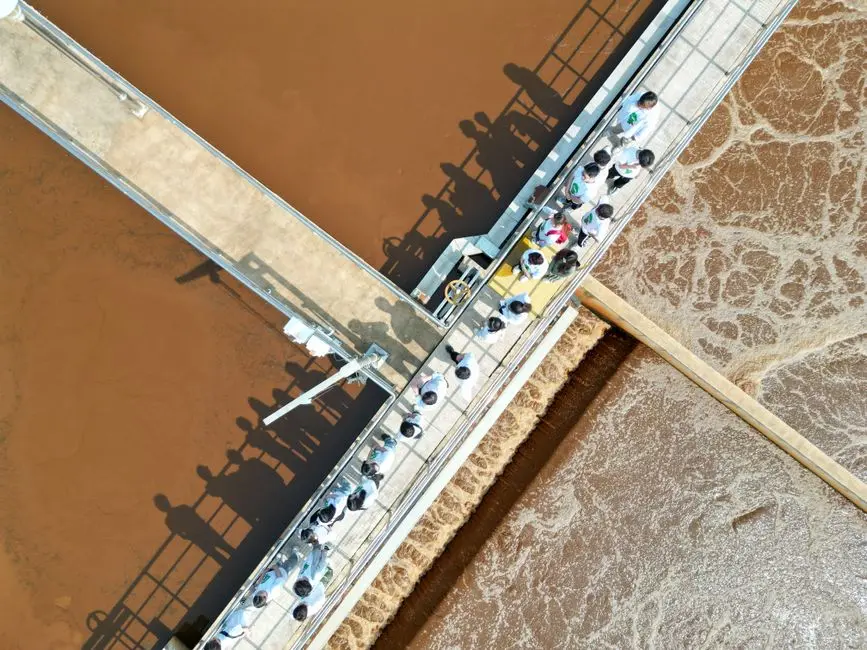
MBR’s lifecycle economics depend on membrane condition and plant integration, not the bioreactor purchase price. The EPA states that MBR systems typically have higher capital and operating costs than conventional systems for the same throughput (EPA, Membrane Bioreactors Fact Sheet, 2021). That comparison remains general and must be recalculated from the foundry’s own flow, wastewater and reuse assumptions.
The operating-cost drivers identified by the EPA include membrane cleaning, fouling control, eventual membrane replacement and air-scour energy. MBR waste sludge may also have a low settling rate, potentially requiring chemicals to produce biosolids acceptable for disposal; however, the EPA notes that waste sludge from MBRs can be processed using standard activated-sludge solids-handling technologies.
Footprint must be treated consistently. The EPA says MBRs can be designed and operated in smaller spaces than conventional systems with clarifiers and sand filters. Separately, the HydropureWater verified product catalog states that its integrated MBR has a 60% smaller footprint than conventional systems. Neither statement supports applying one footprint saving to every foundry layout because tankage, equalization, pretreatment, polishing, access and site constraints differ.
| Lifecycle input | Information required from the bidder | Why it changes the choice |
|---|---|---|
| Membrane capacity | Membrane area, design and operating flux, cleaning allowance and projected effect of the wastewater matrix | Determines whether adequate solids separation can be maintained without excessive fouling |
| Energy | Air-scour demand, blower load and operating profile | MBR adds membrane-related aeration requirements |
| Cleaning | Chemical type, frequency, duration, recovery and associated downtime | Frequent or prolonged cleaning reduces effective capacity |
| Membrane replacement | Service-life basis, replacement terms and unit cost | Shortened membrane life significantly increases cost |
| Sludge | Expected settling characteristics, thickening, dewatering and disposal route | MBR sludge may still use standard solids-handling technologies, but its treatment train must reflect the actual solids |
| Peak flow | Equalization assumptions, membrane allocation and treatment availability during cleaning | Controls whether added membranes or equalization are needed |
For comparable proposals, request a whole-plant operating-cost model rather than a unit-price comparison. Include membrane replacement, air demand, cleaning chemicals, labor, downtime, sludge treatment and downstream polishing. The 2026 MBR cost-per-m³ guide provides a useful basis for structuring that comparison, while the related plate-and-frame filter press option should be evaluated as part of the resolved sludge-handling train.
Match the Treatment Train to Foundry and Passive-Component Wastewater
The biological train must match the source stream rather than treat the plant as one homogeneous wastewater body. Foundry, passive-components, cooling, sanitary and storm flows can have different contaminants, biological compatibility, flow patterns and reuse priorities. Combining them before characterization can hide toxicity excursions and unnecessarily load both the biology and membranes.
Fine screening is a defined membrane-protection requirement. The EPA states that all MBR systems require fine screens with a 1- to 3-mm cutoff immediately before the membranes; hollow-fiber systems typically require 1- to 2-mm screening, while plate systems require 2- to 3-mm screening (EPA, Membrane Bioreactors Fact Sheet, 2021). A supplier should therefore specify its screen basis and debris-control strategy, including the rotary mechanical bar screen solution if it fits the plant’s segregation and screening arrangement.
Equalization protects biology and membranes from flow or composition variation. EPA guidance states that peak design flows should be no more than 1.5 to 2 times average design flow; if peak flows exceed that range, additional membranes or equalization are required (EPA, Membrane Bioreactors Fact Sheet, 2021). The buyer must establish verified average and peak flows rather than infer them from catalog capacity.
Place MBR after the biological reactor and before any dedicated dissolved-contaminant removal. For CAS, retain the biological reactor followed by a clarifier and then filtration or polishing as required. Select downstream processes by contaminant: industrial RO can support semiconductor water applications, but its design must follow MBR effluent chemistry and the reuse specification.
Where low suspended solids, colloids and bacteria must be removed before RO, the catalog states that the UF pretreatment for RO and reuse polishing is applicable. The industrial RO system should then be evaluated against the complete effluent analysis rather than MBR performance alone.
Choose MBR, Conventional Activated Sludge or a Hybrid
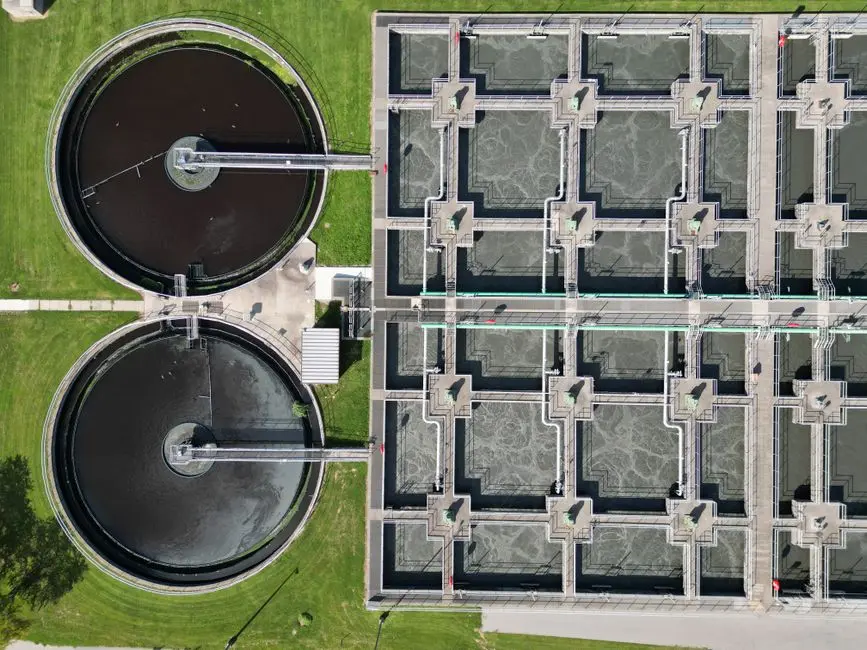
The preferred platform follows the plant’s binding constraints: footprint, solids-separation quality, reuse objective, wastewater toxicity, operating capability and lifecycle cost. Neither process should be selected from effluent-quality claims without a verified feed matrix.
| Plant condition | Preferred approach | Reason and qualification |
|---|---|---|
| Compact biological treatment, low TSS and bacteria, reuse potential, automation and high biomass concentration are priorities | MBR | It provides membrane solids separation in a smaller process footprint, but only if the operator can control fouling and maintenance. |
| Capital simplicity, simpler operation and available footprint dominate | Conventional activated sludge | Appropriate where wastewater is biologically compatible and actual mixed liquor demonstrates acceptable settling. |
| Conventional biology must remain, but tighter solids separation or reuse quality is required | CAS with membrane polishing | Separates biological treatment from membrane solids separation; the membrane is sized for the clarified-water duty. |
| Flow or reuse requirements are likely to change | Staged hybrid | Can defer membrane investment while preserving a route to tighter solids separation or reuse-oriented treatment. |
Any performance basis should include seasonal and diurnal variation, toxicity excursions, target solids concentration, reuse criteria and required availability. MBR reuse potential is not a guarantee: the EPA describes MBR effluent as suitable for reuse applications generally and notes its low TSS, bacteria and BOD, but a foundry still requires site-specific polishing, disinfection and process-compatibility verification (EPA, Membrane Bioreactors Fact Sheet, 2021).
The engineering comparison of MBR and conventional activated sludge provides a useful decision structure, but the evidence must be reapplied to foundry and passive-components wastewater rather than transferred from another industry.
Sizing and Supplier Selection Checklist for 2026 Projects
A comparable bid should begin with a verified design basis: average and peak hydraulic flow, equalization assumptions, feed temperature, pH range, toxicity basis and the wastewater matrix used for biological and membrane sizing. Generic catalog capacity is not a substitute for site data.
Require the bidder to identify design flux, operating flux, cleaning allowance and the effect of expected wastewater chemistry in its membrane-area calculation. Also require details on debris protection and abnormal loading. The EPA identifies one additional membrane tank or unit beyond the nominally required count as an important “N plus 1” redundancy approach for full-treatment MBR installations, while noting that unit count must reflect operations and maintenance requirements (EPA, Membrane Bioreactors Fact Sheet, 2021).
The maintenance proposal should cover screening, membrane cleaning, air scour, spare modules, cleaning chemicals and downtime. The EPA warns that curtailed membrane life and frequent replacement significantly increase cost. Commercial guarantees should address spare-parts availability, membrane replacement pricing, representative-wastewater commissioning tests and operator training.
For a HydropureWater inquiry, identify the integrated submerged-PVDF MBR system or DF flat-sheet MBR membrane modules, then provide actual flow and wastewater matrix. The catalog lists 10–2,000 m³/day for the integrated system and 32–135 m³/day output for the DF module, but those ranges do not replace project-specific sizing (HydropureWater verified product catalog, current as of 2026).
Frequently Asked Questions
Is MBR always cheaper than conventional activated sludge for semiconductor wastewater?
No. EPA evidence states that MBR capital and operating costs are typically higher than conventional systems for the same throughput (EPA, Membrane Bioreactors Fact Sheet, 2021). Request an itemized lifecycle comparison covering membranes, cleaning, air scour, energy, sludge and polishing.
How should an MBR system be sized for a foundry or passive-components plant?
Size it from verified average and peak flow, wastewater characterization, equalization, membrane-flux basis and redundancy. EPA guidance states that peak design flows should not exceed 1.5 to 2 times average design flow without additional membranes or equalization (EPA, Membrane Bioreactors Fact Sheet, 2021).
What should a buyer request from an MBR supplier?
Request the design basis, a flux guarantee tied to representative wastewater, membrane-life and replacement terms, a cleaning plan, spare-module strategy, representative-feed acceptance tests and operator training. These checks reduce uncertainty about fouling, downtime and replacement exposure.
Does MBR alone make semiconductor wastewater suitable for reuse?
No. The EPA supports MBR’s low TSS and bacteria and its general reuse applicability, but dissolved contaminants require additional treatment. The final use must be checked against site-specific polishing and process-compatibility requirements (EPA, Membrane Bioreactors Fact Sheet, 2021).
When is conventional activated sludge the better choice?
CAS is often more practical when footprint flexibility, simpler operation and lower technology-specific cost outweigh tighter solids separation or compact reuse-oriented biological treatment. That choice remains conditional on biological compatibility and demonstrated settling performance with the actual mixed liquor.