What treatment does a Bucaramanga data center actually need?
A Bucaramanga data center needs a site-specific cooling-blowdown treatment train based on source-water quality, circulation flow, cycles of concentration, chemical program and concentrate-disposal route. The likely design is side-stream filtration followed by ultrafiltration and reverse osmosis when blowdown must return to the cooling loop; nanofiltration may suffice when hardness is the principal constraint. Location alone cannot establish equipment size, water quality or discharge compliance, so source analysis, measured flows and a confirmed permit path must precede procurement.
Cooling-tower blowdown and other industrial wastewater are separate design streams. Blowdown contains concentrated cooling chemicals, scaling species, suspended solids and biological material; other wastewater may include washing, sanitation or process discharges with different quality requirements. They should not be combined until hydraulic flow and contaminant compatibility are demonstrated.
For cooling blowdown, the preliminary train is source characterization, side-stream filtration, membrane pretreatment, RO or NF as appropriate, chemical control or disinfection where required, and a defined concentrate route. The University of Georgia Cooperative Extension reports that an estimated 75%–90% of data centers globally primarily use water-based cooling, but that does not establish the cooling configuration of a particular Bucaramanga facility (UGA Extension, 2026).
An inland Andean design must begin with samples from the actual municipal supply, well or alternative source. The higher TDS and chloride profile discussed for Colombia’s Caribbean coast cannot be imported into Bucaramanga without local data. This source-specific approach follows the data center wastewater treatment framework, while treatment-selection lessons can also be compared with the Saitama cooling-blowdown treatment guide.
Build the water balance before choosing equipment
Equipment capacity should follow a measured site water balance rather than a generic flow assumption. Request makeup flow, circulation flow, evaporation, drift, measured blowdown, operating cycles of concentration and every emergency or unmeasured discharge. Genesis Water Technologies warns that actual blowdown can exceed theoretical calculations by 15%–30% because of unmeasured losses and emergency dumps (Genesis Water Technologies, 2026).
At four cycles of concentration, the theoretical blowdown is approximately 25% of makeup-water volume, calculated from the 1/(cycles of concentration − 1) relationship cited by Genesis Water Technologies (2026). That is a relationship, not a measured Bucaramanga result: cooling concentration, carryover, leakage and operating practices must be verified.
Evaporation removes water from the local watershed. Water returned through a cooling loop or reused in another process remains part of water usage rather than consumption. Keeping those categories separate prevents an apparent reduction in withdrawals from being confused with a reduction in basin depletion.
| Balance item | Status | Value or input | Design use |
|---|---|---|---|
| Makeup water | Measured | Site meter reading | Source-water demand and treatment basis |
| Circulation flow | Measured | Operating flow by cooling system | Side-stream filtration basis |
| Evaporation and drift | Calculated from measured data | Cooling-system duty and operating records | Consumption calculation |
| Theoretical blowdown | Calculated | Makeup and cycles of concentration | Initial recovery-plant screen |
| Actual blowdown | Measured | Total withdrawal, including emergency discharges | Final treatment-plant flow |
| Recovery flow | Calculated from selected recovery | Actual blowdown multiplied by recovery | RO or NF feed capacity |
| Permeate blending | Calculated | Permeate quality, cooling chemistry and endpoint specification | Return-to-loop flow |
| Reject flow | Calculated | Feed minus permeate, adjusted for losses | Concentrate-management capacity |
| Contingency | Assumed | Requires engineering justification | Redundancy and operating variation |
The worksheet should also capture operating-mode changes, because a data center may have simultaneous make-up modules with different loads. The treatment concept should identify the base case, maximum simultaneous blowdown and minimum-flow conditions before controls and membrane vessels are sized. Instrumentation and logging requirements can then be coordinated through the wastewater treatment automation upgrades guide.
Characterize the water before selecting the process
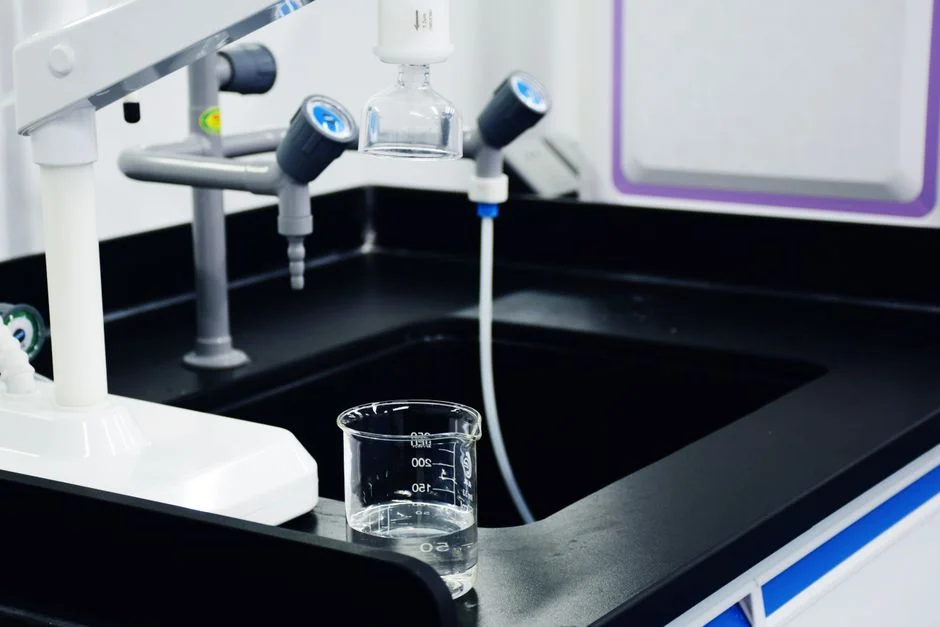
The controlling design input is a representative chemistry profile, not a supplier assumption about “Bucaramanga water.” Sampling should cover source water, circulating cooling water and actual blowdown under normal and high-concentration operation. The analysis should include TDS, hardness, alkalinity, silica, chloride, sulfate, TSS, turbidity, pH, conductivity and biological loading.
Genesis Water Technologies, as summarized by HydropureWater’s Barranquilla treatment research, gives reference blowdown TDS of 1,200–6,000 mg/L and suspended solids of 10–50 mg/L. It also reports cooling-tower makeup normally specified at 500–1,500 mg/L TDS and 10–25 mg/L suspended solids (HydropureWater, 2026). These are comparison envelopes from a coastal reference, not expected Bucaramanga values.
| Parameter | Reason for measurement | Process affected |
|---|---|---|
| Calcium and magnesium | Identify hardness and scaling potential | Antiscalant, NF or RO |
| Alkalinity and pH | Establish carbonate scaling tendency and chemical stability | Pretreatment and recovery chemistry |
| Silica | Assess membrane scaling risk | RO recovery and concentrate treatment |
| Chloride and sulfate | Characterize dissolved-salts and corrosion loading | Materials, RO or NF selection |
| TSS and turbidity | Quantify particulate and biofilm loading | Side-stream filtration and UF |
| Biocides, inhibitors and dispersants | Test membrane and reuse compatibility | Chemistry change and treatment train |
| Organic and biological loading | Evaluate biological contamination | UF, disinfection and operations |
Legacy chromate or high-phosphate programs require particular attention because those chemistries are difficult to reuse or discharge, according to Genesis Water Technologies in the HydropureWater research (2026). A phased chemical changeover should precede or accompany membrane commissioning; fitting UF and RO beneath an unchanged legacy program transfers the incompatibility into membrane cleaning, reject quality and compliance risk.
Do not specify a chemical dosing system from flow data alone. Feed chemistry, recovery target and membrane materials must be known before dosing, instrumentation and control logic are fixed. The automatic chemical dosing system is therefore a downstream decision linked to the water analysis and selected treatment process.
Choose the treatment train that matches the reuse objective
The reuse endpoint determines the required separation performance. Washing, toilet flushing or irrigation does not necessarily require RO-quality water, while direct cooling-loop makeup generally requires controlled dissolved solids, hardness, silica and microbiological quality. The project should evaluate one base case and one lower-capital alternative against those exact endpoints.
Side-stream filtration is the first stage. The HydropureWater research, citing Genesis Water Technologies, specifies self-cleaning spiral filtration at 10–25 microns, installed at 1%–5% of total circulation flow, with $50,000–$200,000 capital for a typical data-center installation (HydropureWater, 2026). These values are planning envelopes, not a Bucaramanga quotation.
UF is pretreatment for the dissolved-solids membrane, not a replacement for it. The same research specifies 0.01–0.1 micron pores, 10–30 psi operating pressure, 90%–95% recovery and chemical cleaning every 1–3 months depending on feed quality. A hollow-fiber ultrafiltration pretreatment stage removes the remaining particulate and biological load before RO or NF.
| Option | Reference performance | Appropriate use | Main limitation |
|---|---|---|---|
| Side-stream filtration | 10–25 microns; 1%–5% of circulation flow | Remove bulk solids from cooling-loop side stream | Does not remove dissolved salts |
| UF pretreatment | 0.01–0.1 microns; 10–30 psi; 90%–95% recovery | Protect downstream membranes | Requires feed characterization and disciplined operation |
| NF | 75–150 psi; 70%–85% recovery; permeate TDS at 30%–50% of feed | Reduce hardness and sulfate where salinity control is not required | Does not provide RO-equivalent desalination |
| RO | 95%–99% dissolved-solids removal; 10–50 mg/L permeate TDS; 50%–85% recovery; 150–400 psi | Direct cooling-makeup reuse or blending | Higher pressure and concentrate management |
| Lower-grade reuse | Physical separation followed by targeted treatment can reduce makeup demand by 15%–25% for non-critical uses | Washing, toilet flushing or irrigation | Requires a separate demand, quality and pathogen assessment |
The RO figures are also from HydropureWater’s 2026 reference research, based on Genesis Water Technologies. An industrial reverse osmosis recovery system is appropriate when dissolved solids, hardness and silica must be reduced for direct makeup reuse. NF is the lower-capital alternative when hardness is the limiting species, but its weaker desalination means it should not be substituted automatically for RO.
Selection must account for the cooling program. If industrial water softening is used upstream, evaluate whether it removes hardness, exchanges ions into another dissolved species or introduces another chemical stream; softening alone does not produce RO-equivalent permeate.
Plan for concentrate before buying the recovery plant
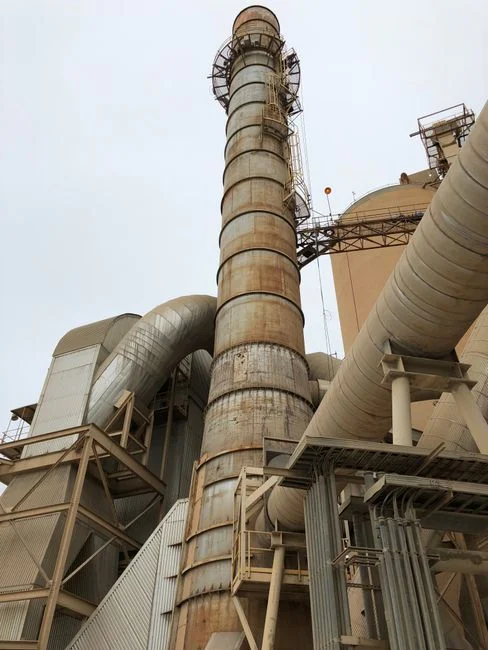
An RO plant without a permitted or technically viable concentrate route is not a complete treatment proposal. Concentrate quantity and composition must be calculated from selected recovery, feed chemistry and reject-flow assumptions, then reviewed for the actual discharge route and receiving environment.
Partial zero liquid discharge is an advanced option for reducing liquid reject. HydropureWater’s 2026 research describes RO at 50%–75% recovery followed by mechanical vapor compression of the concentrate at 95% recovery, producing 85%–95% system-level water recovery. It also reports MVC distillate below 10 mg/L TDS, a residual brine containing 20%–30% dissolved solids, and energy use of 15–25 kWh per 1,000 US gallons of distillate.
| Management route | Reference outcome | Decision condition |
|---|---|---|
| RO with permitted liquid discharge | Reject remains a concentrated liquid stream | Discharge route and limits must be confirmed |
| RO plus partial ZLD | 85%–95% system-level recovery under the cited reference case | Liquid concentrate discharge is unacceptable or minimized |
| Full ZLD | 95%–99% system-level recovery; solid waste below 1% of original blowdown volume | Restriction on liquid high-TDS discharge or a justified water-value case |
Full ZLD should be reserved for a confirmed restriction on liquid high-TDS discharge or a water-stressed business case. The cited figures describe reference envelopes, not guaranteed performance for Bucaramanga feed chemistry, electrical tariffs or equipment scale.
Private wells, off-site hauling and conditional discharge must not be treated as available options until environmental and regulatory acceptance is documented. The broader cooling-blowdown treatment framework illustrates why the concentrate route must be resolved in parallel with recovery equipment selection.
Budget with the correct scope and cost basis
Initial budgeting should separate the reference treatment equipment from site-specific civil, electrical, chemical, concentrate and permitting costs. HydropureWater’s 2026 research gives a planning envelope of $250,000–$500,000 capital for a 50,000 GPD RO unit, with $1.50–$3.00 per thousand gallons for energy, chemicals, membrane replacement and maintenance.
The same research gives $3 million–$8 million capital and $5–$15 per thousand gallons operating cost for a 50,000 GPD RO-plus-partial-ZLD reference scope (HydropureWater, 2026). These figures are planning envelopes, not quotations for Bucaramanga. Pricing requires circulation flow, feed analysis, target recovery, concentrate route and local energy and chemical costs.
| Budget item | Required scope | Pricing input |
|---|---|---|
| Treatment equipment | Filtration, UF, NF or RO, controls and required redundancy | Measured feed flow and water analysis |
| Site works | Pumps, tanks, foundations, piping, buildings and footprint | Geotechnical and utility information |
| Electrical and controls | Power service, PLC, instrumentation, alarms and backup power | Load list and electrical supply |
| Chemical systems | Storage, dosing, antiscalant, biocide and wastewater treatment | Cooling chemistry and process selection |
| Residual handling | UF solids, sludge, RO reject, brine or solids disposal | Permitted destination and waste classification |
| Owner costs | Permitting, training, commissioning and operating resources | Regulatory route and staffing plan |
Return on investment should include avoided freshwater, avoided discharge cost, lower permit risk and operational reliability. Genesis Water Technologies emphasizes total cost of water rather than utility cost alone (2026). A new data center wastewater planning guide can support that lifecycle comparison, but local tariffs and confirmed disposal costs remain necessary inputs.
Resolve Colombian permitting and operational risks
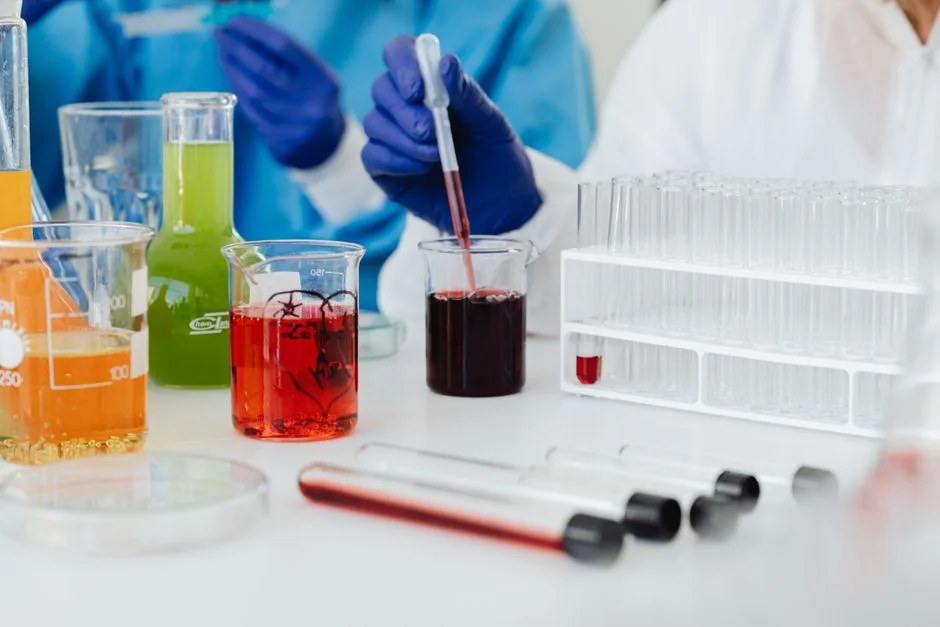
Cooling blowdown and RO concentrate require an early, site-specific Colombian discharge determination. HydropureWater identifies the Ministerio de Ambiente, the Autoridad Nacional de Licencias Ambientales (ANLA), regional autonomous corporations and the Autoridad Nacional del Agua (ANA); the responsible route depends on the project’s jurisdiction and characteristics. The research does not establish numeric limits applicable to a Bucaramanga project.
The permitting file should address more than final-effluent pH. Thermal discharge, suspended solids, salinity or TDS, treatment chemicals, biological risk and concentrate fate can each affect the receiving route and operating controls. The project should obtain written confirmation of the applicable authority, discharge point, quality requirements, monitoring conditions and treatment of residual streams before selecting equipment.
UGA Extension identifies spills and improper disposal of cooling chemicals as potential contamination pathways for soil and groundwater (2026). Accordingly, the design should include leak containment, chemical inventory, automatic isolation, protected storage and monitoring. Cooling chemicals must be coordinated with the recovery process; a chlorine dioxide generator is a specific disinfection option only if the chemistry review supports it, not a default requirement.
Legacy chromate and high-phosphate programs also affect permits and operations. A phased changeover needs baseline sampling, compatibility testing, operator training, updated chemical procedures and a monitoring plan. Treating incompatible legacy blowdown without changing the program can transfer risk from the cooling loop to membranes, sludge and concentrate.
Pre-design checklist for the next 30 days
The first engineering deliverable should be a defensible assumptions and inputs register, not an equipment quotation. Use the following sequence to convert the investigation into a preliminary design.
- Collect source-water, cooling-loop and blowdown samples; document makeup, evaporation, drift, measured blowdown, cycles of concentration and chemical dosing.
- Define the reuse endpoint and confirm whether freshwater blending is acceptable for cooling-tower makeup.
- Prepare a measured mass balance that separates evaporation, consumption, return flow, recovery, permeate blending and reject.
- Identify the concentrate destination, electrical supply, available footprint and operator capability.
- Commission a site-specific conceptual design with a base case and at least one lower-capital alternative, including sensitivity to recovery and concentrate-management cost.
- Begin early engagement with the relevant Colombian environmental and water authorities and document the permit path before final equipment selection.
If the membrane route remains viable after chemistry and recovery review, request RO and UF membrane elements and treatment valves and media only after the feed, permeate and reject criteria are defined. Vendors should size replacement elements and critical spares from those criteria, not from the equipment supplier’s standard model list.
Frequently Asked Questions
What does a cooling-blowdown treatment system cost for a Bucaramanga data center?
HydropureWater’s 2026 reference research gives $250,000–$500,000 capital and $1.50–$3.00 per thousand gallons operating cost for a 50,000 GPD RO unit. Its RO-plus-partial-ZLD reference is $3 million–$8 million capital and $5–$15 per thousand gallons operating cost. These are not Bucaramanga quotations. Request firm pricing after supplying measured blowdown flow, complete water analysis, recovery target, reuse specification, concentrate route, electrical conditions and civil-work requirements.
What measurements are needed before sizing UF, NF or RO?
Request makeup, circulation, evaporation, drift and actual blowdown flows, plus operating cycles of concentration and analyses of source water, circulating water and blowdown. Include hardness, alkalinity, silica, chloride, sulfate, TDS, TSS, turbidity, pH, conductivity and biological loading. Cycles of concentration establish the expected blowdown chemistry; source analysis determines scaling and fouling risk; the recovery target establishes membrane and concentrate capacity.
How should treatment suppliers be selected?
Require bidders to demonstrate compatibility with the actual feed analysis, state recovery and permeate guarantees under site conditions, define the concentrate treatment, identify membrane-replacement assumptions, include PLC controls and alarms, and price full lifecycle operating costs. Also request reference performance, chemical-storage requirements, operator-training scope and a clear performance-test protocol. A selected equipment model without feed-specific guarantees is not an adequate selection.
Which Colombian authorities and limits apply to the discharge?
The supplied research identifies the Ministerio de Ambiente, ANLA, regional autonomous corporations and ANA as relevant institutions, but it does not provide numeric local discharge limits. The project therefore needs a written, site-specific determination covering the final discharge and RO concentrate, receiving route, monitoring, thermal effects, dissolved solids, treatment chemicals and residual waste. Equipment selection should follow that determination.
Should the equipment be ordered before sampling and regulatory review?
No. Sequence source and blowdown sampling, hydraulic balancing, pilot or bench testing where chemistry is uncertain, recovery-route confirmation, regulatory engagement and tendering. Procurement can begin before all engineering is complete only through a staged specification that preserves the right to resize or change the process after feed characterization and concentrate acceptance. This sequence follows the data center wastewater treatment framework and the concentrate-planning lessons in the cooling-blowdown treatment guide.