Confirm the Project Location and Regulatory Context
An industrial effluent treatment project in Panama City, Republic of Panama, is governed by the site’s receiving point, discharge route, wastewater characteristics and current Panamanian environmental requirements—not by records from Panama City Beach, Florida. The project address must identify the municipality and the exact discharge location before technology selection begins.
Confirm whether the treated flow will enter a sanitary sewer, discharge to the sea, support an industrial reuse application, or follow another authorized route. Direct sewer discharge, sea discharge and reuse impose different treatment, documentation and operating requirements. Ask each bidder to identify the current local permit references, site-specific compliance criteria and authorities assumed in its proposal. If a current permit is unavailable, make regulatory verification an explicit pre-award condition rather than assuming a generic discharge standard.
UtilityRadar illustrates the geographic risk: its 2026 utility record identifies Panama City Beach STP as serving 13,500 residents and Military Point Regional AWTF as serving approximately 53,500 residents, both in Panama City Beach, Florida. Neither record describes an industrial effluent treatment plant in Panama City, Panama, and neither population figure should be used as a local design or compliance input.
The Panama industrial effluent treatment guide provides the starting framework, but the permit, receiving water and site data must be verified before bids are evaluated.
Define the Wastewater Before Selecting Equipment
Measured flow and wastewater data—not an average daily production figure—must define the industrial ETP design in Panama. Give bidders the same design basis and require each one to show the sizing calculations, duty cases and equipment-selection assumptions used to reach its proposal.
Request flow data by shift, average day, peak hour and clean-in-place or batch-discharge events. Identify seasonal and production variations, storm or washdown inflows, stored wastewater, recycled process water and any flow that can exceed the normal operating envelope. These inputs determine equalization, pumping and treatment capacity.
Before final process selection, require representative sampling and analysis for pH, oil and grease, suspended solids, COD, BOD, salinity and temperature. Add toxicity and contaminant tests where the production process, receiving water or reuse application requires them. Document whether the wastewater contains high salt, emulsified oils, colloids, nutrients, pathogens or industrial compounds that resist biological treatment.
| Design input | Buyer must obtain | Why it changes selection |
|---|---|---|
| Flow regime | Shift, average, peak-hour, batch and clean-in-place flows | Sets equalization, pumping and treatment duty cases |
| Physical condition | pH and temperature | Influences chemical control, biology and equipment limits |
| Organic loading | COD and BOD | Determines biological or physicochemical load and aeration demand |
| Separable material | Oil and grease, suspended solids and colloid characterization | Determines whether screening, DAF or clarification is required |
| Wastewater matrix | Salinity and relevant contaminants | Identifies inhibition risks and treatment barriers |
| Compliance route | Discharge point and current permit or reuse criteria | Defines the required final effluent quality |
Require bidders to map each proposed unit to this submitted dataset. Equipment matched only to average flow can fail during batch discharges, salinity excursions or production peaks.
Build the Right Industrial Treatment Process Train
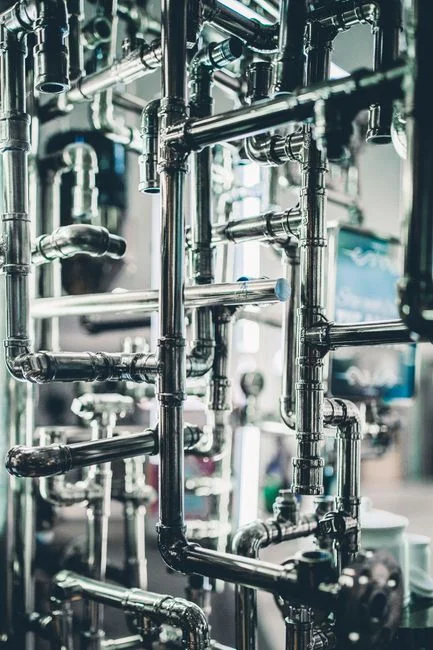
A complete industrial wastewater treatment train follows a defined sequence: characterize the wastewater, equalize and screen it, remove oil, grease or settleable solids where required, apply biological treatment when the load is suitable, polish the effluent, disinfect where required and dewater the residuals. Each stage depends on the quality and variability of the flow entering it.
The PROMARINA Puerto Caimito fish-processing ETP is a useful case study, not a universal template. SIGMADAF reported a wastewater volume of 2,560 m³/day in one shift for a plant producing fishmeal and fish oil using seawater for fish transport. The case treatment included coarse and fine screening in perforated drum separators, then coarse-bubble flotation for high-salt, oil-and-grease wastewater. Pre-flotation separated oil and grease before physicochemical treatment and two DAF FPAC100 units (SIGMADAF case study, 2026).
The chemical train in that case was specific: acid adjusted pH, ferric chloride acted as coagulant and polyelectrolyte supported floc formation. Inline tubular flocculators mixed the chemicals before flotation, and DAF bubbles of 30–50 microns separated the flocs. The case scope included feed and sludge pumps, piping and valves, chemical preparation and dosing, instrumentation, an electrical cabinet, PLC controls, installation supervision, commissioning and training (SIGMADAF case study, 2026).
For a new industrial ETP design in Panama, the equipment sequence may therefore begin with a mechanical bar screen, followed by equalization and a dissolved air flotation system for industrial wastewater. Chemical conditioning requires an automatic chemical dosing system. Where the wastewater is biologically treatable and high-quality effluent or reuse is required, an MBR wastewater treatment system can combine biological treatment and solids separation in a compact package. These are candidate functions, not mandatory blocks for every project.
| Process stage | Primary purpose | Decision condition |
|---|---|---|
| Screening and equalization | Remove gross material and moderate flow or concentration variation | Required when rags, solids, batch discharges or production peaks are present |
| DAF or clarification | Recover oil, grease and floatable solids or reduce suspended solids | Select after testing emulsification, solids loading and chemical demand |
| Biological treatment | Remove biodegradable dissolved organics | Use only after confirming biodegradability, inhibition and process suitability |
| MBR or filtration | Provide biological solids separation or effluent polishing | Consider where target quality, footprint or reuse requires it |
| Disinfection | Reduce viable pathogens where required | Define the required receiving point or reuse conditions |
| Residuals treatment | Thicken and dewater captured solids and sludge | Base the design on measured solids generation and handling route |
Polishing remains conditional. The University of Twente thesis Direct nanofiltration of wastewater treatment plant effluent assessed nanofiltration for polishing WWTP effluent and reclamation, but it does not establish nanofiltration as a default for Panama City projects. Wageningen University’s 2022 thesis, Removal of micropollutants from wastewater treatment plant effluent by constructed wetlands, likewise supports feasibility assessment for a defined treatment objective rather than automatic selection.
Compare the Main Treatment Options
DAF, MBR, UF, RO and lamella clarification perform different functions. The correct comparison starts with the contaminant to be removed and the required effluent quality, then checks pretreatment, residual production, utilities and operating requirements.
| Option | Target contaminant or function | Principal advantage | Principal limitation | Required pretreatment |
|---|---|---|---|---|
| DAF | Oil, grease and floatable suspended solids | Direct physical separation with recoverable float | Chemical and sludge management still apply; performance depends on wastewater characteristics | Equalization, screening and contaminant testing; chemical conditioning where required |
| MBR | Biodegradable organics and suspended solids | Combines biological treatment and membrane solids separation | Requires favorable biodegradability and disciplined membrane, aeration and fouling control | Screening, equalization and removal of materials that foul membranes |
| UF | Suspended solids and fine particulates | Provides a barrier-based polishing step with automatic membrane cleaning | It does not by itself establish salt removal or complete contaminant compliance | Low-turbidity feed and removal of upstream solids or oil |
| RO | Dissolved salts and selected dissolved contaminants | Supports high-quality reuse when its rejection and recovery requirements can be met | Requires pretreatment, concentrate management and higher technical operating control | DAF, biological treatment, UF or other validated pretreatment as defined by the membrane design |
| Lamella clarification | Settleable suspended solids | Compact gravity separation with established equipment configurations | Less suitable for emulsified oil or very light floatable material | Equalization, screening and removal of interfering oils where applicable |
HydropureWater’s 2026 catalog states that its DAF systems cover 4–300 m³/h across 13 standard models, its UF systems span 2,000–40,000 L/h and use 0.03-micron PVDF membranes, and its MBR systems cover 10–2,000 m³/day. The UF catalog also states an acceptance limit of up to 300 ppm turbidity and automatic backwash with air scour. These are equipment specifications, not guaranteed site performance; compliance must be demonstrated against the agreed influent and permit basis.
Select the process using wastewater chemistry, target quality, footprint, energy demand, sludge generation, operator capability and permit conditions. A DAF unit may be justified for oil and grease pretreatment even when downstream biological treatment is required. An MBR system may be justified for compact biological treatment and solids separation. A UF system can polish suitable flows, while a lamella sedimentation tank remains relevant for settleable solids. None is universal.
Include Sludge, Odor and Site Utilities in the Project Scope
Residual handling is part of the treatment plant, not an optional accessory. In the PROMARINA Puerto Caimito example, estimated sludge production was 300 m³/day, and the supplied scope included a decanter centrifuge (SIGMADAF case study, 2026). That figure is specific to that case; a new project needs its own solids balance.
Specify thickening, dewatering, cake handling, odor control, drainage and disposal according to the characteristics and quantity of captured oil, grease and sludge. Compare a plate-and-frame filter press with other dewatering options, but base selection on cake characteristics, cycle time, washdown, operator availability and the final disposal route. Include covered transfer points and ventilation where odors or aerosol exposure warrant them.
Chemical preparation and dosing should be included where pH adjustment, coagulation or flocculation is required. In the Puerto Caimito case, acid, ferric chloride and polyelectrolyte dosing were part of the turnkey scope; the associated automatic chemical dosing system therefore sits within the process, controls and operating-cost boundaries.
Request a mass balance covering water, chemicals, solids and sludge. Also make electrical service, standby power, access roads, lifting arrangements, washdown water, compressed air, ventilation and remote monitoring explicit site inputs. Omitting these items can make the lowest equipment price the least complete and most expensive proposal.
Evaluate Bids and Plan Commissioning
Comparable bids must separate process equipment from the complete ETP scope. Ask suppliers to price equipment, tanks, pumps, piping, instrumentation, electrical controls, civil work, installation, commissioning, training, spares and sludge handling as distinct items, with a clear total for each configuration.
Every proposal should state design assumptions, design flow, pollutant duty, utilities, controls, alarms, bypass strategy, warranty boundaries and exclusions. This prevents a bidder from meeting a partial supply scope while leaving civil works, controls or residuals treatment with the buyer.
| Procurement stage | Information or test required | Buyer decision enabled |
|---|---|---|
| Bid review | Line-item equipment and installed-scope pricing; assumptions; exclusions | Identify incomplete or non-comparable offers |
| Design review | Sizing calculations, duty cases, utilities, controls, alarms and bypass | Confirm that the proposal follows the measured influent and permit basis |
| Factory acceptance | Agreed inspection and functional checks before shipment | Limit risk of discovering defects after installation |
| Site acceptance | Installed equipment, utilities, interlocks and safety checks | Verify readiness for process testing |
| Performance testing | Tests against the current permit and agreed influent design basis | Determine whether the plant meets its contracted obligations |
| Handover | Training records, manuals, spares, warranty boundaries and support arrangements | Confirm the buyer can operate and maintain the plant |
The Puerto Caimito scope provides a useful benchmark for turnkey completeness: SIGMADAF’s 2026 case included DAF equipment, feed and sludge pumps, piping and valves, chemical preparation and dosing, agitators, level, flow and pH instrumentation, an electrical cabinet, PLC controls, cabling, spare parts, assembly and installation supervision, commissioning and training.
Before selecting a supplier, request maintenance intervals, critical spares, operator-training scope and local technical support. A data-driven DAF capacity assessment illustrates why duty cases matter, while a decanter centrifuge design guide can inform the separate question of residual dewatering. Neither changes the requirement to base final sizing on Panama site data.
Frequently Asked Questions
What does an industrial effluent treatment plant in Panama City typically cost?
The supplied research provides no defensible plant-price range for Panama City, Panama, so a universal cost should not be used for budgeting. Request separate quotations for equipment, tanks, pumps, piping, controls, civil works, installation, commissioning, training, utilities and sludge handling. Require each bidder to state the flow, pollutant design basis, permit route, warranty and exclusions behind its price so that proposals can be compared on the same scope.
How should ETP equipment be sized for a Panama industrial plant?
Begin with measured flow by shift, average day, peak hour and batch-discharge events, then add representative wastewater analyses and the current discharge or reuse criteria. Select the process from those inputs and require the supplier to show how each unit is sized for the stated duty cases. A single average-flow figure is not a sufficient design basis.
When is DAF more appropriate than biological treatment alone?
DAF is a strong candidate when testing confirms recoverable oil, grease or floatable solids loads that should be removed before biological treatment. The Puerto Caimito fish-processing case demonstrates that use in a high-salt, oil-and-grease application, but it does not prove suitability for another site. Emulsification, solids loading, chemical demand and the required final quality determine the decision.
When should a buyer choose MBR, UF or RO?
Choose MBR where biological treatment and membrane solids separation suit the wastewater and space constraints; consider UF where suspended-solids polishing is required; and assess RO where dissolved-salts removal and reuse quality justify its pretreatment, energy and concentrate-management requirements. Require equipment-specific guarantees and pilot or site data where the wastewater is outside catalog conditions.
What should a buyer check before selecting an ETP supplier in Panama?
Check whether the supplier has demonstrated the proposed process under comparable wastewater conditions, identified local permit references and received current site data. Also verify installation resources, operator competence, critical-spares availability, response time for technical support, warranty responsibility and commissioning support. A complete proposal should include civil works, utilities, controls, performance testing, training and sludge handling—not equipment alone.