What Treatment Option Fits a Panama City Site?
The right domestic sewage treatment in Panama City depends on the discharge location and whether centralized sewer service is technically and financially available. If a sanitary-sewer connection is feasible, the project should remain on that path until the City of Panama City Utilities Division confirms service availability, capacity allocation, connection requirements, and project approvals. If connection is impractical, the buyer must compare an underground package treatment plant with a membrane bioreactor and site-built alternatives. WSZ and MBR configurations are candidates, not automatic selections; influent quality, peak flow, reuse objectives, footprint, operator availability, and the receiving point determine the defensible answer.
The City of Panama City provides water, wastewater, and garbage services to residences and businesses in the community. This description refers to utility service, not guaranteed availability for every parcel. Buyers must confirm the specific property, connection point, network capacity, review requirements, and whether sewer pretreatment is required before treating centralized conveyance as an option.
For residential communities, hotels, hospitals, factories, and rural developments where a compact buried treatment train is useful, an underground WSZ package sewage treatment plant is a candidate. An integrated MBR wastewater treatment system is more relevant where compactness, integrated membrane filtration, or reuse-oriented treatment objectives justify added process complexity.
Start the decision with six inputs: receiving destination, average and peak flow, wastewater characteristics, available footprint, reuse requirements, and available operating labor. Do not request equipment quotations until the first two are known, because both the treatment route and the sizing basis will change if sewer service is unavailable or a discharge authorization imposes different treatment objectives.
Panama City's Wastewater Infrastructure Context
The City of Panama City Utilities Division operates approximately 700 miles of underground water and wastewater infrastructure, more than 140 lift stations, an environmental laboratory, and two wastewater treatment plants with 12.5 million gallons per day of capacity. This data represents the utility’s centralized operating context; it does not establish the service status or residual capacity at an individual development parcel.
The Utilities Division operates as an enterprise fund supported by user fees. The City reports that, beginning with October 2026 usage, the average residential monthly utility bill is expected to increase by approximately $6.50, with bills reflecting the new rates expected during the week of November 2, 2026. These figures may affect project economics, but they do not by themselves establish whether centralized or decentralized treatment is preferable.
| Confirmed utility fact | Buyer implication |
|---|---|
| Approximately 700 miles of underground water and wastewater infrastructure | Network extent does not confirm parcel-level service availability; verify the actual connection route. |
| More than 140 lift stations and two wastewater treatment plants | Centralized treatment exists, but project capacity allocation still requires confirmation. |
| 12.5 million gallons per day of wastewater treatment capacity | Total system capacity is not the same as available capacity for a specific development. |
| Enterprise funding supported by user fees | Connection charges and continuing service costs belong in the project financial comparison. |
| Average residential monthly bill expected to increase approximately $6.50 beginning with October 2026 usage; new-rate bills expected the week of November 2, 2026 | Include the municipal service pathway in life-cycle cost comparisons without treating the rate change as proof of a preferred treatment route. |
For a site brief, ask the Utilities Division to identify the service territory, nearest suitable connection point, applicable review process, capacity constraints, and any sewer pretreatment requirements. Treat the utility’s general service description as context, not as a permit or engineering acceptance.
Why Sewer-Wastewater Characterization Matters
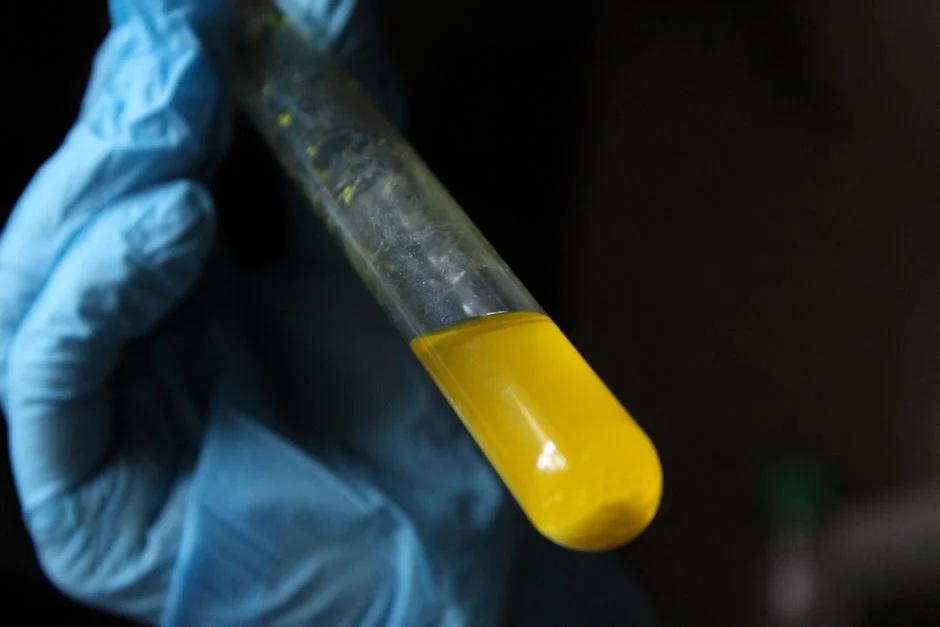
A 2021 study in The Science of the Total Environment showed that pollutants entering a municipal sewage network can impair wastewater treatment plant operation, particularly in the activated-sludge reactor. The research screened organic contaminants and characterized dissolved organic matter through three monitoring campaigns at six selected locations: PVZ-1, PVZ-2, PS-F, PS-VC, CP-VC, and PS-T, together with plant influent and effluent. This evidence supports influent and sewer-network investigation before a treatment train or discharge agreement is finalized.
For a Panama City project, request current flow data and wastewater characterization covering COD, BOD, suspended solids, pH, fats, oils and grease, and any contaminants relevant to the proposed discharge. For industrial or mixed-use flows, identify episodic discharges, toxins, cleaning chemicals, and slug loads because uncontrolled inputs can affect biological treatment and downstream operations.
Do not size equipment from nominal flow alone. Average flow can conceal short-duration hydraulic peaks, while a stable domestic average can coexist with industrial batch discharges. The buyer needs the temporal pattern, not just an annual volume estimate.
The supplied research does not include Panama City-specific influent values, contaminant thresholds, or numerical discharge limits. Project-specific testing is required. For applications involving dedicated treatment, use the research on MBR versus conventional activated sludge for chemical wastewater to frame treatment questions, then establish the local requirement through the receiving authority rather than importing an unverified limit.
Document sampling points and operating periods so the data can be interpreted. If the project will discharge to a sewer, coordinate sampling with the utility’s Fats, Oils and Grease and environmental compliance functions. If there is no direct discharge route, the receiving point must be defined before a process can be selected.
Compare WSZ, MBR, and Conventional Treatment
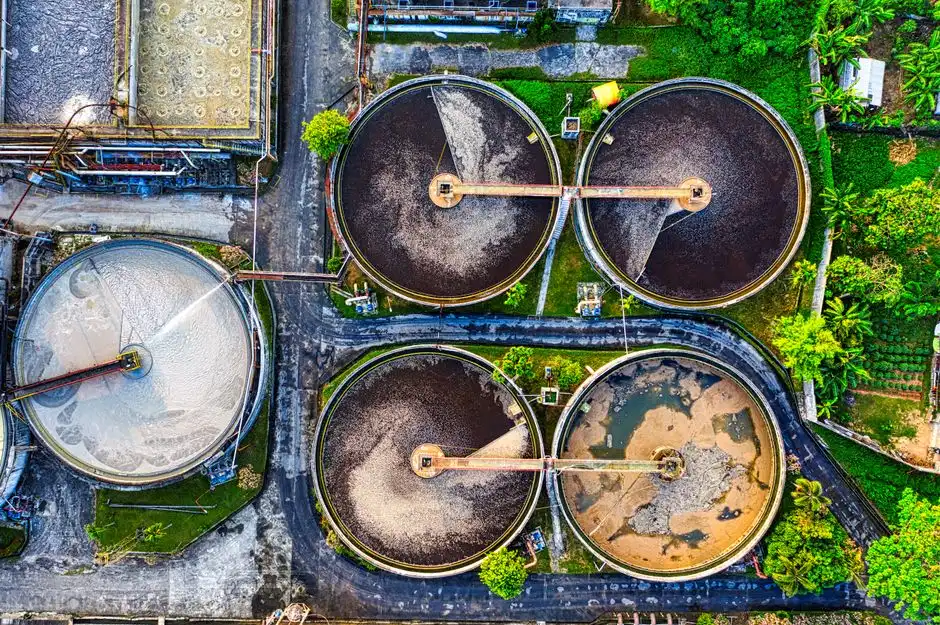
The HydropureWater verified catalog describes the WSZ as a buried package combining anoxic/aerobic biological contact oxidation, sedimentation, and disinfection in one unit, with catalog capacity of 1–80 m³/h. It also describes the system as fully automated and suitable for below-grade installation with landscaping above or trailer mounting for mobile deployment. These are verified catalog attributes, not project-specific guarantees.
The same catalog describes the MBR as activated sludge combined with submerged PVDF membrane filtration, producing near-reuse-quality effluent with filtration below 1 μm and catalog capacity of 10–2,000 m³/day. Its stated footprint is 60% smaller than conventional systems; this is a manufacturer figure rather than a guaranteed site footprint. MBR screening should include the actual civil envelope, access aisles, ancillary equipment, and utility connections.
| Selection variable | WSZ package plant | MBR system | Conventional or site-built treatment |
|---|---|---|---|
| Process configuration | Combined anoxic/aerobic contact oxidation, sedimentation, and disinfection | Activated sludge with submerged PVDF membrane filtration | More configurable process arrangement; final train must be defined by project engineering |
| Catalog capacity | 1–80 m³/h | 10–2,000 m³/day | No Panama City comparison figure supplied |
| Site arrangement | Buried unit; trailer-mounted mobile configuration also described | Compact equipment concept, subject to project layout and access | Generally greater site, staffing, and commissioning input |
| Automation and staffing | Catalog describes full automation and no operator required | Controls, aeration, membrane cleaning, and solids handling require lifecycle planning | Greater operator and commissioning input |
| Treatment objective | Integrated biological treatment, settling, and disinfection | Integrated membrane filtration; catalog describes near-reuse-quality effluent | Can be tailored around project-specific objectives |
| Key information still required | Peak flow, influent analysis, footprint, access, utilities, discharge route | Peak flow, influent analysis, reuse criteria, membrane maintenance, solids handling | Site constraints, process design, staffing, civil works, commissioning scope |
Conventional or site-built treatment offers more configuration flexibility but requires greater site, staffing, and commissioning input. The supplied research contains no Panama City cost or performance figures for that comparison, so a buyer should compare offers only against the confirmed design basis: flow range, treatment objectives, footprint, automation, operator requirement, discharge route, maintenance access, and future expansion.
Do not recommend a technology until the influent analysis and regulatory route are available. Use a broader comparison of decentralized, WSZ package, and MBR sewage treatment systems to structure questions, but base the Panama City selection on local infrastructure, waste characterization, and project requirements.
Build a Project-Specific Treatment Brief
A defensible equipment brief begins with the flow basis and receiving point, not with a preferred product name. Document domestic and industrial flows separately, including average flow, peak flow, seasonal variation, and future expansion. Provide a wastewater analysis covering COD, BOD, suspended solids, pH, fats, oils and grease, nutrients, temperature, and project-relevant industrial contaminants.
Define the receiving point as a sanitary sewer, permitted direct discharge, water-reuse application, or another approved destination. Identify who owns the permit or discharge authorization, and whether the utility requires sewer pretreatment. Supplier quotations should use the same design data and commercial boundaries; otherwise, nominal-price comparison will be misleading.
| Brief item | Minimum information to obtain | Acceptance question |
|---|---|---|
| Design flow | Average, peak, seasonal, and expansion basis | Is the quoted capacity tied to the buyer’s documented flow profile? |
| Wastewater analysis | COD, BOD, suspended solids, pH, FOG, nutrients, temperature, and relevant industrial contaminants | Does the proposed train address the measured constituents and episodic loads? |
| Receiving point | Sewer, direct discharge, reuse, or other approved destination and permit ownership | Which party confirms acceptance and regulatory compliance? |
| Physical and utility requirements | Footprint, civil works, electrical supply, controls, access, and future expansion | Are exclusions and interface responsibilities explicit? |
| Performance and resilience | Peak loading, low flow, abnormal influent, power interruptions, and redundancy | What operating response is documented rather than merely claimed? |
| Handover and lifecycle | Commissioning, training, startup sampling, maintenance, spares, and support | Who owns each deliverable after handover? |
Ask each supplier to state the guaranteed flow basis, treatment-train description, controls philosophy, commissioning plan, and O&M scope. Require a documented response to peak loading, low flow, abnormal influent, power interruption, and equipment redundancy. Do not accept “fully automatic” as a sufficient answer without controls, fail-safe, access, and maintenance details.
Compare quotations on the same design basis, performance criteria, installation scope, exclusions, and commercial terms. This approach creates a cleaner comparison of prefabricated wastewater plants with site-built alternatives.
Plan Permitting, Commissioning, and Lifecycle Support
Contact the City of Panama City Utilities Division before ordering equipment to confirm service territory, connection requirements, infrastructure capacity, review responsibilities, and project-specific approvals. Confirm the required permitting path with the applicable local and state authorities; the supplied research does not provide a complete Panama City permit matrix or numerical discharge limits.
Allocate responsibilities before delivery for civil works, electrical installation, controls integration, training, initial startup, sampling, and long-term maintenance. For the WSZ configuration, retain above-grade access for inspection and maintenance even though the treatment unit is buried. For the MBR configuration, include membrane cleaning, replacement planning, aeration performance, and solids handling in the lifecycle evaluation.
Request a commissioning plan that states prerequisites, test procedures, acceptance criteria, training deliverables, and handover documents. If the selected route is direct discharge or reuse, document the approval owner and sampling responsibility so the equipment supplier’s scope and the developer’s compliance scope do not overlap ambiguously.
Frequently Asked Questions
Should a Panama City development connect to the municipal sewer or install onsite treatment?
Connect to the municipal sewer when the Utilities Division confirms that service is available for the parcel, a connection route and capacity allocation can be secured, and the resulting approval and life-cycle costs are acceptable. Consider onsite treatment when connection is infeasible, unsuitable, or cannot be secured within the project schedule. The decision requires confirmation of the specific property—not an inference from the utility’s general service area.
How much sewage can a WSZ package plant treat?
HydropureWater’s verified catalog states a WSZ capacity range of 1–80 m³/h. Model selection still requires documented average and peak flow, influent characterization, the receiving point, and site constraints. Ask each bidder to identify the flow basis and guaranteed operating basis used in its quotation; without those inputs, the catalog range cannot establish the correct unit.
When is an MBR preferable to a conventional package plant?
An MBR is more relevant when compactness, integrated membrane filtration, and reuse-oriented treatment objectives justify the additional process and maintenance requirements. Final selection