Start with the Paxico discharge point and control authority
Mining and metals plants near Paxico meet sewer pretreatment limits by first identifying the receiving POTW and its current sewer-use requirements, then applying every applicable categorical standard, prohibited-discharge rule, and site-specific local limit. EPA states that POTWs impose local limits at the industrial user’s end-of-pipe discharge, meaning the point of connection to the collection system. Plants then characterize each wastewater stream, control sources, equalize variable flows, remove regulated metals and other pollutants, and verify compliance through representative monitoring. Equipment should be selected only after the permit and local-limit requirements are documented.
The first engineering task is not selecting a clarifier; it is identifying the legally responsible authority and the precise discharge point. For a site near Paxico, obtain the receiving POTW’s current sewer-use ordinance, industrial-user permit or equivalent control mechanism, permit appendices, connection approval, monitoring-point requirements, and any applicable discharge authorization. The supplied research does not identify the controlling POTW, its ordinance, or verified numeric local limits, so publishing or sizing to assumed “Paxico limits” would create an avoidable compliance risk.
EPA’s Local Limits Development Guidance, published as an EPA webpage document in June 2021, states that an indirect discharger’s obligations are determined by POTW industrial-user permits or equivalent control mechanisms and that a permit or regulation controls if it conflicts with guidance. The same guidance directs POTWs to evaluate local limits at the industrial user’s end-of-pipe discharge, interpreted here as the point where the plant discharges to the POTW collection system.
| Document or decision | What the project team must establish | Why it affects treatment design |
|---|---|---|
| Receiving POTW and sewer-use ordinance | Legal authority, current limits, narrative conditions, appendices, and revision status | Defines the enforceable site-specific discharge requirements |
| Industrial-user pretreatment permit or equivalent mechanism | Monitoring point, pollutants, averaging basis, sampling, reporting, compliance dates, and operating conditions | Converts general requirements into measurable acceptance and operating duties |
| Connection and sampling-point drawings | Physical point of connection, flow direction, sampling access, and any upstream user controls | Prevents treatment from being placed on the wrong side of the compliance boundary |
| Separate direct-discharge authorizations | NPDES coverage for applicable stormwater or surface-water outfalls | A sewer connection does not establish authorization for every other outfall |
| Applicable categorical standards | Facility classification, process coverage, production basis, and corresponding federal requirements | Determines which categorical conditions and subcategory provisions apply |
Maintain a document register that keeps indirect sewer-discharge obligations separate from direct stormwater and surface-water permits. EPA’s Mineral Mining and Processing Effluent Guidelines, current on the EPA webpage in 2026, explains that 40 CFR Part 436 applies to mine drainage, mineral processing wastewater, and stormwater runoff and is incorporated into NPDES permits. That is a different authorization pathway from a POTW pretreatment permit.
Use the mining and metals pretreatment compliance guide as a secondary workflow aid, not as a source of Paxico limits. The 2026 mining pretreatment compliance workflow should also be checked against the live permit and ordinance. The controlling evidence is the current authority-issued document, not a generic industry article.
Build the compliance envelope from every applicable requirement
The binding discharge envelope is the combination of categorical pretreatment standards, prohibited-discharge rules, POTW local limits, and industrial-user permit conditions; no single source should be treated as the complete design basis.
EPA’s Pretreatment Standards and Requirements—Local Limits webpage states that local limits address the needs of the POTW, its sludge, and its receiving waters. They can be numeric or narrative and can include best management practices. The agency also explains that most prohibited-discharge standards in 40 CFR Part 403.5 are not pollutant-specific limits, while 40 CFR Part 403.5(c) identifies circumstances in which POTWs must develop local limits.
First determine the facility’s actual regulatory category. Commercial research supplied for this article identifies 40 CFR Part 430 for metal mining, Part 434 for coal mining, Part 437 for ore mining and dressing, and Part 433 for metal finishing as possibilities. Those references do not establish which provision applies to a Paxico facility. Confirm the processes, production basis, and subcategory with the control authority.
| Requirement layer | Decision to document | Compliance-matrix entry |
|---|---|---|
| Categorical pretreatment standard | Applicable industrial category, subcategory, production basis, and pollutants | Federal requirement and any more stringent applicable condition |
| Prohibited discharges | Whether the discharge contains a prohibited or acutely hazardous constituent | Prohibition, screening basis, and evidence of exclusion |
| POTW local limits | Numeric or narrative condition and the pollutants it protects | Limit, averaging basis, monitoring point, frequency, and method |
| Industrial-user permit | Site-specific operating, monitoring, reporting, and compliance conditions | Permit condition, responsible role, due date, and corrective action |
| Pass-through and interference | Potential effects on POTW treatment, sludge use or disposal, permit compliance, and receiving waters | Affected POTW process or approval evidence and required control |
Maximum Allowable Headworks Loading, or MAHL, is a framework for developing local limits, not a shortcut for predicting a plant’s own treatment performance. EPA’s June 2021 Local Limits Development Guidance presents a sequence: determine pollutants of concern; collect and analyze data; calculate MAHLs for each pollutant; designate and implement limits; and address collection-system concerns. The supplied commercial mining reference should be used only for background on how limits may be compared; the POTW’s approved limits and industrial-user permit remain decisive.
Define pass-through and interference operationally. In practical terms, pass-through asks whether the industrial discharge leaves the POTW in quantities or concentrations that cause or worsen a POTW permit violation. Interference asks whether the discharge inhibits or disrupts POTW treatment or sludge processes and thereby causes a permit violation or improper sludge use or disposal. These tests connect pollutant removal to collection-system and solids-management consequences, not only to a single concentration limit.
Compare process alternatives against that completed envelope using the industrial heavy-metals removal methods comparison. Treat it as an engineering reference, then replace assumed local numbers with verified permit conditions before sizing.
Characterize and equalize each mining wastewater stream
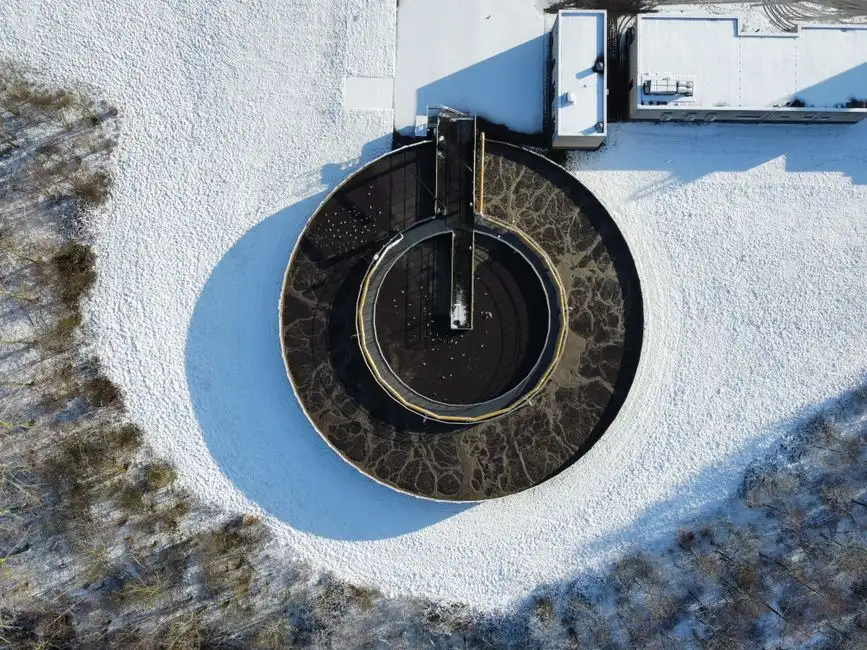
A defensible treatment train begins with a source-by-source wastewater inventory and representative data; batch peaks and metal-bearing drainage cannot be separated from design assumptions without characterization.
Map mine drainage, process water, washdown, contact water, stormwater, and hauled waste separately. For each stream, identify its normal destination, discharge frequency, batch timing, flow variability, known contaminants, and responsible operating area. Flag which streams actually enter the sanitary sewer. Clean stormwater and uncontaminated wash water should be excluded where practical rather than diluted into a stream that requires metals removal.
EPA’s June 2021 Local Limits Development Guidance identifies the POTW, collection system, and industrial user as important sampling locations for local-limit development. That supports a coordinated sampling strategy: characterize the plant’s discharge at the industrial-user point, examine relevant collection-system and POTW data, and confirm impacts with the POTW where pass-through or interference is in question.
Collect data across normal production and the events that control compliance risk. Record flow, pH, metals of concern, suspended solids, oil and grease, batch timing, and constituents that may be prohibited by the permit. Associate each analytical result with its production condition. A grab sample that happens to miss a leach cycle or cleanout is not a defensible basis for equalization or treatment sizing.
Use equalization to smooth the observed discharge pattern, not an unsupported generic holding-time rule. Document average flow, peak flow, event duration, operating schedule, turndown assumptions, and available tank volume. Evaluate whether segregation at the source can prevent clean water from increasing treatment flow. Also determine whether a temporary storage failure, bypass, or uncontrolled batch could defeat the design.
Chemical addition should follow a defined reaction sequence. An automatic chemical dosing system can be evaluated where the treatment design requires controlled pH adjustment, coagulant, flocculant, or specialty-chemical feed. The multi-media filtration option may be relevant for solids removal before final monitoring or polishing, but only after the required treatment objectives and feed-water characteristics are established.
Design a treatment train around the pollutants being regulated
Each treatment stage should have a defined compliance purpose: source control and equalization stabilize the load, chemistry and solids separation remove regulated pollutants, polishing addresses a confirmed residual barrier, and monitoring verifies the final discharge condition.
Start with source segregation, equalization, and controlled chemical reactions. Add solids separation when the verified pollutant profile supports it. Use filtration or ultrafiltration only for a defined solids, turbidity, or other permit-related barrier. Route metal-bearing residuals into a controlled sludge-handling sequence rather than treating clarification underflow, DAF float, and membrane backwash as an unresolved waste stream.
| Process decision | Use when the verified design basis supports it | Key procurement evidence |
|---|---|---|
| Controlled chemical dosing | The treatment chemistry requires controlled pH adjustment, coagulation, flocculation, or specialty reagents | Control narrative, feed range, interlocks, alarms, calibration procedure, and chemical assumptions |
| DAF | The stream contains suspended solids, oil and grease, FOG, or colloidal matter that requires flotation separation | HydropureWater specifies a 4–300 m³/h range across 13 standard DAF models in its product catalog |
| Lamella clarification | Inclined-plate solids separation is appropriate for the precipitated solids stream | HydropureWater specifies 20–40 m/h surface loading and reports chemical-consumption reductions of up to 30% |
| UF polishing | The permit or local limit requires a defined solids or turbidity barrier and feed quality supports the membrane | HydropureWater specifies 0.03 micron PVDF membranes, 2,000–40,000 L/h capacity, automatic backwash and air scour, and feed turbidity acceptance up to 300 ppm |
| Sludge dewatering | Metal-bearing solids require controlled cake formation, liquid capture, and a defined disposal route | HydropureWater plate-and-frame presses span filtration areas from 1 m² to 500 m², with manual, hydraulic, and fully automatic PLC-controlled operation |
Use the industrial DAF system for solids, FOG, and colloidal matter when flotation is the appropriate solids or oil-removal mechanism. If the treatment objective is predominantly metal-hydroxide solids separation, compare that train with the high-efficiency sedimentation tank. The selection should reflect the actual pollutant profile and permit objective rather than an assumed preference for one clarification technology.
Consider the PVDF ultrafiltration polishing system after clarification when the permit requires a final solids or turbidity barrier. UF does not replace a required dissolved-metals removal step. A catalog specification cannot guarantee POTW compliance; performance depends on the confirmed limit, influent characterization, chemical dosing, hydraulic conditions, and final control mechanism.
For residuals, use the plate-and-frame filter press options to evaluate dewatering and filtrate management. Confirm cake-handling, filtrate-return, disposal, and characterization requirements before selecting a press. The compliance boundary remains at the authorized discharge point even if part of the flow is reused internally.
Prove compliance with a sampling and records plan

Compliance is demonstrated by a traceable matrix that links every verified permit condition to a measurement, responsible person, record, and corrective action.
For each pollutant or narrative condition, record the limit, averaging basis, monitoring point, frequency, analytical method, responsible person, reporting destination, and response required after an excursion. EPA’s June 2021 Local Limits Development Guidance emphasizes data collection, analysis, and evaluation of local-limit development; the plant should retain enough chain-of-custody and laboratory information to reproduce each compliance determination.
Calibrate pH and flow instruments and any other online analyzers according to documented procedures. Retain representative influent and final-effluent laboratory results. Separate routine compliance samples from investigative samples so an upset does not become diluted by unrelated averages. Confirm that the sampling point matches the permit or approved sampling plan.
Maintain startup, upset, bypass, batch-discharge, chemical-dosing, maintenance, calibration, and corrective-action records. A bypass should have a documented alarm, notification, containment or return plan, and review. Recurring excursions should be investigated by production condition, stream source, chemistry, equipment condition, or operator action—not treated as isolated lab errors by default.
Recheck the compliance matrix whenever the POTW revises its ordinance, the industrial-user permit changes, production or water chemistry shifts, a treatment unit is added, or a bypass occurs. For internal reuse, document the receiving process and its water-quality requirements separately; reuse does not remove the obligation to meet the sewer control mechanism when a sewer discharge occurs.
The automatic chemical dosing system should therefore be evaluated not only for reagent control but also for alarms, interlocks, dose records, calibration access, and the operator information needed during an excursion review.
Compare treatment options before requesting a 2026 proposal
Comparable 2026 proposals require the same verified requirements, influent basis, flow basis, acceptance criteria, and cost boundary; otherwise the lowest price does not identify the lowest compliance risk.
Require every bidder to identify the exact permit or local-limit condition addressed by the proposal. Ask whether each performance statement is a design target, a guaranteed value, or an assumption. A vendor should not present a catalog value as proof that the discharge will comply with an unidentified Paxico requirement.
| Required RFQ field | Buyer’s verification check | Decision enabled |
|---|---|---|
| Permit and limit traceability | Condition, pollutant, averaging basis, monitoring point, and source document are identified | Reject proposals based on unverified generic limits |
| Design flow and influent envelope | Source-by-source flow, batch peaks, chemistry, and duration assumptions match site data | Compare hydraulic and treatment loading fairly |
| Target and guaranteed effluent | Every value is labeled and tied to the verified requirement | Separate design intent from contractual performance |
| Chemical, sludge, utilities, and controls | Consumption, residue volume, utilities, alarms, interlocks, redundancy, and monitoring are stated | Assess operating burden and hidden cost |
| Schedule and acceptance plan | Milestones, commissioning protocol, test conditions, correction period, and POTW acceptance procedure are defined | Make delivery and performance risk contractual |
Compare total installed and operating cost only after those bases align. Chemical consumption, sludge handling, utilities, labor, maintenance access, automatic controls, spare parts, and failure response all affect lifecycle cost. Treat schedule and operator burden as compliance-risk items rather than optional features.
For technology bids, use the industrial DAF system, high-efficiency sedimentation tank, and PVDF ultrafiltration polishing system only as specified alternatives. Each should answer the same questions about verified pollutants, design flow, target effluent, controls, residual handling, utilities, and acceptance testing.
Require a site acceptance plan that ties final performance testing to the verified discharge requirements and the POTW’s acceptance procedure. Define test influent, sampling locations, analytical methods, duration, pass/fail criteria, and responsibility for corrective work before award.
Frequently Asked Questions
What sewer pretreatment limits apply to a mining or metals plant near Paxico?
The applicable limits must be assembled from the receiving POTW’s current sewer-use requirements, the industrial-user pretreatment permit or equivalent control mechanism, applicable categorical pretreatment standards, and prohibited-discharge rules. EPA identifies the industrial user’s end-of-pipe discharge at the connection to the POTW collection system as the point where POTW local limits apply. The supplied research does not provide verified Paxico numerical limits, so obtain them from the control authority before treatment sizing.
Do we need a DAF, lamella clarifier, or UF for mining wastewater?
Choose from the verified pollutant profile and compliance objective. DAF is relevant where suspended solids, oil and grease, FOG, or colloidal matter require flotation separation. Lamella clarification is relevant where inclined-plate solids separation fits the precipitated-solids stream. UF is a final solids or turbidity barrier, not a substitute for required dissolved-metals removal. The permit, local limit, influent data, and residual-handling route determine the combination.
How should a mining wastewater treatment system be sized for compliance?
Size it from source-by-source flow and analytical data, characterized batch peaks, the verified discharge requirement, and unit-duty information. Document average flow, peak flow, event duration, turndown, influent pollutants, chemical demand, and solids yield before selecting capacity. The supplied research does not support a universal capacity or holding-time answer for a Paxico facility, so use site data rather than an industry rule of thumb.
What should we include in an industrial wastewater vendor RFQ to compare cost and compliance risk?
Require a common design basis: verified permit conditions, flow and influent envelope, target and guaranteed effluent, chemical and sludge estimates, utilities, controls, redundancy, monitoring, maintenance, schedule, and site acceptance criteria. Also require an assumption register showing which values are confirmed, proposed, or unresolved. For supplier selection, check whether the vendor can demonstrate performance against the verified requirement—not merely provide a catalog capacity—and whether the POTW will accept the proposed acceptance procedure.
How much does it cost to meet sewer limits at a mining or metals plant near Paxico?
The supplied research provides no defensible site-specific cost figure. An honest budget requires the verified local limits and permit conditions, source flow, influent chemistry, treatment architecture, utilities, chemical demand, residual-disposal route, controls, monitoring, installation conditions, and schedule. Request each vendor to price the same scope and distinguish installed equipment from site work, commissioning, chemicals, sludge handling, and long-term operation. Without those inputs, a numerical quotation would imply more certainty than the available evidence supports.