Why Bettles Changes the Question: No Sewer, Sub-Arctic Logistics
Bettles sits in the Yukon-Koyukuk Census Area of Interior Alaska and has no road access and no municipal POTW, which means an industrial discharger cannot meet a sewer-authority local limit because there is no sewer authority to issue one. The practical discharge paths for a Bettles-area mining/metals operation are NPDES-permitted direct discharge to surface water under EPA Alaska Region 10 and Alaska DEC oversight, tank-and-haul to an approved receiving facility, or on-site zero-liquid-discharge with brine handling.
That re-mapping changes the engineering question: instead of "what local limit do I hit," the question becomes "which path is even available, and what treatment train earns the NPDES permit or makes haul-off practical." Cold-climate operation, seasonal barge access, and diesel-driven freshwater cost change the reuse-economics math compared with a Lower-48 mill town, and the 40–60% freshwater reduction enabled by RO is therefore worth more in absolute dollars at a Bettles-area site (AMPAC USA, 2025-09).
The Federal Floor: 40 CFR Part 436 and the NPDES Stack
The EPA promulgated 40 CFR Part 436 (Mineral Mining and Processing Effluent Guidelines and Standards) in 1975 to cover wastewater discharges from mine drainage, mineral processing operations, and stormwater runoff, with requirements incorporated into NPDES permits (EPA, 2026-02). The EPA rule is the federal floor, but it does not stand alone — facilities engaged in mining and processing of metal ores are required to obtain NPDES permits, and those permits cite 40 CFR Part 436 limits for the parameters the applicable subpart covers while the state and Alaska DEC layer additional conditions on top (Miller et al., ACS ES&T Engineering).
For a Bettles-area operator the first question is which subpart applies, because the active-vs-reserved distinction drives whether federal numeric limits exist at all before the Alaska layer kicks in. The EPA reserves Dimension Stone (Subpart A), Lightweight Aggregates (Subpart H), Mica and Sericite (Subpart I), Trona (Subpart P), Rock Salt (Subpart Q), Mineral Pigments (Subpart T), Lithium (Subpart U), Fire Clay (Subpart AA), Attapulgite and Montmorillonite (Subpart AB), Kyanite (Subpart AC), Shale and Common Clay (Subpart AD), Aplite (Subpart AE), Kaolin (Subpart AG), Ball Clay (Subpart AH), Feldspar (Subpart AI), Talc, Steatite, Soapstone, and Pyrophyllite (Subpart AJ), and Garnet (Subpart AK) (EPA, 2026-02). When the subpart is reserved, there are no federal numeric effluent limits, and the operator defaults to Alaska water quality standards and site-specific best management practices — which still requires an NPDES permit, just one without a 40 CFR Part 436 numeric ceiling driving the design.
What Mining Wastewater Actually Looks Like at a Bettles-Type Site
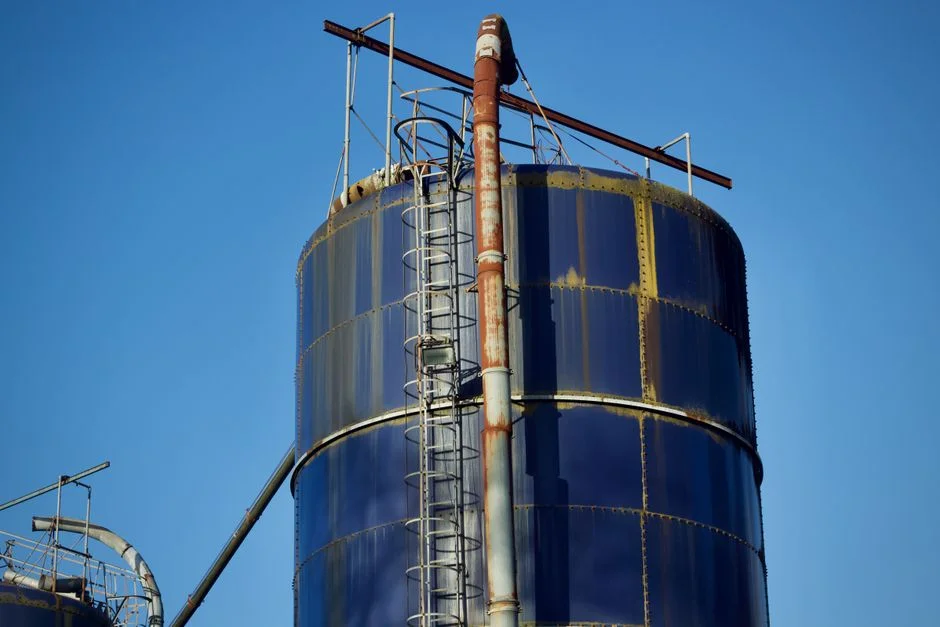
Acid mine drainage (AMD) is the most prevalent mining water quality problem and shows up wherever sulfide minerals (pyrite, pyrrhotite) in waste rock and tailings are exposed to oxygen and water; oxidation reactions produce sulfuric acid, creating highly acidic streams with dissolved heavy metals — iron, manganese, copper, zinc, arsenic, cadmium — at concentrations far exceeding regulatory limits (AMPAC USA, 2025-09). Process water from ore processing — flotation, heap leaching, cyanide gold extraction, and chlorination circuits — contains process chemicals, reagents, and dissolved ore constituents, typically with high TDS and often carrying cyanide, ammonia, or chloramines depending on the circuit (AMPAC USA, 2025-09).
Tailings pond effluent is the liquid fraction of tailings impoundments and contains fine solids, processing chemicals, and leached metals; dewatering discharge from open pits or underground workings varies by geology and can be relatively clean or metal-loaded (AMPAC USA, 2025-09). Because a copper operation, a coal operation, and a dimension-stone quarry produce fundamentally different wastewaters, a Bettles-area operator must characterize the influent stream by stream before a supplier can quote equipment (AMPAC USA, 2025-09). Skipping that characterization is the most common path to an undersized clarifier, a fouled membrane, or a missed metal.
The 2026 Defensible Treatment Train, Step by Step
A defensible 2026 unit-operation sequence for a Bettles-area mineral mining or aggregate operation has six steps, each tied to a specific parameter the literature supports. The order is pH correction first, then coagulation, then solids separation, then multimedia filtration, then a membrane polish when salts or trace metals persist, with monitoring and reporting on the back end (Genesis Water Technologies; PMC review, 2024-02).
- pH correction: raise pH with lime so dissolved metals precipitate as hydroxides and gypsum drops out — the published basis is lime raise to pH >10 before thickening (PMC review, 2024-02). A PLC-controlled chemical dosing skid handles lime, coagulant, and flocculant injection with HMI integration so commissioning is fast and setpoints are auditable.
- Coagulation and flocculation: aggregate suspended solids and fine metal particles into settleable or floatable flocs, matched to the floc density that drives the next separation step (Genesis Water Technologies, 2025-11).
- Solids separation: a DAF system for mining wastewater solids separation when the floc is buoyant or the influent carries oils or fines that float; a lamella clarifier for metal hydroxide sludge when sludge volume and footprint are the constraint (Genesis Water Technologies, 2025-11).
- Multimedia filtration: drop turbidity and colloids to protect downstream membranes, specified by target SDI after the filter rather than inlet turbidity alone. A multi-media filter for RO pretreatment is the standard workhorse for that duty.
- Membrane polish: a UF system for RO pretreatment takes out fine colloids; an industrial RO system for mining wastewater takes out dissolved salts and metals at >99% rejection. RO recovery is 50–70% on AMD feed and 70–85% as the RO stage of a ZLD train (AMPAC USA, 2025-09).
- Sludge dewatering: chemical precipitation produces metal-hydroxide sludge dewatered with a filter press for mining sludge dewatering, the standard fit for the cake volumes produced by precipitation-based mining trains.
Back-end monitoring ties it together: a PLC/HMI with continuous pH, flow, and conductivity, plus Alaska DEC self-monitoring records, even where no POTW exists (LiqTech, 2025-08).
| Step | Unit operation | When to choose | Key parameter |
|---|---|---|---|
| 1. pH correction | Lime dosing, skid-mounted | Dissolved metals, low pH | Raise to pH >10 before thickening (PMC review, 2024-02) |
| 2. Coagulation / flocculation | Coagulant + flocculant | Suspended solids, fine metals | Match floc density to next separator |
| 3a. Solids separation (buoyant) | DAF | Floc below water, oils, fines | Air-to-solids ratio, polymer compatibility |
| 3b. Solids separation (heavy) | Lamella clarifier | Sludge volume, footprint constraint | Plate spacing, underflow solids |
| 4. Filtration | Multi-media filter | RO feed conditioning | Target SDI after filter, not inlet turbidity |
| 5. Membrane polish | UF + RO | Dissolved salts and metals above limit | >99% rejection; 50–70% recovery AMD, 70–85% ZLD RO stage (AMPAC USA, 2025-09) |
| 6. Sludge dewatering | Filter press | Cake volume from precipitation | Cake dryness target, cycle time |
Cold-Climate Sizing and Reuse Economics for a Bettles Operation
Throughput for a Bettles-area site depends on operation type; a single dimension-stone or sand-and-gravel site typically runs in the low-to-mid two-digit m³/h range, while a process plant with heap leach or milling sits an order of magnitude higher, and the operator should size against the highest anticipated daily discharge rather than the average (LiqTech, 2025-08). Sub-Arctic operation requires enclosure and heat tracing on chemical dosing, clarification, and filtration skids; insulated or housed process buildings are typically specified for the chemistry and membrane rooms so freeze-ups do not shut the train down in mid-winter.
RO polish rejects over 99% of dissolved metals and salts, enabling on-site reuse for mineral processing or dust suppression rather than drawing additional freshwater (AMPAC USA, 2025-09). Internal reuse enabled by RO can reduce freshwater consumption by 40–60% versus once-through operation (AMPAC USA, 2025-09), monetizing the compliance investment at a site where freshwater is diesel-hauled or barge-delivered. The industrial RO system for mining wastewater converts a permitting expense into a working-asset line item.
Putting the Basis of Design Together for a Supplier Quotation
Buyers must request a quotation against their specific basis of design rather than relying on published price ranges. The information to put in that request is peak and average flow in m³/h, influent pH and metal profile from a representative sampling round, the Alaska DEC and EPA Region 10 limits for metals, pH, and TSS that apply to the chosen discharge path, and the desired recovery percentage if reuse is in scope. A side-by-side read against the Tenino mining pretreatment 2026 guide shows where the train stays the same and where the Bettles re-mapping changes the question.
Look for a supplier that provides complete end-to-end service and helps the operator obtain the most durable and efficient mining wastewater treatment system, with a clear plan for how to operate and maintain it (LiqTech, 2025-08). Confirm the proposed scope ties chemistry dosing, PLC/HMI controls, and the membrane skid into a single integrated control system, and confirm the supplier has installed the same unit operations — DAF or lamella, multimedia filter, UF, RO, and sludge dewatering — at flows in the same order of magnitude as the Bettles site. The auto dosing for wastewater treatment engineering guide covers the chemistry-control side of that integration in more detail.
Frequently Asked Questions
What federal rule sets the floor for mining wastewater discharge in the U.S.?
40 CFR Part 436 (Mineral Mining and Processing Effluent Guidelines and Standards) is the federal floor for any mining operation that discharges wastewater in the U.S., promulgated in 1975, last amended in 1979, and incorporated into NPDES permits (EPA, 2026-02).
What is the 2026 treatment-train sequence for a Bettles-area mining site?
The defensible 2026 sequence is pH correction with lime to pH >10, coagulation, DAF or lamella, multimedia filtration, RO polish at >99% rejection, and filter-press sludge dewatering, with RO recovery 50–70% on AMD feed and 70–85% on a ZLD RO stage (AMPAC USA, 2025-09; PMC review, 2024-02).
How much does a complete Bettles-area pretreatment train cost, and how do I budget it?
Buyers should provide peak and average flow (m³/h), influent pH and metal