Heavy Metals Removal Methods at a Glance
Heavy metals are persistent and do not biodegrade, so treatment must be selected against a defined wastewater matrix and residue route rather than by removal percentage alone. The July 2024 review by Erfani Gahrouei and colleagues compared adsorption, flotation, ion exchange, chemical precipitation, membrane filtration, coagulation-flocculation, phytoremediation, and electrochemical methods. Published results indicate strong removal under specific study conditions, but they do not establish whole-plant performance because reagent demand, energy, fouling, sludge, brine, spent media, and concentrate can determine operating and compliance risk.
| Method family | Primary mechanism | Strongest application fit | Principal advantage | Principal limitation | Residue requiring management |
|---|---|---|---|---|---|
| Chemical precipitation | Converts dissolved metals into insoluble solids | Bulk removal across variable industrial streams | Simple established chemistry | Chemical demand and large-volume sludge | Metal-bearing sludge |
| Ion exchange | Exchanges dissolved ions for counter-ions on resin | Selective polishing, especially at low metal concentrations | Targeted capture | Breakthrough and competing ions | Regeneration brine |
| Adsorption | Captures metals on material surfaces or pores | Low-concentration polishing with validated media | Potentially selective and recoverable | Retention time, cycling stability, media replacement | Spent or regenerated media |
| UF and RO | Separates material through a membrane barrier | UF as pretreatment; RO for high-rejection separation | Physical separation with controlled reject | Fouling, scaling, cleaning, and concentrate | UF solids and RO concentrate |
| Flotation | Separates suspended or attached material by buoyancy | Oil, solids, and colloid pretreatment | Reduces upstream load | Limited direct dissolved-ion capture | Float sludge |
| Coagulation-flocculation | Destabilizes particles and aggregates them | Conditioning and solids removal | Supports precipitation and filtration | Chemical use and sludge generation | Chemical sludge |
| Electrochemical | Uses electrical reactions to separate or recover metals | Specialized recovery applications | Metal recovery potential | Industrial separation remains unresolved | Large-volume sludge concern |
| Phytoremediation | Uptakes metals through plant biomass | Low-strength, land-based polishing | Uses biomass pathways | Area and time requirements | Metal-bearing biomass |
Chemical Precipitation for Bulk Heavy Metal Removal
Chemical precipitation converts dissolved metals into solids that can be separated, making it a common primary treatment for industrial heavy metal wastewater. The 2024 academic review in Comparing Conventional and Advanced Approaches for Heavy Metal Removal reported precipitation efficiencies of 95–99% for the heavy metals and applications examined. That range is evidence of removal potential, not a guarantee for an industrial train; reagent dose, pH, competing ions, metal speciation, and solids separation can change actual performance.
Do not select a reactor and sludge-handling system from concentration and flow alone. Request pH, total and dissolved metal concentrations, species such as chromium or arsenic, flow variability, alkalinity, oil and grease, suspended solids, and co-contaminants. These inputs determine whether precipitation will work as intended, how much reagent is needed, and how much residue must be handled. The same review identifies large-volume sludge formation as a persistent drawback of chemical and membrane methods, so sludge yield belongs in the economic comparison rather than being treated as an afterthought.
- Characterize the feed and confirm metal species.
- Adjust pH and add the selected precipitant under controlled mixing.
- Separate the resulting solids by settling or filtration.
- Assess residual-metal stability in the sludge.
- Dewater and route the sludge to an authorized disposal or recovery pathway.
A plate and frame filter press can be evaluated for the solid-liquid separation stage after precipitation. It does not remove dissolved metals by itself. Metal-bearing sludge dewatering should be specified around cake production, filtrate quality, residual-metal stability, and the final disposal route; the supplied research does not provide a universal sludge-yield or dewatering-cost value.
Ion Exchange and Adsorption for Selective Metal Capture
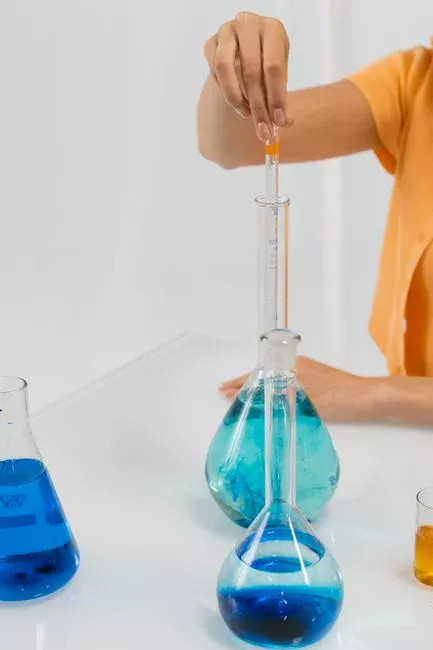
Ion exchange and adsorption can both provide selective dissolved-metal removal, but they operate through different mechanisms and create different burdens. Ion exchange uses resin sites to exchange dissolved ions for counter-ions. Adsorption captures metals on the surface of an adsorbent. The industry overview Top 5 Heavy Metal Wastewater Removal Methods identifies ion exchange as effective for low-concentration metal ions and states that adsorbent performance depends on the material and metal load. Neither method should be selected from a catalogue capacity alone.
The 2024 academic review reported approximately 90% trivalent-chromium removal for both tested resins in the specific application examined. It also summarized adsorption removals of 90–99% for copper, lead, and nickel using high-specific-surface-area materials reported at 500–1500 m²/g. The metal-specific Zeo/PVA/SA bead results show why generic claims are inadequate: the review reports 99.5% for Pb²⁺, 99.2% for Cd²⁺, 98.8% for Sr²⁺, 97.2% for Cu²⁺, 95.6% for Zn²⁺, 93.1% for Ni²⁺, 92.4% for Mn²⁺, and 74.5% for Li²⁺.
| Selection issue | Ion exchange | Adsorption | Buyer action |
|---|---|---|---|
| Capture mechanism | Resin-based ion exchange | Surface or pore capture | Test the actual metal and competing-ion matrix |
| Best fit | Targeted polishing | Targeted polishing with a suitable material | Compare feed concentration, pH, and required endpoint |
| Capacity limit | Breakthrough under service conditions | Loading, retention time, and saturation | Require breakthrough or isotherm data from representative water |
| Operating burden | Regeneration and brine handling | Regeneration or media replacement | Price chemicals, labor, disposal, and recovery value |
| Residual route | Regeneration brine | Spent or regenerated media | Confirm the authorized route before purchase |
Pilot testing must address co-ion competition, breakthrough behavior, regeneration, spent-media handling, and cycling stability. The July 2024 review by Erfani Gahrouei and colleagues specifically identifies selective removal of diverse ions, prolonged retention times, and cycling stability as adsorption challenges. The academic review also reports hybrid-adsorbent removal of 92–98% and metal recovery exceeding 90% in the cited application, but those results cannot be transferred to an untested commercial adsorbent. Use them as evidence of a possible route, not as procurement guarantees.
Membrane Filtration: UF, RO, and Their Industrial Roles
Ultrafiltration and reverse osmosis separate material physically; neither should be treated as an interchangeable substitute for a designed chemical or adsorptive removal stage. The 2024 academic review reported 96–99% removal of iron, copper, and chromium by UF in the applications summarized. It separately reported approximately 99% lead removal and 88% chromium removal in another membrane application, demonstrating that the result remains metal- and system-specific.
For RO, the same review reported removal exceeding 98.75% for Ni²⁺, Cr⁶⁺, and Cu²⁺ in electroplating wastewater and 98–99.96% for Co²⁺, Cu²⁺, and Zn²⁺ in acid mine drainage. These are study-specific results, not universal plant guarantees. The July 2024 review by Erfani Gahrouei and colleagues also identifies persistent sludge and membrane-related scale-up concerns, while the supplied evidence requires fouling, scaling, cleaning, recovery, energy, and concentrate disposal to be evaluated explicitly.
UF is primarily a barrier for suspended solids and colloids and can protect downstream adsorption, ion exchange, or RO. An ultrafiltration system should therefore be assessed on feed solids, oil, particle size, flux behavior, fouling rate, cleaning method, and filtrate quality—not described simply as a heavy metal remover. An industrial reverse osmosis system may provide high metal rejection, but the buyer must evaluate the complete feedwater chemistry, recovery setting, concentrate volume and composition, cleaning demand, and final disposition of that concentrate.
Reject water is not a neutral side effect. Membrane selection should therefore be paired with the reuse or discharge target and an evaluation of pretreatment, concentrate recovery, disposal, and consequences if the feed changes.
Flotation, Electrochemical Treatment, and Supporting Processes
Flotation belongs in the heavy-metal method set because metal-bearing particles, precipitates, and surface-attached metals can be separated with float, but flotation does not directly remove all dissolved metal ions. The July 2024 review by Erfani Gahrouei and colleagues identifies flotation among the evaluated strategies while noting unresolved scale-up issues for electrical methods, particularly large-volume sludge and industrial-scale separation.
In an industrial train, an industrial DAF pretreatment system is most relevant where suspended solids, oil and grease, FOG, or colloidal material would foul or blind downstream filtration, adsorption, ion exchange, or membrane stages. The design question is whether DAF reliably reduces the specific interference using representative wastewater, not whether flotation can substitute for dissolved-metal capture.
Coagulation-flocculation and sedimentation are supporting operations. They can condition wastewater, aggregate particles, capture metal-bearing precipitates, and improve separation before polishing. They are not automatically interchangeable with a dedicated dissolved-metal process. Reagent selection must account for pH, alkalinity, co-contaminants, and the resulting sludge volume.
Electrochemical treatment remains a specialized option with potential for metal recovery, but the 2024 review states that large-volume sludge and industrial-scale separation still require solutions. For electroplating, mining, batteries, and metalworking, the evidence supports staged evaluation more strongly than a single-unit assumption. The reviewer also calls for future studies using real wastewater samples rather than relying only on idealized laboratory matrices; that caution should carry into procurement trials and guaranteed performance schedules.
Choose a Heavy Metals Treatment Train by Application
A heavy metals treatment train should follow the water and residue route: characterize the feed, remove interfering solids and oil, adjust chemistry where required, perform the selected metal-removal stage, polish the effluent, and manage every residual stream. This sequence prevents a high-rejection or adsorption unit from becoming the plant’s primary solids-removal device. Front-end performance is part of the guarantee because it controls chemical demand, fouling, media loading, membrane scaling, and sludge production.
For electroplating, evaluate source control and solids or oil removal, followed by pH-controlled precipitation and filtration, or a membrane-polishing route. The 2024 academic review reported RO removal exceeding 98.75% for Ni²⁺, Cr⁶⁺, and Cu²⁺ in electroplating wastewater, but that result does not establish a universal plant specification. Request chromium speciation because Cr⁶⁺ and trivalent chromium do not present the same treatment or reduction requirement.
For mining and acid mine drainage, evaluate clarification and any required oxidation or pH control, then compare membrane separation with selective adsorption. The academic review reports 98–99.96% RO removal for Co²⁺, Cu²⁺, and Zn²⁺ in acid mine drainage, while the broader evidence also identifies large-volume sludge as a persistent limitation. Use the supplied DAF versus clarifier for mining wastewater guide to compare clarification hardware, but confirm the selected route with site water.
For lower-concentration polishing, compare ion exchange with adsorption using breakthrough, competing ions, regeneration frequency, media replacement, brine, and spent-media handling. Do not place either method ahead of adequate pretreatment.
| Input to request | Why it changes selection or sizing |
|---|---|
| Metal species and speciation | Defines precipitation chemistry, adsorption selectivity, and treatment of oxidized versus reduced forms |
| pH and alkalinity | Controls reagent demand, precipitation, resin behavior, and membrane scaling |
| Total and dissolved concentrations | Sets the required bulk-removal and polishing duties |
| Flow and variability | Determines peak-load, equalization, residence-time, and residual-management requirements |
| Suspended solids, oil and grease, and FOG | Establishes pretreatment needs and downstream fouling risk |
| Competing ions | Affects adsorption selectivity, resin breakthrough, and chemical use |
| Temperature | Influences reaction and membrane operating conditions |
| Reuse or discharge target | Defines the required endpoint and treatment intensity |
| Residual-disposal route | Constrains sludge, brine, spent media, and concentrate handling |
Require a jar test and then a representative-water pilot before equipment sizing. An high-efficiency sedimentation tank may fit clarification, while an automatic chemical dosing system addresses controlled reagent addition, but neither choice should precede feed characterization. The 2024 review’s emphasis on real-wastewater validation directly supports site testing before scale commitment.
What to Confirm Before Selecting an Industrial System
Procurement should require performance guarantees tied to the actual feed matrix, specified test methods, and a stated operating envelope. A generic removal percentage does not establish what will happen when pH, metal species, competing ions, flow, or solids change. The guarantee should identify the feed limits, final effluent limits, sampling points, test methods, and responsibility for performance at each process interface.
Ask suppliers how the system responds to competing ions, pH variation, peak flow, membrane fouling, cleaning, chemical delivery, resin regeneration, media replacement, membrane concentrate, and metal-bearing sludge. Compare lifecycle inputs rather than acquisition price alone: reagent consumption, energy, cleaning chemicals, replacement media, labor, disposal, and any recovery value.
Clarify scope boundaries. Which stages are guaranteed? Which are recommended pretreatment? Who owns the risk when upstream performance falls short? This matters at interfaces where an metals-plant wastewater pretreatment limits condition affects the performance of the selected metal-removal unit.
Require a site trial using representative wastewater and define how rejected batches or changed influent composition will be handled. The MBR versus conventional activated sludge for mining wastewater comparison can help identify biological-interface questions, but the treatment-train decision still depends on the metal matrix and permitted endpoint.
Frequently Asked Questions
Which heavy metals removal method has the lowest operating cost?
There is no evidence-based universal ranking. Bulk precipitation may suit high-loading wastewater, but chemical demand and metal-bearing sludge dewatering and disposal can dominate its cost. Ion exchange or adsorption may be economical for polishing, yet regeneration, media replacement, labor, and brine or spent-media handling must be counted. Compare total lifecycle cost using representative feed data; the supplied research provides no defensible quotation for any method.
Should an industrial wastewater plant choose ion exchange or adsorption?
Choose by tested feed concentration, target metal, competing ions, pH, and residual route. Compare resin breakthrough and regeneration against adsorbent loading, regeneration or replacement, and cycling stability. The approximately 90% trivalent-chromium result applies to two tested resins in the reviewed application, while the adsorption results are tied to specific materials and test conditions.
How much capacity should a heavy metals treatment system be sized for?
Request flow and concentration ranges, variability, pretreatment performance, peak-load criteria, and the required effluent endpoint before selecting capacity. Include start-up, shutdown, batch discharge, and off-spec conditions where relevant. Published removal results do not provide a defensible sizing factor; use a representative-water pilot and the selected equipment supplier’s validated duty calculation.
Can one method meet every discharge or reuse requirement?
No method should be assumed to meet every requirement. Compliance depends on the applicable permit, receiving authority, final effluent data, and the selected reuse specification. A train combining pretreatment, primary removal, polishing, and controlled residual management is often more defensible, but the final decision must be checked against site-specific requirements and representative-water results.
Which method is easiest to validate before purchase?
Use a staged validation: jar testing to establish dosing and separation behavior, followed by a pilot on representative wastewater. Compare residual metal, solids carryover, chemical consumption, fouling or breakthrough, sludge generation, and the condition of brine, concentrate, or spent media. This test directly addresses the 2024 review’s call for evidence from real wastewater rather than idealized matrices.