Which Rules Control a Sewer Discharge Near Evanston?
Mining and metals plants near Evanston meet pretreatment limits by treating each wastewater stream to the receiving POTW’s requirements before discharge. Sewer discharge is regulated under Clean Water Act §307(b) and 40 CFR Part 403, not an NPDES permit, although a separate NPDES permit may govern surface-water outfalls. Applicable categorical standards may include 40 CFR Part 437 for ore mining and dressing or Part 433 for metal finishing. The practical treatment train combines equalization, pH correction, hydroxide precipitation, clarification or DAF, filtration when needed, and controlled sludge dewatering. Local limits at the point of connection are often tighter than federal limits and determine final equipment sizing.
The first engineering task is to identify the receiving POTW, not assume that the federal categorical standard is the sewer-discharge limit. EPA identifies POTWs required to develop local limits under 40 CFR 403.5(c), and local limits are imposed at the industrial user’s point of connection to the collection system. EPA explains that these limits protect the POTW’s treatment processes, sludge operations, workers, receiving waters, and NPDES compliance (EPA, Pretreatment Standards and Requirements—Local Limits, accessed 2026).
A mining or metals operation may be a categorical industrial user under 40 CFR Part 437 for ore mining and dressing or Part 433 for metal finishing. The activity and applicable subcategory determine the federal categorical requirements. Local limits may be numeric or narrative, so the sewer-use ordinance, discharge permit, sampling instructions, and written approval from the control authority must be obtained before equipment sizing. The metals-plant sewer pretreatment guide provides a related workflow, but its values are examples rather than substitutes for Evanston-area requirements.
| Requirement | What the engineer must establish | Representative value or decision rule |
|---|---|---|
| Federal categorical standard | Confirm activity and subcategory | 40 CFR Part 437 or Part 433, as applicable |
| Part 433 metal-finishing example | Apply only if the operation falls within the category | Copper: 3.38 mg/L daily maximum; 2.07 mg/L monthly average. Total chromium: 2.77 mg/L daily maximum; 1.71 mg/L monthly average (HydropureWater, 2026) |
| Representative 2026 local POTW limits | Replace with the receiving authority’s ordinance | Zinc: 0.3–1.0 mg/L monthly average; copper: 0.3–0.5 mg/L monthly average (HydropureWater, 2026) |
| Enforcement location | Identify the legally defined sampling point | Industrial-user discharge at the point of connection to the POTW collection system (EPA, accessed 2026) |
Before issuing a design basis, obtain the current sewer-use ordinance, applicable subcategory, sampling point, averaging periods, prohibited discharges, monitoring conditions, and enforcement consequences. The binding number may be the local limit even where a federal value also exists.
Characterize the Wastewater Before Selecting Equipment
A single blended outfall sample can conceal the contaminants that determine the treatment train. Acid mine drainage, ore-processing water, tailings-pond water, and dewatering discharge should be sampled separately because their flow patterns and chemistries differ. The copper-mine wastewater treatment process guide explains why stream-by-stream profiles are needed for preliminary sizing and vendor pricing.
Raw acid mine drainage and spent process solutions can have pH of 2–4, while total suspended solids range from the hundreds to several thousand mg/L. Reported dissolved contaminants include lead, copper, zinc, cadmium, nickel, and arsenic; leach-pad runoff and brine streams may also contain elevated sulfate and total dissolved solids (HydropureWater, 2026). Acid mine drainage can mobilize iron, manganese, copper, zinc, arsenic, and cadmium. Ore-processing water can add high TDS and reagents such as cyanide, ammonia, or chloramines (AMPAC USA, 2025-09).
| Wastewater stream | Character to verify | Design implication |
|---|---|---|
| Acid mine drainage | Acidity, pH, flow cycling, dissolved metals, sulfate and TDS | Assess equalization, pH correction, precipitation, and dissolved-solids treatment |
| Ore-processing water | TSS, target metals, process reagents, conductivity | Screen for reagent-specific controls and solids separation |
| Tailings-pond water | Fine solids, leached metals, process chemicals | Evaluate filtration and sludge-handling requirements |
| Dewatering discharge | Geology-dependent metals and discharge duration | Separate it from other streams when establishing peak flow |
Request a representative sampling round covering pH, flow variability, TSS, TDS or conductivity, target metals, oil and grease where relevant, and process-reagent constituents. Establish average flow and peak flow separately. Size equalization and treatment equipment against the highest anticipated discharge condition rather than an annual average.
The vendor-ready basis of design should contain average and peak flows in m³/h, representative chemistry for each stream, the exact local limits, and any reuse or recovery objectives. Sampling frequency and duration should reflect both normal operations and batch releases. Without those inputs, treatment chemistry, hydraulic loading, and equipment capacity remain assumptions.
Build a Treatment Train Around the Binding Limit
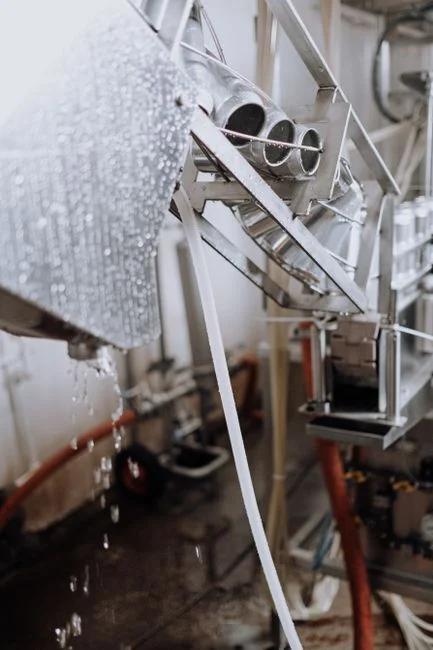
The defensible sequence is equalization, controlled pH correction, parameter-specific precipitation, solids separation, polishing as required, and monitored discharge. Each unit must answer a defined compliance objective; adding filtration or membranes without a corresponding limit or reuse requirement increases capital, operating burden, and sludge handling without establishing why it is needed.
- Equalization: HydropureWater recommends 8–24 hours of average daily flow to damp batch discharges associated with shift changes, dump-leach cycles, and mill clean-outs (HydropureWater, 2026).
- pH correction: Use staged lime or sodium hydroxide dosing. The cited general target is pH 6.5–9.0, with two-stage dosing when influent pH varies by more than 2 pH units (HydropureWater, 2026). A PLC-controlled chemical dosing system for pH and precipitation can integrate pH adjustment and coagulant feed.
- Precipitation: Hydroxide precipitation is the default for dissolved metals. Properly controlled installations achieve 85–95% total-metals removal, according to Fluence (2024-11), as cited by HydropureWater in 2026. Jar tests must establish the optimum pH window for each target metal rather than applying one generic optimum.
- Solids separation: Select DAF for oil, grease, and floatable fines; select lamella clarification for dense metal-hydroxide sludge and footprint-constrained installations.
- Polishing: Use multimedia filtration where residual solids or membrane protection justify it. The cited filtration rate is 1–2 m/h, with residual TSS below 10 mg/L (HydropureWater, 2026). Use UF or RO where local limits or reuse objectives require additional dissolved-metal or dissolved-solids removal. Cited RO recovery is 50–70% for AMD feed and 70–85% in a thermal zero-liquid-discharge train, with more than 99% rejection of dissolved metals and salts (AMPAC USA, 2025-09).
- Sludge handling: Route metal-bearing sludge to dewatering. The cited plate-and-frame filter-press outcome is 25–35% dry-solids cake (HydropureWater, 2026).
| Unit operation | Compliance function | Selection input |
|---|---|---|
| Equalization basin | Damp batch and variable flows | Peak discharge, operating duration, average daily flow |
| Staged pH and chemical dosing | Create the required precipitation condition | Stream chemistry, jar-test window, reagent consumption |
| DAF or lamella | Separate precipitated or floatable solids | Oil and grease, floc density, hydraulic peak, sludge properties |
| Multimedia filter | Polish residual TSS or protect membranes | Target solids concentration, required backwash, filtration rate |
| UF or RO | Remove residual dissolved constituents where required | Local dissolved-metal limit, TDS, recovery and reuse objective |
| Sludge dewatering | Produce a managed metal-bearing residue | Sludge volume, solids content, disposal or recovery route |
Sulfide polishing should be considered when jar tests or local limits cannot be met with hydroxide precipitation alone. It carries higher reagent cost and requires controls for hydrogen sulfide off-gassing. Whether that complexity is warranted is a project-specific decision, not a default specification.
Choose DAF or Lamella from the Waste Profile
DAF is the better primary separator when oil, grease, free oil, or fine colloidal material must be floated; lamella clarification is stronger for dense metal-hydroxide flocs at relatively high flow and constrained footprints. Neither is universally superior. The comparison should follow the waste profile and the limit that must be met.
| Decision factor | DAF | Lamella clarification |
|---|---|---|
| Preferred waste character | Oil-bearing, floatable fines, colloidal material | Dense metal-hydroxide flocs without significant oil |
| Hydraulic or surface loading | 5–25 m/h hydraulic loading | 20–40 m/h surface loading |
| Reported separation performance | 90–98% TSS removal in mining and metal-finishing service | Used for dense precipitated solids after flocculation |
| Chemical-use consideration | Polymer and air-saturation operating requirements must be included | Up to 30% lower chemical consumption than conventional basins |
| Principal limitation | Requires suitable floc and skimming conditions | Not designed for significant oil loading |
The cited DAF product envelope is 4–300 m³/h across 13 standard models. That range supports preliminary screening, not final selection (HydropureWater, 2026). Below 10 m³/h, packaged skid systems are cited as common; above 100 m³/h, multiple DAF trains or a lamella clarifier may become more economical. These are early-screening indicators, not final capacity guarantees.
Use the DAF versus lamella clarifier selection for mining wastewater comparison as a decision framework, then replace its example chemistry with site data. Require guarantees tied to the actual influent, required removal, peak hydraulic loading, sludge properties, and operating envelope. A vendor’s standard TSS-removal claim does not demonstrate compliance with a dissolved-metal limit.
Confirm Performance Before Discharge
Compliance must be demonstrated at the point of connection, not inferred from a federal categorical value or a vendor’s nameplate performance. The final design basis is the receiving POTW’s current sewer-use ordinance and written discharge requirements. Equipment operation should be tied to the applicable averaging period and sampling condition for every regulated parameter.
Specify continuous pH, flow, and conductivity monitoring where needed, with automated chemical dosing linked to the operating sequence. HydropureWater describes PLC control that holds pH within a ±0.2 band as a practical control objective (HydropureWater, 2026). Confirm the required sampling and reporting for pH, TSS, metals, and other constituents before the control authority issues written acceptance.
PFAS should be addressed as a permit-cycle issue. HydropureWater states that EPA’s 2024 Multi-Sector General Permit added PFAS monitoring for sectors including metal mining and that POTWs are adopting similar analytical suites (HydropureWater, 2026). Whether a sewer discharge is within the POTW’s monitoring program must be confirmed directly.
Add disinfection only when the local authority requires it. The cited chlorine-dioxide dose is 1–5 mg/L where selected for the required residual (HydropureWater, 2026). A chlorine-dioxide system for locally required disinfection should therefore be treated as a conditional unit rather than a default addition.
Do not accept a guarantee based only on TSS removal. Tie each guarantee to the applicable local limit, averaging period, sampling condition, and maximum concentration or load. For residual metal limits below 0.3 mg/L, the treatment objective may require sulfide polishing rather than conventional hydroxide precipitation alone (HydropureWater, 2026).
Prepare a Vendor-Ready Basis of Design
A comparable equipment proposal requires a documented hydraulic, chemical, regulatory, and sludge basis. Without that package, suppliers cannot define the guarantee or distinguish necessary equipment from optional additions. The procurement package should be organized as follows.
| Bid package input | Required information | Why the supplier needs it |
|---|---|---|
| Hydraulic basis | Average flow, peak flow, peak 2-hour flow, and anticipated turndown, all in m³/h | Sizes equalization, hydraulic equipment, controls, and piping |
| Stream-specific chemistry | pH, TSS, target metals, TDS or conductivity, oil and grease where relevant, and process reagents | Defines precipitation, separation, filtration, and reagent demand |
| Regulatory basis | Exact POTW limits, prohibited discharges, monitoring frequency, sampling point, and enforcement consequences | Converts legal requirements into performance objectives |
| Recovery objective | Reuse, recovery, or zero-liquid-discharge integration requirements | Determines whether UF or RO belongs in the train |
| Supplier deliverables | Unit sequence, hydraulic basis, reagent consumption, instruments, controls narrative, sludge estimate, footprint, and performance guarantee | Allows engineering and commercial comparison on the same scope |
| Experience evidence | References for comparable flow and wastewater character | Tests the supplier’s mining or metals operating experience |
State the treatment objective explicitly for each stream and for the combined discharge. If blended treatment is proposed, explain whether equalization provides sufficient control of acid slugs, reagent slugs, and peak solids loading. Also identify the expected metal-hydroxide sludge quantity, solids content, filtrate return point, and approved disposal or recovery route.
Ask each bidder to include a DAF system for oil-bearing and floatable mining wastewater or a high-efficiency sedimentation solution, as appropriate, and to identify every performance assumption. Require references for installations at comparable flow and wastewater character; a broad industrial reference is not a substitute for mining or metals service.
Frequently Asked Questions
How much does industrial wastewater pretreatment cost for a mining or metals plant near Evanston?
No standard complete-system price range is supported by the research. Request a quotation using peak and average flow, separate stream chemistry, the exact POTW limits, and any recovery objective. Also request reagent consumption, sludge volume and solids content, controls scope, and installation costs so the comparison includes operating consequences rather than equipment price alone.
Which pretreatment technology should be selected for metal-bearing mining wastewater?
Select DAF when oil, grease, or floatable colloidal fines dominate the separation problem; select lamella clarification when dense metal-hydroxide sludge and footprint are the controlling factors. Confirm the decision with representative chemistry and jar testing. For more detail, use the mining-wastewater DAF and lamella comparison.
When are sulfide polishing, UF, RO, or disinfection required?
Sulfide polishing may be needed when hydroxide precipitation cannot meet a very low residual-metal limit. UF or RO is justified by dissolved-solids or dissolved-metal requirements and reuse objectives, not by a generic treatment template. Include disinfection only when the receiving POTW requires it. Jar tests and the sewer-use ordinance should establish each decision.
How should a supplier be selected for a defensible pretreatment system?
Evaluate demonstrated mining or metals service at comparable flow, guarantees tied to the actual local limits and averaging periods, PLC and instrument integration, sludge handling, and commissioning support. Require references and a written controls narrative. Do not accept a TSS-removal guarantee when the binding issue is a dissolved metal, pH excursion, or prohibited discharge.