
Which Rules Govern an Elkmont Sewer Discharge?
Fabricated metals plants near Elkmont meet sewer pretreatment limits by first confirming which metal-finishing category applies to their actual operations, then applying the stricter applicable requirement for each pollutant. The governing design envelope must combine federal categorical standards, any applicable PSES or PSNS limits, the receiving POTW’s site-specific local limits, and prohibitions against pass-through and interference. Equipment selection should follow an actual wastewater characterization and the industrial user’s permit—not a generic treatment train. That permit review is the first procurement gate.
Pretreatment means treating industrial wastewater before it enters a publicly owned treatment works collection system. It is distinct from treatment performed inside the POTW. EPA identifies 40 CFR 403.5(c) as the basis for POTWs to develop local limits. Those limits address the particular POTW, its sludge, and receiving waters; they may be numerical or narrative and are imposed at the industrial user’s point of connection. EPA’s Pretreatment Standards and Requirements—Local Limits guidance also explains that pass-through and interference prohibitions can apply independently of numerical limits.
There is a material discrepancy in the research that must not be copied silently into an equipment specification. The 2026 HydropureWater fabricated-metals source identifies 40 CFR Part 433 as the Metal Finishing category, while the 2026 Elk Grove Village source identifies 40 CFR Part 413 for electroplating, plating, polishing, anodizing, coloring, and coating. Neither source resolves which provision governs a specific Elkmont facility. Confirm the plant’s actual regulated operations and obtain the receiving authority’s written interpretation before setting the design basis. For a broader treatment sequence, see the related sewer-limit decision framework.
| Due-diligence item | What the buyer should obtain | Effect on equipment scope |
|---|---|---|
| POTW authority | Current sewer-use ordinance and the identity of the receiving authority | Identifies the enforceable local program and discharge point |
| Industrial user permit | Permit, applicable conditions, local-limit table, monitoring schedule, and prohibited discharges | Defines the pollutant-by-pollutant design envelope |
| Categorical applicability | Written applicability determination based on actual operations | Determines whether PSES, PSNS, or neither category governs |
| Operations and reuse | Process inventory, batch schedule, and future reuse or zero-discharge assumptions | Sets segregation, equalization, polishing, and reuse requirements |
Characterize the Wastewater Before Fixing the Equipment Scope
Cutting, bending, welding, and assembly generally do not create the same wastewater profile as electroplating, plating, polishing, anodizing, coloring, coating, or pickling. The buyer should map every operation to its drains before pricing treatment. A shop that only fabricates and ships dry parts should not receive the same treatment scope as a facility operating a chromic-acid or alkaline-cyanide line.
The relevant streams can contain free or emulsified oils, dissolved metals such as zinc, nickel, copper, chromium, lead, and cadmium, hexavalent chromium associated with chromic-acid operations, and suspended solids from grinding swarf, casting sand, or hydroxide floc. Cyanide requires particular attention where alkaline cyanide plating remains in use: the 2026 HydropureWater fabricated-metals source states that it must be destroyed before metals precipitation because residual cyanide can resolubilize downstream precipitates.
HydropureWater’s 2026 field data for a mixed floor drain entering pretreatment reports oils at 50–500 mg/L, total dissolved metals at 5–200 mg/L, TSS at 100–1,000 mg/L, and pH swings from 2 to 12 across batch dumps. These values describe that mixed-floor-drain application; they are not automatic Elkmont permit limits. The same source reports that a four-hour composite can miss a major batch dump and undersize equalization, so specify a full-week composite before finalizing equipment.
- Characterize concentrated process streams separately, including rinsewater, cleaning baths, and pickling drains.
- Characterize dilute floor and contact water separately from process wastewater.
- Identify storm-derived contact water and determine whether it enters the POTW or segregated drainage system.
- Sample compressible-air condensate where it enters the facility drain system.
Separate characterization permits deliberate segregation instead of accidental dilution. It also supports load-based sizing for industrial wastewater sludge treatment and provides the operating history needed for MBR treatment for steel pickling rinsewater.
Build a Treatment Train for Separate Removal Problems
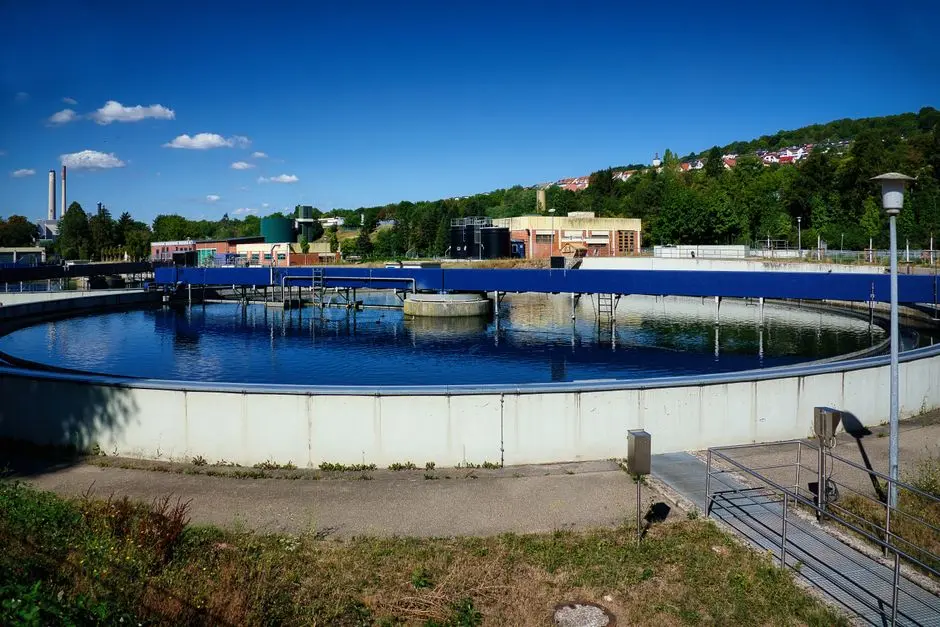
The defensible sequence separates contaminant removal problems instead of forcing oils, chromium, cyanide, and dissolved metals into one reaction stage. The process flow is screening and segregation, equalization, oil and grease removal, hexavalent-chromium reduction, cyanide oxidation where applicable, pH-controlled metals precipitation, flocculation, DAF or lamella clarification, final pH control, and optional polishing.
Equalization is the control point for batch dumps. It smooths flow, pH, and contaminant concentration before downstream reactions. Oil and grease require physical separation or chemical break. Hexavalent chromium requires chemical reduction. Cyanide requires oxidation. Dissolved metals require pH-driven precipitation. Combining these functions without separate controls increases reagent consumption and the chance of an invalid outlet.
For chrome reduction, the 2026 HydropureWater fabricated-metals source identifies sodium metabisulfite or ferrous sulfate at pH 2–3, with ORP controlled at roughly 250–300 mV. The resulting trivalent chromium is precipitated as Cr(OH)₃ during the pH 8.5–9.5 precipitation stage. These are process conditions cited by that source, not a substitute for the Elkmont permit or a reaction-trial design.
Chemical feed should combine flow-paced feedforward for chemical demand with pH or ORP feedback for process control. The 2026 source identifies NaOH or H₂SO₄ for pH adjustment, sodium metabisulfite for chrome reduction, NaOCl for cyanide destruction, and polymer for flocculation. An automatic chemical dosing system for pretreatment controls should also provide calibration access, stroke-count totalization, alarms, and fail-safe routing. The broader automatic dosing system design for wastewater pretreatment explains the control architecture.
Protective interlocks should divert flow back to equalization when pH moves outside the approved range, ORP leaves its control band, or high-TSS protection is triggered. A rotary mechanical bar screen can protect downstream equipment from rags, wipes, and tramp metal.
| Process step | Primary removal problem | Required control or protection |
|---|---|---|
| Screening and equalization | Tramp solids and batch variability | Batch routing, level control, mixing |
| Oil removal | Free and emulsified oil | Separation performance, carryover control |
| Chrome reduction | Hexavalent chromium | pH and ORP feedback |
| Cyanide oxidation | Cyanide | Validated oxidation endpoint |
| Metals precipitation | Dissolved metals | pH control, mixing, residual cyanide control |
| Flocculation and clarification | Metallic hydroxide floc and remaining TSS | Polymer feed, solids inventory, divert interlock |
Match Each Treatment Step to Its Failure Mode
A proposed unit is not adequately specified by its name. Each major step needs a design flow, pollutant-loading basis, outlet objective, control narrative, interlocks, and defined response to upset conditions. That test exposes failures before the system reaches the POTW connection.
- Equalization: An undersized basin, uncontrolled batch routing, or poor mixing allows downstream flow and pH excursions.
- Oil removal: Emulsified oil or separator carryover consumes downstream reagents and impairs solids separation.
- Chrome reduction: Incorrect reduction pH, weak ORP control, or reaction short-circuiting leaves hexavalent chromium untreated.
- Metals precipitation: Unsuitable pH, poor mixing, residual cyanide, or inadequate flocculation can leave dissolved metals in solution or carry hydroxide solids into the outlet.
- DAF: Hydraulic or air-to-solids mis-sizing, excessive recycle, fragile floc, foam, or high incoming solids can reduce separation performance or increase downtime.
Require each supplier to explain what the equipment will do, how the result will be measured, and where flow goes when the result is unacceptable. A high-TSS alarm connected only to an audible annunciator is not equivalent to automatic diversion to equalization. Include air flotation energy-efficiency considerations in the technical review rather than evaluating only rated flow.
| Failure mode | Evidence supplier should provide | Acceptance criterion |
|---|---|---|
| Batch overload | Batch-volume record and equalization calculation | Documented containment of specified batch schedule |
| Chemical-control upset | Control narrative, calibration method, and sensor range | Simulated alarm and divert sequence during FAT |
| Solids carryover | Design loading basis and high-TSS response | Permit-linked outlet sampling plan |
| Equipment unavailable | Maintenance plan, critical spares, and bypass strategy | Documented redundancy or containment response |
Select DAF, Clarification, and Sludge Handling by Performance
DAF design must be tied to hydraulic loading, floc characteristics, and recycle rather than a single flow rating. The 2026 HydropureWater fabricated-metals source cites hydraulic surface loading of 4–20 m/h depending on model and floc density, an A/S range of 0.005–0.060 with 0.02 as a typical design point, and recycle of 10–30% of forward flow.
Increasing A/S can produce a drier float but raises blower power and may shatter fragile floc. Increasing recycle can improve TSS removal, but it dilutes chemistry and increases equalization demand. These are trade-offs, not independent “more is better” settings. The supplier must identify the selected value, supporting floc assumptions, blower duty, and required equalization response. Review a dissolved air flotation system for metals wastewater against those conditions.
Lamella clarification is appropriate when compact inclined-plate separation and sludge recirculation are preferred. DAF is more strongly indicated where oil, FOG, and floatable solids make flotation advantageous. Compare the alternatives using measured inlet loading, required outlet quality, footprint, auxiliary power, foam management, and sludge handling—not unit name alone. A high-efficiency sedimentation tank is one clarification option, not a substitute for a complete performance design.
For sludge, the 2026 HydropureWater source reports floated metal-hydroxide sludge at 2–5% dry solids after DAF, 25–35% after plate-and-frame dewatering, and approximately 22% dry solids with belt pressing for metal hydroxide. Evaluate the plate-and-frame filter press against batch frequency, cake handling, chemical conditioning, and the disposal route. The sludge technology comparison should be used to test haul-off cost and moisture consequences rather than equipment price alone.
| Evaluation area | DAF question | Clarification question |
|---|---|---|
| Separation driver | Can flotation recover the required oil and floatable-solids load? | Can the selected solids have suitable settling and sludge-recirculation behavior? |
| Operating risk | Will recycle, foam, or fragile floc impair performance? | Will solids accumulation or sludge recirculation restrict capacity? |
| Acceptance basis | Measured TSS, oil, and solids removal under design loading | Measured TSS and metals performance under design loading |
| Sludge route | Float recovery and dewatering behavior | Settled-solids withdrawal and dewatering behavior |
Determine Whether Polishing or Water Reuse Is Actually Required
Polishing is justified when the POTW’s limits are stricter than the governing categorical requirements, the plant needs reuse-quality water, or a future requirement creates a need for additional removal. It is not justified merely because the wastewater contains dissolved metals. The 2026 HydropureWater source states that most fabricated metals plants can meet ordinary sewer limits with the core train.
For BOD/COD tightening or reuse, an integrated MBR wastewater treatment system using submerged PVDF membranes provides filtration below 1 μm. An industrial reverse-osmosis system supports sub-ppm TDS or a specific reuse metal cap, including nickel below 0.1 mg/L for some reuse specifications, according to the 2026 source. Its upstream multi-media filter should hold SDI15 below 3 to avoid premature RO membrane failure.
Anion exchange or granular activated carbon can provide a future PFAS-polish stage. The supplied research identifies a 2026 EPA chrome-finishing rulemaking but no current numerical PFAS limit for chrome finishers. Reserve space, connections, and control architecture if future-proofing is justified; do not represent a pending requirement as an enforceable current limit.
Closed-loop zero-liquid-discharge equipment is generally uneconomic for a fabricated metals plant unless water scarcity or a specific reuse-economics case supports the capital. Compare reuse value, brine or concentrate disposal, energy demand, pretreatment burden, and operating labor against the incremental water and disposal savings.
Turn the Permit and Wastewater Data into a Supplier Scope
The procurement package should begin with the controlling documents, not a generic equipment list. Issue the POTW permit and local-limit table, one week of characterized flow, pollutant profiles, operating pH ranges, batch schedules, available utilities, sludge-disposal route, and future reuse assumptions. Where required information is missing, identify it as a supplier deliverable or a design hold point rather than filling it with an assumed value.
- Request a complete mass balance covering wastewater source, unit process, destination, chemical demand, residual generation, alarms, fail-safe routing, sampling points, and operator controls.
- Require permit-based performance criteria rather than unsupported generic removal claims.
- Define a factory acceptance test, installation qualification, operational test, and sampling plan tied to applicable daily-maximum and monthly-average requirements.
- Compare bids on chemical consumption, blower and pumping energy, sludge dry solids or moisture, controls interoperability, maintenance access, operator training, and validation support.
The 2026 Elk Grove Village source reports that categorical industrial users typically monitor pH continuously or per batch, oil and grease and TSS through monthly or quarterly 24-hour composites, and metals with monthly or quarterly grabs. The actual Elkmont permit controls, so these practices must be reconciled with its written monitoring frequency and sample types rather than copied blindly.
Require suppliers to identify which conditions create a permit noncompliance and how the package prevents a discharge during that condition. A controlled divert to equalization, an automatic chemical shutoff, or a segregated hold tank is an engineering answer; a statement that the operator will “monitor closely” is not.
Frequently Asked Questions
Which federal category and local limits should govern an Elkmont fabricated metals discharge?
Confirm the facility’s actual operations and the receiving POTW’s written requirements before selecting equipment. The research conflicts between 40 CFR Part 433 and Part 413, so neither should be assumed. For each pollutant, the design must satisfy the stricter applicable requirement, while separately addressing pass-through and interference prohibitions.
How should equalization and DAF equipment be sized?
Begin with a full-week characterization. The cited HydropureWater 2026 mixed-floor-drain data reports oils at 50–500 mg/L, total dissolved metals at 5–200 mg/L, TSS at 100–1,000 mg/L, and pH swings from 2 to 12; these characterize one application, not the Elkmont permit. Use actual batch volumes and pollutant loads to size equalization and DAF.
What should a treatment supplier guarantee before award?
Require a process-specific guarantee supported by a design-flow and loading calculation, an outlet objective tied to the permit, a control narrative, calibrated critical instruments, automatic fail-safe routing, and defined FAT and performance-test criteria. “Heavy-duty construction” or headline treatment capacity is not an acceptance criterion.
How should buyers compare treatment costs and budgets?
Compare the life cycle of the complete treatment scope, not only the purchase price of the clarification equipment. Request chemical consumption, blower and pumping energy, sludge moisture or dry-solids outcomes, monitoring obligations, maintenance, operator labor, disposal costs, and any reserve for future polishing. Obtain project-specific quotations after the permit and wastewater data establish the scope.
When are MBR, RO, anion exchange, or GAC necessary?
MBR becomes relevant for BOD/COD tightening or reuse, while RO supports sub-ppm TDS or a defined reuse-metal cap. Anion exchange or GAC becomes relevant when a PFAS requirement or reuse specification creates that need. Current discharge compliance should be handled by the core treatment train; polishing should be added for a documented permit, reuse, or future-compliance trigger. A plant-specific ETP and DAF scope can be used to compare those boundaries.