Why Steel Pickling Rinse Breaks Generic MBR Guidance
A submerged flat-sheet PVDF MBR with 0.1 μm pore size is the standard 2026 configuration for steel pickling rinse water destined for either reuse or discharge. It follows a neutralization–oxidation–precipitation–DAF pretreatment train that drops Fe²⁺ below 5 mg/L and F⁻ below 10 mg/L before the bioreactor, protecting the membrane and delivering <1 μm effluent suitable for pickling-line countercurrent reuse at 60–80% recovery.
Pickling rinse is not a generic industrial wastewater. Free mineral acidity (FMA) runs 1–8% as HCl or H₂SO₄, ferrous iron (Fe²⁺) sits between 2,000 and 12,000 mg/L, total Fe can reach 15,000 mg/L, and fluoride spikes to 50–200 mg/L on stainless lines. Temperature holds at 40–70 °C from the bath carryover, and rolling oil rides the strip into the rinse at 50–500 mg/L. None of the textile MBR datasets — built around reactive dyes, hot caustic, and 500–1,500 mg/L COD (Springer Nature Switzerland, 2024) — describe this envelope. A submerged flat-sheet MBR can handle it, but only because the bioreactor is the polish step, not the workhorse.
Generic MBR guidance fails on four fronts at this chemistry. Low pH crashes nitrifying biomass and strips microbial diversity from the floc. Fe²⁺ oxidizes inside the aeration tank and plates Fe(OH)₃ directly onto the membrane surface, choking flux. F⁻ attacks glass-filled polypropylene housings and welds. Oil blinds the membrane within hours if it slips past pretreatment. A defensible 2026 configuration starts by solving these four failure modes upstream, then runs an MBR sized for the residual load, not the raw influent.
"Reuse" here means countercurrent rinse-stage makeup, where the treated stream replaces freshwater at the final rinse cascade. "Discharge" means meeting GB 13456-2012 Table 2 (China, total Fe ≤10 mg/L, Zn ≤2 mg/L, pH 6–9) or the EU IED 2010/75/EU BAT-AEL ranges. The MBR serves both targets — the difference is whether a downstream RO polishes for closed-loop TDS control.
Pickling Rinse Characterization: Parameters That Drive MBR Sizing
No standardized pickling-rinse influent dataset exists in the public literature, so the envelope below reflects engineering-typical values from operating lines rather than a single citable study. Treat these as the design basis you hand to any MBR supplier before sizing membranes or equalization volume.
| Parameter | Typical Range | Design Implication |
|---|---|---|
| pH | 0.5–2.5 | Neutralization to 8.5–9.5 requires 15–25 g NaOH per liter of rinse |
| FMA (HCl / H₂SO₄) | 1–8% | Drives chemical consumption and concrete-protection requirements |
| Fe²⁺ | 2,000–12,000 mg/L | Sets oxidation-tank HRT and aeration demand |
| Total Fe | up to 15,000 mg/L | Defines sludge yield — ~2.5 kg dry solids per kg Fe removed |
| F⁻ | 50–200 mg/L | Forces non-glass-filled PP housings and limits RO recovery |
| Zn²⁺ | 20–300 mg/L | Co-precipitates with Fe(OH)₃ above pH 8.5 |
| Cr⁶⁺ | Rare, but regulated | Requires reduction to Cr³⁺ before precipitation |
| COD | 100–800 mg/L | Mostly from oil/rolling lubricant; amenable to biological polish |
| TSS | 50–500 mg/L | Removed by DAF/lamella before the MBR |
| Oil & grease | 50–500 mg/L | Must be below 10 mg/L entering the MBR tank |
| Temperature | 40–70 °C | Cooling to <35 °C required before biological stage |
Flow is intermittent: pickling lines dump in pulses during coil changeover and grade switches, so equalization is mandatory before any biological or membrane step. The equalization basin must be sized for 8–24 h HRT to dampen the pH and Fe swings, and it is typically the first place where partial caustic dosing brings pH to 2–3 to protect concrete and downstream piping.
MBR alone cannot treat this stream. Chemistry has to remove 95% of the iron and zinc before the bioreactor sees it; biology then polishes residual COD, drops any remaining chelated metals, and delivers the low-SDI effluent that RO needs for reuse duty. Skipping the chemistry step is the single most common reason MBRs fail on pickling service.
Pretreatment Train: The Steps That Make MBR Viable
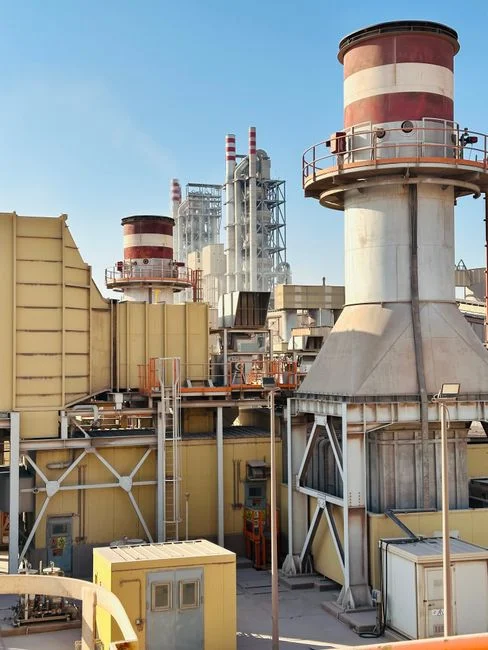
The pretreatment train is the section top-ranking pages skip, and it is also the section that determines whether the MBR runs six months or six years. Five stages sit between the pickling-rinse gutter and the membrane tank.
Stage 1 — Equalization. An 8–24 h HRT agitated tank absorbs batch dumps from coil changeovers. Partial caustic dosing to pH 2–3 protects concrete and lets downstream pumps run on standard alloys. A bottom-slope scraper prevents Fe(OH)₂ buildup on the floor.
Stage 2 — Fe²⁺ oxidation. Aeration alone converts Fe²⁺ to Fe³⁺ at 1.0–1.5 kg O₂ per kg Fe at pH 4–5, but it is slow below pH 3. Two practical routes exist: a dedicated oxidation tank with 4–6 h HRT, fine-bubble diffusers, and ORP control above 250 mV, or H₂O₂ dosing at 0.3–0.5 kg H₂O₂ per kg Fe²⁺ for faster turnover. The ORP setpoint matters more than the timer — at 250–350 mV the reaction is 95% complete in 4 h, below 200 mV it stalls. An automatic chemical dosing system ties the peroxide feed to the ORP signal so the loop holds tight through load swings.
Stage 3 — Neutralization and precipitation. Lime or NaOH lifts pH to 8.5–9.5, crashing Fe(OH)₃, Zn(OH)₂, and Cr(OH)₃ as a dense floc. NaOH is cleaner but more expensive; lime generates 2–3× the sludge but costs a third as much per kg of acid neutralized. A lamella clarifier at this stage gives a high-rate sedimentation footprint of roughly 1 m³/h per m² of plan area, against 0.3 m³/h per m² for a conventional clarifier. pH control to within ±0.2 is the difference between passing Zn discharge and missing it on a routine sample.
Stage 4 — Dissolved air flotation (DAF). DAF lifts the metal-hydroxide floc and any emulsified rolling oil in a single pass. Micro-bubble sizing sits at 30–50 μm, recycle ratio 20–40%, and hydraulic loading 4–25 m³/m²·h across the DAF line, which ranges from 4 to 300 m³/h. Oil removal to below 10 mg/L and TSS below 30 mg/L is realistic at this stage. The DAF system is also the last defense against oil blinding the MBR — if DAF effluent shows oil above 15 mg/L, the MBR will foul in days, not months.
Stage 5 — Sand or multi-media filtration. A polishing multi-media filter drops TSS to below 20 mg/L and SDI to below 5, which is the gate the MBR membrane expects. Skipping this step trades a $40,000 filter for a $200,000 membrane replacement on the first major upset.
Submerged vs Sidestream MBR: Which Configuration Fits Pickling Rinse
The configuration decision is the one top SERP pages do not actually resolve. Three MBR formats can treat pretreated pickling rinse; only one is the defensible 2026 default.
| Parameter | Submerged Flat-Sheet | Submerged Hollow-Fiber | Sidestream Tubular |
|---|---|---|---|
| Pore size / material | 0.1 μm PVDF | 0.1–0.4 μm PVDF/PE | 0.05–0.1 μm PVDF/ceramic |
| Operating flux | 15–25 LMH | 12–20 LMH | 50–80 LMH |
| TMP / suction | 10–50 kPa | 10–40 kPa | 200–400 kPa |
| Cross-flow velocity | n/a (submerged) | n/a (submerged) | 2–4 m/s |
| Specific energy | 0.3–0.8 kWh/m³ | 0.3–0.8 kWh/m³ | 2–5 kWh/m³ |
| Tolerated MLSS | 8,000–12,000 mg/L | 6,000–10,000 mg/L | 10,000–15,000 mg/L |
| Oil / fouling tolerance | High (flat surface) | Low (fiber fouling) | Very high (cross-flow scour) |
| Footprint | Low | Lowest | High (recirculation loop) |
| Capex per m³/day | Moderate | Lowest | Highest (2–3× flat-sheet) |
| Element replacement | Module-by-module | Module bundle | Tube-by-tube |
Submerged flat-sheet PVDF at 0.1 μm runs 15–25 LMH at 10–50 kPa suction, 10–20× lower energy than sidestream, tolerates MLSS of 8,000–12,000 mg/L, and lets operators replace one module without draining the tank (per the PVDF flat-sheet MBR module DF series, 80–225 m² per cassette, 32–135 m³/day per unit). Hollow-fiber costs less upfront but fouls when iron floc slips through pretreatment — the fiber bundle traps solids between filaments, and a chemical clean rarely restores it. Sidestream tubular delivers 50–80 LMH and shrugs off oil residuals, but the 2–4 m/s cross-flow consumes 2–5 kWh/m³ and rarely justifies itself after a proper DAF polish.
The recommendation: a submerged flat-sheet integrated MBR system is the 2026 default for pickling rinse post-pretreatment. Reserve sidestream tubular for two specific cases — residual oil above 100 mg/L escaping the DAF, or TDS above 10,000 mg/L persisting after precipitation. In both cases, the problem is upstream of the membrane and the right answer is to fix pretreatment before paying for sidestream complexity.
Recommended 2026 Configuration: Reuse vs Discharge
For a 2026 pickling line, the defensible process block is equalization → Fe²⁺ oxidation → neutralization/precipitation → DAF → multi-media filter → submerged flat-sheet MBR. Whether you add RO depends on reuse versus discharge.
For countercurrent rinse reuse at 60–80% recovery, add an industrial RO system downstream of the MBR to drop TDS and recover the last 1–2 mg/L of dissolved salts. RO reject (typically 20–30% of feed) returns to the neutralization feed tank, so the acid in the reject offsets fresh caustic demand. Without RO, the MBR effluent already meets the suspended-solids and organics envelope, but TDS will creep up in the rinse cascade within 20–30 cycles.
For direct discharge, the same train without RO is sufficient. Expected effluent from MBR plus the pretreatment train described above:
| Parameter | Typical MBR+pretreatment Effluent | GB 13456-2012 Table 2 Limit |
|---|---|---|
| pH | 6–9 | 6–9 |
| COD | ≤50 mg/L | ≤100 mg/L |
| BOD | ≤10 mg/L | ≤20 mg/L |
| TSS | ≤5 mg/L | ≤70 mg/L |
| Total Fe | ≤2 mg/L | ≤10 mg/L |
| Zn²⁺ | ≤0.5 mg/L | ≤2 mg/L |
| F⁻ | ≤10 mg/L | ≤10 mg/L |
| Oil & grease | ≤2 mg/L | ≤5 mg/L |
ZLD via MEE and crystallizer is only economic above a 90% recovery mandate, or where freshwater cost exceeds roughly $4/m³. The driving factor is not equipment cost — it is the local price differential between freshwater intake and brine disposal. Plants in inland China and across the EU have been crossing that threshold since 2024; coastal plants with cheap intake and cheap outfall still favor RO discharge to sea.
Frequently Asked Questions
What is the best MBR type for steel pickling rinse?
A submerged flat-sheet PVDF MBR with 0.1 μm pore size is the 2026 default for pickling rinse after neutralization, Fe²⁺ oxidation, precipitation, DAF, and multi-media filtration. It runs 15–25 LMH at 10–50 kPa suction, tolerates MLSS up to 12,000 mg/L, and replaces module-by-module without draining the tank.
What pretreatment does pickling rinse need before MBR?
A five-stage train: 8–24 h equalization with partial pH correction, Fe²⁺ oxidation to ORP above 250 mV via aeration or H₂O₂, neutralization to pH 8.5–9.5 with lime or NaOH, DAF for floc and oil removal to below 10 mg/L, and a multi-media filter to bring TSS under 20 mg/L before the membrane.
What effluent quality can MBR achieve on pickling rinse?
After the pretreatment train, a submerged flat-sheet MBR typically delivers COD ≤50 mg/L, BOD ≤10 mg/L, TSS ≤5 mg/L, total Fe ≤2 mg/L, Zn ≤0.5 mg/L, F⁻ ≤10 mg/L, oil ≤2 mg/L, and pH 6–9 — comfortably inside GB 13456-2012 Table 2 for direct discharge.
Can MBR effluent be reused directly in the pickling line?
Only at the first countercurrent rinse stage, where TDS up to 2,000 mg/L is tolerable. For final-rinse reuse, add an RO polish to drop TDS to below 200 mg/L and prevent salt buildup on the strip surface.
When is sidestream MBR justified over submerged for pickling service?
Only when pretreatment underperforms: residual oil above 100 mg/L escaping the DAF, or TDS above 10,000 mg/L persisting after precipitation. In both cases, fix the upstream chemistry first — sidestream tubular costs 2–3× the capex and 10–20× the energy of submerged flat-sheet.