Which Regulations Govern a Stillwater Sewer Discharge?
Mining and metals plants near Stillwater that discharge to the municipal sewer generally comply through the federal pretreatment program under Clean Water Act Section 307(b) and 40 CFR Part 403, enforced by Stillwater’s POTW through industrial-user permits and sewer-use requirements. Part 437 applies to ore mining and dressing, while Part 433 may also apply to metal-finishing operations. The governing design targets are the plant’s Stillwater permit and POTW requirements, not generic federal values.
Pretreatment is the control of pollutants from non-domestic wastewater sources before discharge to a POTW. It protects the treatment works from industrial pollutants that could interfere with operation, pass through untreated, or contaminate the POTW’s sludge. Stillwater’s Environmental Programs issue industrial-user permits under EPA and Oklahoma oversight, require monthly self-monitoring reports, and conduct quarterly-to-yearly inspections that include wastewater sampling and visual checks for unaccounted releases (City of Stillwater Industrial Pretreatment Program, accessed 2026).
The distinction between discharge pathways determines the governing permit. An NPDES permit applies to direct discharge to surface waters under Clean Water Act Section 402. Sewer discharge is governed under Section 307(b), 40 CFR Part 403, and applicable categorical standards, with local enforcement through the Stillwater POTW. A mine may need both authorizations if it has separate surface-water outfalls. This regulatory separation is summarized in the EPA’s industrial wastewater guidance.
| Discharge pathway | Governing framework | Design consequence |
|---|---|---|
| Direct discharge to surface water | NPDES under Clean Water Act Section 402 | Apply the permit covering the specific outfall and receiving-water requirements. |
| Discharge to Stillwater POTW | Clean Water Act Section 307(b), 40 CFR Part 403, local sewer-use requirements, and the industrial-user permit | Design to the local permit and sampling conditions that control the sewer discharge. |
| Ore mining and dressing | 40 CFR Part 437 where the categorical standard applies | Determine the applicable subcategory and limits. |
| Metal finishing | 40 CFR Part 433 where plating, pickling, anodizing, or another covered operation applies | Determine whether a separately regulated stream is present. |
Federal categorical standards establish a baseline; they do not replace the current Stillwater industrial-user permit, local discharge conditions, or monitoring plan. Before selecting equipment, request the current permit, sewer-use requirements, approved wastewater characterization, monitoring frequency, sampling point, and approved monitoring parameters. The mining and metals pretreatment equipment guide provides a broader treatment context, while this site permit must remain the controlling document.
Build a Permit-Ready Wastewater Characterization
A permit-ready characterization separates mixed plant flows by chemistry, origin, and operating pattern so that sampling and treatment remain representative. Divide process drainage, dump-leach water, mill clean-outs, floor washdown, contact water, and sanitary or non-contact streams before combining them for treatment. Each source needs its own flow record, sampling approach, and discharge point.
Use representative sampling to quantify pH, flow variability, TSS, and dissolved lead, copper, zinc, cadmium, nickel, and arsenic. Also evaluate sulfate, TDS, oil and grease, and constituents identified in the Stillwater permit. Compare biological treatment options for mining wastewater only after the characterization establishes whether biological treatment is relevant to the permitted stream.
Batch sources require special attention. Shift changes, dump-leach cycles, and mill clean-outs can produce short chemical and solids excursions that an average daily composite may conceal. Sampling should capture both routine operations and representative batch events. Map every permitted discharge point and reconcile it with metering, process drawings, and inspection records. Stillwater specifically includes visual checks for wastewater releases that are not accounted for during its inspections (City of Stillwater Industrial Pretreatment Program, accessed 2026).
Determine whether plating, pickling, or anodizing creates a separately regulated metal-finishing stream. Where 40 CFR Part 433 applies, the supplied values are copper at 3.38 mg/L daily maximum and 2.07 mg/L monthly average, and total chromium at 2.77 mg/L daily maximum and 1.71 mg/L monthly average (HydropureWater, “How Mining & Metals Plants Meet Pretreatment Limits Before Sewer Discharge,” accessed 2026). These are federal categorical values, not verified Stillwater permit limits. The plant’s current permit must establish the applicable local requirements.
Equalize Flow Before the Treatment Train
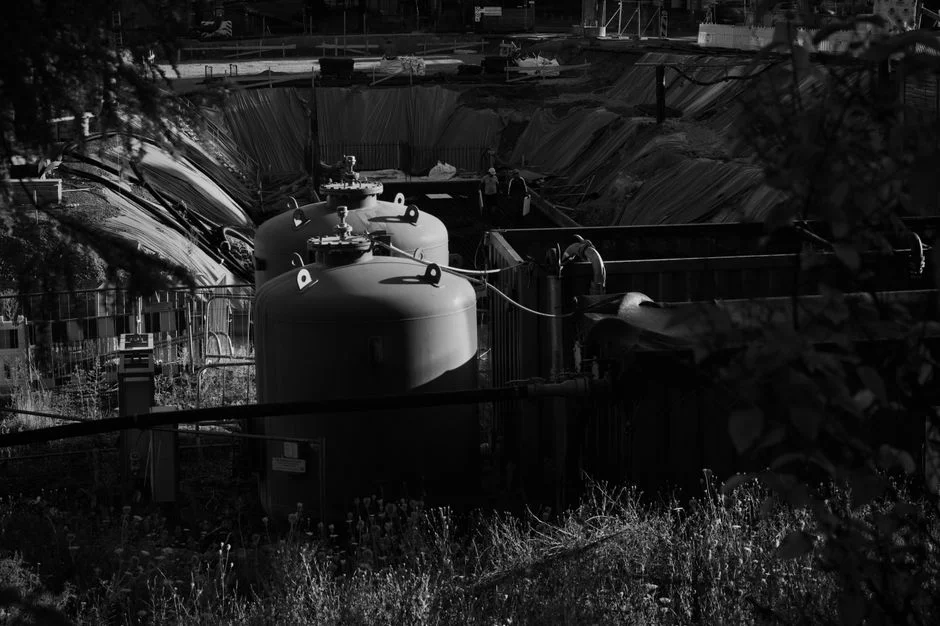
Equalization is the hydraulic barrier between intermittent mining discharges and sensitive downstream chemistry and solids separation. The supplied design basis is 8–24 hours of average daily flow to dampen batch discharges from shift changes, dump-leach cycles, and mill clean-outs (HydropureWater, “How Mining & Metals Plants Meet Pretreatment Limits Before Sewer Discharge,” accessed 2026).
An undersized basin can pass upstream spikes directly into clarification, overpower chemical dosing, and carry precipitated metals into the filter. Sizing should also reflect the supplied pretreatment basis of peak 2-hour flow with 20–30% turndown capacity, rather than average daily flow alone.
Before fixing basin volume, obtain actual flow records, batch schedules, rainfall response, and available footprint. These inputs determine whether a larger basin is justified or whether segregated storage is more effective at the source. Equalization should not combine incompatible streams simply because they share a sewer connection. Evaluate the mixed chemistry, precipitation demand, sludge inventory, and permit implications first.
The basin must also provide working volume for mixing, reagent contact, and controlled withdrawal. Equipment vendors need the measured flow profile and chemical characterization to select tanks, mixers, transfer pumps, and level controls. A PLC-controlled chemical dosing skid can then respond to the buffered stream, but it does not correct a hydraulic basin that is too small.
Adjust pH and Precipitate Dissolved Metals
The correct precipitation sequence is established by jar tests against the actual wastewater and the verified Stillwater permit, not by a generic pH window. A common initial design reference of pH 6.5–9.0 appears in the supplied pretreatment guidance (HydropureWater, “How Mining & Metals Plants Meet Pretreatment Limits Before Sewer Discharge,” accessed 2026). The operating value must be specific to each metal because solubility, ligand effects, and competing species differ.
Stage pH correction when influent swings exceed 2 pH units. The same source states that moving 1 pH unit away from the precipitation optimum can reduce removal efficiency by an order of magnitude. That sensitivity supports staged reactors, online pH measurement, and closed-loop reagent control rather than a single manual dose.
Lime and sodium hydroxide can both support metal hydroxide precipitation. Lime is cheaper per ton but produces 3–5 times more sludge; sodium hydroxide may be economically useful for high-TDS mining streams. Sulfide precipitation can produce lower residual metals but costs 2–4 times more and requires sealed reactors with hydrogen sulfide scrubbing.
| Treatment route | Supplied residual-metals range | Operational implication |
|---|---|---|
| Hydroxide precipitation | 0.5–2.0 mg/L | Usually the first-stage option where the verified limit can be met. |
| Sulfide precipitation | 0.01–0.05 mg/L | Evaluate where hydroxide residuals cannot reliably meet a stricter monthly-average limit. |
If the verified local zinc limit is below 0.3 mg/L, evaluate sulfide polishing on a slipstream with sealed reactors and H₂S scrubbing. Do not assume hydroxide precipitation alone will satisfy that condition. The cited comparison comes from HydropureWater’s 2026-accessed pretreatment article and remains subject to jar testing and permit verification.
Use PLC-controlled chemical dosing to hold the operating band required by a low monthly-average metal limit. The dosing system should interlock pH, chemical inventory, flow, and mixer status while logging the conditions around each sample. Confirm the control objective with Stillwater before treating any vendor control band as a permit compliance guarantee.
Choose DAF or Lamella Clarification for the Metal Sludge
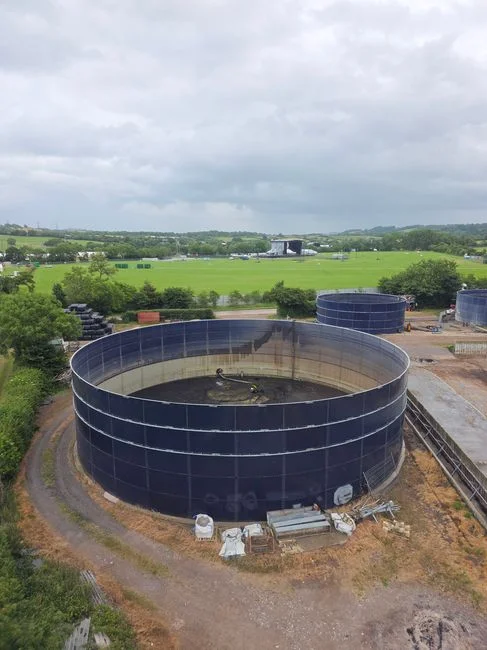
DAF is the stronger starting candidate for wastewater containing oil, grease, or fine colloidal metals, while lamella clarification fits streams dominated by dense metal-hydroxide flocs, especially where flow is higher or footprint is constrained. The supplied comparison lists DAF hydraulic loading at 5–25 m/h and lamella surface loading at 20–40 m/h (HydropureWater, “How Mining & Metals Plants Meet Pretreatment Limits Before Sewer Discharge,” accessed 2026).
The cited DAF range is 4–300 m³/h across 13 models, with 90–98% TSS removal and 85–95% oil and grease removal. Lamella clarification is described as effective for heavy metal-hydroxide flocs and compact installations, but less effective for free oil and colloidal fines than DAF. These are representative product ranges, not guarantees for a Stillwater permit.
| Selection factor | Favors DAF | Favors lamella clarification |
|---|---|---|
| Wastewater character | Oil, grease, fine colloidal metals | Primarily metal-hydroxide sludge |
| Supplied loading range | 5–25 m/h hydraulic loading | 20–40 m/h surface loading |
| Supplied performance range | 90–98% TSS and 85–95% oil and grease removal | No equivalent removal range supplied in the research |
| Site constraint | Greater footprint demand | Compact installation |
Polymer coagulant aid at 0.5–3 mg/L can improve floc formation before clarification, according to the supplied source. Confirm dose and compatibility through jar testing and make polymer addition conditional on flow and turbidity or solids signals.
For flows below 10 m³/h, evaluate packaged skid systems; above 100 m³/h, compare parallel DAF trains with lamella clarification. Those thresholds are supplied procurement guidance, not Stillwater requirements. Evaluate an industrial DAF system for metal-bearing wastewater against the stream’s oil and colloid content, and compare it with a high-efficiency sedimentation tank using actual hydraulic loading, sludge settleability, footprint, and maintenance constraints.
Filter, Disinfect, and Control Residual Risk
Multimedia filtration provides the final solids barrier between clarification and the sewer discharge point. The supplied design uses a 1–2 m/h filtration rate and can reduce residual TSS below 10 mg/L (HydropureWater, “How Mining & Metals Plants Meet Pretreatment Limits Before Sewer Discharge,” accessed 2026). These are representative design values; the required performance must remain tied to the Stillwater permit.
Size the filter for its backwash cycle rather than average flow, and trigger backwash on differential pressure. An multimedia filter for polishing should have sufficient media, wash-water capacity, and dirty-media storage to manage a representative surge without passing solids during a backwash cycle.
Add disinfection only where the Stillwater sewer-use requirements or collection-system conditions call for it. The supplied chlorine dioxide range is 1–5 mg/L. Use chlorine dioxide where the POTW requires a residual without the regulated trihalomethanes associated with chlorine, through an on-site chlorine dioxide generation system. The final concentration and contact condition require confirmation in the permit and sewer-use requirements.
Calibrate the sampling and flow-measurement points before startup. The monitored sample must represent the combined treated stream at the authorized discharge point, and the installation must prevent unrepresentative dead zones, leaks, or cross-connections. Verify the physical discharge point and monitoring arrangement with Stillwater rather than relying only on process drawings.
Manage and Dewater the Metal-Bearing Sludge
Metal-bearing sludge requires its own compliance and disposal plan because treating the liquid does not remove the residual waste-management obligation. Characterize clarifier or DAF sludge for the intended disposal route before selecting dewatering equipment, and evaluate the metals content, physical properties, regulatory classification, and available receiving facility.
The supplied source reports that a plate-and-frame filter press can dewater sludge to 25–35% dry solids, producing stackable cake (HydropureWater, “How Mining & Metals Plants Meet Pretreatment Limits Before Sewer Discharge,” accessed 2026). A plate-and-frame filter press is therefore an option where transportable cake supports the selected disposal route, but cake percentage alone does not establish disposal eligibility.
Return filtrate to the process head only after confirming that it will not destabilize equalization, pH control, or solids inventory. Evaluate reuse or recycle at the same rigor as direct discharge because metals can accumulate through repeated returns. A mass balance around the clarifier, filter, and filtrate return is necessary.
Evaluate disposal, transport, and residual-metal recovery options separately because each changes the overall treatment economics. Include sludge handling, chemical consumption, operator labor, disposal, and filtrate management in lifecycle comparisons. Comparing DAF or lamella equipment on purchase price alone omits the recurring costs most likely to change a mining plant’s total treatment expense.
A Practical Compliance and Procurement Workflow
A defensible Stillwater pretreatment project proceeds from permit verification to performance testing, with each design input tied to a record or test result. The regional mining pretreatment compliance workflow provides a related decision sequence, but the Stillwater permit remains controlling.
- Obtain the current Stillwater industrial-user permit, sewer-use requirements, approved monitoring plan, and applicable federal category. Confirm whether Part 437, Part 433, or both apply.
- Complete representative wastewater characterization, map all sources and discharge points, and segregate incompatible streams.
- Establish jar-tested pH, precipitation, polymer, filtration, and solids-separation criteria against every verified daily-maximum and monthly-average condition.
- Size equalization, chemical dosing, DAF or lamella clarification, filtration, and sludge handling around the supplied peak 2-hour flow and 20–30% turndown design basis.
- Test across representative batches, document analytical results, and verify that monthly-average performance is not achieved only by isolated compliant samples.
- Submit monthly industrial wastewater self-monitoring reports and prepare for Stillwater’s quarterly-to-yearly sampling and visual inspections.
The supplied guidance cites civil penalties of up to $25,000 per day per violation under Clean Water Act Section 309 and recommends verifying current enforcement terms with counsel or the local authority (HydropureWater, “How Mining & Metals Plants Meet Pretreatment Limits Before Sewer Discharge,” accessed 2026). Treat that figure as a compliance-risk consideration, not a quotation for a specific enforcement action.
For procurement, require bidders to separate equipment price, reagent consumption, sludge production, disposal, controls, sampling, installation, and operator training. Technical selection should show how each item satisfies a permit condition, how performance will be tested, and which operating data the owner must retain. This structure makes the evaluation auditable and reduces the risk of purchasing equipment that meets a generic specification but fails the Stillwater permit.
Frequently Asked Questions
What should a mine request from Stillwater before pricing treatment equipment?
Request the current Stillwater industrial-user permit, sewer-use requirements, approved monitoring plan, categorical-standard determination, sampling point, monitoring frequency, and approved parameters. Also obtain site flow data and wastewater characterization. These documents establish the actual design basis; representative treatment ranges cannot replace the permit.
How should a buyer compare the cost of hydroxide precipitation with sulfide polishing?
Request a reagent-consumption comparison based on jar-tested influent chemistry, verified residual-metal targets, sludge yield, and the resulting disposal volume. The supplied source reports hydroxide residuals of 0.5–2.0 mg/L and sulfide residuals of 0.01–0.05 mg/L, with sulfide reagent cost running 2–4 times higher (HydropureWater, “How Mining & Metals Plants Meet Pretreatment Limits Before Sewer Discharge,” accessed 2026). These figures support comparative planning, but a site-specific quotation and permit verification are required before procurement.
When is DAF preferable to lamella clarification for a mining wastewater stream?
Use DAF as the starting evaluation when oil, grease, or fine colloidal metals are present. Consider lamella when the stream is primarily metal-hydroxide sludge, flow is higher, or footprint is constrained. The supplied comparison gives DAF 5–25 m/h hydraulic loading and lamella 20–40 m/h surface loading, both of which require confirmation against actual settling, oil content, and flow data.
What should the supplier demonstrate before equipment delivery and startup?
Require a permit-compliance matrix linking every proposed component to the verified permit condition, a sizing calculation based on measured flow and influent data, control narratives, calibration requirements, commissioning tests, and training records. Before startup, agree on sampling locations, analytical methods, batch test cases, acceptance criteria, and data retention with the owner and Stillwater.
Before recommending equipment, request the site permit, influent data, flow profile, and sludge-disposal route. Those inputs are necessary to close the remaining compliance, sizing, and budget questions.