What should be decided before choosing MBR or activated sludge
The permit and actual wastewater matrix determine whether MBR, conventional activated sludge (CAS), or a hybrid train is feasible at the Somerset site. Start with the current discharge permit, then characterize the influent and site constraints; equipment selection should follow those facts rather than generic mining-water assumptions. The existing mining wastewater permit and pretreatment guide identifies 40 CFR Part 440 for ore mining and dressing and instructs readers to confirm whether MassDEP metals or sulfate limits also apply. For a Somerset facility in the United States, confirm the applicable state and local requirements instead of assuming that the federal provision alone defines compliance.
Request a seven-day composite influent characterization, with operating variability recorded rather than hidden in an average. The minimum matrix should cover flow, pH, COD, BOD, the BOD/COD ratio, sulfate, TDS, relevant metals, toxicity, and any process-specific contaminants. It should also establish whether the wastewater is mine drainage, process water, contact water, a mixture, or a variable blend.
Record the available footprint, electrical service and tariff, make-up-water cost, reuse objective, downstream disposal route, equalization volume, and the condition of existing aeration and clarifier assets. These inputs can eliminate an unsuitable platform before commercial proposals are opened.
Treat the footprint, flow, and reuse thresholds in the existing HydropureWater framework as screening assumptions, not universal design rules. Confirm them against the current permit, site data, utility conditions, and the selected vendor’s process proposal.
How MBR and conventional activated sludge handle the same wastewater
An MBR retains activated-sludge biomass and separates solids through submerged membranes; CAS separates the same biological mixed liquor in a secondary clarifier. That architectural difference determines much of the project outcome: MBR does not depend on floc settling to produce its solids-rejection barrier, while CAS does.
The membrane permits a higher-biomass inventory without requiring the settling area associated with a secondary clarifier. Clarifier performance remains exposed to sludge settleability and changes in feed conditions. This distinction matters when a mining site wants predictable solids separation, a compact retrofit, or an effluent suitable for further reuse treatment.
The integrated submerged-PVDF MBR system in the HydropureWater verified product catalog combines activated-sludge treatment with submerged PVDF filtration below 1 μm. Its catalog capacity is 10–2,000 m³/day, and the manufacturer states that the system occupies approximately 60% less footprint than conventional systems. These are catalog facts, not a mining-performance guarantee for a specific Somerset influent.
The cleaner separation barrier is accompanied by obligations that CAS does not have in the same form. An MBR introduces membrane fouling, air scour, chemical cleaning, permeate pumping, instrumentation, and eventual membrane replacement. The designer must also account for how the membrane arrangement changes tankage, equalization, screening, and maintenance access.
The 2026 MBR cost-per-m³ guide and the supplied sustainability review identify membranes as particularly relevant to industrial effluents containing recalcitrant or toxic substances. That finding is industrial in scope, not mining-specific, so it supports further investigation rather than a presumption of compliance.
Head-to-head performance for mining and metals wastewater
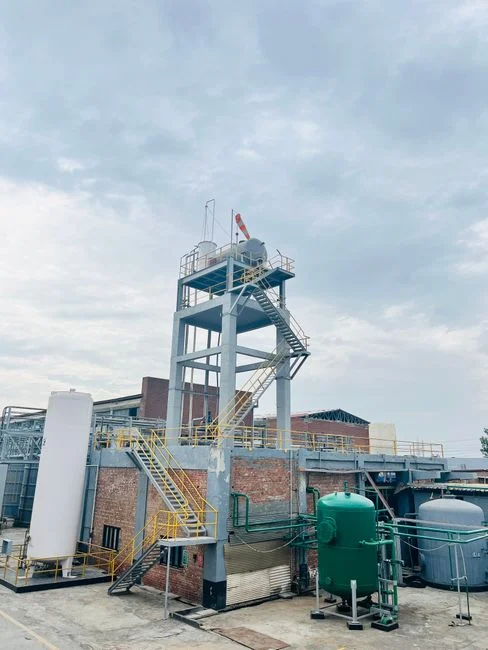
MBR usually wins the comparison where solids separation must remain consistent despite variable feed or where clarifier and sand-filter area is unavailable. CAS remains viable where dilution, aeration assets, and low lifecycle cost outweigh reuse quality and footprint constraints. Neither platform can be selected from a general performance table because metals toxicity, salinity, sulfate, hydraulic variation, and pretreatment requirements determine whether the biology remains operable.
The existing HydropureWater article lists typical mixed-liquor suspended solids values of 8,000–12,000 mg/L for MBR and 2,000–4,000 mg/L for clarifier-based CAS. These are article-specific typical values, not guaranteed operating concentrations. The membrane can replace both the secondary clarifier and sand filter, providing the structural basis for the catalog’s approximately 60% footprint reduction.
The supplied sustainability review reports greater than 95% COD and suspended-solids performance in one bio-membrane example. That result must not be presented as a Somerset mining guarantee; feed composition, loading, fouling control, and pretreatment remain decisive. The same caution applies to metals: arsenic, lead, zinc, copper, nickel, and cadmium can disrupt biology, while biological treatment does not establish that membrane separation alone will meet a metals limit.
| Procurement criterion | MBR | Conventional activated sludge | Decision implication |
|---|---|---|---|
| Final solids separation | Submerged membrane provides a physical separation barrier | Secondary clarifier separates biomass by settling | Test actual feed variability and required effluent quality |
| Footprint | Catalog states approximately 60% smaller than conventional systems | Requires aeration basin, clarifier, and associated solids handling | Compare the complete train, not only the membrane tank |
| Typical MLSS in the existing article | 8,000–12,000 mg/L | 2,000–4,000 mg/L | Screening values only; obtain the vendor’s design basis |
| Reuse readiness | Supports a controlled solids barrier before polishing | Usually requires additional solids separation for demanding reuse | Define the end use and final water quality before selecting |
| Operational exposure | Fouling, cleaning, air scour, pumping, and replacement | Clarifier settling, sludge recycle, aeration, and basin maintenance | Compare failure modes with the site’s staffing and utilities |
| Metals and toxicity | Retains biomass but does not eliminate upstream toxicity | Exposed to biomass toxicity and floc deterioration | Require testing and a defined pretreatment strategy |
Use the DF Series membrane bioreactor module only as a candidate architecture. Its treatment claim must be validated against the permit and actual wastewater rather than used to imply that dissolved metals are removed by filtration alone.
A three-question decision framework for Somerset sites
Three screening questions can make the initial platform decision auditable: is the available footprint below roughly 500 m², is there a reuse or zero-liquid-discharge driver, and is the flow below about 2,000 m³/day? The existing HydropureWater framework treats two positive answers as a signal to favor MBR. Under its rule, zero or one positive answer favors CAS or a hybrid treatment train.
Those thresholds are procurement screening assumptions from the existing framework, not automatic design criteria. A site can have sufficient area but toxic or saline influent that defeats CAS; another can have limited area but very dilute flow where existing aeration and clarification make CAS economical.
CAS is the economic baseline for large, dilute flows when reliable aeration and clarifier assets already exist and reuse has little value. MBR is the stronger candidate for compact retrofits, reuse objectives, or operationally demanding industrial influent matrices, subject to verified pretreatment and pilot results. A hybrid train may be better where CAS remains economical but additional solids separation or reuse quality is required; that is a project-specific option, not a universal default.
| Screening result | Provisional platform | Required confirmation |
|---|---|---|
| Two or three positive answers | Advance MBR for detailed evaluation | Permit limits, influent toxicity, pretreatment, utilities, reuse quality, and pilot performance |
| Zero or one positive answer | Advance CAS or evaluate a hybrid | Existing asset condition, clarifier performance, aeration reliability, disposal route, and lifecycle cost |
| MBR rejected after testing | Retain CAS or reconsider hybrid treatment | Document the failed criterion and compare the complete capital and operating consequences |
The comparison framework for industrial wastewater provides a useful check on this screening logic, but its application here must remain anchored to the Somerset permit and mine-water matrix.
What MBR will add to capital and operating cost
At 1,000 m³/day, HydropureWater’s 2026 estimate places MBR capital cost roughly 20–40% above equivalent-flow CAS and operating cost 15–30% higher per cubic metre. The estimate is useful for establishing the commercial direction of the comparison; it is not a Somerset quotation and excludes the site-specific variables that determine the final budget.
The stated capital cost drivers are membrane cassettes, fine screens, permeate pumps, and PLC upgrades. Operating and lifecycle cost drivers include air-scour energy, chemical cleaning, and membrane replacement over the project horizon. The proposal should separately identify utilities, pretreatment, equalization, polishing, solids handling, installation, controls, and disposal rather than hiding them in a platform price.
Request the electricity tariff, make-up-water cost, brine-disposal cost, chemical-cleaning allowance, and replacement schedule before comparing lifecycle economics. Reuse can create a financial benefit where treated water displaces purchased water or avoids disposal, but the value depends on the site’s actual water and disposal prices. Without those inputs, a generic payback claim is not defensible.
| Lifecycle worksheet item | CAS | MBR | Site input required |
|---|---|---|---|
| Annual variable treatment cost | Annual treated volume multiplied by variable cost | Annual treated volume multiplied by variable cost | Actual flow profile and vendor operating assumptions |
| Cleaning and replacement | Clarifier and basin maintenance provisions | Cleaning chemicals and membrane replacement allowance | Cleaning frequency, membrane life, replacement price per membrane area |
| Reuse benefit | Value only where post-clarification quality is suitable | Value where produced water meets the defined use | Make-up-water price, required quality, achievable recovery |
| Disposal cost | Sludge and residual-water disposal | Sludge, brine where applicable, and residual-waste disposal | Waste characterization, route, and destination price |
Use the 2026 MBR cost-per-m³ guide to structure the comparison, but require the vendor to fill the worksheet with site-specific inputs and state all exclusions.
Build a pretreatment train that protects the membrane
A defensible mining MBR train begins with equalization, followed by pH control and precipitation where the influent requires it, fine screening, biological MBR treatment, polishing when the reuse specification demands it, and sludge dewatering. The sequence must be confirmed against the real wastewater and the selected membrane manufacturer’s limits.
The existing article gives screening ranges of 1–2 mm for hollow-fiber bundles and 2–3 mm for flat-plate modules. These are architecture-based screening points, not universal requirements; the buyer should follow the selected manufacturer’s specification. A GX Series rotary fine screen can be evaluated as part of the headworks, with the required aperture and duty established by the membrane specification.
The supplied DF Series module uses 0.1 μm PVDF flat-sheet elements and offers 80–225 m² configurations producing 32–135 m³/day. That module geometry and duty must be matched to the selected train; the module output is not interchangeable across architectures.
Use automatic chemical dosing to hold pH within the precipitation window described in the existing article rather than relying on manual corrections during variable metal loads. The automatic chemical dosing system should be specified around the confirmed chemistry, including chemical type, duty, control sequence, containment, and verification alarms.
MBR sludge handling can be evaluated with a plate-and-frame filter press where the existing article’s dewatering route is appropriate. Before accepting that route, characterize the waste and confirm its permitted disposal or beneficial-use destination. A flow diagram alone does not establish a compliant solids-disposal route.
Keep the mine-water pretreatment work separate from any promise that membrane separation removes dissolved metals. Precipitation, biological response, membrane rejection, and polishing perform different functions; the permit and reuse specification determine which are required.
Turn the comparison into a pilot and vendor specification
The existing HydropureWater article recommends a 60–90 day cassette rental against the actual feed before committing capital expenditure. For a Somerset procurement, the pilot is the point at which assumptions about toxicity, fouling, solids separation, and operability can be tested without transferring the entire risk to a fixed-price equipment order.
Define acceptance tests around the permit drivers and observed influent variability. Include hydraulic and contaminant loading, solids separation, pH control, fouling rate, cleaning frequency, biological response, reuse quality where relevant, and treatment of upset conditions. Clean-water membrane performance is not a substitute for feed-specific evidence.
Require each supplier to document:
- The influent characterization and all sampling methods used for design.
- Equalization volume in hours of average flow.
- The fine-screen specification in millimetres and its relationship to the selected membrane.
- The membrane warranty in years, including its operating assumptions.
- The 10-year membrane replacement cost in dollars per square metre of membrane area.
- Comparable mining or metals references, with the source data and operating envelope disclosed.
- Design assumptions, exclusions, utility demand, chemical demand, spare parts, controls, training, and guaranteed performance criteria.
Ask for evidence from comparable mining or metals applications rather than relying only on municipal references or clean-water tests. The selected source data, operating assumptions, exclusions, guarantees, and pilot results should become part of the purchase specification. The mining wastewater permit guide and DAF versus clarifier buyer’s guide provide useful checks for upstream-unit scope.
Use a staged sequence: characterize the wastewater and permit; screen technologies; pilot the preferred configuration; verify lifecycle cost under site inputs; then select and specify. This creates an auditable record instead of forcing a technology choice before the missing evidence exists.
Frequently Asked Questions
How much more does MBR cost than conventional activated sludge?
HydropureWater’s 2026 estimate for a 1,000 m³/day system is roughly 20–40% more MBR capital cost and 15–30% more operating cost per cubic metre than equivalent-flow CAS. A Somerset budget cannot rely on that percentage alone. Request an itemized proposal and complete the lifecycle worksheet using the site’s electricity tariff, make-up-water price, disposal costs, cleaning allowance, and membrane replacement schedule. Treat any reuse benefit as an avoided cost only when the specified end use is technically achievable.
Which MBR capacity should be selected for a Somerset mining site?
Do not size from a generic flow range alone. The verified integrated MBR catalog covers 10–2,000 m³/day, while the supplied DF Series configurations span 80–225 m² of membrane area and produce 32–135 m³/day. Confirm average and peak flow, equalization duty, loading basis, recovery, pretreatment, and required reuse quality. Require the vendor to map its proposed train to those inputs and state any design margin rather than treating the upper catalog limit as an entitlement.
Which permit limits must be checked before ordering equipment?
The existing article identifies 40 CFR Part 440 as the federal framework for ore mining and dressing, but the current site permit must be checked for applicable MassDEP metals or sulfate limits and any local or discharge-specific conditions. Compliance should be written against named permit parameters, not against generic MBR performance claims. The pilot acceptance protocol should test the parameters that control discharge authorization, and the equipment proposal should state which limits were used in its design.
What should be checked when selecting an MBR supplier?
Require a membrane warranty stated in years, references from comparable mining or metals duty, transparent replacement pricing per square metre of membrane area, and a pilot using actual site feed. Also verify the proposed screening specification, equalization provision, chemical-cleaning method, utility demand, controls scope, sludge route, and the assumptions behind each performance guarantee. A detailed proposal without feed-specific evidence should not outrank a supplier that has demonstrated operability under the project matrix.