
Why the Somerville Decision Is Different in 2026
Mining and metals plants near Somerville, US are no longer comparing MBR and CAS on equal footing because the local constraint set is unusually tight. The mid-sized 1,000 m³/day retrofit profile that defines the region sits inside a 480 m² available pad, faces a 40 CFR Part 440 effluent ceiling for ore mining and dressing, and may carry a MassDEP metals or sulfate limit layered on top of the federal numbers, so the current permit text is the first input into the comparison. The influent matrix is what breaks textbook CAS: BOD/COD ratios below 0.3, hardness in the thousands of mg/L as CaCO₃, sulfate often above 1,000 mg/L, and TDS climbing past 5,000 mg/L where fresh make-up water is scarce, which is the exact envelope that drives filamentous bulking in a secondary clarifier.
Two 2026-specific factors flip the answer for the Northeast. The first is reuse: water scarcity in the broader arid districts that feed the regional metals supply chain raises the value of every cubic meter of permeate, so a reuse or zero-liquid-discharge driver on site changes the OPEX math. The second is footprint: a packaged MBR cost per m³ 2026 guide built around a 1,000 m³/day skid lives in the exact 10–2,000 m³/day band where the membrane option beats CAS on space. Reuse driver on site, available footprint under roughly 500 m², and flow below about 2,000 m³/day are the three conditions that flip the answer from CAS to MBR for Somerville-area retrofits.
What Breaks in a Conventional Activated Sludge Basin on Mining Feed
CAS fails on mining feed because the feed violates almost every design assumption the original activated-sludge textbook was written around. Low BOD/COD, high hardness, high sulfate, variable metals, and saline TDS in arid districts all push the biology past the operating window where a secondary clarifier can settle the mixed liquor. The basin still treats carbon, but the polish step — the clarifier — is what gives up first.
Heavy metals (As, Pb, Zn, Cu, Ni, Cd) at milligram-per-liter levels shock biomass during upset events. According to HydropureWater (2026), CAS systems typically lose 30–60% of their removal efficiency for a 24–72 hour window after a metal pulse, because the floc itself is what carries the contaminant out. Once the floc is dispersed, the clarifier cannot recover quickly enough to ride the shock. Salinity above roughly 5,000 mg/L TDS inhibits nitrifiers, and the standard 5–15 day SRT of a CAS basin does not give slow-growing autotrophs enough time to recover. Cyanide, ammonia, and thiosulfate from cyanidation circuits add an oxygen-demand swing that a clarifier cannot ride out without equalization. MBR operation at 30–60 day SRT, by contrast, retains biomass through the same shock and is the structural fix for the failure mode the CAS basin cannot escape.
How an MBR Reconfigures the Secondary Train
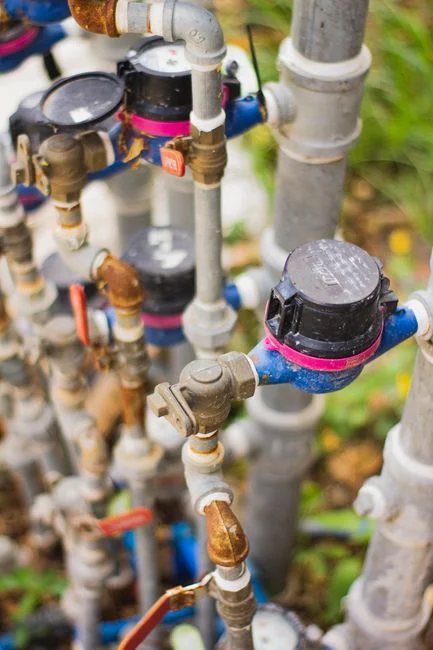
The dominant 2026 configuration is a submerged PVDF hollow-fiber or flat-sheet module with a nominal pore size below 1 μm, sitting inside an aerated biological tank. The DF-series flat-sheet MBR module at 0.1 μm with an integrated aeration box is a current example, and the submerged hollow-fiber bundles from the legacy Zenon/Memcor lines run the same train with a different screening spec. The membrane replaces both the secondary clarifier and the sand filter, which is why MLSS in an MBR routinely runs 8,000–12,000 mg/L versus 2,000–4,000 mg/L in a clarifier-based CAS basin.
The headworks decision falls out of the module choice. Hollow-fiber bundles need 1–2 mm fine screening, while flat-plate (Kubota-style) modules need 2–3 mm — a procurement-spec decision that drives both CAPEX and the headworks design. For most metals operations the train is precipitation at pH 6.5–7.5, equalization, fine screening, the MBR tank itself, and a polishing step (UV or RO) only if the plant needs true reuse. Jijingi et al. (2024), cited in HydropureWater (2026), confirm in their industrial-MBR review that MBR tackles heavy metals and industrial wastewater with a smaller footprint, reduced chemical use, and water-reuse potential — which is the engineering case for the swap. An integrated MBR system sized for the 10–2,000 m³/day range is the form factor that ships for this retrofit profile.
MBR vs CAS: Side-by-Side Operating Parameters
The table below consolidates the parameters a process engineer will copy into their own evaluation memo. MBR numbers are drawn from the EPA Membrane Bioreactor Fact Sheet (Calls Creek and Cauley Creek facilities) and from Jijingi et al. (2024); CAS numbers are typical secondary-clarifier performance for municipal-style activated sludge.
| Parameter | MBR (mining duty) | CAS (clarifier-based) |
|---|---|---|
| SRT | 30–60 days | 1–5 days (nitrifying); 5–15 days (non-nitrifying) |
| MLSS | 8,000–12,000 mg/L (typical); 8,000–15,000 mg/L (S2 deep block) | 2,000–4,000 mg/L |
| Effluent BOD | Near analytical detection limit (EPA Fact Sheet) | 5–30 mg/L (typical) |
| Effluent TSS | Near analytical detection limit (EPA Fact Sheet) | 5–30 mg/L (typical) |
| Effluent ammonia-N | 0.10–0.72 mg/L (EPA Fact Sheet) | Variable; 1–10 mg/L if nitrified |
| Effluent turbidity | 0.01–1.31 NTU (EPA Fact Sheet) | 1–5 NTU (clarifier overflow) |
| Footprint vs CAS + sand filter | ~60% smaller | Baseline |
| Metal-shock resilience | Biomass retained; stable through pulse | 30–60% removal loss for 24–72 h |
| Membrane life | 5–8 years (mining service with pretreatment) | 20+ years (basin structure, if aeration grid intact) |
These systems differ significantly in their operational resilience. CAS pays less in OPEX and CAPEX but loses 30–60% of removal efficiency during metal shocks that an MBR rides out because the membrane keeps biomass in the tank regardless of floc condition. The SRT gap is what protects MBR biomass through metal shocks, and the MLSS gap is what lets the same basin carry more biology in less volume.
The 30-Second Decision Rule for a Somerville Retrofit
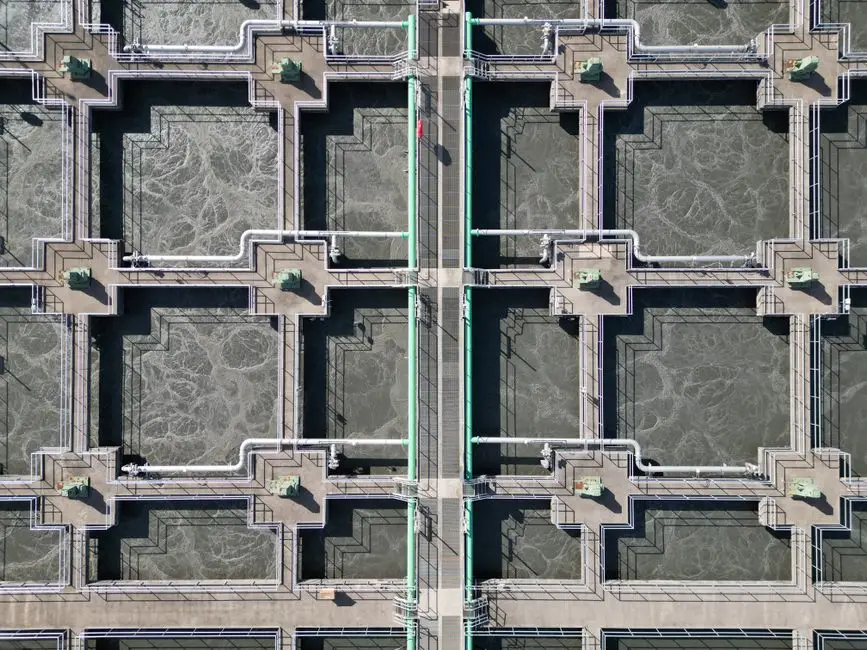
The decision rule for the procurement memo is straightforward and is the part of the article an engineer will actually copy into a memo. Score three questions against the current site: (1) Is the available footprint below 500 m²? (2) Does the site have a reuse or ZLD driver? (3) Is the flow below 2,000 m³/day? Two out of three yes answers means MBR; zero or one yes means CAS or a hybrid clarifier-plus-MBR polish on the reuse stream.
MBR is the right call for a Somerville plant when the feed carries variable or shock heavy-metal loads, the available footprint is under roughly 500 m², or there is a water-reuse or zero-liquid-discharge driver on site. CAS still wins on large dilute flows above about 5,000 m³/day, sites with electricity below roughly $0.07/kWh, and existing aeration basins that have 20+ years of useful life left. For a 60–90 day pilot against the actual feed, rent one MBR cassette and verify metals removal at the real influent matrix before committing CAPEX — the protocol and CIP budget are covered in the MBR cost per m³ 2026 guide. Two out of three yes answers is the procurement-grade rule, and the rest of the article supplies the supporting numbers to defend it.
Somerville Cost Scenarios at 1,000 m³/day (2026 Power and Water Tariffs)
For a 1,000 m³/day mining plant, MBR CAPEX runs roughly 20–40% above an equivalent-flow CAS basin because of the membrane cassettes, fine screens, permeate pumps, and PLC upgrade. OPEX runs 15–30% higher per m³, driven by air-scour energy, periodic chemical cleaning with sodium hypochlorite and citric acid, and membrane replacements over a 20-year horizon. The two OPEX swing factors that flip the answer for a Somerville-area site are the electricity tariff and the value of reused water.
The table below frames the decision for a 1,000 m³/day feed at 2026 power and water costs. The numbers a buyer must request — site-specific electricity tariff in $/kWh, make-up water cost in $/m³, brine disposal cost in $/m³, and any 20-year OPEX adjustment for chemical cleaning — are the inputs that turn this table from a directional read into a defensible project number.
| Scenario (1,000 m³/day, 20-yr) | CAPEX vs CAS | OPEX vs CAS | Payback trigger |
|---|---|---|---|
| MBR + reuse, water >$2/m³, electricity >$0.09/kWh | +20–40% | +15–30% | 4–6 years on reuse credit |
| MBR + reuse, water $1–2/m³, electricity $0.07–0.09/kWh | +20–40% | +15–30% | Site-specific; depends on brine disposal cost |
| MBR no reuse, electricity <$0.07/kWh | +20–40% | +15–30% | No payback; CAS preferred |
| CAS retro of existing aeration basin, 20+ yr life | Baseline | Baseline | Lowest lifecycle cost if reuse is not required |
According to Mannina et al. (2019), plant-wide modelling reports direct GHG emissions of 0.85 kgCO₂eq/m³ for CAS versus 0.91 kgCO₂eq/m³ for MBR in a benchmark scenario — small but real, and a credit if the site has a decarbonization target. OPEX for chemical cleaning is best controlled with a properly sized automatic chemical dosing system so membrane CIP is not left to operator memory. The HydropureWater (2026) cost model for a 1,000 m³/day skid sets the CAPEX premium and the 4–6 year payback window when water cost exceeds roughly $2/m³.
Pretreatment and Sludge-Side Pitfalls That Sink MBR Projects
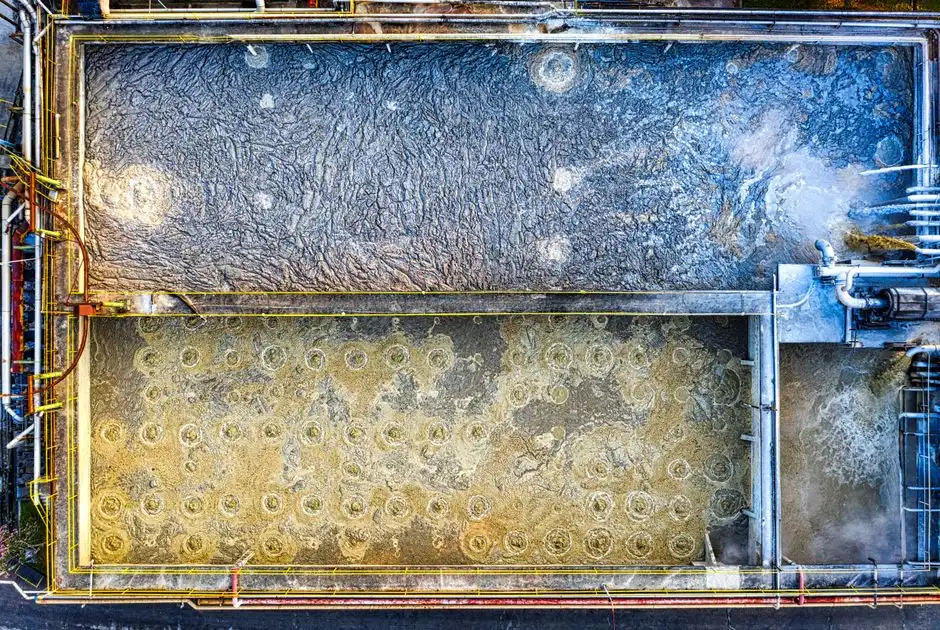
Most MBR failures in mining service trace back to skipped pretreatment. All MBR systems require 1–3 mm fine screens immediately before the membranes, with the cutoff depending on the manufacturer; undersized screening is the single most common cause of torn membranes and shortened cassette life. A GX-series rotary bar screen at the headworks is the standard mining-duty answer for cutting fiber and abrasive fines before they reach the cassette.
Most mining flows also need pH adjustment to 6.5–7.5 before the MBR to keep dissolved metals precipitated as hydroxides; pair the screen with an automatic chemical dosing system for lime, caustic, or coagulant so pH holds inside the precipitation window even during a metal pulse. MBR waste sludge has lower settleability and more colloidal particles than CAS waste activated sludge, so a plate-and-frame filter press is the right dewatering choice to hit 25–35% dry solids for landfill or backfill. For high-turbidity or oil-laden mine-water feeds upstream of the equalization basin, a DAF unit removes floatables and protects the fine screens — the upstream-side decision is also covered in the DAF vs clarifier for mining/metals wastewater companion piece.
Procurement Checklist Before You Sign the PO
The procurement memo is shorter than people think. Run the 30-second score against three questions — footprint below 500 m², reuse or ZLD driver present, flow below 2,000 m³/day — and document the answer in the memo so the technology choice is auditable later. Hand procurement a five-line spec sheet: influent characterization with 7-day composite, equalization volume in hours of average flow, fine-screen spec in mm, membrane warranty length in years, and 10-year membrane replacement cost in dollars per m² of membrane area.
Confirm whether the local permit layers selenium or sulfate limits on top of the federal 40 CFR Part 440 numbers before the vendor proposal is finalized, and allocate budget for OPEX chemical cleaning with a properly sized automatic chemical dosing system so membrane CIP is not left to operator memory. Request a 60–90 day cassette rental against the actual feed, sized around an integrated MBR system that fits the 480 m² pad, and lock the membrane warranty in years rather than in operating hours.
Frequently Asked Questions
What is the typical CAPEX premium for an MBR over CAS for a 1,000 m³/day mining plant in Somerville, US in 2026?
According to HydropureWater (2026), MBR CAPEX runs roughly 20–40% above an equivalent-flow CAS basin at 1,000 m³/day because of the membrane cassettes, fine screens, permeate pumps, and PLC upgrade. The exact figure a vendor returns depends on influent characterization, equalization volume, fine-screen spec in mm, membrane warranty length in years, and 10-year membrane replacement cost in $/m² — request all five inputs in writing before comparing quotes.
How do I pick a supplier for a Somerville-area MBR retrofit who will survive a 40 CFR Part 440 plus MassDEP review?
Shortlist suppliers who can show documented effluent performance at the Calls Creek or Cauley Creek envelope (BOD and TSS near the analytical detection limit, ammonia-N 0.10–0.72 mg/L, turbidity 0.01–1.31 NTU per the EPA Membrane Bioreactor Fact Sheet) and who will warranty the membrane in years rather than operating hours. Ask for a 60–90 day cassette rental against the actual feed, a MassDEP-aware spec sheet that names which state metals or sulfate limits apply on top of 40 CFR Part 440, and a reference list of mining-duty MBRs already operating in the Northeast.
Does MBR really need only about 60% of the footprint of a CAS + sand filter train?
Yes. The EPA Membrane Bioreactor Fact Sheet, cited in HydropureWater (2026), reports roughly 60% footprint reduction versus a clarifier-and-sand-filter train because the membrane replaces both the secondary clarifier and the sand filter, and MLSS runs 8,000–12,000 mg/L versus 2,000–4,000 mg/L in CAS. For a Somerville retrofit with a 480 m² available pad, that is the structural reason MBR fits where CAS does not.
What influent conditions should make me walk away from CAS and specify MBR?
Walk away from CAS when the feed carries variable or shock heavy-metal loads, the available footprint is under roughly 500 m², or there is a water-reuse or zero-liquid-discharge driver on site. Salinity above roughly 5,000 mg/L TDS, BOD/COD ratios below 0.3, and sulfate above 1,000 mg/L are the matrix conditions that break a secondary clarifier; MBR at 30–60 day SRT retains biomass through the same shocks, which is why the procurement rule scores footprint, reuse, and flow before the technology choice is locked.